Robert Campbell - Campbell’s Cove - Campbell’s Stores - Campbell’s Bank - The Rocks - Sydney - New South Wales


Robert Campbell was a prominent early settler and merchant in Sydney, New South Wales, during the late 18th and early 19th centuries. He played a significant role in the development of the colony and left a lasting legacy, including the establishment of Campbells Cove. Here's some information about Robert Campbell and Campbells Cove:
1. Robert Campbell: Robert Campbell was born in Greenock, Scotland in 1769 and arrived in Sydney in 1798. He was an astute businessman and quickly became involved in various commercial ventures. Campbell engaged in activities such as shipping, whaling, and the export of goods, including wool and timber.
2. Business Ventures: Robert Campbell established a successful import-export business, dealing in a wide range of goods. His ships carried cargo to and from Australia, and he developed extensive trade connections with Asia, Europe, and America. Campbell's enterprises contributed to the economic growth of the young colony.
3. Campbell's Cove: Campbell's Cove is a historic site located on the western side of Sydney Cove, near The Rocks area. It was named after Robert Campbell, who owned land in the area. Campbell developed the cove as a wharf and shipping hub, playing a crucial role in the maritime trade of the colony.
4. Wharf and Warehouses: Campbell's Cove became an important center for the handling and storage of goods. Warehouses were constructed along the waterfront, facilitating the movement of cargo from ships to land. The area was bustling with activity, with vessels from around the world arriving to unload their cargo at Campbell's Cove.
5. Development and Decline: During its heyday, Campbell's Cove thrived as a commercial precinct. However, with the growth of the city and changes in shipping practices, the significance of the cove diminished over time. The construction of larger wharves in other locations, such as Darling Harbour, led to the decline of Campbell's Cove as a major maritime hub.
6. Preservation and Heritage: Today, Campbell's Cove is a heritage-listed area and part of The Rocks historic precinct. The wharves and warehouses have been preserved and restored, maintaining their historical character. The area is now a popular destination for tourists and locals, featuring restaurants, bars, and picturesque views of Sydney Harbour.
Robert Campbell's contributions to Sydney's early development, particularly through his commercial endeavors and the establishment of Campbell's Cove, are significant. The legacy of Campbell's Cove as a historic site and its connection to Sydney's maritime history continue to be celebrated and enjoyed by visitors to the area.
Robert Campbell was Born On 28th April 1768
And Died At Duntroon NSW On 25th April 1846
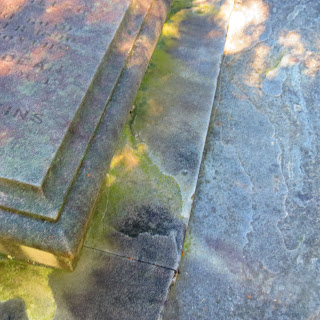
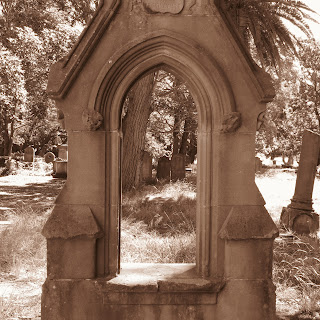
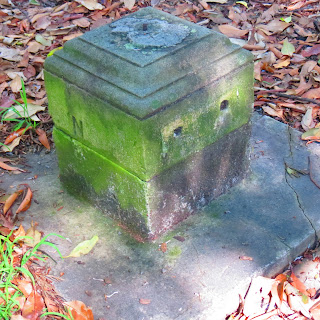
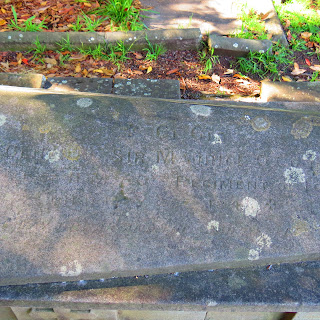
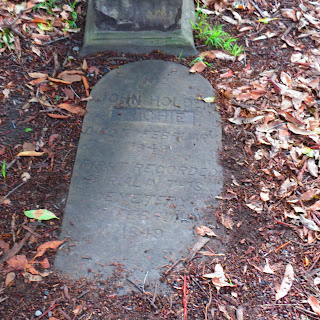
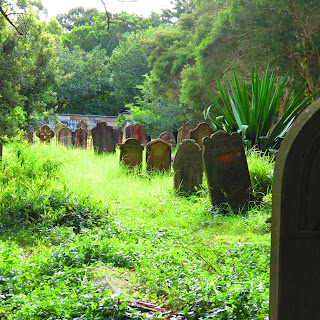
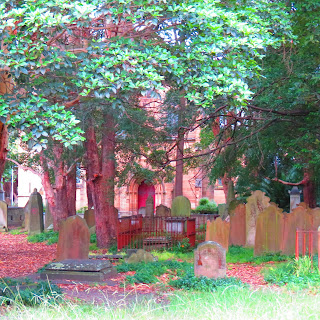
And is Buried At St John’s Cemetery - Parramatta
More of the Story
Since I first put this page up I've dug a lot deeper into Robert Campbell, his wharf and the stores, so here is the rest of the story, with the sources at the bottom.
Robert Campbell in masonic regalia, a portrait by Edmund Thomas dated 1859, after the merchant's death. Edmund Thomas, public domain, via Wikimedia Commons
From Greenock to Calcutta
The Australian Dictionary of Biography says Robert Campbell was born on 28 April 1769 at Greenock in Scotland. He was the youngest surviving son of the ten children of John Campbell, laird of Ashfield and the town clerk of Greenock, and his wife Agnes, née Paterson. After some business in Greenock that didn't pay, he went out to India at the age of 27 to join his elder brother John, a partner in the Calcutta agency house of Campbell Clarke & Co., which had been set up in 1790.
Robert was made a partner in January 1798, only a few months after he got there. In July 1799 the Clarkes pulled out and the firm became Campbell & Co.
Arriving in Sydney, 1798 to 1800
The firm already had its eye on New South Wales. In 1796 Campbell Clarke & Co. sent their first cargo to the colony in the Sydney Cove, which was wrecked off the Australian coast. In April 1798 Robert himself left in their ship the Hunter for another go at building up trade with Sydney.
He must have liked what he saw. The ADB says he went back to India in the Barwell in August 1798 and came back to Sydney with another cargo in the Hunter in February 1800. With the governor's permission he settled on land he had bought in 1798 at Dawes Point, where he had already started building warehouses and a private wharf. The heritage listing for Campbell's Stores says he bought the land from John Baughan.
He married Sophia Palmer in 1801. She was the sister of John Palmer, the colony's commissary. The ADB puts the wedding in November 1801, while the heritage listing says September. They had seven children: John, Robert, Charles, Sophia Ives, Sarah, George and Frederick.
The Wharf and Wharf House
The heritage listing tells it like this. By November 1801 some of Campbell's storehouses were finished, along with a stone wall and a small wharf at right angles to the main warehouse. It was claimed to be the first privately owned wharf in Australia. In 1802 Robert and Sophia moved into Wharf House, though it was still unfinished. Vaults to store goods were dug out of the sandstone rock face underneath it.
John Lewin painted the place in 1808. According to the heritage listing, his watercolour shows the jetty run out from the vaults, a two-storey storehouse and an access road to Wharf House behind the jetty. The ADB adds that by 1810 a second wharf had gone in, and behind it, in its own garden, stood Campbell's house, "finished in an elegant manner with colonades & two fronts". The Dictionary of Sydney calls the house an Indian-style bungalow.
In 1814 Macquarie made it official. On 29 June that year Campbell was granted 3 acres 3 roods running down to Sydney Cove, which the heritage listing quotes as given "in consequence of his having erected thereon several large and expensive Buildings".
Breaking the Officers' Grip on Trade
To see why Campbell mattered, you have to remember how things were run back then. The ADB says his regular shipments "noticeably ameliorated the previous pressures of scarcity and monopoly". By 1804 Campbell & Co. had £50,000 worth of goods in its Sydney warehouses. The firm also took government contracts to bring livestock from India for Sydney and the Derwent, and Governor King reckoned they had made £16,000 from the government alone between 1800 and 1804.
King did grumble about Campbell trying to bring in too much spirits. All the same, the ADB says his name "became synonymous with fair trading, reduced prices and generous credit". In 1804, 200 settlers signed a memorial to him that ended:
"But for you, we had still been a prey to the Mercenary unsparing Hand of Avarice and Extortion." (Memorial from settlers to Robert Campbell, 1804, quoted in the ADB)
The "father of Australian commerce" tag gets hung on him a lot. The ADB doesn't use those words. What it says is that by the mid-1820s he was "already recognized as 'father of the mercantile community'". He was asked to let his name go first on the list of members of the new Chamber of Commerce, and he sat on its first committee.
Not every voyage came off. Wikipedia notes that in 1802 the Campbell & Co. brig Fly, "laden with piece and other valuable goods", was lost at sea coming back from Calcutta.
Sydney Cove from Fort Macquarie in 1859, looking west across the water to Campbell's wharf on the left and Dawes Battery on the right. State Library of New South Wales (PXB 698), no known copyright restrictions, via Wikimedia Commons
The Lady Barlow and the East India Company, 1805
This is the bit I find the most interesting. The ADB says Campbell more or less started the colonial sealing industry, because he needed something to send back in his empty ships. In January 1805 he and his family sailed for England in his ship the Lady Barlow, carrying colony-caught oil and fur skins for the English market. Strictly speaking, that broke the rights of the East India Company, which held the monopoly on British trade east of the Cape of Good Hope. Campbell's view was that it was time New South Wales got a fairer go in trade.
According to Wikipedia's article on the ship, the Lady Barlow reached Portsmouth on 7 July 1805 carrying 264 tons of fine elephant seal oil, 13,750 seal skins and 3,673 solid feet of oak or beef wood. Customs seized her when she reached London.
The two sources tell the ending differently. The ADB says the matter "was resolved with no great commercial loss to Campbell", and that with Sir Joseph Banks behind him he even got permission for a second colonial cargo to follow. Wikipedia says Campbell won his court case but could only land the cargo in London for re-shipping to Europe. By the time customs let it go, four months had passed, seal skin prices had dropped, and he lost £7,000 on the voyage.
The ADB adds that a bill was then drawn up to treat New South Wales as a proper colony and give it some useful trade concessions. The Grenville ministry fell in March 1807 before it could be passed. Campbell came home in his ship the Albion in August 1806.
Bligh, the Rum Rebellion and Campbell's Side
When William Bligh arrived as governor, he was told Campbell was "the only private pillar which supported the honest people of the Colony". Bligh, for his part, "always found … just and humane and a gentleman like merchant". Both quotes come from the ADB.
In May 1807 Bligh made Campbell a magistrate and Naval Officer, the man in charge of shipping and customs at the port. In June he became colonial treasurer in all but name, when the police and orphan funds were put in his hands. As Naval Officer, it fell to Campbell to take official action to recover the stills John Macarthur had brought in illegally. That put him right in the middle of the trouble that came to a head in January 1808.
When Bligh was deposed, Campbell had been dining at Government House. He was put under military arrest and then sacked as treasurer, Naval Officer and collector of taxes. The rebels claimed he was trying to set up a trading monopoly with Bligh, and they kept a costly, meddling watch over Campbell & Co. In June 1809 he was tried for refusing to act as coroner. He said he didn't recognise the court, and it fined him £50 anyway. His business partner and his brother-in-law, Commissary John Palmer, were both gaoled by the rebels. The Dictionary of Sydney names the partner as Charles Hook, who backed Bligh against the officers' trading ring.
Campbell said later that his stand cost him so much business that he never fully got it back.
Exile, Ruin and the Long Climb Back
In January 1810 Macquarie arrived and put Campbell back into his old offices, one of the first to be reinstated. Two months later he resigned as Naval Officer because the duties got in the way of his business, and Macquarie thanked him for his "Zeal, Fidelity & Attention".
On 12 May 1810 he sailed, unwillingly, for England in the Hindostan to give evidence for Bligh at Lieutenant-Colonel George Johnston's trial. He also appeared before the select committee on transportation in April 1812. While he was away, his London agent failed early in 1811, owing him more than £30,000.
He got back to Sydney in the Sydney Packet on 18 March 1815 and found his house, goods and land mortgaged. Campbell & Co. was wound up. For the next few years, the ADB says, the family lived frugally on what the farms produced and on rent from the warehouses and land, while he worked through five years of tangled business to pay what he owed. The heritage listing adds that many of his ships had been wrecked while he was away, and that in January 1822 he was formally compensated by the government for the loss of his ships between 1812 and 1815.
There was an earlier loss too. In 1806, after the Hawkesbury floods, Governor King chartered Campbell's ship the Sydney to fetch rice or wheat from Calcutta, and she was wrecked off New Guinea. Wikipedia says he was given £3,000, 4,000 acres and 710 sheep in compensation. The ADB says there was a long row about how much money he had actually been awarded, £8,000 as Campbell claimed or £4,000. In 1840 he was forced by legal proceedings to repay Treasury bills that had been paid to him twice by mistake.
From April 1820 he started over with an agency and commission business. By 1825 he owned ships again. The ADB says that in 1826 Campbell's wharf "became a private one for the first time", and in 1827 he took his two eldest sons into partnership in the re-established Campbell & Co.
The Banks
In November 1816 Campbell was at the informal meeting of magistrates and leading merchants that led to the Bank of New South Wales, and he was one of its original shareholders. He was also secretary of the Savings Bank set up in July 1819 to encourage the "Industrious Poor of the Colony". The Dictionary of Sydney says he ran the Sydney branch from his offices in lower George Street at Circular Quay, and people called it "Campbell's Bank".
The Legislative Council
On 17 July 1825 Campbell was appointed one of three private members of the new Legislative Council, and he stayed on until it was replaced in 1843. The ADB says he was the only private member to oppose any part of Governor Darling's Stamp Act. In 1830 he was one of six who petitioned the King to end transportation to New South Wales and bring in free settlers instead. He also fought against trial by jury, which made him unpopular with Governor Bourke.
Canterbury and Duntroon
Campbell was a big landholder as well as a merchant. In May 1803 he bought William Cox's 900-acre Canterbury estate. According to the ADB, he bought it mainly to hold the imported cattle the government had turned down, and by 1806 that had made him the colony's largest private holder of cattle. Canterbury stayed in the family. His daughter Sarah married Arthur Jeffreys, who is named in Campbell's will. Canterbury House was built for Arthur and Sarah Jeffreys (see my Canterbury House post).
In January 1825, as part of the compensation for the Sydney, he took 4,000 acres on the newly found Limestone Plains, where Canberra stands today, and stocked it with sheep that year. Wikipedia says James Ainslie set up the station, called Pialligo, for him. Through grants and purchases in the 1820s and 1830s, Campbell ended up owning the best land on the Limestone Plains. The ADB says he didn't visit it before 1830, but he lived there more and more after Sophia died in 1833. He named it Duntroon after an ancestral home of his clan. Wikipedia says he renamed it in 1846, after Duntrune Castle in Argyll.
In 1910, once the Australian Capital Territory had been created, the government bought Duntroon for the Royal Military College. Wikipedia says the original homestead, though extended since, is now the college's officers' mess.
Duntroon homestead on the Limestone Plains, photographed in 1870. Public domain, via Wikimedia Commons
St John's Church and His Church Work
Campbell was brought up a Presbyterian and supported Scots Church in Sydney for years. Later he leaned more and more towards the Church of England and gave it generous endowments. The ADB says he paid at least half the cost of St John's Church at Canberra. In 1837 he gave land and money for St Peter's at Cook's River, and he also gave to churches at South Bargo, Yass and St Philip's in Sydney.
Wikipedia's St John's article says Campbell chose the site in 1840 with the support of Bishop William Grant Broughton. The foundation stone was laid on 11 May 1841 and the church was consecrated on 12 March 1845. It's the oldest church in the ACT. In March 1843, the ADB says, Broughton gave Campbell his first Communion "in a church of his own building".
St John's Church of England, Canberra, on a postcard of about 1935. Campbell picked the site in 1840. State Government Photographer, CC0, via Wikimedia Commons
His Death in 1846
Robert Campbell died at Duntroon on 15 April 1846, aged 76. The ADB says he was buried at St John's, Parramatta, and the Dictionary of Sydney gives the burial date as 25 April 1846. In his will of 11 October 1845, quoted in the heritage listing, he divided his property into six parts, for his sons John, Robert, Charles and George, his daughter Sophia Ives Campbell, and Arthur Jeffreys, Sarah's husband. The suburb of Campbell in Canberra is named after him.
After Robert: The Sons and the Wharf
The heritage listing picks up the wharf story from here. The waterfront warehouses Robert built were all finished by 1825, and these are not the Campbell's Stores you see today. By about 1830 his son John had pretty well taken over the business, and he officially became head of the firm in 1836, at a time when it was in money trouble. In May 1836 Campbell's Wharf was even advertised for sale, before an injunction stopped it.
In 1841 Robert applied to enlarge the wharf so ships could unload at low tide. In 1843, just after one of the worst depressions in the colony's early years, he mortgaged it to the Australian Trust Company for £10,000. That mortgage kept getting renewed for decades, and the family didn't win full possession back until 1877, after going to the Supreme Court.
Building Campbell's Stores
Here's where the dates matter. The Dictionary of Sydney gives the stores' construction as 1839–1861. The heritage listing, which goes through the rate books year by year, tells it differently:
- Between August 1851 and September 1852 the rate book shows J. Campbell had added five stone stores with slate roofs. These are today's Bays 6 to 10.
- Three more bays, now Bays 3 to 5, were finished around 1858.
- The last three were finished by 1860. The 1861 rate book shows eleven bays in all, each of two storeys with two rooms.
A photo in the M. F. Moresby album, dated somewhere between 1856 and 1860, shows ten bays up and the eleventh still waiting for its roof. The heritage listing says the first five bays show the economy recovering after the 1840s depression, and the next six show the boom that followed the gold rushes.
Robert's son Robert junior died at Duntroon on 30 March 1859, right as the work was finishing, which left John running the firm.
Campbell's Wharf, a watercolour catalogued on Commons as Conrad Martens, 1857. Conrad Martens, public domain, via Wikimedia Commons
Campbell's Wharf, Sydney, 1859, a stereoscopic glass transparency by Edwin Dalton. Edwin Dalton, State Library of New South Wales (ON 235), public domain, via Wikimedia Commons
Who used the stores
All sorts of merchants rented space there. In 1861 the Sands Directory lists Campbell & Co., the Colonial Sugar Refining Co. stores, Peruvian guano stores, George Lloyd & Co., Robey & Co. and a customs house officer, among others. In November 1875 the wharf was described as having 22 very strong stone stores which, together with two sheds on the wharf, could hold 20,000 tons.
Here's a detail I like. The heritage listing says that as late as 1875 you could still see, behind the stores, part of the cemetery that had been on that land in the 1790s, before Campbell took it over. There was a tombstone of a marine, John Jones, who died in 1792.
Looking south from Dawes Point past the ships at Campbell's wharf to Circular Quay, about 1857. State Library of New South Wales (PXB 698), no known copyright restrictions, via Wikimedia Commons
The other way round: looking east across a ship at Campbell's Wharf towards Government House in the distance. State Library of New South Wales (PXB 698), no known copyright restrictions, via Wikimedia Commons
The ASN Company and the Third Storey
In 1876 the Australasian Steam Navigation Company bought Campbell's Wharf. The company secretary said it cost £100,000. They needed a bigger, more central wharf than their old one in Sussex Street. They rebuilt it with a 320-foot wharf and two long jetties. In 1878 the stores became "The Metcalfe Bond and Free Stores", and the "Metcalfe Stores" name stuck after that. In 1884 the company let a £30,000 contract for new offices and four stores on the site of Campbell's old house.
The ASN Co. didn't knock down Campbell's Stores. It added to them. H. P. Dove's insurance plans of about 1882 show a two-storey building of eleven bays, and the 1887 revision shows three floors. The heritage listing dates the top floor to sometime between 1882 and 1887, and elsewhere says 1883 or the mid-1880s. The new level was in dry-pressed brick laid in English bond, which is why the stores are sandstone to the top of the second level and brick above. So the "c.1890" date you sometimes see for the third storey doesn't quite match the heritage listing.
Look at the join: sandstone up to the top of the second level, brick above. That top floor came in the 1880s. sv1ambo, CC BY 2.0, via Wikimedia Commons
The company overreached itself. In 1887 it merged into the Australasian United Steam Navigation Company, and Campbell's Wharf was no longer needed. On 28 October 1887 it was sold to the Crown for £275,000.
Government Hands: Harbour Trust and Maritime Services Board
The government pulled down most of the other buildings for a Navigation Board slipway but kept the Metcalfe Bond stores. Upward & Co. leased them until at least 1901. A branch of the Government Printing Office sat at the northern end. That northern bay, Bay 11, is built differently from the others, in brick. The heritage listing dates it to the 1890s in one place, and to about 1895 or 1915 in another.
In 1901, the year of the plague scares, the Sydney Harbour Trust took over the stores. The building of Hickson Road around 1915 meant changes to the back of Bay 10 and new doors on the second level. In 1932 a fire broke out in the northern addition, where part of the Government Printing Office and the offices of Metcalfe and Upward were. In 1958 the southernmost bay was pulled down to make way for the Overseas Passenger Terminal, which left ten of the eleven older bays.
The heritage listing says the stores were used as bond and free stores for over 120 years, from 1851 to about 1970. Each owner in turn, including the Sydney Harbour Trust and its successor the Maritime Services Board, leased parts of them to merchant companies.
The 1970s: Green Bans and Restaurants
Once the Overseas Passenger Terminal went up, commercial shipping left Sydney Cove for Darling Harbour and Pyrmont. In the 1970s the Maritime Services Board handed the stores to the Sydney Cove Redevelopment Authority. The heritage listing is clear on one point: "The existence of Campbell's Stores is indicative of the success of the 'green bans' in the 1970s which prevented the wholesale redevelopment of The Rocks."
The restoration started in 1974–75 and finished in 1978–79. It was one of the first big restoration projects in Sydney. Damaged sandstone was replaced and a service tunnel was run along the whole western side, and the stores were turned over to restaurants. The heritage listing mentions some of them by name: the Waterfront Restaurant with its "historic" maritime fit-out, the Imperial Peking, the Italian Village and Wolfies. In 1998 the Sydney Harbour Foreshore Authority took over the area.
Heritage Listing
Campbell's Stores went on the NSW State Heritage Register on 10 May 2002. The listing calls them "a superb example of mid-nineteenth century warehouse buildings, now rare in Sydney", and says they are the only warehouses of their type left on the foreshores of Sydney Cove. It also points to the hydraulic hoists and winches inside. The big winch wheels on Level 3 carry the words "Hudson Brothers Limited Clyde".
The back of the stores from Hickson Road, with the Metcalfe Bond Stores, 2024. Ymblanter, CC BY-SA 4.0, via Wikimedia Commons
The 2015–2018 Makeover and Today
The lease is held by Tallawoladah Pty Ltd, a company set up by the existing restaurant tenants, Dockside and the Imperial Peking group. Wikipedia says they spent $32 million on a refurbishment from 2015 to 2018. The 1980s shade canopies and ship masts at the front came down, the slate roof was replaced, and a new stand-alone "Bay 12" was built at the northern end. Restaurants started reopening in the building from autumn 2019.
Campbell's Stores at The Rocks in 2023. Chris Olszewski, CC BY-SA 4.0, via Wikimedia Commons
The heritage listing describes the site as running north to the Park Hyatt hotel. The Dictionary of Sydney describes Campbell's Cove as the small cove on the western side of Sydney Cove between the Overseas Passenger Terminal and Dawes Point. Next time you walk along there, look for the old cat-head beams and loading doors on the stores. They're still there from when goods were hauled up by hand.
The ASN Co building and Campbell's Stores, seen from the Park Hyatt in 2024. Ymblanter, CC BY-SA 4.0, via Wikimedia Commons
Campbell's Cove at night, Christmas 2022. Dicklyon, CC BY-SA 4.0, via Wikimedia Commons
Timeline
- 28 April 1769 – Robert Campbell born at Greenock, Scotland.
- 1790 – Campbell Clarke & Co. set up in Calcutta.
- 1796 – The firm's first cargo for NSW, in the Sydney Cove, is wrecked.
- January 1798 – Robert becomes a partner. April 1798 – He sails for Sydney in the Hunter and buys land at Dawes Point.
- July 1799 – The firm becomes Campbell & Co.
- February 1800 – He returns to Sydney to settle.
- 1801 – Marries Sophia Palmer. By November, storehouses and a small wharf are built, claimed by the heritage listing as the first private wharf in Australia.
- 1802 – Moves into Wharf House.
- May 1803 – Buys the Canterbury estate.
- 1804 – 200 settlers sign a memorial thanking him.
- January 1805 – Sails to England in the Lady Barlow, challenging the East India Company monopoly.
- August 1806 – Returns in the Albion.
- May–June 1807 – Becomes magistrate, Naval Officer and effectively treasurer.
- January 1808 – Bligh deposed. Campbell arrested and sacked.
- June 1809 – Fined £50 for refusing to act as coroner.
- January 1810 – Reinstated by Macquarie. 12 May 1810 – Sails for England as a witness for Bligh.
- 29 June 1814 – Granted the 3 acres 3 roods at the wharf.
- 18 March 1815 – Returns to find his business ruined.
- November 1816 – Original shareholder in the Bank of New South Wales.
- July 1819 – Secretary of the Savings Bank ("Campbell's Bank").
- 1825 – Takes up land on the Limestone Plains. Appointed to the Legislative Council on 17 July.
- 1833 – Sophia dies.
- 1836 – John Campbell officially heads the firm.
- 1841 – St John's, Canberra, foundation stone laid. Consecrated 12 March 1845.
- 1843 – Wharf mortgaged for £10,000.
- 15 April 1846 – Robert Campbell dies at Duntroon.
- 1851–52 – First five bays of Campbell's Stores built.
- c.1858–1861 – Six more bays added, eleven in all.
- 1876 – ASN Co. buys Campbell's Wharf.
- 1878 – Stores become the Metcalfe Bond and Free Stores.
- 1882–1887 – Third storey added by the ASN Co.
- 28 October 1887 – Wharf sold to the Crown.
- 1901 – Sydney Harbour Trust takes over.
- 1910 – Duntroon bought for the Royal Military College.
- 1932 – Fire in the northern addition.
- 1958 – Southernmost bay demolished for the Overseas Passenger Terminal.
- 1970s – Maritime Services Board hands the stores to the Sydney Cove Redevelopment Authority. Restored 1974–79 and turned into restaurants.
- 1998 – Sydney Harbour Foreshore Authority takes control.
- 10 May 2002 – Listed on the NSW State Heritage Register.
- 2015–2018 – $32 million refurbishment. Restaurants reopen from 2019.
Where the Sources Disagree
- When the stores were built. The Dictionary of Sydney says 1839–1861. The heritage listing, working from the rate books, says the first five bays went up in 1851–52 and the rest by 1860–61, and that the 1820s waterfront stores were a separate, earlier building.
- The third storey. The heritage listing gives 1882–1887, 1883 and the mid-1880s in different places. I haven't found a source backing the c.1890 date.
- Bay 11. The heritage listing dates it to the 1890s in one place and to about 1895 or 1915 in another.
- The first private wharf. The heritage listing says Campbell's 1801 wharf was claimed to be the first privately owned wharf in Australia. The ADB says that in 1826 "Campbell's wharf became a private one for the first time".
- His wedding. The ADB says November 1801. The heritage listing says September 1801.
- The Lady Barlow. The ADB says the seizure was sorted out "with no great commercial loss". Wikipedia says he lost £7,000 on the voyage.
- "Father of Australian commerce". The ADB's wording is "father of the mercantile community".
- Naming Duntroon. Wikipedia says he renamed the property in 1846. The ADB gives no date for the name.
- The Sydney compensation. Wikipedia says £3,000 plus land and sheep. The ADB describes a dispute over whether he had been awarded £8,000 or £4,000.
My Earlier Posts
Sources
- Australian Dictionary of Biography, "Campbell, Robert (1769–1846)": adb.anu.edu.au/biography/campbell-robert-1876
- Heritage NSW, State Heritage Register, "Campbell's Stores" (SHR, listed 10 May 2002): apps.environment.nsw.gov.au … ID=5053151
- Wikipedia, "Campbell's Stores" (drawn from the SHR listing): en.wikipedia.org/wiki/Campbell's_Stores
- Wikipedia, "Robert Campbell (Australian politician, born 1769)": en.wikipedia.org
- Wikipedia, "Lady Barlow (1803 ship)": en.wikipedia.org
- Wikipedia, "St John the Baptist Church, Reid": en.wikipedia.org
- Dictionary of Sydney, "Campbell, Robert" (includes Campbell's Cove, NSW Savings Bank and Charles Hook): dictionaryofsydney.org/person/campbell_robert
- Dictionary of Sydney, "Campbell's Stores": dictionaryofsydney.org/building/campbells_stores
- Parliament of NSW, former members, "Mr Robert (1) Campbell (1769–1846)": parliament.nsw.gov.au
- Pictures: Wikimedia Commons, State Library of New South Wales (PXB 698 and ON 235), with credits under each image.