
Customs House

Built - 1843 - 1845
Architect - Mortimer Lewis - Colonial Architect
Additional Architects -
1887 - James Barnet - Colonial Architect
1896 - Walter Liberty Vernon - Government Architect
1915 - George Oakeshott
Sydney's Customs House At Circular Quay Occupies A Unique Symbolic Place On The Site Of The First Fleet Landing In 1788. Today Its Location Is A Physical Reminder Of The Importance Of Circular Quay As The Original Maritime Centre Of The Colony, And The Colony's reliance On Trade. Its Renewal Over The Decades Also Embodies The Work Of Three Government Architects
The Customs Service Was Responsible For All Imports And Exports, Excise On Local Goods, Immigration Control, And Control Of Narcotic Substances And Morally Corrupt Goods (Such As Books And Films)
By 1844, With Sydney's Maritime Trade Booming, The Existing Customs Building In The Rocks Was Packed To The Rafters. This Prompted Governor Sir George Gipps To Commission A New 2 Storey Georgian Building, Designed By Colonial Architect Mortimer Lewis, With A Facade That Included 13 Large Windows Offering Commanding Views of Shipping Activity In Sydney Cove.
In 1887, The Building Was Partly Dismantled And Expanded To Three Levels By Colonial Architect James Barnet. It was Further Expanded In 1896 By Government Architect Walter Liberty Vernon, Who Staged Alterations Adding Two New Levels And A Rear Wing In The Courtyard. In 1915, Architect George Oakeshott Added A New Framed Internal Structure That Opened Up The Ground Floor With An Atrium.
Despite These Later Additions During World War 1, Significant Parts Of The Original Building Remain Today, Having Been In Continuous Use For 145 Years As Headquarters For The Customs Service Right Up Until 1990. in 2003 The Historic Building Became The Venue For The City Of Sydney Library, Along With restaurants, Bars And Offices.
There Is A Scale Model Of Sydney's CBD, Under A Glass Floor In The Ground Floor Foyer. At A Scale Of 1:500, It Covers Around 10 Square Kilometres Of The City And Includes More Than 1000 Detailed Buildings, As Well As 5000 Trees, And People, And Cars And Boats


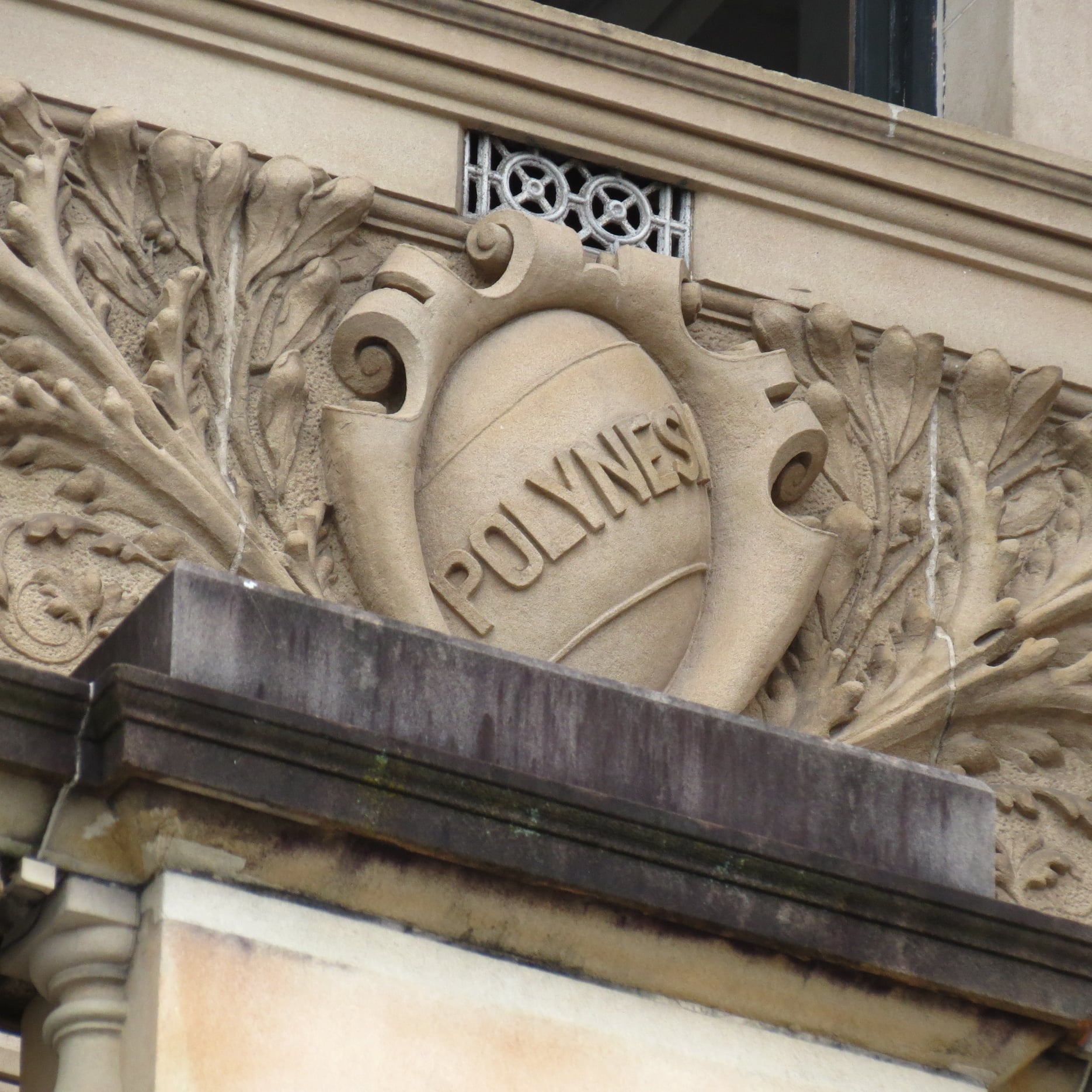


The 6 Storey Building Evolved through Several Phases Of Expansion Between 1845 & 1917.
On Loftus Street Alongside Customs House, A Union Jack Flies Permanently On The Site Where The British Flag Was First Raised On January 26th 1788. For Some Australians, This Is The Site Of The Invasion.
Customs House in Sydney, Australia, is an iconic heritage building that has played a significant role in the city's history. It has served various functions over the years and stands as a symbol of maritime trade, cultural engagement, and architectural beauty. Here's a comprehensive overview of its history:
Early History:
- The original Customs House on the site was constructed in the early 19th century. It served as a customs and maritime office to regulate trade and collect taxes on imports and exports.
Construction of the Current Building:
- The present-day Customs House building was constructed between 1843 and 1845, designed by colonial architect Mortimer Lewis as a simple two-storey building in the Georgian / Greek Revival style.
- Its long front had thirteen large windows looking out over the shipping in Sydney Cove; the portico at the front was added later by James Barnet in the 1880s.
Function as Customs Office:
- The new Customs House continued to serve as a hub for customs and maritime operations, facilitating trade and overseeing shipping activities in Sydney Harbour.
Expansions and Additions:
- Over the years, Customs House underwent expansions and additions to accommodate its growing functions and staff.
- In the late 19th century, additional wings were added to the building to accommodate increased maritime activity.
Cultural Role and Transformation:
- In the 20th century, as shipping and customs operations moved to other locations, Customs House underwent a transformation into a cultural and public space.
- Customs moved out in 1990, and in 1996–97 the building was renovated and repurposed as a multi-purpose cultural and exhibition venue.
City of Sydney Library:
- Customs House houses the City of Sydney Library, offering a range of books, resources, and services to the public.
- The library features modern amenities while preserving the building's historical features.
Civic and Cultural Events:
- Customs House is also used as a venue for various civic and cultural events, exhibitions, and lectures.
Heritage Status:
- Customs House is recognized as a heritage-listed building, reflecting its historical, architectural, and cultural significance.
Customs House stands as a reminder of Sydney's maritime heritage and its transition from a functional government building to a dynamic cultural center. Its architectural beauty, versatile functions, and central location have made it a focal point of Sydney's urban landscape and cultural life
More On Customs House – Filling In The Story
I've walked past Customs House more times than I can count, usually on the way to a ferry, so I thought it was time to dig a bit deeper. Here's what I found.
Gadigal Country And Warrane
Long before any customs men turned up, this was Gadigal country. The cove the British called Sydney Cove is Warrane (Dharug), and Wikipedia's Customs House article notes that Eora people are said to have watched the First Fleet land here in 1788. The NSW State Heritage Register listing goes further and records the site's significance "as the initial point of European invasion of the lands of Aboriginal people". The building also sits on reclaimed land straddling the old high-water mark, so the shoreline the Gadigal knew ran right through where the foyer is now (Dictionary of Sydney).
The First Customs Men
According to Laila Ellmoos in the Dictionary of Sydney, customs duties were first collected in NSW in 1799, first by the Registrar of Imports and Exports and then by the Naval Officer until 1827. That year customs came under the London Board of Commissioners of Customs, and the NSW Customs Regulation Act of 1830 paved the way for a proper Customs House. From 1830 the customs offices were squeezed into the Argyle Stores in The Rocks. Wikipedia, on the other hand, says the first customs house was built in 1800, at or near the landing and flag-raising spot.
Colonel Gibbes, Governor Gipps And The 1845 Building
The driving force was Colonel John George Nathaniel Gibbes, Collector of Customs for a record 25 years (1834–1859). He talked Governor Sir George Gipps into building, and the job doubled as unemployment relief for stonemasons and labourers during the 1840s depression. Gibbes lived across the water at Wotonga (today's Admiralty House) and could watch the work from his verandah (Wikipedia). Mortimer Lewis designed a two-storey building with thirteen big windows looking over the cove; Wikipedia calls it Georgian, the Dictionary of Sydney calls it a simple Greek Revival building. It opened in 1845.
It wasn't a comfy posting. Staff complained bitterly that it was cold and damp because it sat on reclaimed land, repair bills climbed through the 1860s and 1870s, and by the early 1880s it was falling apart and bursting at the seams (Dictionary of Sydney). Bonded goods went into the Queen's Warehouse in the south-east corner of the grounds, with stables and staff quarters out the back.
.jpg)
James Barnet Rebuilds It
Colonial Architect James Barnet took it on in the 1880s. The NSW Heritage Register puts the work at 1885–1887: the old building was partly pulled down and rebuilt to three storeys with side wings, making a U-shape. Barnet kept the central wing, added east and west wings, lifted it a level and put a portico on the front. The Dictionary of Sydney reckons it was in effect a reconstruction, with only the Long Room surviving from Lewis's building. Wikipedia also mentions two new wings built 1883–1889 for the Shipping Office and Marine Board.
.jpg)
Vernon, Federation And Oakeshott
Government Architect Walter Liberty Vernon added two floors and a rear courtyard wing in two stages between 1896 and 1903, turning the plan into an E-shape, partly to house the Land and Income Tax Office. With Federation in 1901, customs became a Commonwealth job and the building became the NSW headquarters of the new Department of Trade and Customs. Then in 1915–17 George Oakeshott replaced everything inside the U with a steel frame, opened up the ground floor around a light well, and added a sixth storey for the caretaker (Heritage Register via Wikipedia).
.jpg)
.jpg)


Customs Moves Out And The Library Moves In
Customs did its last day's work here on 15 June 1990. The City of Sydney took it on (leased in 1990 according to the Dictionary of Sydney; ownership transferred in 1994 according to Wikipedia). A conservation and refurbishment project opened in June 1997, more work in 1999 made it a "tourism gateway" for the Olympics, and Customs House Square was laid out out the front by closing part of Alfred Street. The main City of Sydney Library moved here from Town Hall after a 2003 refit.

The City Under Your Feet
The best bit for me is the model. Wikipedia says it's 4.2 by 9.5 metres, weighs a tonne and was built by Modelcraft in 1998, installed during the 1999 refit and put back under the glass floor in 2003. Kids love it and so do I – you can usually find your own office.

The Flagpole In Loftus Street
I checked my earlier line about the Union Jack. The flagpole on its sandstone plinth in Loftus Street says it marks "the location at which the first ceremony of saluting the flag by Captain Arthur Phillip R.N. and his company took place to mark the foundation of Australia on 26th January 1788". The plaque was unveiled by Governor Sir James Rowland on 26 January 1988 for the Bicentenary (Monument Australia; SMH, 14 July 2022). A 1964 SMH clipping in the City of Sydney Archives put the first flag "50 ft south of" Customs House's north-western corner. The flag flown is a replica of the 1788 Union Flag, and the City keeps it up all year. But historians Michael Flynn and Gary Sturgess argued in a 2014 RAHS paper that the landing was on the west side of the cove, near the Bethel Steps in The Rocks, and the Fellowship of First Fleeters' Jon Fearon told the SMH the flagpole is "in the wrong place". So it's the traditional site, not a settled one.

Ghosts And Gossip
Wikipedia records that convict David O'Connor was hanged on the site in 1790, and the story goes his ghost still wanders Customs House offering people rum. I can't vouch for that one.
Timeline
- Before 1788 – Warrane, in Gadigal country
- 26 Jan 1788 – British flag raised at Sydney Cove; Loftus St is the traditional site
- 1790 – Convict David O'Connor hanged on the site (Wikipedia)
- 1799 – First customs duties collected in NSW
- 1800 – First customs house built, per Wikipedia
- 1830 – Customs Regulation Act; offices in the Argyle Stores, The Rocks
- 1834–1859 – Col. John Gibbes is Collector of Customs
- 1843/1844 – Building starts (sources differ)
- 1845 – Mortimer Lewis's Customs House opens
- 1885–1887 – James Barnet's rebuild to three storeys, U-plan
- 1896–1903 – W.L. Vernon adds two floors and rear wing
- 1901 – Customs goes federal
- 1915–1917 – George Oakeshott's steel frame, light well and sixth storey
- 1988 – Flagpole plaque unveiled for the Bicentenary
- 15 June 1990 – Customs leaves the building
- 1994 – Ownership to City of Sydney (Wikipedia)
- June 1997 – Restored building reopens
- 1998–1999 – City model built and installed
- 1999 – State Heritage Register listing (2 April)
- 2003 – City of Sydney Library moves in
- 2004 – Commonwealth Heritage List (22 June)
Where The Sources Disagree
- When building started: 1843 (Dictionary of Sydney, which I've followed above) or 1844 (Wikipedia).
- The first customs house: Wikipedia says one was built in 1800 near the landing site; the Dictionary of Sydney says the first dedicated offices were in the Argyle Stores from 1830.
- Style of Lewis's building: "Georgian" (Wikipedia/Heritage Register) versus "Greek Revival" (Dictionary of Sydney). Both agree it was a plain two-storey building; the portico came later with Barnet.
- When customs left: Wikipedia's intro says head office use ran until 1988, with customs relocating in 1990; the body says 15 June 1990. Either way, the cultural-venue refit came later, in 1996–97.
- The City's takeover: leased in 1990 (Dictionary of Sydney) or ownership transferred in 1994 (Wikipedia).
- Library opening: 2003 (Wikipedia, and my post) versus 2005 (Dictionary of Sydney).
- Barnet's dates: 1887 (my post, Wikipedia history), 1885–1887 (Heritage Register), wings 1883–1889 (Wikipedia).
- The flag site: Loftus Street (plaque, 1964 SMH clipping) versus Bethel Steps on the west side of the cove (Flynn & Sturgess 2014, via SMH 2022).
My Earlier Posts
- First Boat Built At Sydney Cove – Alfred St In Front Of Customs House
- The Government Wharf – Circular Quay
- Commissariat Stores – Circular Quay
- The Roads Obelisk – Macquarie Place
- Admiralty House – Kirribilli (Colonel Gibbes's Wotonga)
Sources
- Customs House, Sydney – Wikipedia (incl. NSW State Heritage Register entry 727, CC BY 4.0)
- Laila Ellmoos, "Customs House", Dictionary of Sydney, 2008
- Sydney Cove – Wikipedia
- First Ceremony of Saluting the Union Flag – Monument Australia
- "Why the City of Sydney pays for a British flag to fly near Circular Quay", SMH, 14 July 2022
- "Site of the first flag is now pinpointed", SMH 3 March 1964, City of Sydney Archives A-00273689
- Images: Wikimedia Commons, Category:Customs House, Sydney