
- Sydney Past & Present - - The City Of Sydney - - The Stories Of Its Growth -
________________________________________________________________________________________________________________________________________________________________________________________________________________________________________________________________________________________________________________
Chapter XVI.
The Sixties And Seventies—(Conclusion).
In the early sixties occurred the largest and most disastrous fire that had ever taken place in Sydney, and which resulted in the total destruction of St. Mary’s Cathedral. Says a newspaper of the day: “The intelligence of this deplorable catastrophe will cause a thrill of sorrow in the hearts of the Roman Catholic population throughout the country, and must excite feelings of the deepest regret in the minds of the community in general The cost of the building, it is thought, could not be less than £50,000; but from its hallowed associations and sacred memories it was of priceless value to thousands of Worshippers of the Roman Catholic communion.”

Besides the building itself, there appears to have been an immense amount of valuable property destroyed, not only in the shape of paintings in the church—one picture representing the death of St. Benedict was alone valued at £1000—but in the beautiful furniture of the Archbishop’s and other residences belonging to the high dignitaries of the cathedral. “Myriads of sparks ascended high into the air, and fell in showers in the direction of Woolloomooloo Bay, whither, for a considerable distances they were driven by the wind. From the top of the cathedral cloud, of yellow flame and smoke issued, which shed a lurid lustre on all around; and, at times, so bright was the glare, that the minutest objects in the remotest parts of Hyde Park, could be seen almost as distinctly as by daylight.”
As showing the magnitude of the illumination, it may be mentioned that Captain Hesselton, now residing in Balmain, but then in command of the steamer You Yangs, saw the reflection of the fire when off Port Hacking, and is of opinion that the glare must have been visible over twenty miles out at sea. A noteworthy incident of the fire was the fortunate escape from a horrible death of an old man named Anthony Brady. Brady was, it is said, 108 years of age, and stone blind. He slept under the sacristy, but was rescued just in time to save him perishing in the flames.
That the Roman Catholics were, if dismayed, still not disheartened by their losses can be shown in no better way than by the noble pile that now stands on the site of the destroyed church, of which Father Therry laid the foundation-stone in 1829.

Three years after the destruction of the Roman Catholic place of worship, the slow-moving church of England gathered in thousands to witness the consecration of St. Andrew’s Cathedral, of which, as far back as 1819, Governor Macquarie had laid the foundation-stone. But, and it is important that this should be remembered when the story of our city comes to be written more in detail, during the long time the project remained in abeyance, a change of site was for some reason or other decided upon, which, many years afterwards, necessitated a relaying of the stone.This ceremony fell to Sir Richard Bourke on May 6, 1837, on which date the old foundation stone was removed and placed in its present position. But, even then, not until January, 1856, was the grant from the Crown finally procured. Nor, stranger still, did the church authorities take it up until 1865. The structure seems to have made a little progress after the re-inception of the undertaking in 1837. But for years the building remained a mere unsightly shell, unroofed and devoid of any architectural beauty. But, at last, after all these tedious years, the end came, and assisted by a large body of bishops and clergy, the Metropolitan (the Right Rev. Dr. Frederick Barker), opened the building for the performance of Divine service. This was in December 1868, and it seems to have been a very solemn and impressive ceremony indeed, although, even then, the building was not nearly completed. But, as at the “sumptuous luncheon” which took place afterwards at the Masonic Hall, and which was attended by all the most eminent, both of the laity and the clergy in these colonies, the Earl of Belmore said: “It was now an edifice of noble proportions, and it had progressed at least so far as to be available for the worship of God. A great deal remains to be done to finish the exterior, but he had no doubt that ere another generation passed away the topmost stone would be laid.” A hope that we have seen happily fulfilled.

In these later sixties, and in the beginning of the seventies, we had the Duke of Edinburgh with us, and we made much use of him in laying foundation stones and opening public buildings before the unfortunate occurrence at Clontarf. Among other ceremonies of the kind in which H.R.H. took a prominent part was that of the inauguration of the long-deferred statue to Captain Cook. The papers of the day were, of course, full of the ceremony, which seems to have been attended by all in Sydney. In the cavity of the stone was placed a bottle containing copies of the “Sydney Morning Herald” and “Empire,” together with the cards of the officers of the Australian Patriotic Association. With these, was also a facsimile of Captain Cook’s handwriting, being a lithographed transcription of his log, containing the great navigator’s observations on the transit of Venus in 1769.

Referring to the occasion, a newspaper of the same date as the ceremony says:
“It is a curious fact that, although the landing place of Captain Cook in Botany Bay is not more than six or seven miles from Sydney, but very few persons have ever visited that secluded spot, or have even a definite idea where it is. This probably arises from the fact that it lies on the southern shores of Botany Bay; at the head of which great inlet from the ocean are two large rivers, terminating in a wild and almost impassable country.”
And, as we are aware, up till within a year or two, what was thus written over thirty years ago might have still stood good. But most people now know all about Kurnell, and the dedication of a public park there to the memory of the discoverer—even if they seldom visit it.
In these sixties and seventies, Sydney was progressing at such a rate that to keep in touch with a tithe of the buildings of importance, both public and private, that sprung up almost as if by magic, would reduce this chapter to a mere record of architectural dates and details; moreover, most of these improvements are well within the memory of thousands of citizens still among us. Nor did the social characteristics of our city apparently differ much from those of the present. It is most edifying and instructive, for instance, to note the fashion in which the story of our city Council was reproduced in one essential particular three generations ago. And the following description might have been written to-day. Indeed, during the existence of the Citizens’ Vigilance Committee, at the time of the plague, such reports were common enough:
“A butcher’s shop was visited in William-street last week by the Inspector of Nuisances and the Acting-Health Officer conjointly. The time was half an hour past noon, The back premises were found in a filthy condition. The dung-heap contained a quantity of hair, etc., and was alive with maggots. There were also a quantity of bones and meat in a state of putrefaction in the shed. The shed itself was filthy, and the premises generally dirty. The duty of the two officers was obviously to proceed, according to the law, against a person, who, by his uncleanliness, was perilling the lives of his fellow-citizens; and it was the duty of all aldermen, whose servants in the interests of the public these officers were, to support them in the execution of their duty.”

But, then, no more than nowadays, were things managed in that style. The butcher cleaned his premises, knowing that an information was sworn against him. Then, quite according to our best modern traditions, he got two aldermen to inspect his premises, and one of them to write to the magistrates at the Water Police Court, saying that he had found the place perfectly clean, while the other alderman attended at the court to depose to the same fact. And the testimony of the aldermen carried the day against the public officials. Mr. Dansey was the Health Officer of the period, and the newspaper calls upon him to do his duty in such instances without fear of aldermen who may prefer to “patronise stinks.” Of what effect the remonstrance was, so far as that particular City Council was concerned, as well as its immediate successors, may be judged from the plague revelations of 1900, and the accumulated masses of filth to which it was principally due.

In 1788, there were landed in Sydney some 200 marines; in 1790 the first detachment of soldiers arrived; and in 1870, Sydney saw the permanent departure of British soldiers from Australian territory. Although the crowd that witnessed their embarkation on the Silver Eagle was a large one, it watched the proceedings in silence, and with an entire absence of enthusiasm. The troops comprised only two companies of the 18th Line Regiment, and about 70 rank and file of the Royal Artillery, who had been hitherto stationed at Dawes Point. They boarded the Silver Eagle at Circular Quay, to the music of the band of the Naval Brigade, stationed in the Ordnance Yard. But though the crowd had increased to vast dimensions there was not the slightest demonstration. Perhaps the people felt that in some way the departure of these soldiers of the Queen typified an approaching severance from the mother country. And yet, of those silent, and perhaps doubtful, spectators, the majority must have lived to see native-born Australians in their thousands embarking to fight oversea for that same Queen.
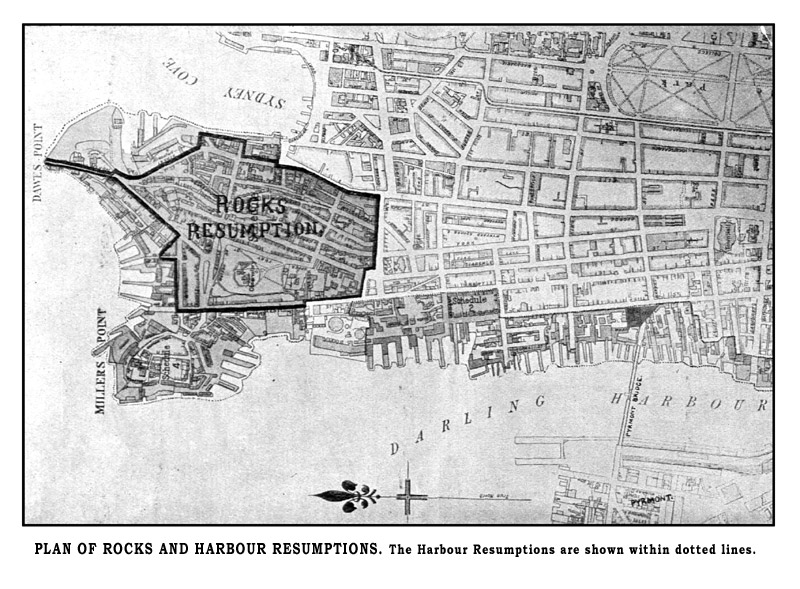
In these days—the early seventies—our present post office had been begun; and the Town Hall, of which Prince Alfred had laid the foundation-stone, was in course of erection; Circular Quay was a quay in reality, although not, of course, equalling its present condition, susceptible of much bettering as that is. Endless improvements were going on everywhere. Prince Alfred and Belmore Parks had been formed, and were being beautified. Moore Park was under process of reclamation. Hyde Park, so long known to us as the Racecourse, bare and uninviting, now possessed an avenue of well-grown trees half a mile long, and was dotted with plantations; the Domain had been landscape-gardened out of all knowledge. We had newspapers by the dozen, churches by the hundred, banks and other financial institutions by the score; and over 100,000 inhabitants.
Besides constant steam communication with England and the sister colonies, Sydney steamers traded regularly to California, New Caledonia, and the Fijis; whilst “sailers ” hailing out of the port dotted every sea from the North Pacific to the Indian Ocean.
At Miller’s point there was a yard capable of turning, out ships of 500 tons burden; and many steamers, both screw and paddle, Gunboats, and dredges, had been built there. The native timber used was, for beams, the iron-bark, blackbutt, and the flooded, blue, red, and spotted gums; and for fittings, the tea-tree, iron-bark, blackbutt, and bungally. And as showing the wonderful excellence of some of these colonial timbers, may be instanced the case of the Fanny Fisher, built on the Manning River in 1847, and by turns whaler, passenger-packet and mail-carrier; and now, after her fifty-three years of service, still afloat as a collier, and in better preservation than many a comparatively new boat. She should be preserved intact when her time comes, and the surveyors shake their heads over her, as a specimen not only of what Australian hardwood is capable of, but as the oldest Australian-built vessel.

As to education in these years, it flourished mightily, and spread all over the colony, in the shape of 807 schools and 600,000 pupils with 1093 teachers—an eloquent commentary on the success of the public school system controlled by the Council of Education. Writing of the Sydney University, a visitor said:
“The glory of Sydney, in the way of education, is its University, and certainly a great deal of spirit has been shown by the colony in the creation of the institution and in the erection of the building. As regards the building, I think no one will dispute the assertion when I say that the college hall—or public room, for it is put to none of the comfortable festive uses for which college halls have been built at our universities—is the finest chamber in the colonies. If I were to say that no college either at Oxford or Cambridge possesses so fine a one, I might possibly be contradicted.”
In these days, however, from a financial point of view, the University was not a success. The people seemed satisfied with a primary education for their children, and did not yearn after a university one. Thus, in 1870, the total cost of the establishment, consisting chiefly of professional salaries, was £5938, of which £5000 was paid out of the taxes of the colony. There were 41 scholars, paying a little over £22 per annum each. As for the resident pupils at the affiliated colleges, there was one, and only one, at St. John’s, and but two or three at St. Paul’s. With as yet a very sparse population, we went in for such a scholastic luxury rather too soon. All young communities are apt to do the same, although not necessarily in the shape of a University. To quote Anthony Trollope: “There is no institution in the colonies which excites and deserves the sympathies of an English traveller more completely than does the Sydney University”—this, of course, applying to the time in which he wrote.
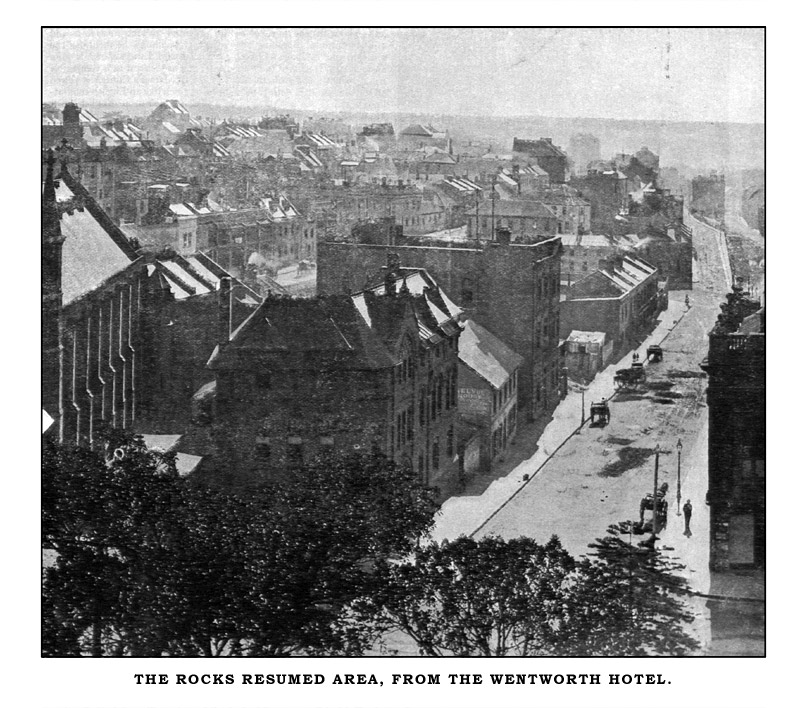
But of all our educational establishments, the celebrated novelist appears to have been most impressed with the Fort-street school, where for his edification some of the pupils were “put through their facings”—
“And certainly one little girl whom I questioned myself must have understood what she was saying (Anthony had just been astounded by a small boy’s feat in mental arithmetic, and jokingly professes a doubt as to whether there might not be collusion with the teacher). A passage in Shakespeare had been read, in which the word ‘strategy’ is used in its secondary, and not in its technical, sense. I asked the meaning of the word, and the little girl said that strategy was the art of military manoeuvering. She was a very nice little girl, and I hope she may live to be the wife of the first Commander-in-Chief of the forces of New South Wales.” In which case, by the way, the “nice little girl” would have had to marry the Right Hon. Sir Augustus William Frederick Spencer Loftus, PC:, G.C.B., who was the first to assume the title. Let us hope, that Trollope’s little girl is still flourishing and happy, although probably in a less exalted position. But to return: “The girls,” says he, “in some of these public schools are more wonderful even than the boys. They read better, and seem to have a clearer perception of things in general. I remember at such an exhibition in New York, hearing a roomful of girls questioned by the mistress. She asked why the Romans ran away with the Sabine matrons. One girl suggested that it was because the Sabine matrons were pretty; but she was soon taken down by a clearer-headed maiden, who told us that it was done for the sake of the population. The young girls at Sydney were perhaps not quite so far advanced as this; but, nevertheless, their condition amazed me. Putting aside all joking, I profess that the excellence of the teaching in the Fort-street school, at Sydney, was very high.”
Could our good-natured visitor leave his appointed place and return to us once more, and inspect the old school, he would probably be more astonished than ever at the advance that has been made there, both in the number of pupils, and in the quality of the teaching, during his absence.

It will be of interest to see what we could do in these years towards raising money for Imperial charitable purposes. There was then a “Patriotic Fund for the Relief of Widows and Orphans of soldiers and Sailors who fell in the Crimean War.” To that fund New South Wales gave £64,916 6s 6d; Tasmania, £28,375 5s 7d; Victoria, £47,711 10s 3d; and South Australia, £6297. But while the whole of our contributions was voluntary, £40,000 of the Victorian amount was voted by the Legislature.
In the Indian Mutiny Fund, Victoria comes first, with a level £25,000; New South Wales, £5821; and South Australia, £2803. Then comes the Cotton Famine Fund, with New South Wales to the front again with £21,311; Victoria, £5000; and West Australia, £603 11s 5d. In addition “Australia” is credited with a lump sum of £15,739 12s 1d, which amount was forwarded to the Lord Mayor’s Relief Fund.
It will thus be seen that this colony, to the extent of £92,048, had, up to the last months of 1870, responded with splendid liberality to all appeals for help from Great Britain—and has been doing so, at intervals, ever since then. Still, alongside the Cotton Famine figures just quoted, those of the late Indian Famine Fund look poor enough. We have now, however, more calls on our purse. It is doubtful whether to-day, backed even by the aegis of a Royal Prince, we could, in a very short time, gather £28,000, as was done to commemorate the visit of the Duke of Edinburgh by building a new hospital.
Trollope came to us in the early seventies, and fell desperately in love with the city, its people, and its surroundings. Unlike some of the latter day “trotters,” who have said nice things whilst partaking of our too-ready hospitality, and then gone away and mercilessly abused us. Anthony, although at times he poked a little mild fun at certain of our peculiarities, was, on the whole, very fair and impartial in his comments upon what he saw. In the light of recent events, one in particular of his utterances sounds curiously prophetic. He had been viewing the defences of the harbor, and was impressed, not only with the different batteries, but with the evident readiness of their defenders to use them in case of need:—
“I hope,” says he, “that New South Wales may never have to fight for England, and certainly that she may not have to fight America. But the feeling of loyalty in the colony is so strong that were there a fight on hand, she would be unhappy not to be allowed to take some share in it.”
A remarkable saying, when we consider it as made so many years before the spirit of Imperialism had been fostered and worked up to its present high pitch; when the sentiment was even discouraged by the British powers that were. It is a pity that Trollope did not live to see how completely his forecast had been justified by the sight of not only New South Wales, but Australasia, raising and equipping an army of 20,000 men to fight for the Empire oversea. Moreover, he appears to have visited us with the hope of being pleased, and not with the hope of cavilling at and picking holes in us and our institutions. Speaking about the city buildings, he mentions the Hospital and St. James’s Church: “The hospital, I was assured, is quite antiquated. It seemed to be airy, easy, and as pleasant as is compatible with the nature of such an institution. St. James’s Church is pewed all round with high, dark panels, and is as much like an English comfortless church of the last century as though it stood in an English town in an eastern county. I went there once, and found it impossible to hear a word from the gentleman who read the lessons, or from him who preached. But it is a fashionable church, and is supposed to be that at which the Governor and his family should say their prayers.”
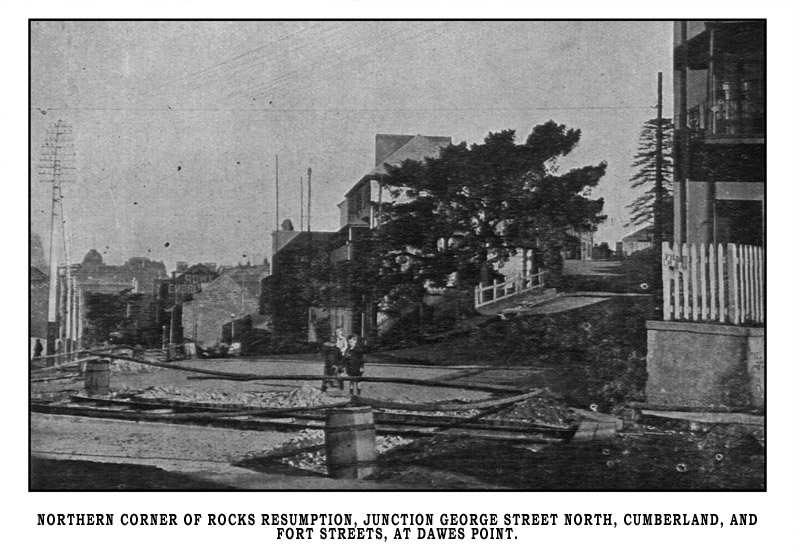
Well, if our visitor could return, he would find something worthier of the name in place of the old hospital; and though the church still stands externally much as it did what time it dominated the Sydney landscape, internally the old things have given way to much that is new.
One more remark of Trollope’s must be quoted, because, although uttered so many years ago, it stands as good to-day as it did then. Speaking of the Legislative Assembly, he compares it to a pudding. Says he: “In the house of Assembly, at Sydney, there was a sufficiency of farinaceous matter to prevent the plums from clogging the appetite and hurting the digestion.”
In drawing this series of articles to a close at this particular epoch in the history of the city, it may be thought necessary to explain that such a fact is not due to want of material respecting the newer Sydney; but because old Sydney and its story having been fairly well exploited, that of the more recent capital would be lacking in interest for the general reader. Besides, during the last couple of decades or so, there is nothing doubtful, nothing that cannot be verified by a few minutes’ search, whether as to the acts of an individual, the age and position of a building, or the site of a celebration. On the other hand, some of the best authorities differ widely regarding the happenings of those old dark days of storm and stress, through which the infant settlement passed, only to emerge triumphant—the great capital city that we see it to-day. And if in this little book any new light, no matter how small, has been let in on the doings of those far off times, if any disputed point, no matter how apparently trivial, has been advanced towards assurance, then it will not have been written in vain.
________________________________________________________________________________________________________________________________________________________________________________________________
No comments:
Post a Comment