Search This Blog

Saturday, April 25, 2020

Important Colonial Paintings, Watercolours, Drawings & Etchings - From January 1788 Onwards

Important Colonial Art in the Colony of New South Wales
Paintings, Water Colours, Drawings, Etchings, Lithographs

From the earliest years of the colony, watercolours, drawings and etchings recorded Sydney’s buildings and people for distant audiences. John Eyre’s topographical views of First Government House and the town, together with a pencil portrait of William Bligh, stand among the important early colonial works held in major library collections. This post presents those works with their catalogue references as given on the page.

1. First Government House, Sydney, c.1807 — watercolour by John Eyre (ML SV/31)

First Government House, Sydney, c.1807 — watercolour by John Eyre (ML SV/31).

John Eyre

John Eyre was born in Coventry, Warwickshire, England. When he was 13 he was apprenticed to his father who was a wool comber and weaver, and became a Coventry freeman in August 1792.

On 23rd March 1799, John Eyre was sentenced to transportation for 7 years for housebreaking, and he finally reached the colony of Sydney in the transport called "Canada" in December 1801.

He was granted a conditional pardon on 4th June 1804, and a month later he advertised that he would buy a box of watercolours. His first drawings were done around 1807.

Eyre seemed to make a fairly reasonable living in the new colony. In 1811 he was engaged to paint numbers on all the buildings on the eastern side of the Tank Stream at a sixpence a time, and in February 1812 he received 12 pounds for painting the Constable Staffs Office.

The records give no real clues to Eyre's character. Nothing is known of him after he left Sydney. He was essentially a topographical illustrator, and his work was very competent, and done with precision.

2. A West View of Sydney in New South Wales (detail), c.1809 — watercolour attributed to John Eyre (DL Pg50)

A West View of Sydney in New South Wales (detail), c.1809 — watercolour attributed to John Eyre (DL Pg50).

3. William Bligh, 20 November 1805 — pencil drawing by Henry Ashton Barker (ML MIN 351)

William Bligh, 20 November 1805 — pencil drawing by Henry Ashton Barker (ML MIN 351).

The Rum Rebellion - 26th January 1808 - Governor William Bligh Is Overthrown At Government House - Sydney

On the evening of 26 January 1808 — twenty years to the day after Phillip’s camp at Warrane — the New South Wales Corps marched up Bridge Street to the first Government House and took the governor. That house sat where the Museum of Sydney now stands, not in the Domain pile Blore finished in the 1840s. Major George Johnston assumed the government; John Macarthur had sharpened the crisis. William Bligh was arrested. Military-backed administrations ran the colony until Lachlan Macquarie took office on 1 January 1810.

The nickname Rum Rebellion is later journalism. Nobody in 1808 printed those two words on a handbill. The Corps’ spirits trade earned it Rum Corps after the fact; the fight on the day was land, rum as currency, courts, and who gave orders in a small town. It remains the only successful military overthrow of a government in Australia. The yarn that Bligh was dragged from under a bed is Corps propaganda. The First Government House picture shows the site, not the sandstone Government House in the Gardens.

Friday, April 24, 2020

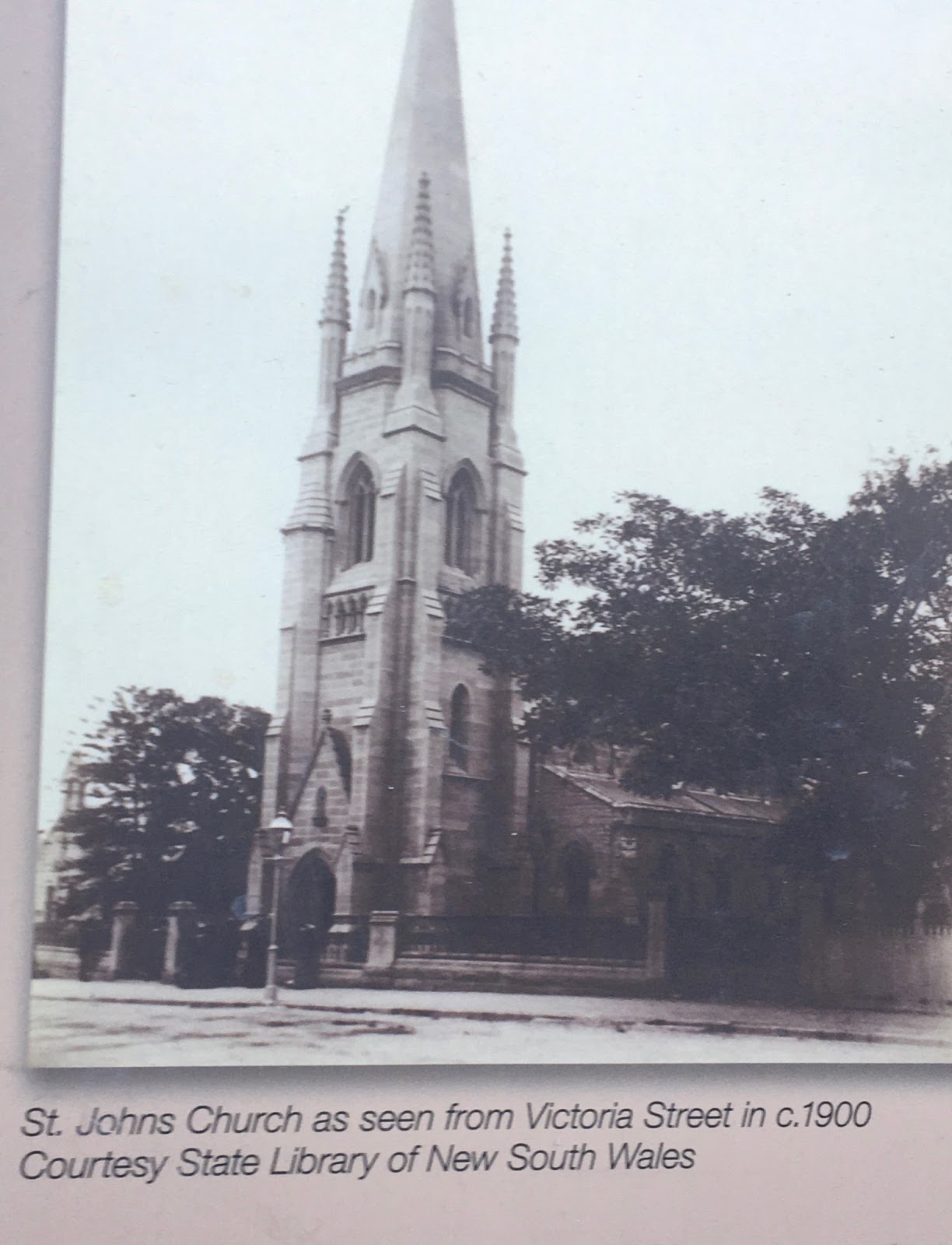
St John’s Church – Darlinghurst Road

Walk Darlinghurst Road toward the Cross and the spire is the thing that tells you you’ve arrived — sandstone Gothic punching up through the pubs and apartment blocks. St John’s Anglican Church (Church of St John the Evangelist) stands at 120 Darlinghurst Road, Darlinghurst, with grounds running through to Victoria Street. The foundation stone went down in December 1856 and the church opened in 1858. Stage one — nave, aisles and north porch — was Goold and Hilling in decorated Gothic, for a prosperous inner-suburban congregation that wanted something they recognised from home.

From 1871 Edmund Blacket transformed what you see from the street. He added the ornate tower and spire and the transepts (done by about 1875); the chancel followed later (Heritage NSW notes completion by about 1885). That tower and spire now dominate Darlinghurst Road. With its rectory, grounds and fence, St John’s is regarded as one of the most intact nineteenth-century church groups in Sydney and is listed on the NSW State Heritage Register (listed 1999).
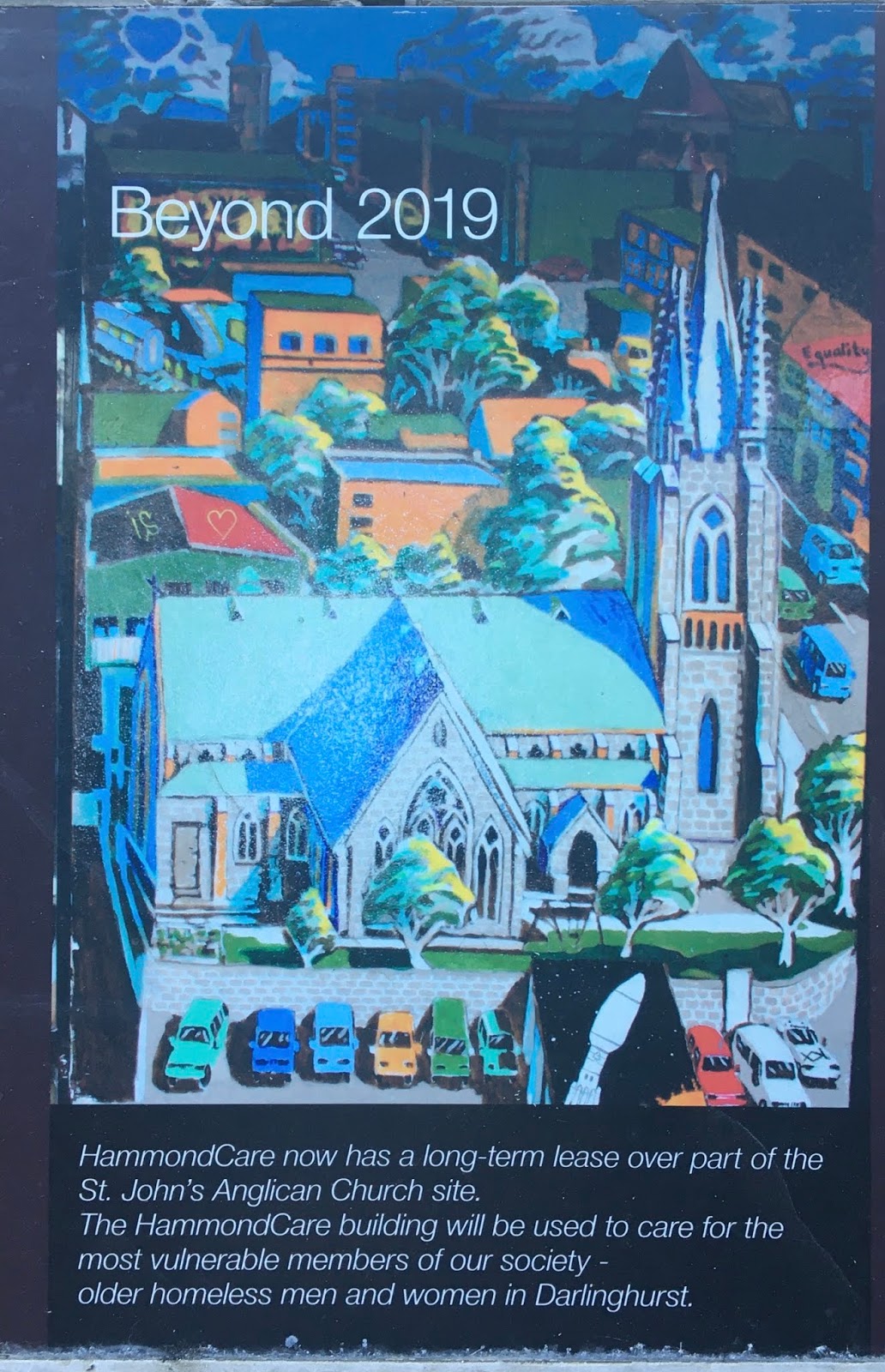
The photographs document sandstone Gothic detail, stained glass, and the church’s place in the Darlinghurst / Kings Cross streetscape.

St John’s Church in Darlinghurst is one of Sydney’s historic Anglican churches. Its location on Darlinghurst Road reflects the suburb’s long religious and civic history.


St John’s Church, Darlinghurst

St John’s Church stands on Darlinghurst Road, a visible reminder of the area’s changing history and character. 


Sunday, April 12, 2020

Centennial Park - Sydney - New South Wales

Centennial Park is the grand Victorian “People’s Park” dedicated in 1888 under Premier Sir Henry Parkes to mark the centenary of European settlement in New South Wales. It was carved from parts of the old Sydney Common and Lachlan Swamps water reserve east of the city — unemployed labour turned swampy ground into formal drives, ponds, plantations and statues in the English public-park tradition. Charles Moore (Director of the Botanic Gardens) and engineer Frederick Franklin were among those who assessed the potential; Randwick Road through the Government Domain later became Anzac Parade.

On 1 January 1901 the park’s natural amphitheatre hosted the inauguration of the Commonwealth of Australia, when the colonies were proclaimed a federation. A temporary Federation Pavilion stood for the ceremony; the hexagonal Federation Stone later marked the spot, and architect Alexander Tzannes’s permanent Federation Pavilion (dedicated 1 January 1988) now houses the stone. Centennial Park sits on the Australian National Heritage List for that nation-making association. Together with Moore Park and Queens Park it forms the Centennial Parklands, managed for public recreation, equestrian use and historic landscape conservation.

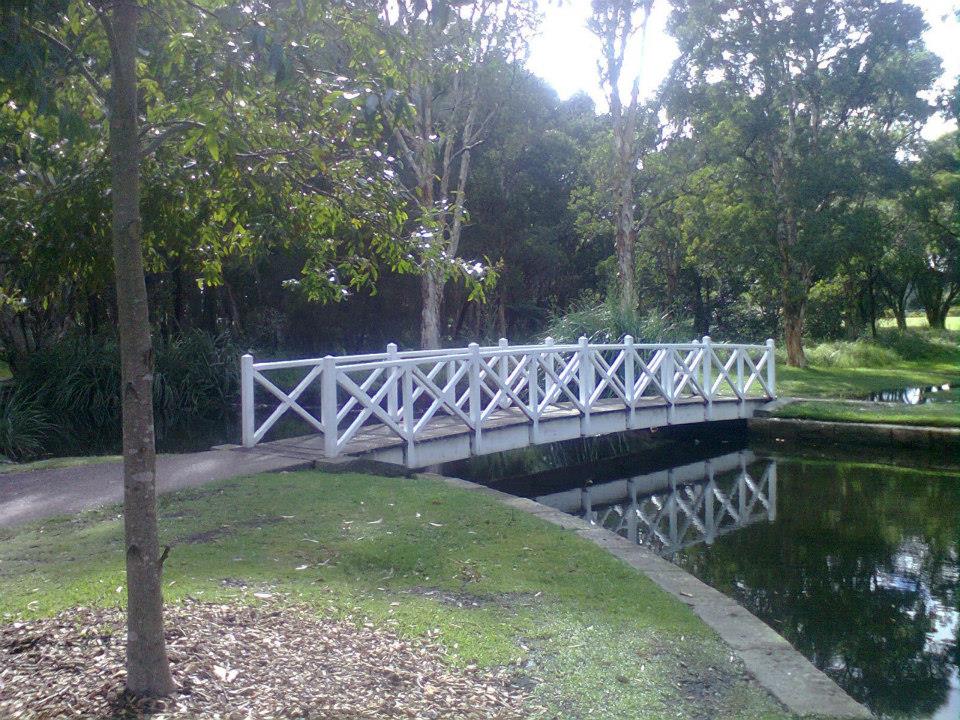
Photographs here show drives, water bodies and park structures in the Centennial landscape.


Centennial Park Was The brainchild of Sir Henry Parkes, Who At The Time Was Colonial Secretary For The Colony Of New South Wales. 


Randwick Had Turned Into A Flourishing Village And Was Connected To Randwick Road Which Ran Through The Government Domain Which Was Later Called Moore Park After Charles Moore, The Mayor Of Sydney At The Time. Randwick Road Was Later Called Anzac Parade After The Tragedies & Sacrifice From World War 1.