
Sydney Hospital – The Rum Hospital – Macquarie Street, Sydney
If you've ever walked up Macquarie Street from the Quay you'll know the stretch. Parliament House with its long verandahs, the sandstone hospital in the middle, the Mint next door, and out the front a bronze boar with a nose rubbed gold by about fifty years of Sydney hands. It looks like three or four separate buildings from different centuries, and that's exactly what it is. But they all started life as one job: a hospital paid for with rum.
I've written about Sydney Hospital a few times over the years and taken a fair few photos in and around it, so I've pulled all those pages together into this one. The story's first, then all my photos and notes from each visit, oldest first.

Before Macquarie Street: the tents at The Rocks
Sydney's first hospital wasn't on Macquarie Street at all. Wikipedia's history of the hospital says many of the convicts who came out on the First Fleet arrived sick with dysentery, smallpox, scurvy and typhoid, and Governor Phillip and Surgeon-General John White put up a tent hospital along what's now George Street in The Rocks. The Dictionary of Sydney says the first proper general hospital, on the western side of Sydney Cove, was a prefabricated building that came out from Britain on the Second Fleet in 1790. By the early 1800s it was falling apart and far too small for the town.
Macquarie's rum deal
When Lachlan Macquarie took over as governor in 1810 he wanted a real hospital, and he wanted it up on the ridge at the eastern edge of town. The Dictionary of Sydney says the site ran along most of the eastern side of what became Macquarie Street, between the governor's Domain and Hyde Park. The catch was money. London wouldn't pay for it, according to Wikipedia, so Macquarie went to three of Sydney's businessmen instead: Garnham Blaxcell, Alexander Riley and D'Arcy Wentworth.

The deal went like this. The Australian Dictionary of Biography's entry on Wentworth says the government's direct cost was about £4,200, made up of 80 oxen for slaughter, 20 convicts for three years and 20 draught oxen on loan. In return the three men got permission to import first 45,000 and then 65,000 gallons of rum (rum being the catch-all word for spirits back then). For four years, other private imports were restricted. The contractors still had to pay a duty of three shillings a gallon, and for that they promised a hospital big enough for more than 200 sick.
Wikipedia puts the contract signing at 6 November 1810. Blaxcell's ADB entry calls it the right to import 45,000 gallons over three years. Either way, it was a monopoly in all but name, and that's why Sydney has called it the Rum Hospital ever since.
Were they rorting it? The ADB says Macquarie saw it as a tremendous bargain, while his critics saw an undeserved monopoly. London didn't cancel the contract, but it criticised it hard. The contractors reckoned they lost money on it, and their enemies said they made at least £10,000 each. The ADB thinks the contractors were probably right. Blaxcell certainly didn't get rich. His ADB entry says he was buried in debt by 1817, slipped off to England on the Kangaroo in April that year, and died at Batavia in October.
Wentworth was the money in the deal. The ADB says he was far wealthier than the other two and the scheme couldn't have happened without him. He was also the colony's principal surgeon, and Wikipedia says he became the first surgeon to live in the hospital's surgeons' quarters. His son William Charles Wentworth went on to help shape the colony's parliament, which ends up sitting in that very same building.
Built by convicts, and built badly
The Dictionary of Sydney says the hospital went up between 1811 and 1816 with convict labour: three colonnaded wings, each two storeys high. Nobody's quite sure who designed it. The Dictionary of Sydney says the architect is unknown but there's speculation the Macquaries had a hand in it. Wikipedia names John O'Hearen as the stronger contender, because he defended how it was built and signed himself as 'Architect' in letters about it.
It wasn't built well. Wikipedia says the convict architect Francis Greenway was asked to report on it in 1815, as it neared completion, and he said it 'must soon fall into ruin'. He found weak joints in the beams, rotting stone, feeble foundations and dry rot. By 1820 part of the south wing was said to have collapsed and had to be rebuilt. The Dictionary of Sydney says Greenway was then put in charge of big repairs to all three wings in the 1820s.

Convict patients moved into the new hospital in 1816, according to Wikipedia. The Dictionary of Sydney says the central wing was used for convicts first, and that buildings on that central site have been used as hospital wards ever since.
Too big for the town: the wings find new jobs
The funny thing is that the hospital was too big for Sydney. The Dictionary of Sydney says the north and south wings were meant to house the surgeon and assistant surgeon, but both were soon handed over to other uses.
The north wing becomes Parliament House
Wikipedia says that under pressure from Lord Bathurst, Macquarie gave the north wing and part of the centre to Judge Jeffery Hart Bent as chambers and a temporary courthouse. Then in January 1829 Governor Darling foreshadowed taking over the north wing for the Legislative Council. The Council first met there on 21 August 1829, with the surgeons still using about a third of the space. In 1852 the legislature took over the whole building. Today the old surgeons' wing is the front of Parliament House, and Wikipedia's Parliament House page calls it the oldest public building in the City of Sydney.

The south wing becomes the Mint
The south wing had an even busier life. Wikipedia says it was used for the assistant surgeon and storage at first, then for military hospital wards from 1823. The Sydney Dispensary, a charity started in 1826 to treat the free poor, moved into it in 1845 and became the Sydney Infirmary and Dispensary. In 1848, when the convict medical system wound up, the Infirmary gave up the south wing and moved into the whole middle block.

Then came the gold. Wikipedia says the Legislative Council asked for a mint in 1851 after Hargraves' find at Ophir, and royal assent came in 1853. To save time and money they put it in the old south wing, which officially became the Sydney branch of the Royal Mint in 1854. A coining factory, prefabricated in England, went up behind it. The Mint closed in 1926, and the building later held government offices, courts and a museum. Today Museums of History NSW looks after it as The Mint.


Lucy Osburn and the Nightingale nurses, 1868
By the 1860s the Infirmary was in a bad way. Wikipedia says Henry Parkes was worried enough about the state of it that he wrote to Florence Nightingale asking for trained nurses. Lucy Osburn, who trained at the Nightingale School at St Thomas' Hospital, arrived in Sydney on 5 March 1868 as Lady Superintendent, along with five other St Thomas' nurses.


They hit the ground running. Within a week, according to Wikipedia, Osburn was asked to supply nurses for Prince Alfred, the Duke of Edinburgh, after he was shot at Clontarf, and they nursed him at Government House, not the hospital. Wikipedia's hospital page describes the Infirmary they took on as crumbling, foul-smelling and full of vermin. The idea of gentlewomen nursing was still shocking to plenty of people, and Osburn copped hostility. She was obstructed by one surgeon, Dr Alfred Roberts, and attacked in Parliament. A Royal Commission into public charities in 1873 condemned the Infirmary's management and praised her work. Her nurses went on to become matrons around the colony. Wikipedia says that by December 1868 she'd trained 16 more nurses, and she left Sydney in 1884.
The Nightingale Wing went up in 1869 to house the nurses. The Dictionary of Sydney says it was designed by the Cornish-born architect Thomas Rowe, and it's now the oldest building on the hospital grounds. Wikipedia describes it as brick and sandstone Gothic Revival, built with input from Florence Nightingale herself.


Pulling down the Rum Hospital: Thomas Rowe's new hospital, 1879–1894
The old centre block couldn't go on forever. The Dictionary of Sydney says a competition for a new hospital was announced in 1878, Rowe's design won, and the old central wing came down the following year. Work stopped in 1884 because it was over budget and didn't start again until 1892, when Rowe was taken off the job and John Kirkpatrick took over. The new hospital was officially opened in September 1894, in sandstone, in what the Dictionary calls the Victorian Free Classical style, and it doesn't look much like Rowe's original plans.
Rowe was one of the busiest architects in the colony. The ADB says he was born in Penzance in 1829, came to Sydney in 1848, and that people said in 1890 you could walk down Pitt Street and always be opposite one of his buildings. He was also the first mayor of Manly. He lost nearly everything in the 1893 crash and died almost penniless in 1899. Wikipedia says his peers criticised him for under-quoting costs to win competitions, and that the Sydney Infirmary was the classic example. Meanwhile, in 1881, the Infirmary was renamed Sydney Hospital.


.jpg)


Il Porcellino, 1968
Now for the pig. Il Porcellino, 'the little pig', is a bronze copy of Pietro Tacca's wild boar in Florence. The City of Sydney says it was a gift from Marchesa Clarissa Torrigiani in memory of her father Thomas Fiaschi and her brother Piero Fiaschi, who were both honorary surgeons at Sydney Hospital. She gave it to help raise money for the hospital, after a replica given to a children's hospital in Kansas City in 1962 had brought in plenty of donations there. The City says the Sydney bronze was installed by 18 April 1968, and the formal presentation was held on 16 December 1969, after the Marchesa had to rush back to Italy because of illness in the family.
Thomas Fiaschi was a Florentine who, according to Wikipedia, became an honorary surgeon at Sydney Hospital in 1890 and died at Darling Point in 1927. The Sydney Morning Herald wrote that he's also remembered as a father of Australian viticulture, after he set up the Tizzana vineyard in 1882.
The legend goes that if you rub his snout you'll have good luck, and that's why his nose is polished gold. The Herald and the local health district both say the coins tossed into the fountain have raised more than $500,000 for the hospital. The Herald also tells the story of nine-year-old Tom Yates, the Marchesa's great-nephew, who threw in the first coins. One of the inscriptions on the base, as the City of Sydney records it, reads: 'Il Porcellino – When you rub my nose and make a wish your donation supports research, education and development at Sydney Hospital Australia's First Hospital.'


.jpg)
Sydney Hospital and Sydney Eye Hospital today
Wikipedia says the Sydney Eye Hospital started at Millers Point in 1882, moved to Woolloomooloo in 1922 and joined the Sydney Hospital campus in 1996, when the new Clinical Services building opened on 30 October. The restoration of the old Rum Hospital wings was finished by 1984. The Dictionary of Sydney says it's no longer a general hospital, but Sydney Hospital and Sydney Eye Hospital is still the oldest working hospital in Australia, and Wikipedia says it specialises in eye and hand surgery.
.jpg)
.jpg)

Timeline
- 1788 – A tent hospital goes up along today's George Street, The Rocks
- 1790 – A prefabricated hospital arrives with the Second Fleet
- 6 November 1810 – The rum contract with Blaxcell, Riley and Wentworth is signed (Wikipedia)
- 1811–1816 – Convicts build the General Hospital on Macquarie Street
- 1815 – Francis Greenway condemns the work
- 1816 – Convict patients move in
- 1820s – Greenway oversees repairs to all three wings
- 21 August 1829 – The Legislative Council first meets in the north wing
- 1845 – The Sydney Dispensary moves into the south wing
- 1848 – The Sydney Infirmary and Dispensary moves into the central block
- 1852 – The legislature takes over the whole north wing
- 1854 – The south wing becomes the Sydney branch of the Royal Mint
- 5 March 1868 – Lucy Osburn and five Nightingale nurses arrive
- 1869 – Thomas Rowe's Nightingale Wing is built
- 1873 – A Royal Commission condemns the Infirmary's management and backs Osburn
- 1878 – A competition is held for a new hospital, and Rowe wins
- 1879 – The old central block is demolished
- 1881 – The Infirmary is renamed Sydney Hospital
- 1884 – Work stops over the budget, and Osburn leaves Sydney
- 1892 – John Kirkpatrick takes over
- September 1894 – The new hospital is officially opened
- 1926 – The Mint closes
- 18 April 1968 – Il Porcellino is installed
- 16 December 1969 – Il Porcellino is formally presented
- 1984 – Restoration of the Rum Hospital wings is completed
- 30 October 1996 – The Clinical Services building opens, and the Eye Hospital joins the campus
Where the Sources Disagree
- How much rum? Blaxcell's ADB entry says 45,000 gallons over three years. Wentworth's ADB entry says first 45,000 and then 65,000 gallons. Wikipedia says 45,000, later increased to 60,000.
- Who designed the hospital? The Dictionary of Sydney says the architect is unknown and floats the Macquaries. Wikipedia names John O'Hearen as the stronger contender. Greenway reported on it and repaired it, but neither source says he designed it.
- When did Rowe win? The Dictionary of Sydney says the competition was announced in 1878, with the old wing demolished the following year. Wikipedia says the centre came down in 1879 and Rowe won the competition in 1880. Rowe's ADB entry dates his Sydney Hospital to 1879, completed by Kirkpatrick 'after 1891', while the Dictionary of Sydney says Kirkpatrick came in in 1892.
- When was the hospital founded? Wikipedia dates the hospital itself to 1788 and the Macquarie Street site to 1811. The Dictionary of Sydney dates the continuous use of the central site to 1816. One of the inscriptions on the building gives 'Founded A.D. 1814'.
- How old is the Florence boar? The Dictionary of Sydney says it has stood in the Florence straw market since 1547. The City of Sydney says around 1633 and that Cosimo II commissioned it in 1621. The Herald and the health district say it was placed in front of the Straw Market in 1612.
- When did Sydney's Il Porcellino arrive? The City of Sydney says it was installed by 18 April 1968, with the formal presentation on 16 December 1969. The Herald puts the first coin-throwing ceremony on a rainy day in December 1968. One Commons photo caption calls it 'a 1962 copy', a date the City of Sydney gives for the Kansas City replica.
My Photos and Notes from Sydney Hospital
Sydney Hospital – Macquarie Street (My Australian History Journey, 17 February 2015)
Sydney Hospital - The "Rum Hospital" - Macquarie Street - Sydney - NSW
Sydney Hospital And Other Government Buildings Came Around As A Result Of The Hard Work Governor Lachlan Macquarie When He Took Over As Governor In 1810.
And It's Hard To Imagine What Lachlan Macquarie And His Wife Were Sailing Into When They Came From England. Rum Ruled Everything. It Was The Currency Of New South Wales, And The Renegade Red Coats Were Probably In Control. I Don't Know Much About That Period Between Governor Bligh Hiding Under His Bed When The Red Coats Got Him And Took Over In 1808, Which Sticks In My Head From A Famous Painting Of The Scene, And The Time Governor Macquarie Arrived.
Sydney Was Pretty Much Slums With a Few Muddy Tracks.
Macquarie Went On To Name The Streets And Map Them Out.
In Relation To Sydney Hospital I've Often Heard That Macquarie Paid For It From Rum Proceeds. But What An Amazing Piece Of Work It Is. The Whole Of That Part Of Macquarie Street Is Amazing. It holds
- Hyde Park Barracks
- The NSW Mint
- The NSW Parliament (which I Think Was Originally Part Of The Hospital)
- The Mitchell Wing
- The Conservatorium Of Music (Originally The Government Horse Stables)
- Government House, Which Is Hidden Away From View In The Botanical Gardens And The Domain
- The Sydney Garden Palace Would've Been The Jewel In The Macquarie Street Crown If Any Part Of It Were Still There. Yet Another Piece Of History Gone up In Smoke Probably From Arson. I will be writing About How I Found Out About Its Existence In Some Rubbish.
Just To Name A Few Things
I Happened To Be At Sydney Hospital Recently And Gee..... Its Upkeep Has Really Started To Deteriorate. It Was Quite Disheartening Considering It's A Group Of Buildings That Has Really Stood The Test Of Time, & Is Still A Fully Working Hospital.
Nobody's Sure Who Designed It. The Dictionary Of Sydney Says The Architect Is Unknown And The Macquaries May Have Had A Hand In It, While Wikipedia Reckons John O'Hearen Is The Likeliest. Francis Greenway, The Convict Architect Behind A Lot Of Macquarie's Buildings Who'd Been Sent Out For Forgery, Inspected It In 1815, Said It Would Soon Fall Into Ruin, And Later Oversaw The Repairs.


The Main Entrance To The Hospital And Up The Stairs.


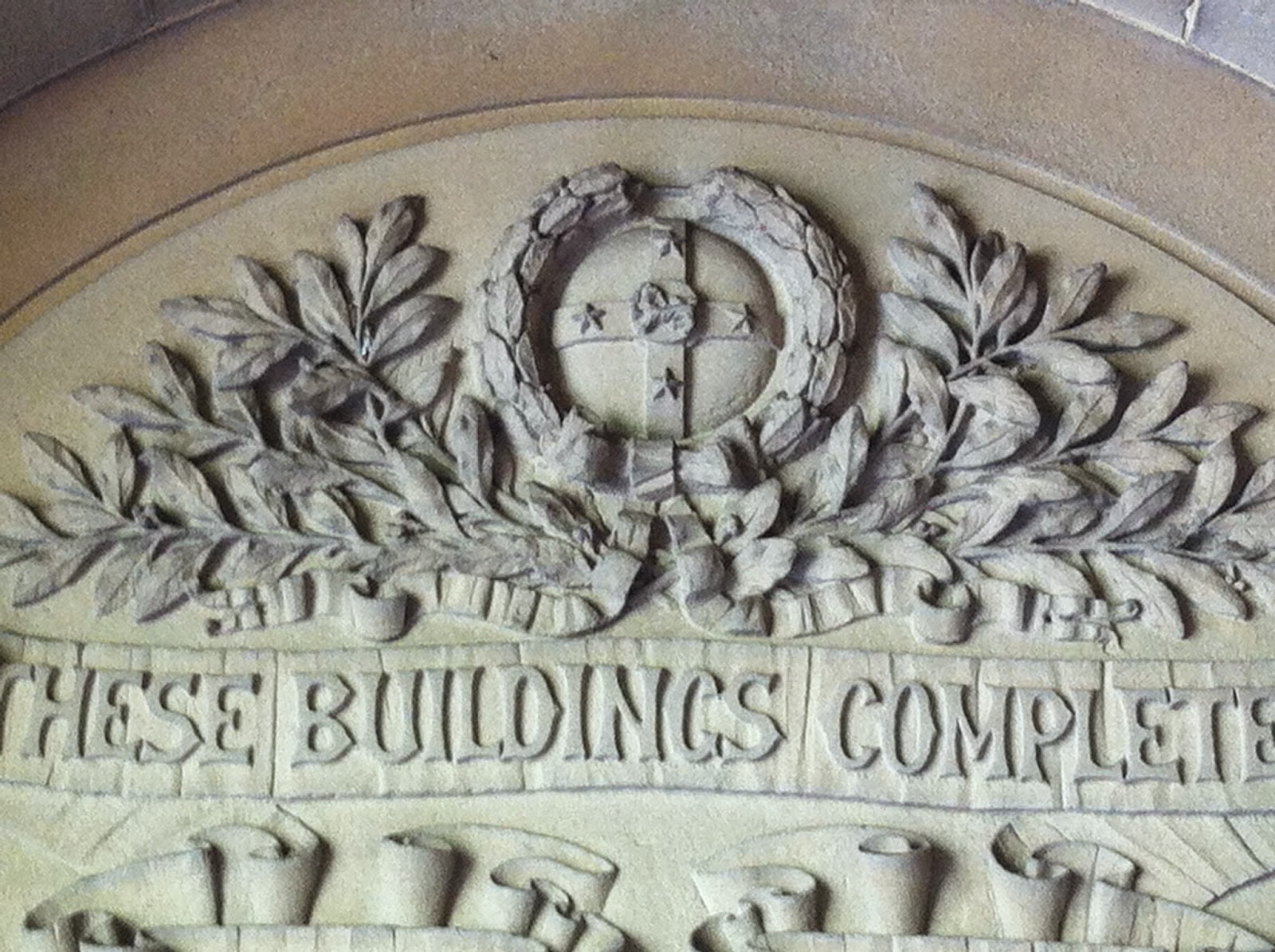


Some Of The Stonework Is Truly Amazing Once You Get Up Close To It.


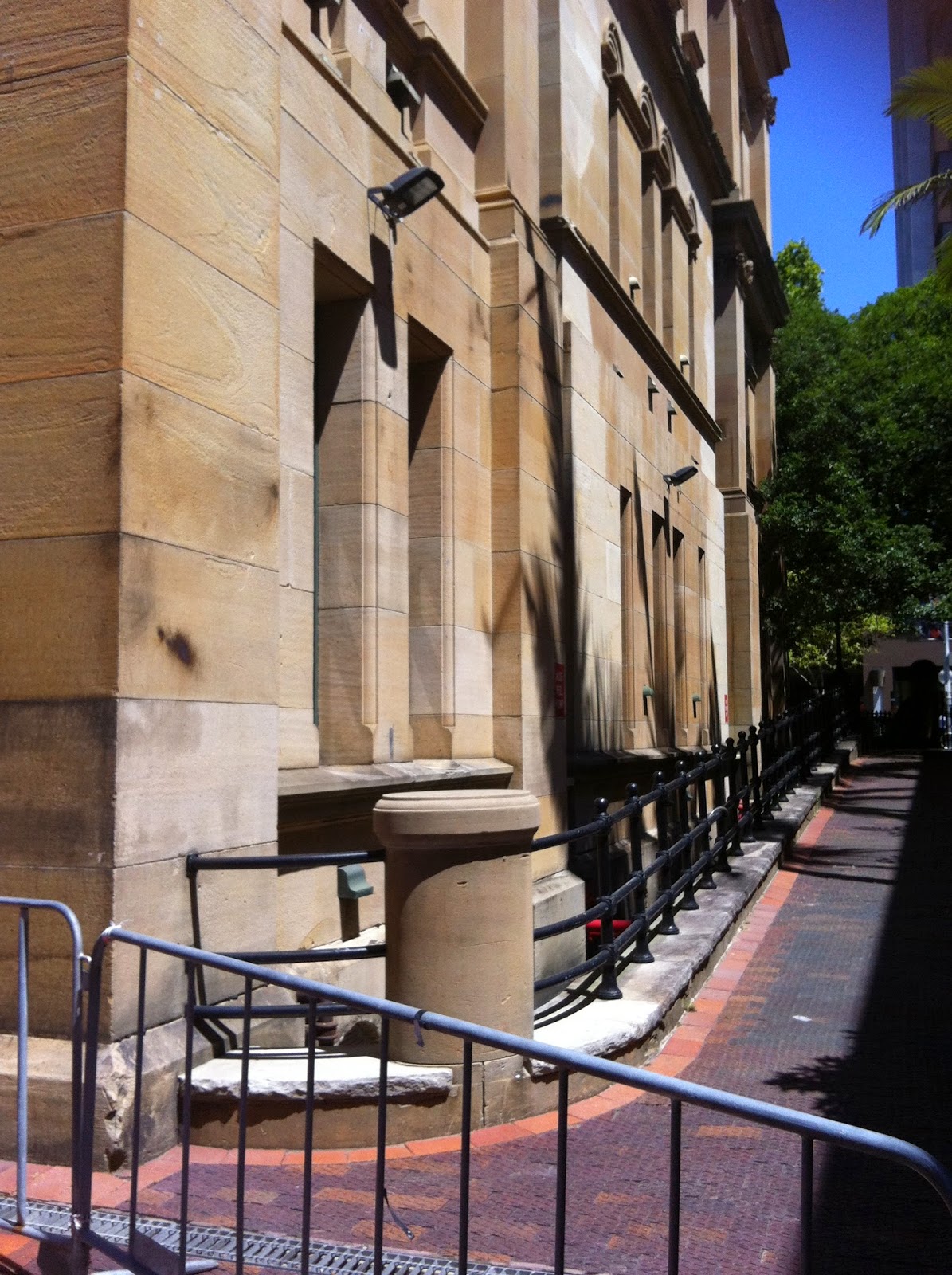


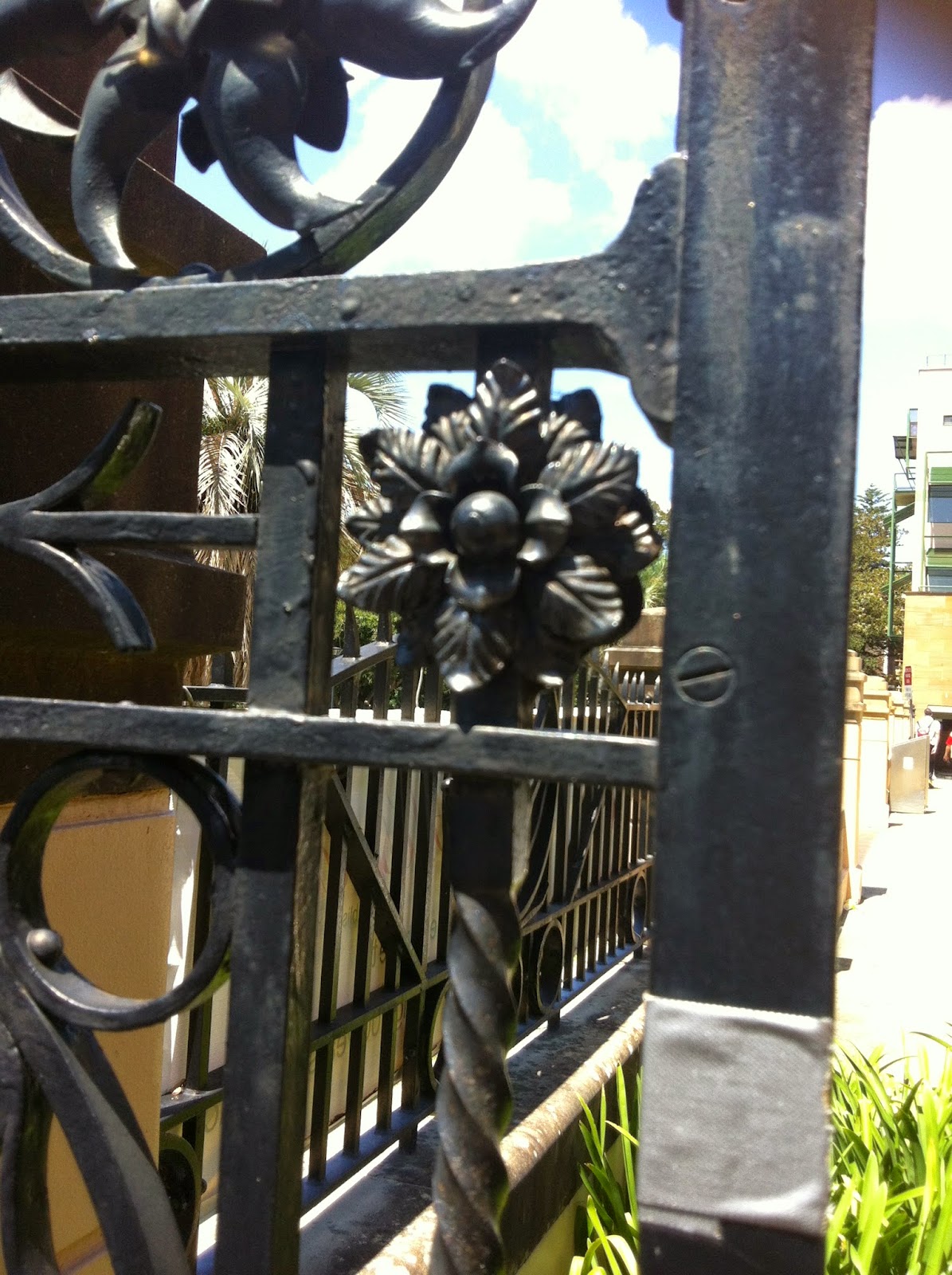


Sydney Hospital – Macquarie Street (My Australian History Journey, 4 June 2015)
Sydney Hospital on Macquarie Street still wears the nickname of the deal that paid for its ancestor: the Rum Hospital. Governor Macquarie, short of cash in 1810–11, contracted D’Arcy Wentworth, Garnham Blaxcell and Alexander Riley to raise a colonnaded hospital in return for a short monopoly on spirit imports. The foundation stone went down on 30 October 1811; shoddy work delayed opening until 1816. The north wing became Parliament House, the south wing the Mint — those verandahs are the Rum Hospital you can still touch. The central ward block was cleared from 1879 for a new hospital that opened in 1894.
So when you stand on Macquarie Street you are looking at layered time: 1816 wings in civic dress, late-Victorian wards where the original centre stood, and a working hospital (Sydney Hospital and Sydney Eye Hospital) that claims continuous service on this ridge.
Sydney “Rum” Hospital - Macquarie Street


Governor Macquarie On The 27th July 1822 Reported Building
“A Large Stone Built Colonial General Hospital, Two Stories High, With Quarters For 6 Medical Officers, With Upper And Lower Verandahs Round All The Buildings .
It Could Accommodate Up To 300 Patients, And Garden Ground For Medical Officers And The Sick, And The Whole Premises Enclosed With A Nine Foot Wall.
The Chosen Spot For Sydney Hospital Was On A Ridge, Seven Acres South Of Government House.
Governor Macquarie Allowed 45,000 Gallons Of Bengal Rum, With A Six Month Grace Period Before They Had To Pay A Duty Of Three Shillings Per Gallon
Sydney Hospital – The Rum Hospital (Historic Sydney Mansions, 22 January 2020)
At a glance
- Address: 8 Macquarie Street, Sydney
- Origins: the “Rum Hospital”, built under Governor Macquarie’s contract with Garnham Blaxcell, Alexander Riley and D’Arcy Wentworth in return for a monopoly on imported rum; completed 1816
- Survivors of the Rum Hospital: its north and south wings, now Parliament House and the Sydney Mint
- Nightingale Wing: designed by Thomas Rowe, 1869, for Lucy Osburn and the Nightingale-trained nurses
- Present main buildings: Thomas Rowe won the 1878 design competition; the Victorian Classical buildings were completed and opened in 1894 (inscribed “These buildings completed A.D. 1894”)
- Status: standing, still an operating public hospital
Sydney Hospital. Sydney Hospital traces its origins to the colony’s early medical services, established soon after the First Fleet arrived in 1788. The present Macquarie Street hospital grew from the colony’s first permanent hospital, built under a contract partly paid in rum. Opened in 1816, it is Australia’s oldest continuously operating hospital.


Transcription:
THESE BUILDINGS COMPLETED / A.D. 1894

Transcription:
THESE BUILDINGS COMPLETED / A.D. 1894


Transcription:
SPES
SYDNEY HOSPITAL


Transcription:
THE SYDNEY HOSPITAL / FOUNDED A.D. 1814

Transcription:
THE SYDNEY HOSPITAL / FOUNDED A.D. 1814


Sources
- Dictionary of Sydney – Sydney Hospital and Eye Hospital
- ADB – Thomas Rowe
- National Museum of Australia – First public hospital
Sydney Hospital – Macquarie Street – August 2021 (My Australian History Journey, 10 August 2021)
Sydney Hospital August 2021


I went past Sydney Hospital again in August 2021 and took these photos. Its full name these days is Sydney Hospital and Sydney Eye Hospital.
The hospital's roots go back to the tent hospital the First Fleet put up at The Rocks in 1788, but the Macquarie Street site dates from Governor Macquarie's Rum Hospital, built between 1811 and 1816. It's still the oldest working hospital in Australia. At first it looked after convicts.
It sits on Macquarie Street, right in the city, near the Royal Botanic Garden, with the State Library and NSW Parliament House close by.
It's a public hospital with an emergency department, and it's known for eye care. The Sydney Eye Hospital moved onto the campus in 1996.
The main sandstone building on Macquarie Street went up between 1879 and 1894, in the Victorian Free Classical style. The old Georgian Rum Hospital wings on either side are now Parliament House and the Mint. The hospital has been added to plenty of times over the years.
It's a heritage-listed site, and it's been a teaching hospital for University of Sydney medical students since 1909.
For a building that's been through so much, it's still doing the job it was built for.
Sydney Hospital – The Rum Hospital (My Australian History Journey, 27 March 2025)
Macquarie Street’s hospital stretch is one of those Sydney stories where the nickname outlived the building. Governor Lachlan Macquarie wanted a proper public hospital, London wouldn’t fund it, so in 1810 he contracted D’Arcy Wentworth, Garnham Blaxcell and Alexander Riley to build a big colonnaded complex in return for a short-term monopoly on importing spirits. He laid the foundation stone on 30 October 1811; shoddy work delayed opening until 1816. Sydneysiders called it the Rum Hospital — and the name stuck.
The finished group had a central ward block with two flanking wings. Those wings were soon pulled into other government jobs: the north wing became the Legislative Council (and later Parliament House), the south wing became the Sydney Mint. Francis Greenway surveyed the dodgy fabric soon after completion and later supervised reinforcing that helped the surviving wings endure. The central Rum Hospital block itself was demolished from 1879. The Infirmary was renamed Sydney Hospital in 1881, and the present building opened in 1894.
Sydney Hospital and Sydney Eye Hospital remains Australia’s oldest continuously operating hospital on this Macquarie Street site — though the working wards are the late-Victorian and later buildings, not the 1816 central block.




My Earlier Posts
- NSW Parliament – Macquarie Street – Sydney
- The Sydney Mint – Macquarie Street – Sydney
- Artworks Housed in NSW Parliament House
- Sydney's First General Hospital – Old George Street North – The Rocks
- First General Hospital – George Street North – The Rocks
- Macquarie Street And Associated Landmarks
- The Attempted Assassination of Prince Alfred – Clontarf – 12 March 1868
- The Wentworth Family of Vaucluse
- Queens Square – Macquarie Street
- Albert The Good Statue – Queens Square
- Government House – 'The Peoples Domain'
Sources
- Laila Ellmoos, 'Sydney Hospital and Eye Hospital', Dictionary of Sydney, 2008: https://dictionaryofsydney.org/entry/sydney_hospital_and_eye_hospital
- 'Sydney Hospital', Wikipedia: https://en.wikipedia.org/wiki/Sydney_Hospital
- E. W. Dunlop, 'Blaxcell, Garnham (1778–1817)', Australian Dictionary of Biography: https://adb.anu.edu.au/biography/blaxcell-garnham-1794
- 'Wentworth, D'Arcy', Australian Dictionary of Biography: https://adb.anu.edu.au/biography/wentworth-darcy-1545
- J. M. Freeland, 'Rowe, Thomas (1829–1899)', Australian Dictionary of Biography: https://adb.anu.edu.au/biography/rowe-thomas-4517
- 'Lucy Osburn', Wikipedia: https://en.wikipedia.org/wiki/Lucy_Osburn
- 'Parliament House, Sydney', Wikipedia: https://en.wikipedia.org/wiki/Parliament_House,_Sydney
- 'The Mint, Sydney', Wikipedia: https://en.wikipedia.org/wiki/The_Mint,_Sydney
- The Mint, Museums of History NSW: https://mhnsw.au/visit-us/the-mint/
- 'Il Porcellino', City of Sydney: https://www.cityofsydney.nsw.gov.au/sculptures/il-porcellino
- Shirley Fitzgerald, 'Il Porcellino', Dictionary of Sydney, 2008: https://dictionaryofsydney.org/entry/il_porcellino
- Nick Galvin, 'Il Porcellino, the pig with the golden snout, turns 50', Sydney Morning Herald, 30 November 2018: https://www.smh.com.au/entertainment/art-and-design/il-porcellino-the-pig-with-the-golden-snout-turns-50-20181130-h18juh.html
- 'Sydney/Sydney Eye Hospital's famous Boar turns 50', South Eastern Sydney Local Health District: https://www.seslhd.health.nsw.gov.au/news/sydneysydney-eye-hospital%E2%80%99s-famous-%E2%80%98boar%E2%80%99-turns-50
- 'Thomas Fiaschi', Wikipedia: https://en.wikipedia.org/wiki/Thomas_Fiaschi
- Wikimedia Commons, Category:Sydney Hospital: https://commons.wikimedia.org/wiki/Category:Sydney_Hospital