Search This Blog

Showing posts with label Governor Arthur Phillip. Show all posts

Thursday, March 23, 2023

Instructions from Lord Sydney - Home Secretary to Captain Arthur Phillip - Sydney 1788


Instructions from Lord Sydney - Home Secretary to Captain Arthur Phillip - Sydney 1788


We, reposing especial trust and confidence in your loyalty, courage and experience in military affairs, do, by these presents, constitute and appoint you to be Governor of our territory called New South Wales, extending from the Northern cape or extremity of the coast called Cape York, In the latitude of 10 degrees 37 ' South, to the southern extremity of The said territory of New South Wales or South Cape, in latitude 43 degrees 39' South, and all the country inland and westward as far as the one hundred and thirty fifth degree of longitude, reckoning from the meridian of Greenwich, including all the islands adjacent in the Pacific ocean, within the latitude aforesaid of 10 degrees 37' South and 43 degrees 39' South, and of all towns, garrisons, castles, forts and all other fortifications or other military works, which now are or may be hereafter erected upon this said territory. You are therefore carefully and diligently to discharge the duty of Governor in and over our said territory by doing and performing all and all manner of things thereunto belonging, and we do hereby strictly charge and command all our officers and soldiers who shall be employed within our said Territory, and all others whom it may concern, to obey you as our Governor thereof; and you are to observe and follow such orders and directions from time to time as you shall receive from us, or any other your superior Officer according to the rules and discipline of war, and likewise such orders and directions as we shall send you under our signet or sign manual, or by our High Treasurer or Commissioners of our Treasury, for the time being, or one of our Principal Secretaries of State, in pursuance of the trust we hereby repose in you. 


given at our Court at St James, the Twelfth Day of October 1786, in the 27th year of our reign 

By His Majesty's Command. 


Sydney 


Phillip writes to Lord Sydney 

" I have the honour to enclose your Lordship the intended plan for the town. The Lieutenant Governor has already begun a small house, which forms one corner of the parade, & I am building a small cottage on the east side of the cove, where I shall remain for the present with part of the convicts and an officers guard. The convicts are distributed in huts, which are built only for immediate shelter. On the point of land (Dawes Point) which forms the west side of the cove, an observatory building, under the direction of Lieutenant Dawes, who is charged by the Board of longitude with observing the expected comet. We now make very good bricks, and the stone is good, but do not find either lime stone or chalk. The principal streets are placed so as to admit a free circulation of air, and are 200ft wide"


Saturday, November 13, 2021

GOVERNOR ARTHUR PHILLIP‘S INSTRUCTIONS FROM GEORGE III - Opened 7th February 1788

Governor Arthur Phillip's Instructions From King George III - Opened On the 7th February 1788 


Governor Arthur Phillip's Instructions from King George III - Opened and read on the 7th February 1788.


On Thursday 7th February 1788, the day after the women were landedhad variable winds, the temp was 74 Degrees F and the Barometer 29.60

Mr Clark Got up early for the parade, which Arthur Bowes described in detail 

"This Morning at 11 O'clock all who could leave the ships were summoned on shore, to hear the Governor's Commission read and also the Commissison Constituting the Court Of Judicature. The Marines were all under arms, and received the Governor with flying colours and a Band of music. He was accompanied but the Judge Advocate. Lieutenant Governor, Clergiman, Surveyor General, Surgeon General Etc. After taking off his hat and complimenting the Marine Officers, who had lowered their colours and paid that respect to him as Governor which he was entitled to, the Soldiers marched with music playing drums and pipes, and formed a circle around all of the convicts, men and women who were collected together. The convicts were all ordered to sit down on the ground; all gentlemen present were desired to come into the centre where stood the Governor, Lieutenant Governor, Judge Advicate, Clergyman, Surgeon etc. A Cammp table was fixed before the, and 2 leather cases laid therin, containing the Commission etc which were opened and unsealed in the sight of all present, and read by the Judge Advocate (David Collins)

After reading his orders and Commissions "The Governor Harangued the convicts, telling them they had tried him hitherto to see how they were disposed. That he was now thoroughly convicned there were many amongst them incorrigable, and that he was persuaded nothing but severity would have any effect on the, to induce them to behave properly in future. He also assured them that if they attempted to get into the Women's tents of a night there were positive orders for firing upon them. that they were very idle. mot more than 200 our of 600 were at work, that the industrious should not labour for the idle. If they did not work, they should not eat. In England, thieving poultry was not punished with death, but here, where a loss of that kind could not be supplied, it was of the utmost consequence to the settlement, as well as every other species of stock, as they were preserved for breeding. Therefore stealing the most trifling article of stock or provisions should be punished with death. That, however such severity might mitifate against his humanity and feelings towards his fellow creatures, yet that Justice demanded such rigid execution of the laws and they might impolicitly rely upon justice taking place. 

Their labour would not be equal of a husbanndman in England, who had his wife and family to provide for. They would never be worked beyond ther abiulities, but every individual should contribute his share to render himself and Community at large happy and comfortable as soon as the nature of the settlement will admir of them, They should be employed erecting houses for the different officers, next for the Marines and lastly for themselves. After this Harangue they were dismissed in the same form as they were assembled.. After which the Governor retired to a cold collation under the large tent erected for that purpose to which the General officers only were invited and not the least attention whatever was paid to any other person who came out from England. The Masters of the different ships paid him the compliment of attending on shore during the reading of the Commission, which they werre not under any obligation to do, notwithstanding there was no more notice taken of them or even to provide the slightest accommodation for them than the convicts themselves. 

Lt Clarks Account  Of The Day was of a more Material Nature - 'All The officers Dined with him on a cold Collation, but the mutton which had been killed yesterday morning was full of maggots. Nothing will keep 24 hours in this country I Find. 


DOCUMENT PAGE 1 
Instructions for a trusty George R and well beloved Arthur Phillip Esq our Captain General and governor in chief in and over our territory of New South Wales and its dependencies or to the lieutenant-governor or commander in chief of the said territory for the time being. Given that our court at Saint James 25 April 1787 in the 27th year of our reign
With these are instructions you will receive a commission under our great seal constituting an appointing you to be a captain general and governor in chief of our territory called New South Wales. 
DOCUMENT FIRST PAGE ENDS HERE 
extending from the northern Cape or  extremity of the coast called Cape York in the latitude of 10° 37 minutes south, to the southern extremity of the said territory of New South Wales, or South Cape,  in the latitude of 43° 39 minutes south, and all the country inland to the Westward as far as the 135th° of East longitude, reckoning from the Meridian of Greenwich,  including all the islands adjacent in the Pacific ocean within the latitudes aforesaid of 10° 37 minutes south, and 43° 39 minutes south, and of all towns, garrisons, castles, forts, and all other fortifications, or other military works which may be here after erected upon the said territory or any of the said islands, with directions to Obey such orders and instructions as shall from time to time be given to you under our signet and sign manual, or by our order in our pretty council – you are therefore to fit yourself with all convenience speed and to hold
DOCUMENT SECOND PAGE ENDS HERE 
Hold yourself in readiness to repair to your said command, and being arrived, to take upon the execution of the ((place and)) trust we have put in you and as soon as conveniently may be able with all due solemnity to cause Our said commission under our great seal of Great Britain constituting you our governor and commander in chief as aforesaid, should be read and published,
 and whereas have ordered that about 600 mail, and 180 female convicts, now under sentence or order of Transportation, whose names are contained in the list hereunto annexed should be removed out the Gaols and other places of confinement in this our kingdom, and we put on board of the several transport ships which have been taken up for their reception. It is our Royal will and pleasure that as soon as the said convicts, the several persons composing the civic establishments and the stores, provisions etc provided for their use shall be embarked on board to supply Tendor, and the transport ships
DOCUMENT THIRD PAGE ENDS HERE 
Alexander 
Scarborough 
Lady Penrhyn
Friendship
Charlotte
Prince Of Wales
Golden Grove 
Fishburn 
Ships named in the margin, and be in readiness to depart, that you do take them under your protection and proceed in the serious With The said Tinder and transport to the port on the coast of New South Wales, situated in the latitude of 33° 41 minutes, called them by the name of Botany Bay, agreeably to the instructions with which you will be furnished by the Commissioner of are add multi, in pursuance of our Royal commands already signified to 
And where as it may happen upon your passage to New South Wales, that you may find it necessary and expedient to call with the ships and vessels under your current convoy at the island of Teneriffe, at the Rio de Janeiro, and also at the Cape of Good Hope, for supplies of water, and other refreshments for the voyage.
It is our father will and pleasure, that you do, upon your arrival at the former of, those places, take on board any of the ships on of the convoy which you may think
DOCUMENT  FOURTH PAGE ENDS HERE 
I think proper, such quantities of wine as may be requisite for the supply of the said settlement, according to the instructions with which the commiserate of stores and provisions will be furnished by the commissioners of our Treasury, taking care that the quantities purchased do not exceed the proportions to be issued to the several persons composing to set a settlement entitled there to, agreeably to decide instructions, for the time to which they have confined the supply of that article, and for the amount of such purchases, you will direct the commiserate to draw bills of exchange upon them properly certified by you, or a lieutenant-governor of the said intended settlement, with the other usual artist stations, that the same has been obtained at the most reasonable rates, transmitting at the same time In Account they’re off to them in order that you may be released from any impress Any such purchases might occasion.
DOCUMENT FIFTH PAGE ENDS HERE 
any such purchases might occasion.
Not with standing there is already a considerable quantity of corn and other seed, grain put on board the ships of the convoy, most likely probably more than maybe immediately necessary for the raising supplies for the settlement; we are disposed to guard as much as possible against accidents, which may happen, for injuries, which these articles must’ve sustained during the passage;
It is therefore a further willing pleasure that you do upon your arrival, at any of the places you may have occasion to touch that, endeavour to obtain such further quantities of seed and grain, as you may think of requisite for the tillage of the land, at the place of your destination; and also that you do you take on board any Number of black cattle, sheep, goats or hogs, which you can procure and the ships of the convoy can contain, in order to propagate the breed
DOCUMENT SIXTH PAGE ENDS HERE 
Breed of these animals for the general benefit of the intended settlement, causing the commiserate of stores and provisions to draw bills for the same as in before directed for such supplies, as Wellers for any fresh provisions which it may be requisite to procure for the use of the Marines were convicts, at those places, and transmitting information to the commissioners of our Treasury such proceedings
And where as it is intended that several of the transport ships and visualise which are to accompany you to New South Wales, should be employed in bringing home cargoes of tea, and other merchandise, from China, for the use of the East India company – provided they can arrive at Canton, on or before 1 January 1788 in due time whereby a very considerable saving would rise to the public in the freight of those vessels; it is Avril will and pleasure, that upon your arrival at botany Bay, on the side coast of New South Wales, you do cause every possible exertion to be made
DOCUMENT SEVENTH PAGE ENDS HERE 
Made use of four disembark in the offices in composing a civil and Military establishments, together with the convicts, stores, provisions etc and having so done you watch a discharge all the said transports or visualise, in order that such of them as maybe engaged by the East India company may proceed to China, and that the rest may return home, you will however take care, before they said transport ships are discharged, to obtain an assignment to you All Yours the governor in chief for the time being, from the masters of them, of the servitude of the several convicts, for the remainder of the times or terms specified in there several sentences orders of Transportation.
Made use of four disembarking the offices and men composing a civil and military establishments, together with the convicts, stores, provisions etc and having so done you a discharge all the said transports or visual is, in order that such of them as maybe engaged by the East India company may proceed to China, and that the rest may return home, you will however take care, before the said transport ships are discharged, to obtain an assignment to you or you’re the governor and chief for the time being, from the masters of them, of the servitude of the several convicts, for the remainder of the times or terms specified in there several sentences or orders of transportation.
According to the best information which we have obtained, botany Bay appears to be the most eligible situation upon the Central Coast for the first establishment, possessing a Commodious harbour and other advantages which no 
DOCUMENT EIGHTH PAGE ENDS HERE 
No part of the coast here there to discovered a forwards. It is therefore I will and pleasure that you do immediately upon your landing after taking measures for securing yourself and the people who accompany you, as much as possible from any attacks or interruptions of the natives of that country, as well as for the preservation and safety of the public stores, proceed to the cultivation of land, distributing the convicts for that purpose in such manner, and under such inspectors or overseers and under such regulations as may appear to you to be necessary and best calculated for procuring supplies of grain and ground provisions.
The assortment of tools and utensils which have been provided for the use of the convicts and other persons who are to compose the intended settlement, are to be distributed according to your discretion, and according to the employment, assigned to several persons. In the distribution however, you will use Every proper 
DOCUMENT NINTH PAGE ENDS HERE 
Proper degree of economy, be careful that the commiserate you transmit an account of the issues from time to time to the commissioners of our Treasury, to enable them to judge of the propriety or expediency of granting further supplies.
Proper degree of economy, be careful that the commissioner do transmit an account of the issues from time to time to the commissioners are Treasury, to enable them to judge of the propriety or expediency of granting further supplies.
The closing of the convicts and the provisions issued to them, and the civil and military establishments must be accounted for in the same manner.
And where is the commissioners of Admiralty have appointed captain Hunter to repair on board the HMS serious to assist you in the execution of your duty, and you take the command of the ship whenever you make the occasion to touch her from the settlement, and also to station to supply tender under your orders, and to be assisting to you upon occasional services after your arrival.
And where it is at Royal intention that measures should be taken in addition to those which are specified in the article of these are instructions for obtaining
DOCUMENT TENTH PAGE ENDS HERE 
Obtaining supplies of livestock, and having an consequences of such intention court, cause the quantity of arms and other articles and merchandise to be provided, and sent out in the ships Under your convoy, in order to barter with the natives either on the territory of New South Wales, all the islands adjacent in the seas, who found their ignorance of the value of such articles,
under your convoy, in order to barter with the natives either on the territory of New South Wales, or the islands adjacent in those seas, who found the ignorance of the value of for such articles,
It is I will and pleasure that is soon as either of these vessels can be spared with the safety from the settlements that you do to touch one or both of them from that purpose, can finding their intercourse as much as possible to such parts as are not in the possession or under the jurisdiction of other European powers,
The increase of stock of animals, must depend on Tiley up on the measures you may adopt on the outset for their preservation, and as a settlement will be amply supplied with vegetable production in most likely with fish, fresh provisions, excepting for the sick and the convalescence may in a great degree
DOCUMENT ELEVENTH PAGE ENDS HERE 
Degree be dispensed with; for these reasons it will become you to be extremely cautious in permitting any cattle, sheep, hogs etc intended for propagating the breed of such animals being to be slaughtered, until a competent stock maybe acquired to admit of your supplying the settlement from it with animal food without having further request you to places from whence such stock may have originally been obtained.
Degree be dispensed with; for these reasons it will become you to be extremely cautious in permitting any cattle, sheep, hogs etc intended for propagating the breed of such animals being to be slaughtered, until a competent stock may be acquired to admit of your supplying the settlement from it with animal food without having further request to the places from once such stock may have originally been obtained.
It is always a pleasure that the productions of all descriptions acquired by the labour of the convex it is our will and pleasure it shall be considered as public stock and which we so far leave to your disposal, that such parts there of is maybe requisite for the substance of the said convicts and their families, or the substance of the civil and military establishment of the settlement may be applied by you to that use. The remainder of such reductions you will reserve as a provision
DOCUMENT TWELTH PAGE ENDS HERE 
Provisions for a further number of convicts which you may expect will shortly follow you from hence, to be employed under your direction in the manner pointed out in those these are instructions to you.
Provisions for a further number of convicts which you may expect will shortly follow you from hence, should be employed under your direction in the manner pointed out in those these are instructions to you.
From the natural increase of corn and other vegetable food from the common industry after the ground has been once cultivated, as well as of animals, it cannot be expedient that all of the convicts which company are you, should be employed in attending only to the object of provisions.
And as it has been humbly represented up until us the advantages maybe derived from the flax plant which is found in the islands not far distance from the intended settlement, not only as a means of acquiring clothing for the convicts and other persons who may become settlers, but from its superior excellence for a variety of Maritime purposes and as it may ultimately may become an article of export..
It is therefore able and pleasure that you do you particularly attend to its cultivation
DOCUMENT THIRTEENTH PAGE ENDS HERE
Cultivation, and that you do you send home by every opportunity which may affect, samples of that article, in order that the judgement may be formed whether it may not be necessary to instruct your further upon this subject.
Cultivation, and that you do you send home by every opportunity which may affect, samples of that article, in order that the judgement may be formed whether it may not be necessary to instruct you further upon this subject.
And where as we are desirous that some further information should be obtained of the several ports or Harbours upon the coast and the islands contagious there two within the limits of your government; you are, whenever the serious or the supply tender, can conveniently be spared, to send one, or both of them, upon that service. Norfolk Island situated in the latitude and longitude East from Glenn it’s about being represented as a spot which may hear after become useful; you are, as soon as circumstances will admit of it, you send a small establishment do to secure the same to us, and prevent its being occupied by the subjects of any other European power, and you will cause any remarks Or observations which you obtaining consequence of
DOCUMENT FOURTENTH PAGE ENDS HERE 
Of this instruction to be transmitted to our principal secretary of state for plantation affairs for our information.
And where is it may happen, when the settlement should be brought into some state of regulation, that the service of the serious may not be necessary at the said settlement; and as we are desirous to diminish as much as possible the expenses which the intended establishment occasion; you will, whenever the service of the said ship can be dispensed with, and or Captain Hunter to return with to England; and as from such an arrangement, the emolument‘s of your station will be diminished, it is our royal intention, that the same shall be made good to you by the bills to be drawn by you upon the commissioners of our Treasury.
You are twins ever buy every possible means to open an intercourse with the savages and natives and to conciliate their affections, enjoying all are subject to live in and Amity and kindness with them.
AndDo you want to endeavour by every possible means to open an intercourse with the savages natives and to conciliate their affections, enjoying all our subjects to live in and Amity and kindness with them.
And if any of the subjects I want only destroy them, or give them any unnecessary interruption in the exercise of the
DOCUMENT FIFTENTH PAGE ENDS HERE 
There are several occupations. It is always a pleasure that you do cause such offenders to be brought to punishment according to the Greer of the offence. You will endeavour to procure an account of the numbers inhabiting the neighbourhood of the intended settlement and report your opinion to one of our Secretary of State in what manner are intercourse with these people maybe turn to the advantage of this country
((And where is it is a royal intention that all persons who may here after inhabit I said territory of New South Wales, or islands adjacent within your government should have for liberty of conscience and the free exercise at all such most religious worship as a not prohibited by law, we do there for him I require you to permit or persons within your said government to have such liberty,, and to exercise such most religious worship as a not prohibited by law, provided they be contented with a quiet and peaceful enjoyment
And where is it is a royal intention that all persons who may hear after inhabit acid territory of New South Wales, or islands adjacent within your government should have full liberty of conscience and the free exercise at all such most religious worship as a not prohibited by law, we do therefore here by require you to permit or persons within your said government to have such liberty,, and to exercise such most religious worship as a not prohibited by law, provided they be contented with a quiet and peaceful enjoyment)))
And it is further arrival and pleasure that you do by all proper methods in force that you observance of religious in good order among all the inhabitants of the new settlement
DOCUMENT SIXTEENTH PAGE ENDS HERE 
Enjoyment of the same, not giving offence or scandal to Government.
ItEnjoyment of the same, not giving offence or scandal to government.
It is our will and pleasure that you do cause the laws against bless me, providing this, adultery, fornication, polygamy, incest, profit nation of the Lord’s day, swearing and drunkenness to be reduced rigourously executed and that you do take due care for the punishment of the aforementioned vices by presentment upon oath to be made to the Justice of the peace at the session by the constables or other inferior offices, and for the further this encouragement advice and promotion of virtue and good morals, you are not with me any person to act as a Justice of the peace who’s your fame or conversation make Asian scandal, and especially shall take care that the Lord‘s debut devoutly and Julie observed that the book of common prayer as by law established in this kingdom we read each Sunday and holy day, and the Blessid sacrament to be administered, according to  The rights of the church of England.
AndThe rights of the church of England.
And any Orthodox minister already appointed to
And that you so take such steps for the one celebration of public worship is for circumstances will commit
DOCUMENT SEVENTEENTH PAGE ENDS HERE 
To that settlement, or here after to be appointed shall appear to give scandal either by his department or manners, or if any person not being in orders shell preacher administer the holy sacrament in any orthodox church or chapel, you shall given it in an account there of to the Lord Bishop of London.
And you have to take the special care that the table and marriages established by the cannons of the Church of England be hung up in every orthodox church or chapel, and visually observed, and also to transmit,,,, and account of such deaths, marriages, and birth as my take place within your said government, but every opportunity which office to our secretary of state for plantation affairs.
And you have to take the special care that the table and marriages established by the cannons of the Church of England to be hung up in every Orthodox church or chapel, and visually observed, and also to transmit,,,, and account of such deaths, marriages, and births as they take place within your said government, but every opportunity which office to a secretary of state for plantation affairs.
And where is from the greatest proportion of female convicts, those of the males, who are put under your superintendents, it appears advisable and necessary not only for the preservation of decency in good order, but for attending to domestic exercises the further number of the latter should be introduced into the new settlements
DOCUMENT EIGHTEENTH PAGE ENDS HERE 
Intended settlement;
You areIntended settlement;
You are, whenever the serious or the trade or shall touch it any of the islands in the seas, to instruct in the commanders to take on board any of the women who may be disposed to accompany them to the side settlements; you will however take special care, that the offices who may happen to be employed upon the service, do not upon any account, exercise any compulsive measures, or make use of Filicious pretenses for bringing away any of the side women from the places of their present residence.
If any of these women shell there here after arrive at the intended settlement, you will exert every means to prevent their living in common with the convicts, hold out every indulgence which it may be in your power to grant, to promote matrimonial connection, which must appoint mini account to be productive of great advantage to the settlement, as Wellers to the interests and happiness of individuals.
And where as we have our commission bearing date given
DOCUMENT NINETEENTH PAGE ENDS HERE 
Given a grant it on to you other acknowledgements what’s the weather for power and authority to emancipate and discharge from their servitude, any of the convicts and your superintendents, Michelle from the good conduct and the disposition of two industry, be deserving of favour,
It is our will and pleasure in every such case you do issue your warrant to every such to the surveyor of lands person as you may think confident to the discharge of that trust and make surveys of, and mark out in lots such lands upon the said territory as maybe necessary for their use; and when that shall be done, that you do pass grants there of with all convenient speak to any of the said convict so emancipated, in such proportions, and under such conditions and acknowledgements, I shall here after be specified.
Vista every mail shall be granted, 30 acres of land, in case you shall be married, 20 acres more, and for every child who may be with them at the settlement, at the time of making the said grant, a further quantity of 10 acres, free of all fees, taxes, quit rents, or, for the space of 10 years
DOCUMENT TWENTIETH PAGE ENDS HERE 
Space of 10 years, provided that the person to whom the said land Shelby been granted, she resides within the same, and proceed to the cultivation improvement there of. Resigning resigning only to us such timber is maybe growing, or to grow here after, upon the said land, which may be fit for naval purposes, and an annual quit rent of bushel of weight after the expiration of the term of time before mentioned.
YouSpace of 10 years, provided that the person to whom the said land Shelby been granted, shall reside within the same, and proceed to the cultivation improvement there of. Resigning preserving only to us such timber is maybe growing, up to grow here after, upon the said land, which may be fit for naval purposes, and an annual quit rent of bushel of weight after the expiration of the term of time before mentioned.
You will cause copies of such grants as maybe past to be preserved, and make a regular return to the said grants to the commissioners of our Treasury and the Lord’s of the committee of our privy council for trade and plantations.
and where as it is likely to happen at the convicts, who may, after their emancipation, in consequence of this instruction, be put in possession of land, will not have the means of proceedings to they cultivation without the public aid; it is always a pleasure that you do cause every such a person you may so emancipate, to be supplied with such a quantity of present provisions as may be sufficient, for the subsistence of himself and also left his family for 12 months together with and sort of tools and utensils
DOCUMENT TWENTY FIRST PAGE ENDS HERE 
Assortment of tools and utensils, and such a proportion of seed grain, cattle, sheep, hogs etc as maybe proper, and be spread from the general stock of settlement.
Assortment of tools and utensils, and such a proportion of seed grain, cattle, sheep, hogs etc as maybe proper, and be spread from the general stock of settlements.
And where as many of the subjects, employed upon military service, at the said settlement, and others who may resort Caesar upon their private occupations, my hereafter be desirous of proceedings to the cultivation improvements of land, and as we are dispersed to afford them every reasonable encouragement and such an undertaking undertaking, it is a will and pleasure that you do with all convenience speed transmitter report to the actual state and quality of the soil at the new year and the said intend on settlement, the probable and most effectual means of improving and cultivating the same and in what manner it can be best done and of the mode and upon what terms and conditions according to the best of your judgements to settle and should be granted,  that proper instructions and authorities may be given to you for that purpose and

DOCUMENT TWENTY SECOND PAGE ENDS HERE 
And where as it is our role intention that every sort of intercourse between the intended settlement to botany Bay, or other places which may be here after – established on the coast of New South Wales, and it’s dependencies, and the settlements of a rest India company, as well as the coast of China, and the island situated in that part of the world, in which any intercourse has been established by any European nation, should be prevented by every possible means;
It is a problem pleasure that you do not upon any account a little craft of any sort to be built for the use of private individuals, which might enable them to affect such intercourse, and that you do prevent any vessels which may at any time here after arrive to said settlement from any of the ports before mentioned, from having communication with any of the inhabitants residing within your government

DOCUMENT TWENTY THIRD PAGE ENDS HERE 
Government, without first receiving a special permission from you for that purpose
YouGovernment, without first receiving a special permission from you for that purpose
GR

DOCUMENT TWENTY FOURTH PAGE ENDS HERE   
April 20, 1787

Saturday, January 2, 2021

Sodomy In The South Pacific - Sodomy In The Colony Of New South Wales


SODOMY IN THE PENAL COLONY OF NEW SOUTH WALES 


- THE AISLE OF SODOM 

- SODOMY IN THE SOUTH PACIFIC 


The convict stain


The First Officially Recorded Incidence Occurred 60yrs Before European Settlement in 1727. The Dutch Ship Zeewijk. . .  Off The Coast Of Western Australia. 


Captain Arthur Phillip 

"There Are Two Crimes That Would Merit Death - Murder & Sodomy" 

The First Trial For Sodomy Took Place In 1796, With The Accused Francis Wilkinson Was Acquitted. 

The First Person Hanged Was Alexander Brown In 1828. 

1839 - Camping By A Billabong 

In 1828 Samuel Cox Was Sentenced To Death 


Tasmanian Executions 

Heindrick Whitmalder - in Hobart 
Dennis Collins In Launceston in 1863 

Robert Hughes - the Fatal Shore 

1803 - georgette lee -the Portland. 


Thursday, November 26, 2020

Museum Of Sydney - Phillip Street - Site Of Original Government House


Museum Of Sydney - Phillip Street - Site Of Original Government House


I Remember Back In 2017 The Families  Of The First Fleeters  Put The Money Together To Get This Statue Of Captain Arthur Phillip R.N Commissioned And Was Finally Place In The Courtyard On The Corner Of Phillip  And Bligh Street Which Is The Original Site Of The First Government House In Australia. 


I Stopped Back On The Corner Of Bligh Street And Phillip Street, The Site Of The First Government House. This Is Edge Of The Trees, The Installation By Janet Laurence And Fiona Foley, Standing For The Gadigal And Other Eora People, Whose Descendants Still Live In Sydney Today.


Sydney’s first government house was built in 1789 for Governor Arthur Phillip.

In November 1789, two Aboriginal men, Bennelong and Colbee, were captured at Manly under Phillip's orders and were held at Government House.

After they escaped, Bennelong maintained cordial ties with Phillip. He often dined at Government House with his wife Barangaroo, and a number of Aboriginal people were buried within its gardens.

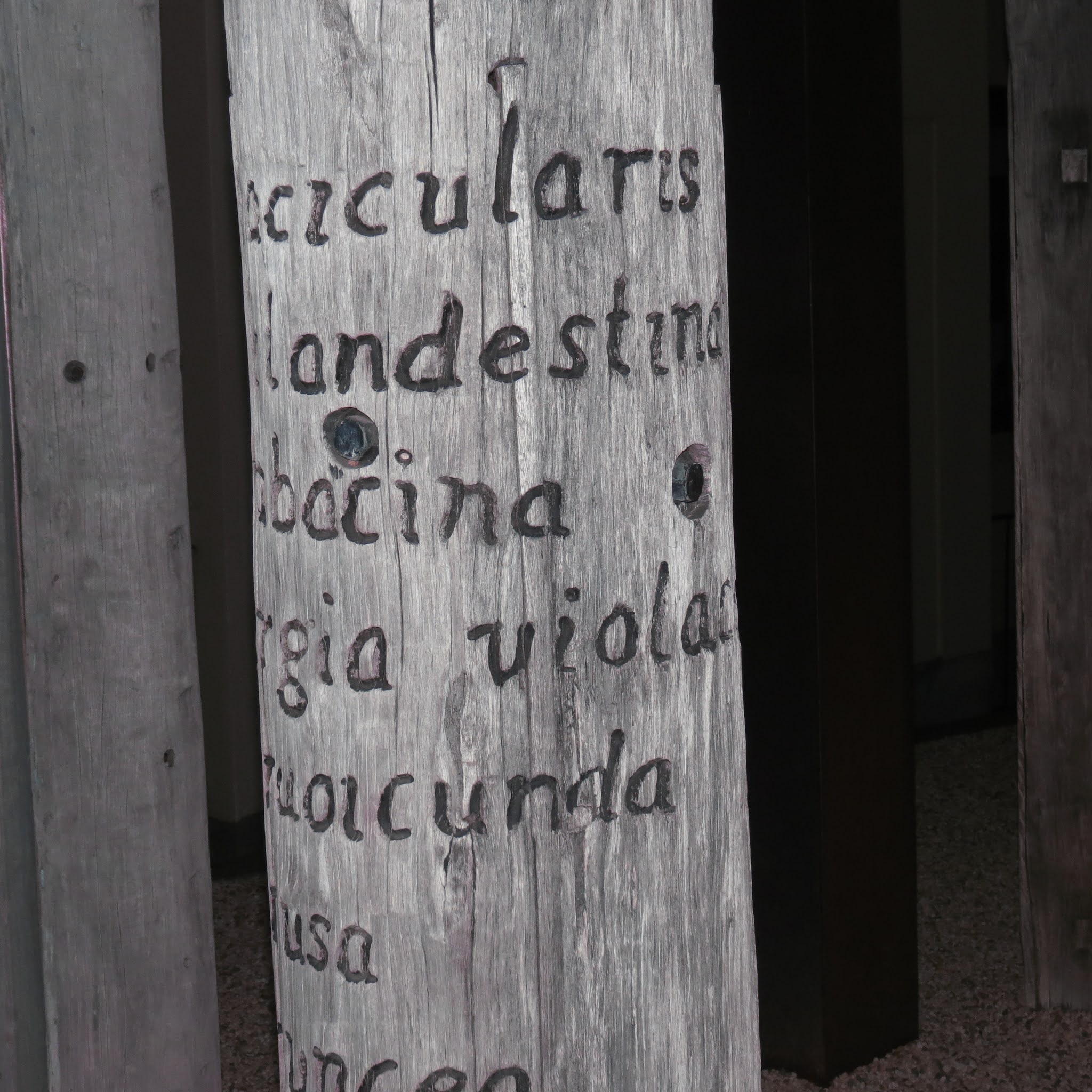
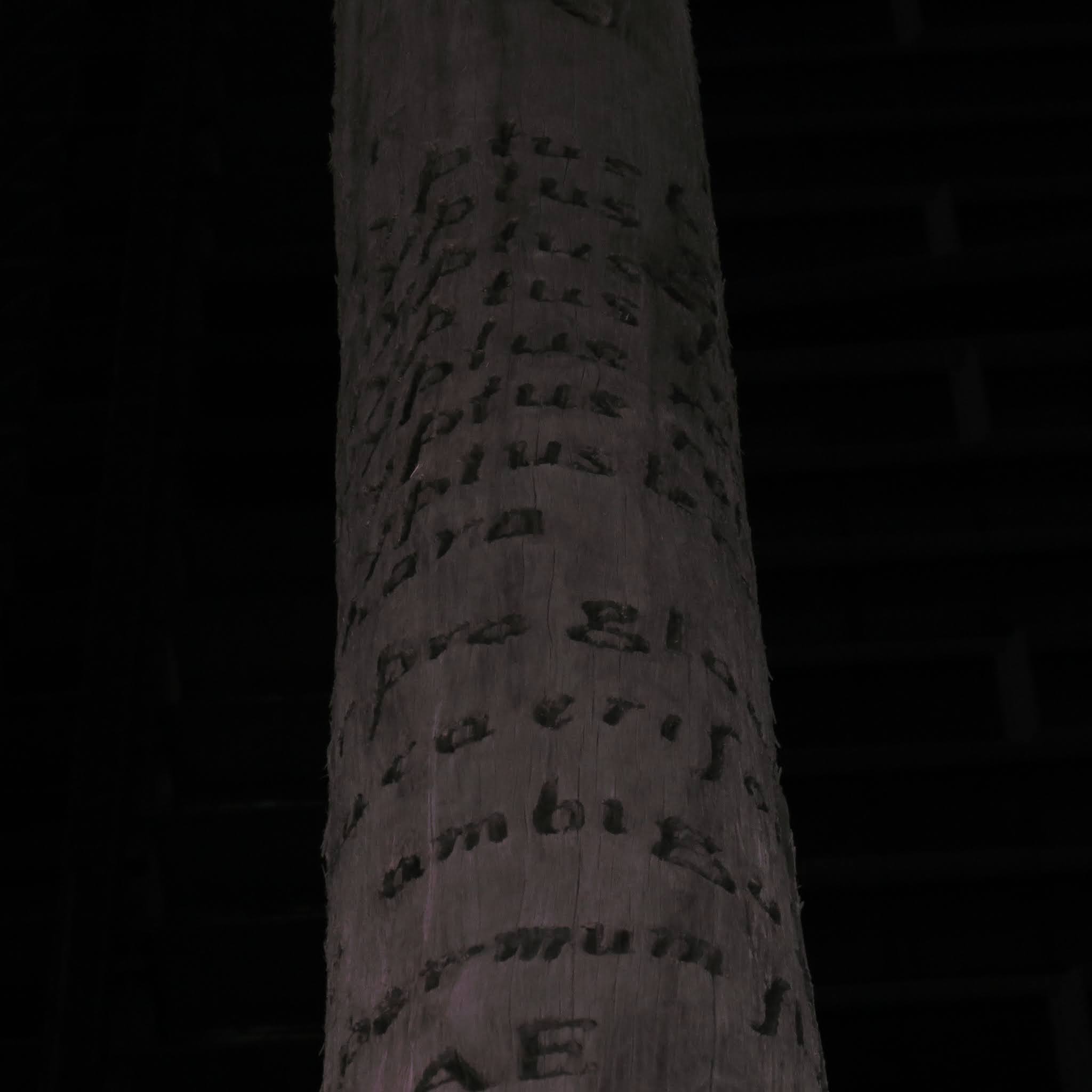
In 1995 the Museum of Sydney opened on the site. A forest of pillars made of timber, stone and steel stands adjacent to the museum entrance.

This installation by Janet Laurence and Fiona Foley, edge of the trees, symbolises the interaction between aboriginal and non-aboriginal people at this important site of early contact


Friday, March 13, 2020

The Tank Stream – Sydney – From Gadigal Water to Stormwater Drain

Aboriginal and Torres Strait Islander readers are advised that this page talks about Aboriginal people who have died, including a burial found beside the Tank Stream, and that some of the old pictures may show people who have died.

If you walk down Pitt Street from Martin Place towards the Quay, you're walking along a creek. You can't see it, you can't hear it, and most of the office workers stepping over it every morning have no idea it's there. But the Tank Stream is the reason Sydney sits where it does. It's the little run of fresh water that made Arthur Phillip pick Sydney Cove in January 1788, it gave the colony its first water supply, it got fouled within a generation, and it ended up as a stone and brick drain under the CBD. It still flows into the harbour at Circular Quay today.

I've written about it a few times over the years, so I've pulled all my Tank Stream posts together into this one page, with my old photos and words, and added a lot more history and pictures.

Tank Stream, Sydney, 1842, sepia watercolour by John Skinner Prout
The Tank Stream in 1842, painted by John Skinner Prout. By then the stream was already more drain than drinking water. John Skinner Prout, State Library of New South Wales, public domain, via Wikimedia Commons

Before the Tanks: Gadigal Country and Warrane

Long before the First Fleet turned up, this little valley was Gadigal country. The Gadigal (also written Cadigal) are the people most commonly accepted as living around Sydney Cove, and the Tank Stream catchment gave them a bit of everything within a short walk: harbour, estuary, rock platform, creek, open forest and wetland. Sydney Water calls the area by its Aboriginal name, Warrane, and describes the Tank Stream as the main source of fresh water in the Warrane (Circular Quay) area. Nobody knows the stream's own Aboriginal name. The City of Sydney's Barani history site says plainly that it isn't known, but that the stream mattered as drinking water and for everything that grew along it.

Some of that history has survived two hundred years of building. In the late 1990s, archaeologists digging ahead of the Angel Place redevelopment, just north of Martin Place between Pitt and George Streets, found a small patch of soil that dated from before 1788. In it were 54 stone artefacts, most of them less than 2 cm long, the chips left over from making stone tools. As the Barani writers put it, Aboriginal people sat just metres from the Tank Stream and made their tools there. A few more artefacts turned up later further down the stream, along George Street, when the Ivy nightclub site was redeveloped.

People were buried along the stream too. More than a century before the Angel Place dig, workmen building additions to the General Post Office in Martin Place found an Aboriginal skull in the buried banks of the Tank Stream. The papers of the day called a hole in it a spear wound, but Barani notes it could have had a number of causes. What became of the skull isn't known. Back then it was common for Aboriginal remains to be collected or sold to museums and private collectors.

The Stream's Course: From the Swamp to the Cove

The Tank Stream rose in marshy ground roughly bounded by today's Elizabeth, Market, Pitt and Park Streets, just to the west of Hyde Park. According to W. V. Aird's 1961 history of Sydney's water supply, it soaked through the soil between Pitt and George Streets before forming a proper channel near King Street, then ran north to the cove. At high tide it met the harbour at what's now the corner of Bridge and Pitt Streets. Its whole catchment was about 65 hectares, roughly the size of the CBD itself.

You can still feel it in your legs. Barani points out that if you walk west from Macquarie Street down any of the cross streets, the road dips down to where the Tank Stream ran and then climbs again towards George Street. That dip is the valley the whole city is built in.

The stream also split the town in two. The eastern side was kept for the governor, government and administration, and the convicts lived on the western side, out towards the Rocks. That's why Bridge Street, where the crossing was, became the main link between east and west Sydney.

Watercolour of Sydney Cove in 1839 showing the mouth of the Tank Stream
Circular Quay and the mouth of the Tank Stream, Sydney Cove, painted by Frederick Garling Jr. in 1839. Frederick Garling Jr., public domain, via Wikimedia Commons
Watercolour view of the Tank Stream, about 1842
A View of Tank Stream, an unknown artist's watercolour from about 1842. Unknown artist, State Library of New South Wales, CC0, via Wikimedia Commons

1788: "Near the Run of Fresh Water"

The colony was meant to go to Botany Bay, on the say-so of Sir Joseph Banks, who'd been there with Cook in 1770. When the fleet got there, Phillip found no decent fresh water, so he took boats north looking for something better and found Port Jackson. Cook had sailed past it and named it in 1770 but never gone in.

David Collins, the colony's judge-advocate, wrote the line everyone quotes. The governor's party anchored off the cove on the evening of the 25th of January 1788, and the spot chosen for the camp "was at the head of the cove, near the run of fresh water, which stole silently along through a very thick wood, the stillness of which had then, for the first time since the creation, been interrupted by the rude sound of the labourer's axe".

Collins also gives us the first bridge. In October 1788 "a gang of convicts were employed in rolling timber together, to form a bridge over the stream at the head of the cove". That crossing is where Bridge Street got its name, which Governor Macquarie made official in 1810.

From My 2020 Post: The Tank Stream – Sydney


When Arthur Phillip First Saw What Is Now Circular Quay & The Freshwater Estuary That Ran Into The Quay, He Must’ve Sighed One Of The Biggest Sighs Of Relief, After Being Let Down With What He’d Been Told About Botany Bay, & That The Land Was Fertile. 
Once the First Fleet arrived in Botany Bay, Arthur Phillip was left with no choice but to get in a smaller boat & search the coast to the north, & that’s how they came upon Port Jackson, which had been marked on Captain Cook’s chart from 1770.
 

The Watercourse Named The Tank Stream Was An Important Source Of Fresh Water For Aboriginal People Before European Settlement. As The 19th Century Progressed & The Population Of Sydney Grew, The Tank Stream  Was First Polluted & Then Channeled & Diverted Underground Into A Series Of  Drains & Pipes.
Fifty Four Worked Stone Artefacts Were Discovered In The Late 1990s During Excavations For The Construction Of The City Recital Hall At Angel Place Which Was Built Above A Section Of The Tank Stream.
This Discovery Shows That Aboriginal People Sat Just Metres From The Stream Making Stone Tools.


From My 2016 Post: Tank Stream Bridge & Head of Sydney Cove

Bridge Street, Northern Side, Between George And Pitt Streets


In October 1788 A Timber bridge was built to span the tank stream at this spot, which was then The Head Of Sydney Cove. In 1803–1804 the structure was replaced by a stone bridge. 

When Governor Phillip inspected Port Jackson in January 1788 he was induced to start a settlement there because Of A Rivulet At The Head Of Sydney Cove Where Wild celery parsley & spinach flourished - healthy vegetables for scurvy patients. A Swampy Spring near the western edge of Today's Hyde Park, Was The Birthplace Of This Rivulet, which fell 100 feet as it wandered Eastward Over sandstone Rocks To King Street.  Then nourished by two springs, one at  King Street and another at Spring Street It Flowed to Bridge Street The Head Of The tidal estuary.

To save the life stream, Governor Phillip in March 1788 wisely decreed that 

"the run of water which supplies the settlement was observed to be only a drain from the swamp. To protect it from the sun, the governor forbids the cutting down of any tree within 50 feet of the run, than which there has not been a finer found in any one of the coves of the harbour."

In February 1791 surveyor Alt deepened the stream Near Bridge Street and in April 1792 the governor had ditches dug flanking the rivulet. A paling fence was erected to keep out stock and cherish the shrubs growing on its Bank.

The Rivulet was christened the tank stream in May 1792 after his Excellency had convicts Hew a tank from sandstone which held 8000 gallons of water.

Bridge Street where the Tank Stream turned into the tidal waters Of Sydney Cove became the main link between East and West Sydney. Collins in October 1788 stated that a gang of convicts were employed in rolling timber together to form a bridge over the stream at the head of the Cove. Soon footbridges spanned the rushing waters, followed later by a circular [arched?] bridge. Alas, an overloaded bullock wagon broke through the decking and put the bridge out of action.

The Tanks That Gave the Stream Its Name

The Tank Stream was never much of a river. In dry weather it couldn't keep up, and the early 1790s were dry. So the governor had tanks cut into the sandstone beside the stream to hold water in reserve, and that's where the name comes from.

Collins tells the story as it happened. In late 1791, with the dry weather hurting the water supply, the governor "employed the stone-mason's gang to cut tanks out of the rock, which would be reservoirs for the water large enough to supply the settlement for some time". Then in May 1792 he records that "a tank that would contain about seven thousand nine hundred and ninety-six gallons of water, with a well in the centre fifteen feet deep, was finished, and the water let into it". That's the "8000 gallons" in my older posts.

The State Heritage Register puts the cutting of the tanks in 1790, says there were three or four of them, and gives each one about 20,000 litres and 5 metres deep. The City of Sydney's old water history says three tanks were built during a drought in 1790. Aird places one at what's now the corner of Pitt and Spring Streets, and the other two in Bond Street on the other side of the stream. None of them is thought to have survived. The stretch between Hunter and Bond Streets, where they were, is now a stone arch and a 1962 concrete box under Australia Square.

Keeping the water clean was a battle from day one. Phillip had the stream fenced against stock as early as 1791, and later trenches were cut alongside it to catch the dirty runoff before it got in. The heritage listing says that in 1795 orders were made against grazing stock or cutting trees within about 15 metres of the stream. Collins records that early in 1796 the governor had to repeat in public orders that "when an order was given by him, it was given to be obeyed", because people kept opening the paling fence and dipping dirty vessels in the water above the tanks, "thereby disturbing and polluting the whole stream below".

From My 2015 Post: Tank Stream - Macquarie Street To Circular Quay


In October 1788, a timber bridge was built to span the Tank Stream at this spot, which was then the head of Sydney Cove. In 1803–1804 the structure was replaced by a stone bridge.

When Governor Phillip inspected Port Jackson in January 1788 he was induced to start a settlement there because of the rivulet at The Head Of Sydney Cove, where wild celery, parsley and spinach flourished – healthy vegetables for scurvy patients. A swampy spring, near the western edge of today's Hyde Park, was  the birthplace of this rivulet which fell 100 feet As it wandered Eastward over sandstone rocks to King Street. Then, nourished by two springs, one at King Street and another at Spring Street, it flowed to Bridge Street, the head of the tidal estuary.

To save the life stream, Governor Phillip in March 1788 wisely decreed that "the run of water which supplies the settlement was observed to be only a drain from the swamp. To protect it from the sun, the governor forbids the cutting down of any tree within 50 feet of the run, than which there has not been a finer found in any one of the coves of the harbour."

In February 1791 surveyor Alt deepened the stream near Bridge Street, and in April 1792 the governor had ditches dug flanking The Rivulet. A Paling fence was erected to keep out stock and cherish the shrubs growing on its banks. The rivulet was christened the tank stream in May 1792 after his Excellency had convicts hew a tank from sandstone which held 8000 gallons of water. Bridge St where the tank stream debouched into the tidal waters of Sydney Cove, became the main link between eastern and western Sydney. Collins in October 1788 Stated that a gang Of convicts were employed in rolling timber together to form a bridge over the stream at the head of the Cove. Soon footbridges spanned the [unfinished – John to complete]

From Drinking Water to Open Sewer

As the town grew, so did the mess. More houses, more animals, more cleared land and fewer trees meant more runoff, and it carried human and animal waste and household rubbish straight into the stream. Aird says it was little more than an open sewer for about ten years before it was finally abandoned as a water supply in 1826. The heritage listing says Governor Brisbane disallowed it for drinking that year, and that Governor Darling had seven wells dug around the town and people put to work fixing the drains.

The answer to the water problem was Busby's Bore, John Busby's tunnel carrying water from the Lachlan Swamps (now Centennial Park) to Hyde Park. Convicts started digging it in September 1827. It began supplying drinkable water in 1830 but wasn't finished until 1837.

Standpipe for Busby's Bore at Hyde Park in 1857
The standpipe for Busby's Bore near the corner of Elizabeth and Market Streets, Hyde Park, in 1857. The Bore took over from the Tank Stream as the town's water supply. Attributed to Charles Woolcott, public domain, via Wikimedia Commons
Section of old wooden water pipe from Busby's Bore
A section of wooden pipe from Busby's Bore, on display at the Powerhouse Museum. Mx. Granger, CC0, via Wikimedia Commons

With the drinking water gone elsewhere, the Tank Stream became the town's drain. The heritage listing says it was an unofficial sewer by 1826 and an official one by 1857, emptying straight into the harbour at the Quay. Around 1850, when Semi-Circular Quay was built, the stream had to be extended north of Bridge Street to reach the new waterline. The swamp that fed it was drained around 1850, according to a 1953 Sunday Herald article cited by Wikipedia, and the new Bennelong sewer works of 1857 drained it further. With less clean water flushing it, the Tank Stream got even filthier. Until 1888 it also carried salt water, which the council stored in reservoirs for cleaning the streets and keeping down the dust.

Engraving titled The Old Tank Stream, Sydney, 1873
"The Old Tank Stream, Sydney", an engraving published in 1873, looking back to the days before it was covered over. Booth (1873), public domain, via Wikimedia Commons

The 1860s Drain and the Stormwater Channel

The smell is what finally got the stream covered. In the late 1850s work started on roofing the Bridge Street to Hunter Street section, and the sandstone arch over it was built in 1860. The heritage listing describes the channel as part stone and part brick in its lower half, with a sandstone arch roof. In 1866 the section from just south of Hunter Street to Martin Place was built as an open stone channel, and it was roofed over in the 1870s. Through the late 1870s the City Council kept going. A brick egg-shaped ("oviform") sewer went in from Pitt Street to Bridge Street in 1878, through what had been private land, and in 1879 the Bridge to Hunter Street floor was relaid in mortar with a terracotta scouring channel down the middle. By 1880 brick had reached the full width of King Street.

What's down there now is a patchwork of almost two hundred years of plumbing. According to the heritage listing, the old fabric survives from King Street, between Pitt and George, all the way to Circular Quay. There are 1866 brick drains enclosed in 1876 near King Street and between Martin Place and Angel Place. A historic oviform sewer runs towards the old GPO. Under Australia Square there's a semicircular stone arch with a shallow V-shaped floor, then a concrete box put in when the Square was built in 1962. Between Abercrombie Lane and Bridge Street there's a stone arch from about 1860. From Bridge Street the stream turns to run under Pitt Street for the last 185 metres to the Quay. A lot of the channel was replaced with modern pipe after the Second World War, when little thought went into its history, under the GPO in 1940, behind Pitt Street in 1958 and 1962, at Australia Square in 1965, at the old GPO site in 2001 and at Angel Place in 2002.

Today the Tank Stream is a stormwater channel looked after by Sydney Water, and it's on the NSW State Heritage Register, listed on 2 April 1999. Between 2024 and 2027 Sydney Water is restoring the old culvert under First Fleet Park at Circular Quay, and for a while you could actually see a bit of it from the street.

Brick-lined arched tunnel of the Tank Stream underground
A brick-lined section of the Tank Stream, photographed on a tour in November 2008. Shermozle, CC BY-SA 3.0, via Wikimedia Commons
Underground stone channel of the Tank Stream with water running through it
Inside the Tank Stream on a November 2008 tour. Shermozle, CC BY-SA 3.0, via Wikimedia Commons
Construction site at First Fleet Park exposing the Tank Stream culvert
Sydney Water's restoration works at First Fleet Park, Circular Quay, in June 2026, when a rare stretch of the Tank Stream culvert was opened to view. Aebion, CC0, via Wikimedia Commons

Tank Stream Way

Up above, the stream has left its name on a little laneway off Bridge Street. The heritage listing says the 40-metre stretch of channel between Abercrombie Lane and Bridge Street is a stone arch from about 1860, and that "on the ground here, Tank Stream Way preserves the name of the stream". Here's what I wrote about it in my laneways series.

From My 2020 Post: Tank Stream Way - Laneways - Sydney - NSW


Tank Stream Way Was Once Part Of Hamilton Street Which Ran Between Bridge And Hunter Streets, Named After Hamilton's Biscuit Factory. Most Of It Disappeared Underneath The Australia Square Development, Leaving Two Remnant Laneways, And This Section Was Renamed In 1981. In Bridge Lane, Once The Site Of The Town’s First Lumber Yards, Look For The Old Warehouse Doorway, Now The Entrance To The Establishment Hotel. As Late As The 1860s There Was Still Vacant Land Sliced Between The Cottages In This Area, But By The End Of The 19th Century It Had Become A Favoured Location for Warehouses, Including Several Tea Merchants Stores. 

Tank Stream Way laneway between city buildings in Sydney
Tank Stream Way seen from the south-east, April 2024. Ymblanter, CC BY-SA 4.0, via Wikimedia Commons

You can read the whole laneway post here: Tank Stream Way - Laneways - Sydney - New South Wales.

The Tank Stream Fountain

The best-known memorial to the stream is down at Herald Square, on the corner of George and Alfred Streets near Circular Quay. The Tank Stream Fountain is a cascading fountain by the sculptor Stephen Walker, with four bronze columns rising out of the pool. All over it are Australian plants and animals, frogs, snakes, goannas, echidnas, crabs, birds and tortoises, that look like they're playing in the water. The kids love it, which is the whole idea. It's also known as the Children's Fountain, dedicated to "all the children who have played around the Tank Stream".

The fountain was a present from John Fairfax & Sons, publishers of the Sydney Morning Herald, to mark 150 years since the first Sydney Herald came out on 18 April 1831. The City of Sydney accepted the offer on 25 June 1979. It was the biggest private gift the city had ever had at that point. The council was already planning to tidy up the streetscape, so the extra work went onto its existing contract with Melocco Bros. The extra landscaping cost $356,154.50, subsidised down to $183,495.50, and the paper matched that and paid for the sculpture as well. The Lord Mayor dedicated the fountain on 16 April 1981.

Walker's brief from Fairfax was "to create an association of water and bronze", and he tied it to the Tank Stream, the settlement's first water supply. Walker was born in Melbourne in 1927, studied painting in Melbourne and Hobart, and started making sculpture in 1952. In the 1950s and 60s he studied in England, Rome, Florence and Prague before coming home in 1964. The fountain is heritage-listed in its own right, and the City of Sydney started cleaning and conserving the bronzes in September 2026, with the work expected to take about two months.

Bronze Tank Stream Fountain in Herald Square, Sydney
The Tank Stream Fountain in Herald Square, by Stephen Walker, 1981. Whiteghost.ink, CC BY-SA 4.0, via Wikimedia Commons
Detail of bronze native animals on the Tank Stream Fountain
Close up, the native animals look like they're playing in the pools. Whiteghost.ink, CC BY-SA 4.0, via Wikimedia Commons
Bronze lizard on the Tank Stream Fountain
A bronze lizard on the fountain. Tony Hisgett, CC BY 2.0, via Wikimedia Commons
Tank Stream Fountain at Circular Quay in 2012
The fountain in 2012. Sardaka, CC BY 3.0, via Wikimedia Commons
Herald Square in Sydney with the Tank Stream Fountain
Herald Square, with the fountain at its centre, in 2023. -wuppertaler, CC BY 4.0, via Wikimedia Commons
Bronze sculptures of the Tank Stream Fountain, Herald Square
Another view of the fountain and its bronze creatures, 2023. -wuppertaler, CC BY 4.0, via Wikimedia Commons

The Plaques, the Tours and Where to See It

The fountain carries its own plaques. One, on the western front, explains how Walker drew on the spot's history. Another says the fountain and the landscaping of the square were donated "for the pleasure and enjoyment of citizens and visitors" by John Fairfax & Sons. The City of Sydney's record of the inscriptions includes a little potted history that starts with 1788: "A stream flows into Sydney Cove. The European settlement of Australia begins along its sandstone banks. Soon drought strikes and storage tanks are carved from the stone, hence the name."

Tank Stream Fountain with commemorative plaque
The fountain and one of its plaques, 2018. Collywolly, CC BY-SA 4.0, via Wikimedia Commons
Plaque commemorating the Tank Stream, Alfred Street, Circular Quay
The plaque near the fountain commemorating the Tank Stream, which gave the first European settlement its water. Collywolly, CC BY-SA 4.0, via Wikimedia Commons

If you want to actually get down there, Sydney Living Museums and Sydney Water have run Tank Stream tours, usually in April and November. Tickets are limited and handed out by ballot, so you need a bit of luck. The way in is through the basement of the Australia Square tower, which is also Sydney Water's inspection point, and there's an information area behind locked gates at the start of the tour. If you miss out, Barani says there's a small Tank Stream exhibition in the basement of the old General Post Office in Martin Place, with an excavated piece of the original brick oviform drain. You go in directly under the clock tower. Otherwise just follow the street names, the artwork and the pub names, and the dip in the road, from Hunter Street down Pitt Street to the Quay.

Timeline

  • Before 1788 – Gadigal people use the stream for water and resources; stone tools are made on its banks (Angel Place site).
  • January 1788 – The First Fleet moves from Botany Bay to Sydney Cove; the camp is set up "near the run of fresh water".
  • October 1788 – Convicts roll timber together to form the first bridge over the stream at the head of the cove.
  • 1790 – The heritage listing and the City of Sydney date the cutting of the tanks to a 1790 drought.
  • 1791 – The stream is fenced against stock; Collins says the stonemasons were cutting tanks in late 1791.
  • May 1792 – Collins records a tank of about 7,996 gallons, with a well 15 feet deep, finished and filled.
  • 1795–96 – Orders against grazing and tree-cutting near the stream; people still fouling the water above the tanks.
  • 1803–04 – A stone bridge replaces the timber one at Bridge Street (according to my older posts).
  • 1810 – Macquarie names Bridge Street.
  • 1826 – The stream is abandoned as drinking water; Darling has seven wells dug.
  • 1827–1837 – Busby's Bore is built; it supplies water from 1830.
  • c.1850 – Semi-Circular Quay is built and the stream is extended north of Bridge Street; the source swamp is drained.
  • 1857 – The Tank Stream becomes an official sewer.
  • 1860 – The sandstone arch between Bridge and Hunter Streets is built.
  • 1866–1880 – Open stone and brick channels are built and roofed over; brick oviform sewers go in.
  • 1888 – Salt water stops being carried in the stream for street cleaning.
  • 1962–1965 – Concrete box replaces the channel under Australia Square; tour access is built there.
  • 16 April 1981 – The Tank Stream Fountain is dedicated in Herald Square; Hamilton Street's remnant becomes Tank Stream Way the same year.
  • Late 1990s – The Angel Place dig finds 54 Aboriginal stone artefacts beside the stream.
  • 2 April 1999 – The Tank Stream is added to the NSW State Heritage Register.
  • 2024–2027 – Sydney Water restores the culvert under First Fleet Park.
  • September 2026 – Conservation work starts on the fountain's bronzes.

Where the Sources Disagree

  • When the tanks were cut: the State Heritage Register and the City of Sydney say 1790. Collins has the stonemasons cutting tanks in late 1791 and the first one finished in May 1792. My older posts say the stream was "christened" in May 1792.
  • How big the tanks were: Collins gives about 7,996 gallons for the May 1792 tank, which is roughly 36,000 litres. The heritage listing gives about 20,000 litres for each of three or four tanks. These may not be measuring the same thing.
  • How many tanks there were: the City of Sydney and Aird say three, and the heritage listing says three or four.
  • The stone bridge: my older posts date the stone bridge at Bridge Street to 1803–04. The heritage listing (as quoted on Wikipedia) says a stone arch bridge replaced the wooden ones in 1792, and its own timeline lists the "first bridge crossing" in 1792, even though Collins describes a timber bridge in October 1788.
  • When it stopped being drinking water: Aird says it was abandoned in 1826 after about ten years as an open sewer, and the heritage listing has Brisbane disallowing it in 1826 but says it was the main source of fresh water until Busby's Bore was finished in 1837.
  • Busby's Bore: Aird (as cited on Wikipedia) dates the next supply to 1830, when the Bore started giving water, and the heritage listing says the Tank Stream was the main supply until the Bore was finished in 1837.
  • Tree-cutting order: my older posts quote an order of March 1788 against cutting trees within 50 feet of the stream. The heritage listing has the order in 1795, at about 15 metres. I couldn't find the 1788 wording in a source I could open.
  • The Angel Place dig: my 2020 post says 1996. Barani says the late 1990s, and the University of Sydney catalogues the reports as the "Angel Place Project 1997".

My Earlier Posts

Sources

  • David Collins, An Account of the English Colony in New South Wales, Vol. 1 (1798), Project Gutenberg: https://www.gutenberg.org/ebooks/12565
  • NSW State Heritage Register, Tank Stream (SHR 00636), as reproduced in Wikipedia, "Tank Stream" (CC BY): https://en.wikipedia.org/wiki/Tank_Stream
  • W. V. Aird, The Water Supply, Sewerage and Drainage of Sydney (MWS&DB, 1961), as cited in Wikipedia, "Tank Stream"
  • City of Sydney, "Tank Stream Fountain": https://www.cityofsydney.nsw.gov.au/fountains-and-water-features/tank-stream-fountain
  • Paul Irish and Tamika Goward, "The Tank Stream", Sydney Barani (City of Sydney): https://www.sydneybarani.com.au/sites/the-tank-stream/
  • Sydney Water, "Circular Quay Tank Stream work": https://www.sydneywater.com.au/water-the-environment/what-we-are-doing/projects-in-your-area/circular-quay-pump-station-and-tank-stream-work.html
  • Wikipedia, "Busby's Bore": https://en.wikipedia.org/wiki/Busby%27s_Bore
  • Wikipedia, "Bridge Street, Sydney": https://en.wikipedia.org/wiki/Bridge_Street,_Sydney
  • Wikipedia, "Port Jackson": https://en.wikipedia.org/wiki/Port_Jackson
  • University of Sydney Library, Godden Mackay, Angel Place Project 1997 Archaeological Excavation Final Report, Vol. 1 (1998): https://digital.library.sydney.edu.au/nodes/view/9364
  • Pictures: Wikimedia Commons, Category:Tank Stream and Category:Busby's Bore (credits under each picture)