Search This Blog

Showing posts with label Rookwood. Show all posts

Thursday, October 15, 2026

Quong Tart – The Scottish Mandarin of Sydney – Braidwood, the Tea Rooms and the QVB – 1850 to 1903

Quong Tart came to the Braidwood goldfields as a nine-year-old Chinese boy and ended up one of the best-known men in Sydney. He picked up a Scottish accent, wore a kilt, recited Burns, made money from gold claims, and then opened tea rooms that gave Sydney something it hadn't really had before: a decent, affordable place to sit down for tea and a meal. He fought the opium trade, stood up for Chinese people at a time when the colony was openly hostile to them, was made a mandarin by the Chinese Emperor, and was given a funeral fit for a governor. Not bad for a lad who arrived with an uncle and a shipload of miners.

Oil portrait of Quong Tart, about 1885
Portrait of Mei Quong Tart, about 1885, oil on canvas, State Library of New South Wales. Unknown artist, public domain, via Wikimedia Commons

From Taishan to Bell's Creek

Who he was

The Australian Dictionary of Biography (ADB) says he was born in 1850 at Hsinning (Sun-ning) in Canton Province, the son of a dealer in ornamental wares. That district is today's Taishan in Guangdong. His full name was Moy (or Mei) Quong Tart. Moy was the family name, and in Chinese the surname comes first, so all those Sydneysiders calling him "Mr Quong Tart" were really using his given name. The Daily Telegraph pointed this out with some amusement in 1888, telling its lady readers they had "for all these years" been calling "the admirable Quong Tart by his Christian name". "Mei" is the modern Mandarin spelling of Moy, and that's why you'll see him called Mei Quong Tart today.

The boy on the goldfields

At nine he came out to New South Wales with an uncle, who was in charge of a shipload of Chinese labourers bound for the Braidwood goldfields. He lived in Thomas Forsyth's store at Bell's Creek. Forsyth was a storekeeper from Argyllshire, and the Sydney Morning Herald and the Chinese Museum's biography both say the boy picked up his Scottish accent and his love of Robert Burns there.

Before long he was taken in by Robert Percy Simpson and his wife Alice (née Want). The ADB says Alice taught him English and converted him to Christianity. He became an Anglican, and he stayed a keen one for the rest of his life. The Simpsons got him buying shares in gold claims, and by 18 he was a wealthy young man.

Old hotel building in Braidwood
An old hotel building in Braidwood, the goldfields town where Quong Tart grew up. Photo by Sheba_Also, CC BY-SA 2.0, via Wikimedia Commons

A local identity

He stayed on at Bell's Creek after the Simpsons moved to Sydney and built himself a cottage there. Around Braidwood and Araluen he was everywhere: captain of the local cricket team, founder of a football team and a horse-racing man. The ADB says he ran a series of popular Chinese horse races at Jembaicumbene. He also worked as an interpreter for the Chinese miners. The South Coast History Society says his standing in the district helped keep out the kind of racism found on other goldfields.

He was naturalised on 11 July 1871 and joined a lodge of Oddfellows. In 1877 he went on the board of the Bell's Creek public school, and in 1885 he became a Freemason.

The Scottish Chinaman

This is the bit everyone remembers. At social functions Quong Tart turned up either in mandarin robes or in a kilt and sporran, according to the State Library of NSW. He told jokes, recited Burns and sang Scottish ballads. The South Coast History Society adds that he played the bagpipes. The Herald described him as having a "thick Scottish brogue". He got the nicknames "Quong Tartan" and "Quong MacTartan". The ADB says his "Scottish songs and recitations mingled with quaint wit" were a guaranteed crowd-puller, and he was in constant demand as a speaker at charity and social events.

Photograph of Mei Quong Tart
Mei Quong Tart. Society of Australian Genealogists (PR 6/25/1), public domain, via Wikimedia Commons

Tea for Sydney

The first tea shop

In 1881 he went home to China to see his family. The Herald says his mother had picked out a Chinese bride for him, but he went back mainly to tell them his future was in Australia. When he came back he opened a tea and silk store in Sydney, then a tea shop where customers could sample his China tea. It went over so well that he opened a whole chain of them. According to the Herald, the first was in King Street, where he put chairs and tables out so people could try the tea. Curator Jennifer O'Callaghan told the paper that in the Sydney of the day there were really only taverns for men or expensive restaurants, and "no cafes or tea shops selling inexpensive food".

His rooms ended up in the Sydney Arcade, the Royal Arcade and King Street, plus George Street, Moore Park Zoo and the Haymarket theatre district.

Royal Arcade Sydney in 1892
The Royal Arcade, Sydney, in 1892. Quong Tart had tea rooms in the arcade. New South Wales Government Printing Office, public domain, via Wikimedia Commons

The Loong Shan Tea House, King Street

In December 1889 he opened his grandest place yet, the Loong Shan Tea House at 137 King Street. It had marble fountains and ponds of golden carp. The tea and grill rooms were on the ground floor and a reading room was upstairs. Governors and premiers ate there, and the Herald calls it one of the most important political meeting places in town. The State Library says Louisa Lawson, Henry Lawson's mother, drank her tea in the Loong Shan while she organised the campaign for women's votes. Wikipedia calls his rooms the site of Sydney's first suffragette meetings. The site is now part of the Glasshouse on King Street, home of the Tea Centre.

King and Elizabeth Street corner Sydney 1890
The corner of King and Elizabeth Streets in 1890, a year after the Loong Shan opened further down King Street. Arthur K. Syer, State Library of New South Wales collection, no known copyright restrictions, via Wikimedia Commons

The Elite Hall at the Queen Victoria Markets

When the Queen Victoria Markets building (today's QVB) went up in 1898, Quong Tart took space in it. The ADB dates the opening of his dining hall there to December 1898. The tea rooms were on the ground floor, near the middle of the building on the George Street side. A carpeted staircase led up to the Elite Hall, which held nearly 500 people and had a stage with a carved proscenium. At the other end was the Elite Dining Saloon.

The State Library puts his success down to good food at fair prices, the quality of the tea and the décor: fountains, ferneries and fishponds, reading rooms and non-smoking rooms for ladies. A place where a woman could comfortably sit down in town on her own was a big thing in those days. He also hung local painters' work on his walls and promoted concerts.

Invitation card to the 1898 opening ball of the Queen Victoria Market Building
Invitation card to the ball for the opening of the Queen Victoria Market Building, 21 July 1898. Unknown author, public domain, via Wikimedia Commons
The Queen Victoria Building Sydney today
The Queen Victoria Building today. Quong Tart's Elite Hall was inside, and so was the office where he was attacked. Photo by Bernard Spragg, CC0, via Wikimedia Commons

A fair boss

Most of his staff were European women working as waitresses. He gave them time off to go shopping and paid them when they were sick, which the ADB calls an "enlightened policy". The State Library adds reasonable hours for the day, meals in the restaurant and free time for reading and needlework. In April 1894, before one of his trips, his employees wrote him a bon voyage letter, and it still survives.

Bon voyage letter from employees to Quong Tart, 1894
Bon voyage letter to Quong Tart from his employees, 20 April 1894. Unknown author, public domain, via Wikimedia Commons
Quong Tart tea house sign at the Chinese Museum Melbourne
A Quong Tart's Tea House sign, now held at the Chinese Museum in Melbourne. Photo by Joyofmuseums, CC BY-SA 4.0, via Wikimedia Commons

Margaret Scarlett

On 30 August 1886 he married Margaret Scarlett, a young Englishwoman who was a schoolteacher. Her family didn't approve. O'Callaghan told the Herald that her father, a business associate of Quong Tart's, stayed away from the wedding, and that "inter-racial marriage was considered shocking". They had two sons and four daughters. He had each child baptised in a different Christian denomination so nobody could accuse him of favouring one church. The family lived at Gallop House in Ashfield, and the girls went to Presbyterian Ladies' College at Croydon, the first Asian students at the school. The South Coast History Society also notes that he appears to have been supporting a wife and children in China at the same time.

After he died, Margaret published his story in 1911 as Quong Tart, or How a Foreigner Succeeded in a British Community.

The Fight Against Opium

In 1883 he went with Sub-Inspector Martin Brennan to look into the Chinese camps of southern New South Wales. Their report showed opium addiction was everywhere. On 24 April 1884 he handed the Colonial Secretary, Alexander Stuart, a petition calling for a ban on opium imports. That June he took the campaign to Melbourne and Ballarat. In 1887 he tried again with a second petition to parliament and a pamphlet, A Plea for the Abolition of the Importation of Opium. The State Library notes that the clergy were on his side, but politicians and businessmen argued that opium wasn't addictive and the colony needed the import revenue. He never lived to see the imports stopped.

Speaking Up for the Chinese

He did all this while anti-Chinese feeling in the colony was at its worst. In 1887 it flared badly, and the ADB says he spent a great deal of time defending his countrymen and interpreting for them. In 1888 the ship Afghan arrived in Sydney with a large number of Chinese passengers and was held in quarantine, and the State Library says Quong Tart helped mediate between the passengers and the government. He was one of the founders of the Lin Yik Tong, the first Chinese merchants' association in Sydney, and he sat on the 1891–92 Royal Commission on Alleged Chinese Gambling and Immorality. He co-signed a petition in 1888 asking China to open a consulate in Australia, then sent one in his own name in 1889. The Herald says he acted for years as an unofficial Chinese consul.

The ADB adds a fair caution. It says the wider community saw him as a Chinese leader, but the Chinese community itself didn't necessarily see him that way. It was split into factions and separated from him by "a wide social and cultural gap".

The China Trips and the Mandarin's Robes

His work was recognised in Peking. The ADB says he was made a mandarin of the fifth degree in January 1888 and went back to China that year. Wikipedia says he and Margaret went with their daughter, and that in Canton he met the viceroy Zhang Zhidong and told him about anti-Chinese feeling in Australia. On his third trip, in 1894, he was raised to a mandarin of the fourth degree, the Mandarin of the Blue Button. The Herald says that was roughly like a British earldom.

Quong Tart photographed by Tesla Studios about 1900
Quong Tart, photographed by Tesla Studios, Sydney, around 1900. Tesla Studios, public domain, via Wikimedia Commons

A Big Heart

Between 1885 and 1888 he put on a series of free feasts for the inmates of the destitute asylums. He also gave dinners for the Benevolent Society home at Liverpool and for the newsboys of Ashfield, Summer Hill, Croydon and Burwood. The State Library says he once invited all the city's newsboys to a banquet and another time hosted local Aboriginal people, and that he helped clothe and feed the children of the Waterloo Ragged School. From 1887 well into the 1920s, racehorses were even named after him.

The Attack at the Markets

On 19 August 1902 an intruder savagely assaulted him in his office in the Queen Victoria Markets. The Herald says he was beaten with an iron bar and the attacker got away with just a few pounds. Frederick Duggan was jailed for 12 years. The police saw it as a robbery gone wrong, but not everyone agreed. Letters from his Chinese friends, which the State Library translated for its 2003 centenary display, show some suspected "the Western people" and others blamed Chinese businessmen whose interests his campaigns had hurt.

He partly recovered, but never got back to his old self. He died of pleurisy at Gallop House, Ashfield, on 26 July 1903, about eleven months after the attack. He was around 53.

The Funeral

His biographer Robert Travers, quoted in the Herald, said he was "carried to the grave with all the pomp and ceremony befitting a state governor or a great statesman". Two hundred men escorted the coffin from his Ashfield home to a train that took the funeral party to Rookwood Cemetery. Thousands were waiting there. He was laid out in his mandarin's robes of the Blue Button, with his Masonic apron over the top.

Old Chinese section of Rookwood Cemetery
The old Chinese section at Rookwood Cemetery, where Quong Tart was buried in 1903. Photo by Vincent Öhlander Rice, CC BY 4.0, via Wikimedia Commons

Remembering Him

In 1998 a statue of him went up in Ashfield, and his bust stands near Ashfield railway station. For the centenary of his death, Sydney held a year of events. These included an evening at the State Library, the exhibition No Ordinary Man. Sydney's Quong Tart: citizen, merchant & philanthropist in the QVB in July and August 2004, and a Powerhouse Museum conference, "Quong Tart and his time, 1850–1903". The QVB Tea Room and the Tea Centre in King Street even served "quong tarts" in his honour. His descendants kept Quong Tart as the family surname. The actor Josh Quong Tart is his great-grandson.

Bust of Quong Tart near Ashfield station
The bust of Quong Tart near Ashfield railway station. Photo by Marc Pasquin, public domain, via Wikimedia Commons
Ashfield railway station
Ashfield railway station, close to his memorial. Gallop House, his home, was in Ashfield. Photo by JustARandomEditor123, CC BY-SA 4.0, via Wikimedia Commons

Timeline

  • 1850 – Born at Hsinning (Taishan), Canton Province, China.
  • 1859 – Arrives on the Braidwood goldfields with his uncle, aged nine.
  • c.1868 – Wealthy from gold claims by 18.
  • 11 July 1871 – Naturalised.
  • 1877 – Joins the board of Bell's Creek public school.
  • 1881 – Visits China, then opens a tea and silk business in Sydney.
  • 1883 – Tours the southern Chinese camps with Sub-Inspector Brennan.
  • 24 April 1884 – Presents his anti-opium petition to Alexander Stuart.
  • 1885 – Becomes a Freemason.
  • 1885–88 – Puts on free feasts for destitute asylum inmates.
  • 30 August 1886 – Marries Margaret Scarlett.
  • 1887 – Second opium petition and his Plea pamphlet.
  • January 1888 – Made a mandarin of the fifth degree (ADB) and visits China.
  • December 1889 – Opens the Loong Shan Tea House, 137 King Street.
  • 1891–92 – Sits on the Royal Commission on Chinese gambling.
  • 1894 – Raised to mandarin of the fourth degree (Blue Button).
  • December 1898 – Opens the Elite Hall in the Queen Victoria Markets.
  • 19 August 1902 – Assaulted in his QVM office.
  • 26 July 1903 – Dies of pleurisy at Gallop House, Ashfield.
  • 1911 – Margaret publishes his life story.
  • 1998 – Statue unveiled at Ashfield.
  • 2003–04 – Centenary year of events.

Where the Sources Disagree

  • Date of the attack: The ADB gives 19 August 1902, and the Herald says August 1902. Wikipedia's Death section dates the attack to 26 July 1903, which is actually the day he died. The ADB date fits the "11 months" everyone agrees on.
  • When he became a mandarin: The ADB says January 1888. Wikipedia says 1887 and links the honour to the 1887 Chinese mission. The Herald mentions only the 1894 Blue Button.
  • Where the Scottish streak came from: The Herald and the Chinese Museum credit storekeeper Thomas Forsyth of Argyllshire. The State Library credits his time with the Simpsons.
  • Wealth and the cottage: The ADB, the Herald and the State Library say he was wealthy at 18. Wikipedia has him building the Bell's Creek cottage "aged just 21".
  • Freemasonry: The ADB dates it to 1885 in Sydney. The Herald seems to place it in his Braidwood years.
  • Federation Convention dinner: Wikipedia says delegates to the 1891 Federation Convention dined at the Elite Hall. The ADB dates the Elite Hall to 1898, so if they dined with him in 1891, it was probably somewhere else.
  • Margaret Scarlett: The ADB calls her "a young Englishwoman". The South Coast History Society calls her a Braidwood schoolteacher.

My Earlier Posts

Sources

  • E. J. Lea-Scarlett, "Moy Quong Tart (1850–1903)", Australian Dictionary of Biography, vol. 5, 1974: adb.anu.edu.au/biography/moy-quong-tart-4181
  • State Library of NSW, "Significant individuals: Quong Tart": sl.nsw.gov.au
  • Steve Meacham, "The man who brought cafe society to town", Sydney Morning Herald, 18 July 2003: smh.com.au
  • South Coast History Society, "Mei Quong Tart": southcoasthistory.org.au
  • Chinese Museum, Chinese-Australian Historical Images in Australia, "Tart, Quong": chia.chinesemuseum.com.au
  • National Portrait Gallery, "Finest quality", Portrait magazine 37: portrait.gov.au
  • Wikipedia, "Mei Quong Tart": en.wikipedia.org/wiki/Mei_Quong_Tart (including its citations of the Evening News, 23 December 1889, and the Daily Telegraph, 12 May 1888)
  • Margaret Tart, Quong Tart, or How a Foreigner Succeeded in a British Community, Sydney, 1911.
  • Robert Travers, Australian Mandarin: The Life and Times of Quong Tart, Kangaroo Press, 1981.
  • Images: Wikimedia Commons, with credits as shown under each image.

Bea Miles – Sydney's Shakespeare-Reciting, Taxi-Fighting Bohemian – 1902 to 1973

If you rode a Sydney tram, bus or taxi between the 1930s and the 1960s, there was a fair chance you crossed paths with Bea Miles. Big, quick and loud, in a green tennis eyeshade, tennis shoes and a scruffy old greatcoat, she recited Shakespeare on street corners for a few coins, refused to pay her fares, wrenched doors off taxis that wouldn't take her, and racked up a court record that ran into the hundreds. She was also a wealthy North Shore businessman's daughter who matriculated with honours from Abbotsleigh, a ferocious reader and a fierce Australian patriot. This is her story, from the family home to the Little Sisters of the Poor at Randwick.

Bea Miles in the early 1940s
Bea Miles (right) in the early 1940s. Consolidated Press, State Library of New South Wales, public domain, via Wikimedia Commons

Bea or Bee?

Both spellings turn up everywhere. The Australian Dictionary of Biography calls her "Bea (or Bee)". Her biographer Rose Ellis, as reviewed in Inside Story, says she insisted on "Bee" and not "Bea", and John Piggott's Senior column agrees that Bee was her preferred spelling "although nearly everyone knew her as Bea". I've used Bea in the title because that's the way most Sydney people remember it, but Bee is the name she chose.

Family and Childhood

Beatrice Miles was born on 17 September 1902 at Ashfield, the third surviving of the five children of William John Miles, a Sydney-born public accountant, and his wife Maria Louisa, née Binnington, a Queenslander (ADB). Her grandmother was Ellen Cordner-Miles, a celebrated contralto in 1870s Sydney, and the family's most successful business was Peapes & Co., the men's clothing store in George Street (Inside Story). Her death notice in 1973 also remembered her as born into "a wealthy family which ran the exclusive clothing store Peapes, in George St".

Wikipedia and the Waverley Council Library both say she grew up at St Ives on the upper North Shore. Inside Story instead mentions the family home at Wahroonga, which is where she caught the train to university. Either way, it was the leafy Ku-ring-gai end of Sydney.

St Ives, New South Wales
St Ives on the upper North Shore, where Bea is said to have grown up. Andrew Harvey, CC BY 3.0, via Wikimedia Commons

William Miles was a man of contradictions. He was a rationalist and free-thinker who raised his children as atheists and taught them to reject "arbitrary" authority, and during the First World War he spoke from a box in the Domain against conscription (Inside Story). People Australia describes him as a wealthy political activist with far-right views, and as abusive. His relationship with Bea was violent; the ADB says an inheritance from her paternal grandmother allowed her to escape "the violent scenes that characterized her relationship with her father". Late in life Bea said that her father loved her until she was fourteen and hated her afterwards, and she alleged that the relationship had been incestuous (Inside Story, reviewing Ellis).

Abbotsleigh

Bea was educated at Abbotsleigh (ADB). At twelve she wore a "No Conscription" badge to school during the 1916 referendum campaign (Wikipedia); Inside Story says her father told all three of his daughters to wear "No" badges, and that Bea relished the fuss while her sisters did not. She was also marked down for an essay that called Gallipoli a "strategical blunder" rather than "a wonderful war effort" (Wikipedia). Her 1973 death report says she matriculated with honours, and David Roth's People Australia entry notes that she passed the University matriculation, with results published in the Sydney Morning Herald on 13 March 1920.

Abbotsleigh School, Wahroonga
Abbotsleigh School, Wahroonga, where Bea went to school. Sardaka, CC BY 3.0, via Wikimedia Commons

University and the Sleeping Sickness

She enrolled in Arts at the University of Sydney but gave it up after a year "because they did not teach enough Australian stuff" (ADB). Wikipedia and the Waverley Council Library also say she enrolled in medicine, which was unusual for a woman then. As a young woman she was known as "mad Bee Miles" for jumping on and off moving trains on the way to university (Inside Story).

Around 1920 she caught encephalitis lethargica, the "sleeping sickness". Ellis tells how she fell asleep at a glove counter in Farmer's department store while shopping with her mother and could not be woken, and how she nearly died (Inside Story). Ellis and others believe the illness shaped the rest of her life: the sensitivity to light that had her wearing an eyeshade, the weight she put on in her forties, and her restless love of movement and attention. Not everyone agrees. David Roth, who found her Callan Park case notes in NSW State Records in 2024, says the evidence of an attack in 1920 is "inconclusive at best", and that the Callan Park doctors listed a "psychopathic constitution" as the main cause, with encephalitis secondary (People Australia).

Gladesville and Callan Park

Fights with her father went on, over her way of life and her sexual "freedom". In 1923 he had her committed to the Hospital for the Insane at Gladesville (ADB). The ADB says she stayed until publicity in Smith's Weekly led to her release in 1925. Later research tells a longer story. Roth, drawing on Ellis, says she went straight from Gladesville to Callan Park in February 1925 and spent 20 months there, apart from a spell at Kenmore in Goulburn and several escapes, one of which got her to Brisbane and Toowoomba. In Brisbane five doctors found her sane, though eccentric. She left Bayview private mental hospital in Sydney late in 1927 (People Australia). Smith's Weekly ran the headline "Madhouse Mystery of Beautiful Sydney Girl. Five Doctors Declare Her Sane" on 19 March 1927. Inside Story dates her first notoriety to a "sensational escape" in February 1927, and says that afterwards her father paid her a weekly allowance to keep her away from the family.

Gladesville Hospital buildings
Gladesville Hospital, the old Hospital for the Insane where Bea was committed in 1923. Sardaka, CC BY-SA 4.0, via Wikimedia Commons

She went back into institutions for short periods during the 1930s, and was admitted to Callan Park again in 1959, for two months (People Australia). Roth found her own accounts of chaos and cruelty in the hospitals exaggerated in places, while Ellis argues that her doctors judged her "through the lens of their own morality" (People Australia; Inside Story).

A Tenant of the City

Her long relationship with Brian Harper ended when she was 38: he wanted to marry, and she despised men who married. From then on, the ADB says, she had "no fixed address". During and after the Second World War, Sydney's housing shortage left her sleeping rough. Ellis points out that "no one chooses to be homeless": her allowance meant the welfare services wouldn't help her, so she called herself a "tenant of the city" (Inside Story).

Ellis pieced together her day. Up at 5am, blankets hooked to her belt, she had steak and eggs at Mason's Café in Elizabeth Street, opposite Central, every morning for nearly twenty years, then a free bath at Dobson's Turkish Bathhouse. She dined at 5pm, always on curried tongue and peas. She slept in a cave at Rushcutters Bay, under a shed in the Domain, on the steps of St James' Church or in the bandstand in Belmore Park (Inside Story). In 1948 a Daily Telegraph journalist visited her cave near Rushcutters Bay and listed her fifteen "rules for living", including to live "toughly, dangerously, excitingly, exhilaratingly and simply".

Belmore Park, Sydney, at dusk
Belmore Park near Central, one of the places Bea slept. Sardaka, CC BY-SA 4.0, via Wikimedia Commons
St James Church, King Street, Sydney
St James' Church, King Street. Bea slept on its steps until one of the clergy told her to go. Henry King, Tyrrell Collection, Powerhouse Museum, public domain, via Wikimedia Commons

One nurse who trained at Sydney Hospital in 1952–56 remembered Bea walking in from Martin Place and sleeping overnight in a small room at the ambulance end of casualty, drying her washing on the instrument sterilisers. The organist at St James' told the same nurse that Bea would sit up the back and shout if she didn't like his crescendos, and that once, when he tried her suggestion, it sounded better (The Senior).

Christ Church St Laurence

In the 1950s she came to treat the rectory of Christ Church St Laurence, near Central, as home. The rector, Father John Hope, who often had to bail her out, gave her a place on the porch between the rectory dining room and the vestry. Clergy had to step over her on their way to vest for Mass. She asked for the church windows to be left open so she could hear evensong, and lectured the altar boys on rationalism. After a spell in Long Bay Gaol for wrenching a door off a taxi, she was allowed to sleep in the rectory laundry, and she stayed until Father Hope retired in 1964 (Wikipedia, citing L. C. Rodd's John Hope of Christ Church, 1972). Inside Story notes that Father Hope was the uncle of the historian Manning Clark.

Christ Church St Laurence, George Street, Sydney
Christ Church St Laurence, George Street. Bea slept in its rectory until 1964. Sardaka, CC BY 3.0, via Wikimedia Commons

Shakespeare for Sixpence

Her best-known way of earning a living was reciting Shakespeare, at prices from sixpence to three shillings (ADB). Ellis calls her a "roving reciter": she wore a sandwich board, caught a bus from Eddy Avenue to somewhere like Watsons Bay, and in the afternoons worked a regular spot such as the steps of the Mitchell Library, where the students passed by (Inside Story). Her death report remembered her recitations "at the Domain". Dorothy Hewett put her into her 1958 novel Bobbin Up as "Sydney's most famous woman", with a sign on her back reading "Shakespeare readings. Any speech on request ... 2/–" (Wikipedia).

The Library

She read voraciously, reputedly two books a day, and spent long hours in the Public Library of New South Wales until she was banned in the late 1950s (ADB; Wikipedia). Inside Story says the ban was for smoking. Later, at Randwick, she borrowed an average of 14 books a week from the branch library (Wikipedia, citing Randwick: A Social History, 1984).

Mitchell Library, Sydney, 1923
The Mitchell Library in December 1923. Bea recited on its steps and read inside until she was banned. The Daily Mail, State Library of New South Wales, public domain, via Wikimedia Commons

Bea and the Taxi Drivers

Nothing made her more famous than her war with Sydney's cabbies. She refused to pay fares, especially in taxis, and drivers often wouldn't pick her up. In return she would leap onto their running-boards, bumper bars or bonnets, or throw herself against the side of the cab, and doors came off their hinges (ADB). Her 1973 death report said that once she was in a taxi, "demands, force and even buckets of water and hosing failed to shift her". She was assaulted several times by unpaid drivers in the 1950s (ADB), and Ellis notes that the drivers were never charged (Inside Story). Her closest friend from the 1940s was a taxi driver, John Beynon (ADB).

Yet she could pay, and handsomely. In 1955 she paid a woman taxi driver £600 to take her to Perth and back, a trip of nineteen days (ADB). A Trove report of 27 January 1955 is headlined "BEA MILES WAS HERE". On Christmas Day 1956 she interrupted a driver's Christmas dinner to be taken to Broken Hill by way of Melbourne, and paid £73 10s when they got back to Sydney (Wikipedia, citing Randwick: A Social History). Les Murray put her taxi journey into his poem "The Quality of Sprawl" (1983) as an image of Australia (Wikipedia).

Arrests and Court Cases

Police and Bea were at war for decades. She claimed she had been "falsely convicted 195 times, fairly 100 times", though the obituaries gave lower figures (ADB). Two newspaper reports on Trove give a flavour of the cases:

  • August 1948, Parramatta. Beatrice Miles, 45, appealed to Judge Shortland at Parramatta Quarter Sessions against a £5 fine for offensive behaviour. She had been found guilty of trying to stop a car on the Great Western Highway by waving her hand over her head. "Everywhere you go today people are hailing cars," said the judge, upholding her appeal.
  • July 1950, Central Court. Beatrice Miles, 48, "described as a student", was fined £2 with £1 costs for offensive behaviour. A Double Bay taxi driver said she jumped into his front seat in Martin Place and demanded to go to Double Bay; he refused "because of the dirty condition she was in", and she wouldn't get out, screamed and called the constable a fool.

In front of a magistrate in 1932 she shouted at her own solicitor to "shut up" when he raised the effects of her sleeping sickness (Inside Story). When she went into care in 1964, the death report said, she had more than 200 convictions, "none was for a criminal offence". "I am psychologically incapable of crime," she said.

Long Bay Gaol entrance, about 1900
Long Bay Gaol, about 1900. Bea served time here after pulling the door off a taxi. Unknown photographer, Randwick Library Local Studies, public domain, via Wikimedia Commons

Politics and Writing

Bea and her brother John joined the far-right Australia First Movement in 1941, but there is no record of her taking part in its activities and she was not among the members interned in 1942 (Wikipedia, citing Barbara Winter). She was a fervent nationalist and advocated free love (ADB).

She wrote a great deal and longed to be published. A few short travelogues appeared in country newspapers, but her accounts of her years in institutions and her big journeys to northern Australia in the 1930s never found a publisher (Inside Story). Her manuscripts are in the State Library of NSW, some in her own hand: Dictionary by a Bitch, I Go on a Wild Goose Chase, I Leave in a Hurry, For We Are Young and Free, Notes on Sydney Monuments and Advance Australia Fair. A corrected typescript of part of Advance Australia Fair is in the University of Sydney Library (Wikipedia). In August 1973 the filmmaker James Ricketson recorded an oral history interview with her, now in the State Library (Wikipedia).

Last Years at Randwick

Ill health caught up with her, and in 1964 she went into the Little Sisters of the Poor Home for the Aged at Randwick (ADB). There she is said to have told the sisters she had "no allergies that I know of, one complex, no delusions, two inhibitions, no neuroses, three phobias, no superstitions and no frustrations" (ADB). A friendly taxi driver took her to visit Father Hope (Wikipedia). One of the sisters remembered her comforting the old and sitting patiently with the dying, and even praying with them: "I don't believe in God, but she does" (Wikipedia, citing Randwick: A Social History).

Death and Burial

Bea Miles died of cancer at the home on 3 December 1973, aged 71 (ADB; 1973 death report). People Australia records it as rectal cancer. At her request, Australian wildflowers were placed on her coffin, and a jazz band played "Waltzing Matilda", "Tie Me Kangaroo Down, Sport" and "Advance Australia Fair" (ADB). The old Wilson's Almanac page adds a ribbon reading "One who loved Australia", and says she asked for lines from Measure for Measure on her monument: "Reason thus with life: If I do lose thee, I do lose a thing that none but fools would keep."

Where she lies is one of the points the sources disagree on. The ADB says she was cremated. Wikipedia says she is in the family plot at Rookwood, though that line is marked as needing a citation. The Senior published a reader's photo of "the plaque at Bee's grave, Rookwood Necropolis", and another reader remembered going to her funeral at Rookwood.

Rookwood Necropolis
Rookwood Necropolis, where Bea's memorial plaque is. J Bar, CC BY-SA 3.0, via Wikimedia Commons

How Sydney Remembers Her

  • The Archibald: Alex Robertson's portrait of her was entered for the 1961 Archibald Prize (ADB).
  • On stage: the musical comedy Better Known as Bee was performed by the Q Theatre Company at Penrith in 1984 (ADB). Vashti Hughes's one-woman show Dictionary by a Bitch was staged at the State Library, the place Bea loved to haunt (Sydney Arts Guide; Urban Village).
  • Lilian's Story: Kate Grenville's 1985 novel Lilian's Story was loosely based on her life, and it became a film starring Toni Collette and Ruth Cracknell (Wikipedia).
  • Books and poems: she appears in Dorothy Hewett's Bobbin Up and Les Murray's "The Quality of Sprawl". There's a likeness of her, unnamed and played by Hewett, in the 1978 film The Night the Prowler, written by Patrick White (Wikipedia). Rose Ellis's biography Bee Miles: Australia's Famous Bohemian Rebel (2023) was shortlisted for the 2024 National Biography Award (Wikipedia).
  • The B Miles Women's Foundation is named after her, though it isn't funded from her estate (Waverley Council Library).

She isn't one of the writers on the Sydney Writers Walk plaques at Circular Quay. The published list of plaques doesn't include her (Monument Australia). The Sydney that remembers her best is the one in people's stories: of the woman who did the crossword in a stranger's paper on the train from Auburn and handed it back without a word, or who lectured a six-year-old on a Bondi tram about the old kings of Ireland (The Senior).

Timeline

  • 17 September 1902: born at Ashfield.
  • 1916: wears a "No Conscription" badge to Abbotsleigh.
  • 1920: passes matriculation; starts university; falls ill with encephalitis lethargica.
  • 1923: committed by her father to Gladesville Hospital for the Insane.
  • February 1925: transferred to Callan Park (People Australia).
  • 1927: escapes; Smith's Weekly reports five doctors found her sane; leaves Bayview late in the year.
  • About 1940: her relationship with Brian Harper ends; "no fixed address" from then on.
  • 1941: joins the Australia First Movement with her brother John.
  • 1948: wins a Parramatta appeal against a fine for hailing a car.
  • 1950: fined at Central Court after refusing to leave a taxi in Martin Place.
  • 1955: pays £600 for a nineteen-day taxi trip to Perth and back.
  • Christmas Day 1956: taxi to Broken Hill via Melbourne.
  • Late 1950s: banned from the Public Library of NSW.
  • 1959: two months in Callan Park.
  • 1961: Alex Robertson's portrait of her in the Archibald Prize.
  • 1964: enters the Little Sisters of the Poor home, Randwick.
  • 3 December 1973: dies at Randwick, aged 71.
  • 1984: Better Known as Bee staged at Penrith.
  • 1985: Kate Grenville's Lilian's Story.
  • 2023: Rose Ellis's biography.

Where the Sources Disagree

  • How many convictions: Bea claimed 195 false and 100 fair (ADB). The 1973 death report said more than 200. Wilson's Almanac quotes her as saying "80 I deserved but 120 were unfair and malicious". The ADB says obituaries gave lower estimates than her own.
  • Her studies: the ADB mentions only Arts. Wikipedia and the Waverley Council Library say she also enrolled in medicine.
  • Her illness: Ellis and others put her behaviour down largely to encephalitis lethargica; Roth thinks the evidence for it is inconclusive.
  • Her time in institutions: the ADB has her released from Gladesville in 1925 and says nothing more; Roth and Ellis say she went straight to Callan Park and was not finally out until late 1927.
  • The family home: St Ives (Wikipedia, Waverley Council) or Wahroonga (Inside Story).
  • Religion at the end: the ADB says she renounced her atheism and received Catholic rites; Wikipedia says her family do not support this.
  • Burial: cremated (ADB), or the family plot at Rookwood (Wikipedia, unsourced). The Senior shows a plaque at Rookwood.
  • The Perth trip: the ADB says the driver took her to Perth and back; Wilson's Almanac says she stayed three months studying wildflowers and came back by sea.
  • The Lilian's Story film: Wikipedia's text gives 1995, while its IMDb reference is to the 1996 film.

My Earlier Posts

Sources

Monday, July 19, 2021

Rookwood Cemetery – Lidcombe – New South Wales


Rookwood Cemetery - Lidcombe NSW


Rookwood Cemetery, located in Lidcombe, New South Wales, is one of the largest and oldest cemeteries in Australia. Here's some information about Rookwood Cemetery:

1. History: Rookwood Cemetery was established in 1867 to address the shortage of burial space in Sydney. It was initially known as the Necropolis, meaning "city of the dead." The land was chosen for its size and distance from urban areas.

2. Size and Layout: Rookwood Cemetery covers an expansive area of approximately 314 hectares (777 acres). It is divided into denominational sections, reflecting the diverse religious and cultural backgrounds of the people buried there. These sections include Catholic, Anglican, Jewish, Muslim, Orthodox, and various other denominations.

3. Burial Ground: Rookwood Cemetery is the final resting place for hundreds of thousands of individuals, including notable Australians and people from various walks of life. The cemetery has both monumental and lawn grave sections, as well as areas for cremation memorials.

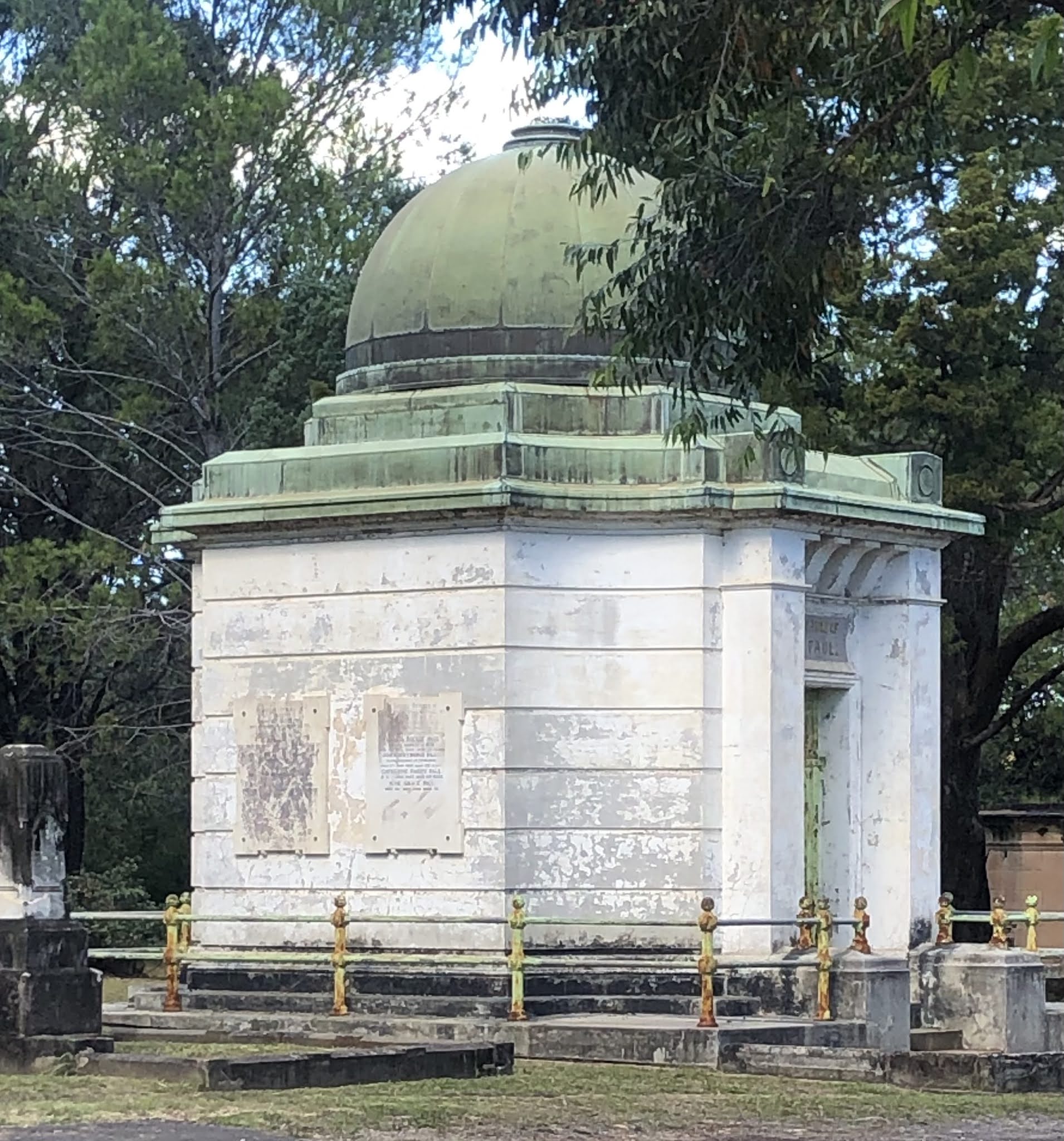
4. Architectural Features: Rookwood Cemetery is known for its impressive architecture and funerary monuments. It features a wide range of tombstones, mausoleums, crypts, and memorials, showcasing various architectural styles such as Victorian, Gothic, Art Deco, and contemporary designs.

5. Cultural and Heritage Significance: Rookwood Cemetery holds cultural and historical significance due to its diverse range of burial practices and the stories of the people buried there. It reflects the multicultural nature of Australian society and provides insights into the social, religious, and cultural history of the region.

6. Facilities and Services: The cemetery offers a range of services, including burial plots, cremation facilities, memorial gardens, and chapel services. It also provides visitor amenities such as parking, maps, and guided tours.

7. Arboretum and Wildlife: Rookwood Cemetery is home to an arboretum, which features a collection of trees and plantings, creating a peaceful and serene environment. The cemetery also supports a variety of wildlife, including birds and native animals.

Rookwood Cemetery continues to serve as an important place for commemoration, remembrance, and reflection. It holds a significant place in Australian history and provides a tranquil space for visitors to pay their respects to loved ones and explore the rich cultural heritage preserved within its grounds.


More Photos of Rookwood

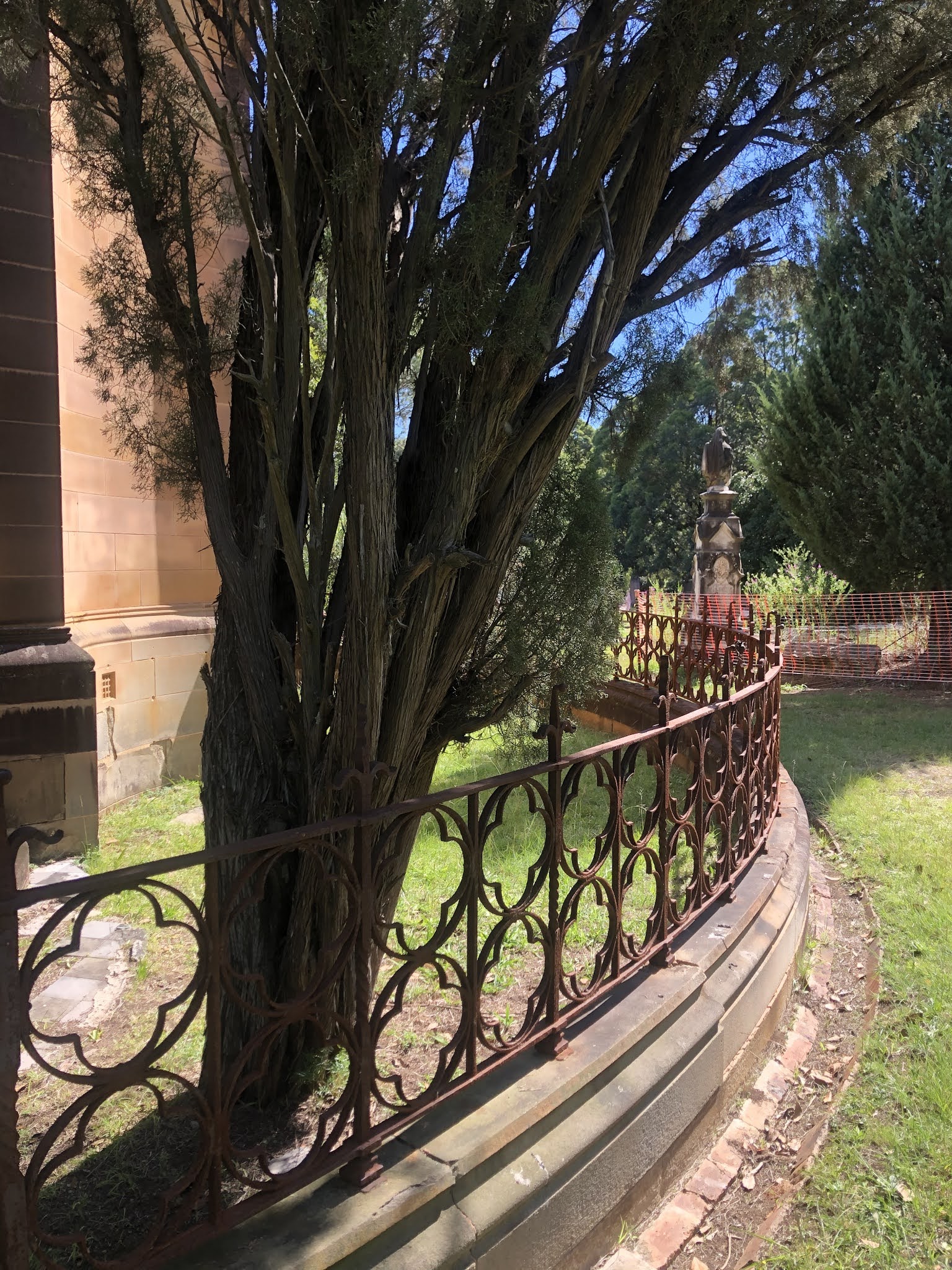
You can spend a whole afternoon at Rookwood and still not cover a tenth of it. This is metropolitan Sydney’s great Victorian cemetery — a State Heritage–listed cultural landscape, and one of the largest operating nineteenth-century cemeteries you will ever walk. In 1862 the colonial government bought about 200 acres of the Hyde Park Estate at Haslem’s Creek for a new general necropolis after older burial grounds, including the Sandhills / Devonshire Street cemetery, could no longer cope. Denominational trusts laid out sections by the 1861 census proportions; Colonial Architect James Barnet designed an early manager’s lodge; and a specialised necropolis railway — matching stations at Regent Street, Chippendale, and inside the cemetery — opened to carry funeral parties.

Burials began in January 1867 under the Necropolis Act. The locality name kept sliding away from the graves: Haslem’s Creek became Rookwood, the surrounding suburb later became Lidcombe, and the necropolis kept Rookwood. Further land purchases from 1879 grew the grounds into today’s vast precinct of denominational cemeteries, ornamental planting, monumental masonry and later crematorium facilities.

Rookwood remains an active burial landscape and a major repository of Sydney’s social history. Photographs here show avenues, monuments and heritage fabric across the necropolis.

“ROOKWOOD NECROPOLIS” - Lidcombe - Sydney - New South Wales

Rookwood Necropolis – Some History

Home to the largest cemetery in the southern hemisphere, where up to 1 million former Sydneysiders now eternally rest. Rookwood Necropolis, near Lidcombe, was opened in 1867 and is still an active cemetery.

The term necropolis refers to its enormous size, deriving from a Greek word meaning City of the Dead and at over 777 acres, or 300 hectares, it is the size of Redfern and Glebe combined.

The need for a large general cemetery was obvious in Sydney from as early as the 1850s. By then, the old Sydney Burial Ground in George Street (under Sydney Town Hall today) had been full and closed for 30 years, and the Devonshire Street cemetery built to replace it (under Central Station today) was also nearing capacity. While there were small, church yard cemeteries around, most of these were also on limited land and were restricted to the particular denomination of the church involved.

rookwood-headstones-cos-archives-020801.jpg

Old headstones at Rookwood Cemetery (City of Sydney Archive)

The need for a site with sufficient depth of soil, no rocks, drainage away from domestic water, relatively isolated from populated areas but still close to a railway and with the capacity to be beautified and landscaped, meant that it was not until the early 1860s that a site was chosen. Land at Liberty Plains, approximately 18km from Sydney was deemed suitable and the Government purchased 200 acres in 1862. In 1867 the passing of the Necropolis Act made it official.

The first burial on site was of a pauper, John Whalan on 5 January 1867, with the first registered burial two days later in the Catholic section. This was of a 14 month old girl. The first burial in the Church of England was also of a child on 4 January 1867. Three humble burials to start.

Originally the cemetery was divided into six sections for different denominations: Church of England, Catholic, Presbyterian, Wesleyan, Congregational and Jewish, with Lutheran, Methodists and a general section added by 1881. In keeping with Victorian era ideals, the cemetery was laid out as a garden landscape, with pathways, garden plantings, fountains and shade houses.

By 1890 there were over 37,000 people buried at Rookwood. As the cemetery grew, it attracted associated industries to the area. By the turn of the twentieth century, about 20 monumental masons had opened yards and showrooms in the area, with a refreshment room and florist also operating inside the cemetery by the 1930s.

The isolation of the necropolis in the years before private motor transport meant mourners and funeral parties needed a way to get to Rookwood. A train line was included as part of the design for the cemetery to overcome this issue.

rookwood-station-with-train-srnsw-17420_a014_a014000306.jpg

Rookwood station with a funeral train c1890 (SRNSW)

Funeral trains ran regularly from Central Station to Rookwood from 1867 until 1948, by which time the use of hearses and private cars had made the service redundant. Inside Rookwood a grand station, or receiving house was built, with a matching one at Central. Designed by the Colonial Architect James Barnet, the sandstone station was in a gothic revival style, with finely carved angels on the entry arches and angels faces on the roof trusses inside. The line was extended through the cemetery between 1867 and 1901 with four stations serving the different sections. In 1957 the main station was sold and dismantled, being re-erected in Canberra as All Saints Church in Ainslie.

Rookwood, final home to many of Sydney’s famous and infamous citizens, remains an active and much loved cemetery. It may not be your idea of a great day out, but it is certainly worth a visit.