Search This Blog

Showing posts with label Haymarket. Show all posts

Monday, December 5, 2022

Paddy’s Markets - Campbell Street - Haymarket - Sydney - New South Wales

Haymarket still smells like a market even when you’re only cutting through to Chinatown — fruit crates, discount jeans, the Saturday crush on Campbell Street. Paddy’s Markets take their name from a long Sydney habit of popular evening and weekend trading. In 1834 Governor Richard Bourke moved cattle, hay and grain markets to Campbell Street and created the district still called Haymarket. Around those official yards a fringe of food sellers, second-hand dealers and Saturday-night stallholders grew up; allowing late Saturday trading is widely treated as the start of the Paddy’s-style market culture locals later named after similar “Paddy’s” markets in Britain.

By the later nineteenth century the Campbell Street / Haymarket site was as much farm-produce and popular market as hay yard. Buildings were rebuilt and stalls relocated several times. When wholesale markets shifted to Flemington in 1975, a Paddy’s retail market was retained there — and the Haymarket Paddy’s also continued, remaining a Chinatown landmark rather than vanishing with the wholesale trade.

Todays Campbell Street / Haymarket Paddy’s is still a working market precinct within Sydney Markets’ operations, even as individual buildings and tenancies change.

Paddy’s Markets in Haymarket take their name from a long Sydney tradition of popular evening and weekend trading. In 1834 Governor Richard Bourke moved cattle, hay and grain markets to Campbell Street, creating the district still called Haymarket. A fringe of food sellers, second-hand dealers and Saturday-night stallholders grew up around those official markets; allowing late Saturday trading is widely treated as the beginning of the Paddy’s-style market culture that locals later named after similar Paddy’s” markets in Britain.


By the later nineteenth century the Campbell Street / Haymarket site was as much a farm-produce and popular market as a hay yard. Market buildings were rebuilt and stalls relocated several times (including moves associated with Belmore markets and twentieth-century market halls). When wholesale markets shifted to Flemington in 1975, a Paddy’s retail market was retained there — and the Haymarket Paddy’s also continued, remaining a Chinatown landmark rather than disappearing with the wholesale trade.


Today’s Campbell Street / Haymarket Paddy’s is still a working market precinct within Sydney Markets’ operations, even as individual buildings and tenancies change. Photographs here document the Haymarket market presence on Campbell Street.


Paddy’s Markets - Campbell Street - Haymarket - Sydney - New South Wales 


Saturday, March 20, 2021

Christ Church - St Laurence - Anglican Church - 814 George Street - Haymarket - Railway Square - NSW

 Christ Church - St Laurence - Anglican Church - 814 George Street - Haymarket - Railway Square - NSW

Christ Church St Laurence stands at 812–814 George Street, Haymarket, right beside Railway Square and Central Station — the sandstone tower and spire you clock when you come in from the south. The parish dates from 1838. Bishop William Grant Broughton laid the foundation stone on New Year’s Day 1840 and consecrated the church on 10 September 1845: the first Anglican church in the city consecrated by a bishop, and still among the oldest Anglican church buildings in Sydney in continuous use.

Henry Robertson began the design; money troubles stalled the build before Edmund Blacket — later Sydney’s leading Gothic Revival architect and a long-serving churchwarden here — finished the interior (ceiling, tracery, fittings) and, in the 1850s, the tower and spire. The church became a centre of Anglo-Catholic worship in a diocese that leaned the other way — ritual, music and social action rather than a plain “preaching box.” A fire in 1905 damaged the interior; John Burcham Clamp led the restoration.

The church, hall and rectory group is on the NSW State Heritage Register. From George Street the spire still marks the railway-age city edge for anyone walking up from Central — a continuous place of worship from convict-era neighbours to the present.

Sunday, March 14, 2021

Hay Street – Haymarket – Chinatown – Sydney – New South Wales


Hay Street - Haymarket - Sydney - New South Wales 

Hay Street runs through Haymarket, the valley south of Brickfield Hill that Governor Darling’s administration set aside in 1829 for cattle and corn markets — a pause-point for farmers’ carts before the haul into town. The place-name Haymarket stuck; City of Sydney later controlled the market lands. Belmore Markets (fruit and vegetables, from 1869 on the old cattle-market ground) and adjoining Paddy’s markets drew produce traders, pubs and Saturday-night crowds; market buildings on the wider site later cycled through circus, hippodrome and Capitol Theatre uses.

Chinese merchants and gardeners clustered here from the 1870s, forming what historians call Sydney’s second Chinatown after The Rocks. When municipal markets shifted toward Darling Harbour in the early twentieth century, Chinese commerce reconcentrated around Dixon Street; from the 1970s–80s that precinct was promoted as Chinatown, while Hay, Campbell and neighbouring streets kept market memory, fine-grain shops and civic buildings (including the Corporation Building / former markets administration fabric nearby). Hay Street today is still a Chinatown–Haymarket spine of heritage shopfronts, light rail and night-time economy.

Photographs here document Hay Street façades and the Haymarket setting.


181–187 Hay Street – Haymarket


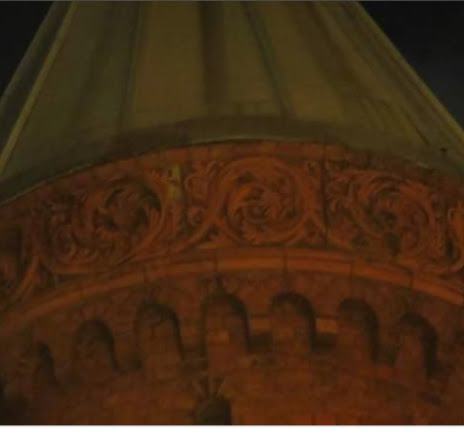
Haymarket’s little terracotta-and-brick corner tower is easy to walk past on the way to Paddy’s or the Capitol — which is a shame, because it is one of the most highly decorated small municipal buildings Sydney ever put up. 181–187 Hay Street, better known as the Corporation Building (also the Municipal Building), was designed in 1892 by City Architect George McRae for Sydney Municipal Council and built in 1893–95 as a service building for the new Belmore Markets. It gave the market clerk and produce agents offices, refreshment rooms and toilets.

The Federation Anglo-Dutch façade is rich in face brick, sandstone and glazed terracotta, with that distinctive corner tower. Together with neighbours such as the Capitol Theatre, Haymarket Chambers and the Palace Hotel, it forms a late-Victorian / Edwardian streetscape tied to markets, the railway terminus and nearby retail. The building is on the NSW State Heritage Register (SHR 00693). City of Sydney conservation works completed in 2022 restored degraded façade detailing and rebuilt the Hay/Parker Street entrance in original character.

Photographs here document the Hay Street elevations and ornamental detail of McRae’s Corporation Building.


Thursday, October 22, 2015

Brickfield Creek


brickfield creek

Early colonial records indicate that a simple log bridge carried the road to Parramatta across the main creek near the Brickfields settlement's brick kilns. First marked on a map dated 1891, this bridge was located somewhere near the intersection of Hay and Pitt Streets. The section of Pitt Street between Hay Street and Railway Square was originally the beginning of Parramatta Road which began at the bridge.

According to a map dated 1802 drawn by French explorer Francois Peron, a bridge also existed over a small creek which flowed into Darling Harbour on its western side. That bridge was located where the flyover takes the Western Distributor over Pyrmont Street. The path which crossed the creek at the bridge provided access to the farm of Surgeon John Harris and followed the line of Harris Street. The creek is believed to have had its source within the site of the Sydney Institute of Technology, Ultimo. It is now an underground drain.
UBD Map 3 Ref B 14

Tuesday, October 20, 2015

George McCrae - New South Wales Colonial Architect - Sydney Municipality Building


Sydney Municipality Building


This Building Waa Designed By The colonial architect George McCrae And Was Built In 1896. He Had Been Appointed As The Head Colonial Architect For The City Of Sydney During The Golden Era Of the Victorian Era. 

George McCrae Was Also The Architect behind The Design Of The queen Victoria Building. & Would You believe  He Wet as Far As Designing Four Different Styles For The "Queen Victoria Markets" Which We Now Call The Queen Victoria Building 
George McCrae Did A Gothic Revival, Queen Anne Style,  Renaissance & Romanesque. I wonder where His Other versions  Of The Queen Victoria Building Are Ok If They've Ever Seen the Light When The  Romanesque Style Was Decided Upon.