Search This Blog

Saturday, November 13, 2021

GOVERNOR ARTHUR PHILLIP‘S INSTRUCTIONS FROM GEORGE III - Opened 7th February 1788

Governor Arthur Phillip's Instructions From King George III - Opened On the 7th February 1788 


Governor Arthur Phillip's Instructions from King George III - Opened and read on the 7th February 1788.


On Thursday 7th February 1788, the day after the women were landedhad variable winds, the temp was 74 Degrees F and the Barometer 29.60

Mr Clark Got up early for the parade, which Arthur Bowes described in detail 

"This Morning at 11 O'clock all who could leave the ships were summoned on shore, to hear the Governor's Commission read and also the Commissison Constituting the Court Of Judicature. The Marines were all under arms, and received the Governor with flying colours and a Band of music. He was accompanied but the Judge Advocate. Lieutenant Governor, Clergiman, Surveyor General, Surgeon General Etc. After taking off his hat and complimenting the Marine Officers, who had lowered their colours and paid that respect to him as Governor which he was entitled to, the Soldiers marched with music playing drums and pipes, and formed a circle around all of the convicts, men and women who were collected together. The convicts were all ordered to sit down on the ground; all gentlemen present were desired to come into the centre where stood the Governor, Lieutenant Governor, Judge Advicate, Clergyman, Surgeon etc. A Cammp table was fixed before the, and 2 leather cases laid therin, containing the Commission etc which were opened and unsealed in the sight of all present, and read by the Judge Advocate (David Collins)

After reading his orders and Commissions "The Governor Harangued the convicts, telling them they had tried him hitherto to see how they were disposed. That he was now thoroughly convicned there were many amongst them incorrigable, and that he was persuaded nothing but severity would have any effect on the, to induce them to behave properly in future. He also assured them that if they attempted to get into the Women's tents of a night there were positive orders for firing upon them. that they were very idle. mot more than 200 our of 600 were at work, that the industrious should not labour for the idle. If they did not work, they should not eat. In England, thieving poultry was not punished with death, but here, where a loss of that kind could not be supplied, it was of the utmost consequence to the settlement, as well as every other species of stock, as they were preserved for breeding. Therefore stealing the most trifling article of stock or provisions should be punished with death. That, however such severity might mitifate against his humanity and feelings towards his fellow creatures, yet that Justice demanded such rigid execution of the laws and they might impolicitly rely upon justice taking place. 

Their labour would not be equal of a husbanndman in England, who had his wife and family to provide for. They would never be worked beyond ther abiulities, but every individual should contribute his share to render himself and Community at large happy and comfortable as soon as the nature of the settlement will admir of them, They should be employed erecting houses for the different officers, next for the Marines and lastly for themselves. After this Harangue they were dismissed in the same form as they were assembled.. After which the Governor retired to a cold collation under the large tent erected for that purpose to which the General officers only were invited and not the least attention whatever was paid to any other person who came out from England. The Masters of the different ships paid him the compliment of attending on shore during the reading of the Commission, which they werre not under any obligation to do, notwithstanding there was no more notice taken of them or even to provide the slightest accommodation for them than the convicts themselves. 

Lt Clarks Account  Of The Day was of a more Material Nature - 'All The officers Dined with him on a cold Collation, but the mutton which had been killed yesterday morning was full of maggots. Nothing will keep 24 hours in this country I Find. 


DOCUMENT PAGE 1 
Instructions for a trusty George R and well beloved Arthur Phillip Esq our Captain General and governor in chief in and over our territory of New South Wales and its dependencies or to the lieutenant-governor or commander in chief of the said territory for the time being. Given that our court at Saint James 25 April 1787 in the 27th year of our reign
With these are instructions you will receive a commission under our great seal constituting an appointing you to be a captain general and governor in chief of our territory called New South Wales. 
DOCUMENT FIRST PAGE ENDS HERE 
extending from the northern Cape or  extremity of the coast called Cape York in the latitude of 10° 37 minutes south, to the southern extremity of the said territory of New South Wales, or South Cape,  in the latitude of 43° 39 minutes south, and all the country inland to the Westward as far as the 135th° of East longitude, reckoning from the Meridian of Greenwich,  including all the islands adjacent in the Pacific ocean within the latitudes aforesaid of 10° 37 minutes south, and 43° 39 minutes south, and of all towns, garrisons, castles, forts, and all other fortifications, or other military works which may be here after erected upon the said territory or any of the said islands, with directions to Obey such orders and instructions as shall from time to time be given to you under our signet and sign manual, or by our order in our pretty council – you are therefore to fit yourself with all convenience speed and to hold
DOCUMENT SECOND PAGE ENDS HERE 
Hold yourself in readiness to repair to your said command, and being arrived, to take upon the execution of the ((place and)) trust we have put in you and as soon as conveniently may be able with all due solemnity to cause Our said commission under our great seal of Great Britain constituting you our governor and commander in chief as aforesaid, should be read and published,
 and whereas have ordered that about 600 mail, and 180 female convicts, now under sentence or order of Transportation, whose names are contained in the list hereunto annexed should be removed out the Gaols and other places of confinement in this our kingdom, and we put on board of the several transport ships which have been taken up for their reception. It is our Royal will and pleasure that as soon as the said convicts, the several persons composing the civic establishments and the stores, provisions etc provided for their use shall be embarked on board to supply Tendor, and the transport ships
DOCUMENT THIRD PAGE ENDS HERE 
Alexander 
Scarborough 
Lady Penrhyn
Friendship
Charlotte
Prince Of Wales
Golden Grove 
Fishburn 
Ships named in the margin, and be in readiness to depart, that you do take them under your protection and proceed in the serious With The said Tinder and transport to the port on the coast of New South Wales, situated in the latitude of 33° 41 minutes, called them by the name of Botany Bay, agreeably to the instructions with which you will be furnished by the Commissioner of are add multi, in pursuance of our Royal commands already signified to 
And where as it may happen upon your passage to New South Wales, that you may find it necessary and expedient to call with the ships and vessels under your current convoy at the island of Teneriffe, at the Rio de Janeiro, and also at the Cape of Good Hope, for supplies of water, and other refreshments for the voyage.
It is our father will and pleasure, that you do, upon your arrival at the former of, those places, take on board any of the ships on of the convoy which you may think
DOCUMENT  FOURTH PAGE ENDS HERE 
I think proper, such quantities of wine as may be requisite for the supply of the said settlement, according to the instructions with which the commiserate of stores and provisions will be furnished by the commissioners of our Treasury, taking care that the quantities purchased do not exceed the proportions to be issued to the several persons composing to set a settlement entitled there to, agreeably to decide instructions, for the time to which they have confined the supply of that article, and for the amount of such purchases, you will direct the commiserate to draw bills of exchange upon them properly certified by you, or a lieutenant-governor of the said intended settlement, with the other usual artist stations, that the same has been obtained at the most reasonable rates, transmitting at the same time In Account they’re off to them in order that you may be released from any impress Any such purchases might occasion.
DOCUMENT FIFTH PAGE ENDS HERE 
any such purchases might occasion.
Not with standing there is already a considerable quantity of corn and other seed, grain put on board the ships of the convoy, most likely probably more than maybe immediately necessary for the raising supplies for the settlement; we are disposed to guard as much as possible against accidents, which may happen, for injuries, which these articles must’ve sustained during the passage;
It is therefore a further willing pleasure that you do upon your arrival, at any of the places you may have occasion to touch that, endeavour to obtain such further quantities of seed and grain, as you may think of requisite for the tillage of the land, at the place of your destination; and also that you do you take on board any Number of black cattle, sheep, goats or hogs, which you can procure and the ships of the convoy can contain, in order to propagate the breed
DOCUMENT SIXTH PAGE ENDS HERE 
Breed of these animals for the general benefit of the intended settlement, causing the commiserate of stores and provisions to draw bills for the same as in before directed for such supplies, as Wellers for any fresh provisions which it may be requisite to procure for the use of the Marines were convicts, at those places, and transmitting information to the commissioners of our Treasury such proceedings
And where as it is intended that several of the transport ships and visualise which are to accompany you to New South Wales, should be employed in bringing home cargoes of tea, and other merchandise, from China, for the use of the East India company – provided they can arrive at Canton, on or before 1 January 1788 in due time whereby a very considerable saving would rise to the public in the freight of those vessels; it is Avril will and pleasure, that upon your arrival at botany Bay, on the side coast of New South Wales, you do cause every possible exertion to be made
DOCUMENT SEVENTH PAGE ENDS HERE 
Made use of four disembark in the offices in composing a civil and Military establishments, together with the convicts, stores, provisions etc and having so done you watch a discharge all the said transports or visualise, in order that such of them as maybe engaged by the East India company may proceed to China, and that the rest may return home, you will however take care, before they said transport ships are discharged, to obtain an assignment to you All Yours the governor in chief for the time being, from the masters of them, of the servitude of the several convicts, for the remainder of the times or terms specified in there several sentences orders of Transportation.
Made use of four disembarking the offices and men composing a civil and military establishments, together with the convicts, stores, provisions etc and having so done you a discharge all the said transports or visual is, in order that such of them as maybe engaged by the East India company may proceed to China, and that the rest may return home, you will however take care, before the said transport ships are discharged, to obtain an assignment to you or you’re the governor and chief for the time being, from the masters of them, of the servitude of the several convicts, for the remainder of the times or terms specified in there several sentences or orders of transportation.
According to the best information which we have obtained, botany Bay appears to be the most eligible situation upon the Central Coast for the first establishment, possessing a Commodious harbour and other advantages which no 
DOCUMENT EIGHTH PAGE ENDS HERE 
No part of the coast here there to discovered a forwards. It is therefore I will and pleasure that you do immediately upon your landing after taking measures for securing yourself and the people who accompany you, as much as possible from any attacks or interruptions of the natives of that country, as well as for the preservation and safety of the public stores, proceed to the cultivation of land, distributing the convicts for that purpose in such manner, and under such inspectors or overseers and under such regulations as may appear to you to be necessary and best calculated for procuring supplies of grain and ground provisions.
The assortment of tools and utensils which have been provided for the use of the convicts and other persons who are to compose the intended settlement, are to be distributed according to your discretion, and according to the employment, assigned to several persons. In the distribution however, you will use Every proper 
DOCUMENT NINTH PAGE ENDS HERE 
Proper degree of economy, be careful that the commiserate you transmit an account of the issues from time to time to the commissioners of our Treasury, to enable them to judge of the propriety or expediency of granting further supplies.
Proper degree of economy, be careful that the commissioner do transmit an account of the issues from time to time to the commissioners are Treasury, to enable them to judge of the propriety or expediency of granting further supplies.
The closing of the convicts and the provisions issued to them, and the civil and military establishments must be accounted for in the same manner.
And where is the commissioners of Admiralty have appointed captain Hunter to repair on board the HMS serious to assist you in the execution of your duty, and you take the command of the ship whenever you make the occasion to touch her from the settlement, and also to station to supply tender under your orders, and to be assisting to you upon occasional services after your arrival.
And where it is at Royal intention that measures should be taken in addition to those which are specified in the article of these are instructions for obtaining
DOCUMENT TENTH PAGE ENDS HERE 
Obtaining supplies of livestock, and having an consequences of such intention court, cause the quantity of arms and other articles and merchandise to be provided, and sent out in the ships Under your convoy, in order to barter with the natives either on the territory of New South Wales, all the islands adjacent in the seas, who found their ignorance of the value of such articles,
under your convoy, in order to barter with the natives either on the territory of New South Wales, or the islands adjacent in those seas, who found the ignorance of the value of for such articles,
It is I will and pleasure that is soon as either of these vessels can be spared with the safety from the settlements that you do to touch one or both of them from that purpose, can finding their intercourse as much as possible to such parts as are not in the possession or under the jurisdiction of other European powers,
The increase of stock of animals, must depend on Tiley up on the measures you may adopt on the outset for their preservation, and as a settlement will be amply supplied with vegetable production in most likely with fish, fresh provisions, excepting for the sick and the convalescence may in a great degree
DOCUMENT ELEVENTH PAGE ENDS HERE 
Degree be dispensed with; for these reasons it will become you to be extremely cautious in permitting any cattle, sheep, hogs etc intended for propagating the breed of such animals being to be slaughtered, until a competent stock maybe acquired to admit of your supplying the settlement from it with animal food without having further request you to places from whence such stock may have originally been obtained.
Degree be dispensed with; for these reasons it will become you to be extremely cautious in permitting any cattle, sheep, hogs etc intended for propagating the breed of such animals being to be slaughtered, until a competent stock may be acquired to admit of your supplying the settlement from it with animal food without having further request to the places from once such stock may have originally been obtained.
It is always a pleasure that the productions of all descriptions acquired by the labour of the convex it is our will and pleasure it shall be considered as public stock and which we so far leave to your disposal, that such parts there of is maybe requisite for the substance of the said convicts and their families, or the substance of the civil and military establishment of the settlement may be applied by you to that use. The remainder of such reductions you will reserve as a provision
DOCUMENT TWELTH PAGE ENDS HERE 
Provisions for a further number of convicts which you may expect will shortly follow you from hence, to be employed under your direction in the manner pointed out in those these are instructions to you.
Provisions for a further number of convicts which you may expect will shortly follow you from hence, should be employed under your direction in the manner pointed out in those these are instructions to you.
From the natural increase of corn and other vegetable food from the common industry after the ground has been once cultivated, as well as of animals, it cannot be expedient that all of the convicts which company are you, should be employed in attending only to the object of provisions.
And as it has been humbly represented up until us the advantages maybe derived from the flax plant which is found in the islands not far distance from the intended settlement, not only as a means of acquiring clothing for the convicts and other persons who may become settlers, but from its superior excellence for a variety of Maritime purposes and as it may ultimately may become an article of export..
It is therefore able and pleasure that you do you particularly attend to its cultivation
DOCUMENT THIRTEENTH PAGE ENDS HERE
Cultivation, and that you do you send home by every opportunity which may affect, samples of that article, in order that the judgement may be formed whether it may not be necessary to instruct your further upon this subject.
Cultivation, and that you do you send home by every opportunity which may affect, samples of that article, in order that the judgement may be formed whether it may not be necessary to instruct you further upon this subject.
And where as we are desirous that some further information should be obtained of the several ports or Harbours upon the coast and the islands contagious there two within the limits of your government; you are, whenever the serious or the supply tender, can conveniently be spared, to send one, or both of them, upon that service. Norfolk Island situated in the latitude and longitude East from Glenn it’s about being represented as a spot which may hear after become useful; you are, as soon as circumstances will admit of it, you send a small establishment do to secure the same to us, and prevent its being occupied by the subjects of any other European power, and you will cause any remarks Or observations which you obtaining consequence of
DOCUMENT FOURTENTH PAGE ENDS HERE 
Of this instruction to be transmitted to our principal secretary of state for plantation affairs for our information.
And where is it may happen, when the settlement should be brought into some state of regulation, that the service of the serious may not be necessary at the said settlement; and as we are desirous to diminish as much as possible the expenses which the intended establishment occasion; you will, whenever the service of the said ship can be dispensed with, and or Captain Hunter to return with to England; and as from such an arrangement, the emolument‘s of your station will be diminished, it is our royal intention, that the same shall be made good to you by the bills to be drawn by you upon the commissioners of our Treasury.
You are twins ever buy every possible means to open an intercourse with the savages and natives and to conciliate their affections, enjoying all are subject to live in and Amity and kindness with them.
AndDo you want to endeavour by every possible means to open an intercourse with the savages natives and to conciliate their affections, enjoying all our subjects to live in and Amity and kindness with them.
And if any of the subjects I want only destroy them, or give them any unnecessary interruption in the exercise of the
DOCUMENT FIFTENTH PAGE ENDS HERE 
There are several occupations. It is always a pleasure that you do cause such offenders to be brought to punishment according to the Greer of the offence. You will endeavour to procure an account of the numbers inhabiting the neighbourhood of the intended settlement and report your opinion to one of our Secretary of State in what manner are intercourse with these people maybe turn to the advantage of this country
((And where is it is a royal intention that all persons who may here after inhabit I said territory of New South Wales, or islands adjacent within your government should have for liberty of conscience and the free exercise at all such most religious worship as a not prohibited by law, we do there for him I require you to permit or persons within your said government to have such liberty,, and to exercise such most religious worship as a not prohibited by law, provided they be contented with a quiet and peaceful enjoyment
And where is it is a royal intention that all persons who may hear after inhabit acid territory of New South Wales, or islands adjacent within your government should have full liberty of conscience and the free exercise at all such most religious worship as a not prohibited by law, we do therefore here by require you to permit or persons within your said government to have such liberty,, and to exercise such most religious worship as a not prohibited by law, provided they be contented with a quiet and peaceful enjoyment)))
And it is further arrival and pleasure that you do by all proper methods in force that you observance of religious in good order among all the inhabitants of the new settlement
DOCUMENT SIXTEENTH PAGE ENDS HERE 
Enjoyment of the same, not giving offence or scandal to Government.
ItEnjoyment of the same, not giving offence or scandal to government.
It is our will and pleasure that you do cause the laws against bless me, providing this, adultery, fornication, polygamy, incest, profit nation of the Lord’s day, swearing and drunkenness to be reduced rigourously executed and that you do take due care for the punishment of the aforementioned vices by presentment upon oath to be made to the Justice of the peace at the session by the constables or other inferior offices, and for the further this encouragement advice and promotion of virtue and good morals, you are not with me any person to act as a Justice of the peace who’s your fame or conversation make Asian scandal, and especially shall take care that the Lord‘s debut devoutly and Julie observed that the book of common prayer as by law established in this kingdom we read each Sunday and holy day, and the Blessid sacrament to be administered, according to  The rights of the church of England.
AndThe rights of the church of England.
And any Orthodox minister already appointed to
And that you so take such steps for the one celebration of public worship is for circumstances will commit
DOCUMENT SEVENTEENTH PAGE ENDS HERE 
To that settlement, or here after to be appointed shall appear to give scandal either by his department or manners, or if any person not being in orders shell preacher administer the holy sacrament in any orthodox church or chapel, you shall given it in an account there of to the Lord Bishop of London.
And you have to take the special care that the table and marriages established by the cannons of the Church of England be hung up in every orthodox church or chapel, and visually observed, and also to transmit,,,, and account of such deaths, marriages, and birth as my take place within your said government, but every opportunity which office to our secretary of state for plantation affairs.
And you have to take the special care that the table and marriages established by the cannons of the Church of England to be hung up in every Orthodox church or chapel, and visually observed, and also to transmit,,,, and account of such deaths, marriages, and births as they take place within your said government, but every opportunity which office to a secretary of state for plantation affairs.
And where is from the greatest proportion of female convicts, those of the males, who are put under your superintendents, it appears advisable and necessary not only for the preservation of decency in good order, but for attending to domestic exercises the further number of the latter should be introduced into the new settlements
DOCUMENT EIGHTEENTH PAGE ENDS HERE 
Intended settlement;
You areIntended settlement;
You are, whenever the serious or the trade or shall touch it any of the islands in the seas, to instruct in the commanders to take on board any of the women who may be disposed to accompany them to the side settlements; you will however take special care, that the offices who may happen to be employed upon the service, do not upon any account, exercise any compulsive measures, or make use of Filicious pretenses for bringing away any of the side women from the places of their present residence.
If any of these women shell there here after arrive at the intended settlement, you will exert every means to prevent their living in common with the convicts, hold out every indulgence which it may be in your power to grant, to promote matrimonial connection, which must appoint mini account to be productive of great advantage to the settlement, as Wellers to the interests and happiness of individuals.
And where as we have our commission bearing date given
DOCUMENT NINETEENTH PAGE ENDS HERE 
Given a grant it on to you other acknowledgements what’s the weather for power and authority to emancipate and discharge from their servitude, any of the convicts and your superintendents, Michelle from the good conduct and the disposition of two industry, be deserving of favour,
It is our will and pleasure in every such case you do issue your warrant to every such to the surveyor of lands person as you may think confident to the discharge of that trust and make surveys of, and mark out in lots such lands upon the said territory as maybe necessary for their use; and when that shall be done, that you do pass grants there of with all convenient speak to any of the said convict so emancipated, in such proportions, and under such conditions and acknowledgements, I shall here after be specified.
Vista every mail shall be granted, 30 acres of land, in case you shall be married, 20 acres more, and for every child who may be with them at the settlement, at the time of making the said grant, a further quantity of 10 acres, free of all fees, taxes, quit rents, or, for the space of 10 years
DOCUMENT TWENTIETH PAGE ENDS HERE 
Space of 10 years, provided that the person to whom the said land Shelby been granted, she resides within the same, and proceed to the cultivation improvement there of. Resigning resigning only to us such timber is maybe growing, or to grow here after, upon the said land, which may be fit for naval purposes, and an annual quit rent of bushel of weight after the expiration of the term of time before mentioned.
YouSpace of 10 years, provided that the person to whom the said land Shelby been granted, shall reside within the same, and proceed to the cultivation improvement there of. Resigning preserving only to us such timber is maybe growing, up to grow here after, upon the said land, which may be fit for naval purposes, and an annual quit rent of bushel of weight after the expiration of the term of time before mentioned.
You will cause copies of such grants as maybe past to be preserved, and make a regular return to the said grants to the commissioners of our Treasury and the Lord’s of the committee of our privy council for trade and plantations.
and where as it is likely to happen at the convicts, who may, after their emancipation, in consequence of this instruction, be put in possession of land, will not have the means of proceedings to they cultivation without the public aid; it is always a pleasure that you do cause every such a person you may so emancipate, to be supplied with such a quantity of present provisions as may be sufficient, for the subsistence of himself and also left his family for 12 months together with and sort of tools and utensils
DOCUMENT TWENTY FIRST PAGE ENDS HERE 
Assortment of tools and utensils, and such a proportion of seed grain, cattle, sheep, hogs etc as maybe proper, and be spread from the general stock of settlement.
Assortment of tools and utensils, and such a proportion of seed grain, cattle, sheep, hogs etc as maybe proper, and be spread from the general stock of settlements.
And where as many of the subjects, employed upon military service, at the said settlement, and others who may resort Caesar upon their private occupations, my hereafter be desirous of proceedings to the cultivation improvements of land, and as we are dispersed to afford them every reasonable encouragement and such an undertaking undertaking, it is a will and pleasure that you do with all convenience speed transmitter report to the actual state and quality of the soil at the new year and the said intend on settlement, the probable and most effectual means of improving and cultivating the same and in what manner it can be best done and of the mode and upon what terms and conditions according to the best of your judgements to settle and should be granted,  that proper instructions and authorities may be given to you for that purpose and

DOCUMENT TWENTY SECOND PAGE ENDS HERE 
And where as it is our role intention that every sort of intercourse between the intended settlement to botany Bay, or other places which may be here after – established on the coast of New South Wales, and it’s dependencies, and the settlements of a rest India company, as well as the coast of China, and the island situated in that part of the world, in which any intercourse has been established by any European nation, should be prevented by every possible means;
It is a problem pleasure that you do not upon any account a little craft of any sort to be built for the use of private individuals, which might enable them to affect such intercourse, and that you do prevent any vessels which may at any time here after arrive to said settlement from any of the ports before mentioned, from having communication with any of the inhabitants residing within your government

DOCUMENT TWENTY THIRD PAGE ENDS HERE 
Government, without first receiving a special permission from you for that purpose
YouGovernment, without first receiving a special permission from you for that purpose
GR

DOCUMENT TWENTY FOURTH PAGE ENDS HERE   
April 20, 1787

Friday, November 12, 2021

Administration Building - 50 Todman Avenue - Randwick - New South Wales

 Administration Building - 50 Todman Avenue - Kensington - New South Wales 

Bought in 1912 From George by the British and Australian tobacco companies reputation in please Welfare. Administration building a wrecked a 1926 to design and killing
The land on which the administration building stands was originally part of a government grant to Samuel Samuel Terry in 1823 which passed through Daniel Cooper and William Cooper to the Australian cities investment Corporation in 1891.
In 1909 George Tottenham mind some of the land of the Corporation went to the potential. Australia in 1912. Elan was transferred to WD and HO wheels in 1920


The building known as the branch ministration building of WD and HO wills was constructive in 1926 additional wing being added in 1949. The new

The wheels factory came to centre of community life and the social club organised outings concerts and special occasions and parties. Also incorporated into the Rayleigh park with no one bowling greens, a cricket ground, club houses, soccer and walking fields, basketball netball courts and various other facilities to serve employees and the needs of the surrounding schools and athletic clubs.
In 1989 to 1949 addition of the building was demolished and worked again polishing all over buildings to make way for residential development


Sunday, October 24, 2021

"Clydebank" Formerly Bligh House - 43 Lower Fort Street - The Rocks - NSW


"Clydebank" - Formerly Known As Bligh House - 43 Lower Fort Street - The Rocks 


One Of The First Respectable Citizens To Build In The Rocks Area Was The Second Robert Campbell, Son Of The Colony's First Merchant. 

The House, Now Number 43, Is Handsome & 3 Storied, Has Pillars Along The Front Of The Vernadah In The Best Colonial Style. 

Campbell & is Bride Moved There As Soon As It Was Finished In 1835, And Called It "St Elmo". It Was Then Called "Holbeck" & Then Finally "Bligh House"

These Houses Spread Along Cumberland Street, Cumberland Place, & Princes Street, Which Have All Vanished Beneath The Approaches Of The Harbour Bridge

Famous Names Became Commonplace On This Golden Fringe Of The Rocks. Some Of The Residents Were 
* Archdeacon Broughton - Bishop Of Australia; 
* Edmund Barton - 1st Prime Minister
* David Scott Mitchell - Founder Of The Mitchell Library..

Bligh House Remains As The Only Example Of A Colonial Georgian Residence Within The City.  It Was Starting To Fall Into Decay & Disrepair Until It Was Rescued By The Australian College Of General Practitioners, & Restored By Sydney Architect Morton Herman. 

"Clydebank" Is A Good Example Of All The Main Features Of Old Colonial Regency Style. The Building Has 2 Upper Stories From Lower Fort Street, With A Basement That Is Cut Into The Steep Slope Down To Downshire Street. The Upper Floors Are Rendered And Lined Over Brickwork, Whilst The Basement Is In The Rough, Coursed Stone Expected From An 1820's Building. 

There Is A Finish On The Ground Floor That Has A Very High Gloss Level, Perhaps To Deter Grafitti. 


The Building Is Divided Into The Typical Georgian Five Bays Of 12 Pane Windows To The Upper Floor With Timber & French Doors With Transomlight Sashes Below, Each Detailed With Offset Glazing Beads Typical Of Regency Detailing.


The Building Is Set Back From The Street Behind Rendered Classical Posts & An Iron Palisade Fence, & The Ground Has Been Cut Away To Open Up To A Basement Verandah Underneath The Timber Framed Ground Floor Entry Balcony. 


Captain Cook Statue - Hyde Park South - Unveiled 25th February 1879 - Sydney - New South Wales

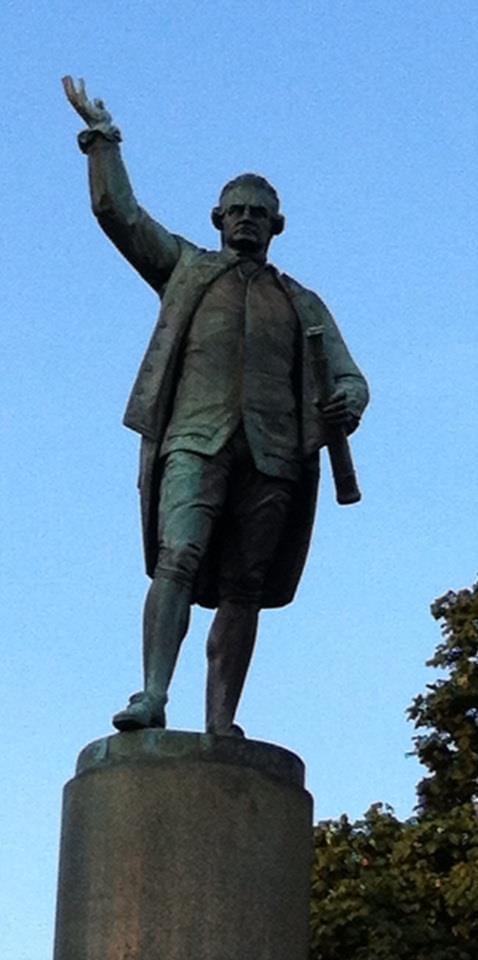
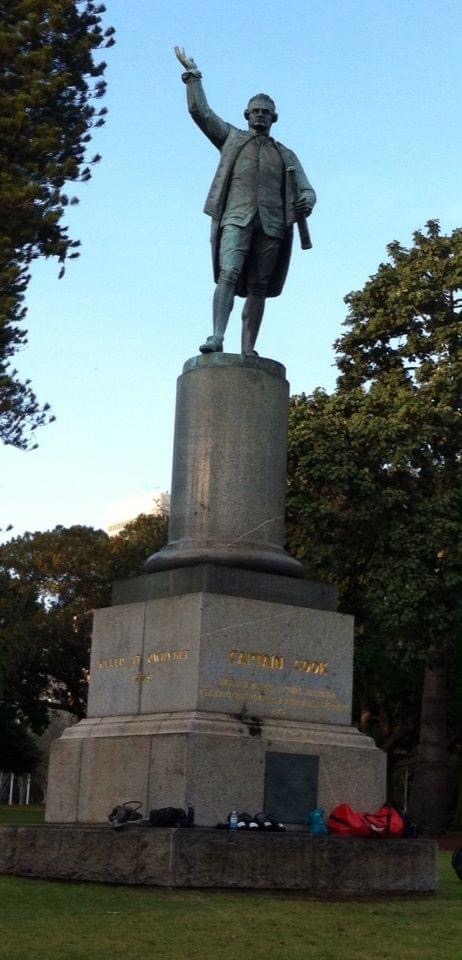
If you cut through Hyde Park South near Park and Elizabeth Streets, the bronze of Captain James Cook is hard to miss — larger than life, telescope in the left hand, right arm raised. English sculptor Thomas Woolner (1825–1892), a founding Pre-Raphaelite who had briefly tried the Victorian goldfields in the 1850s, designed the figure. It stands on a massive Moruya granite pedestal shipped to Sydney in 1878.

Commissioned in 1874 with public subscription and a New South Wales government grant, the statue was cast in England and unveiled on 25 February 1879 by Governor Sir Hercules Robinson. The day was a public holiday; contemporary reports described a huge procession (about 12,000) and a crowd estimated around 60,000. Pedestal inscriptions record Cook’s birth at Marton, Yorkshire (1728), the 1770 voyage of exploration, and his death at Hawai‘i (1779), together with the 1879 dedication.

It remains a City of Sydney public sculpture in the park’s southern formal landscape. Photographs here show the statue, pedestal and Hyde Park South setting.


The Captain Cook Statue - Hyde Park - Sydney - NSW


The Captain Cook Statue Is In The South Of Hyde Park 
The Sculpture Stands On A Moruya Granite Pedestool. 
This Work Was Commissioned On The 26th September 1874 & Was unveiled To The Public On The 25th February 1879 
It Was Made By Thomas Woolner (1825 - 1892). He Was Born In Hadleigh, Suffolk, & Studied At The Royal Academy. He Travelled To Australia in 1852, & Went On To Have Limited Success On The Voctorian Goldfields. 
The Day Of The Sculpture's Unveilling Was Declared A Public Holiday In Honour Of Cook & The Monument. It Was Estimated That 12,000 Joined The Procession To Hyde Park & 60,000 People Attended. 


Transcription (Pedestal inscription, Captain Cook statue, Hyde Park)

CAPTAIN COOK
THIS STATUE WAS ERECTED BY PUBLIC SUBSCRIPTION
ASSISTED BY A GRANT FROM THE NEW SOUTH WALES GOVERNMENT
1879


Sydney Morning Herald (NSW : 1842 - 1954), Tuesday 25 February 1879, page 7


Transcription (Sydney Morning Herald, Tuesday 25 February 1879, page 7)

THE
CAPTAIN COOK STATUE.

It has been said that while public holidays are numerous enough in Australia they are too often meaningless, and are rarely directed to any specific useful purpose. That, however, cannot be said of the public holiday to-day which has been proclaimed by the Government, who have rightly interpreted the desire which exists on the part of the whole community to honour the memory of the illustrious sailor who discovered the eastern shores of this great south land. It is now nearly one hundred and ten years since the two ships under the command of Captain James Cook anchored in Botany Bay; and it is, therefore, but an act of tardy justice to his memory that we are about to consummate. It is, however, honourable to New South Wales that she has been the first to recognise the worth of one of the greatest naval discoverers belonging to our nation; for it will not be alleged that the value of Cook's discoveries are by any means confined to those who have found a home upon these shores. England herself owes a debt of lasting gratitude to him whose discoveries have enormously swollen the volume of her commerce and extended the bounds of her beneficent rule.

The life of Captain Cook having closed a hundred years ago, his career and his discoveries have long since drifted into the literature of the British nation, and are known to the people of to-day in part only, and as biographers and others may present to the reading public any particular events which at certain times are thought worthy of admiration or example. But on the present auspicious occasion his life and his services are full of interest to everybody, the circumstances of his career from his birth to his death possessing more attraction for Australians than ever they possessed before. Born on October 27th, 1728, at the village of Marton in Yorkshire, where his father was an agricultural labourer and farm bailiff, he commenced the business of life at the age of thirteen, by being apprenticed to a haberdasher, near Whitby. But not finding a haberdasher's business congenial to his tastes, and having quarrelled with his master, he was permitted to abandon his apprenticeship and went to sea, binding himself on board a collier. In this vessel his aptitude and ability soon raised him to the position of mate, but at the breaking out of war in 1755 he left the merchant service and joined a King's ship, the Eagle, of 60 guns, commanded by Captain Hamer, and afterwards by Sir Hugh Palliser. Cook was not slow to distinguish himself, and Sir Hugh Palliser, discovering his merit, he was raised to the quarter-deck and entrusted with the conduct of important services. On board the Mercury he was present at the capture of Quebec, and it was while in the St. Lawrence that he began to be employed in the services which afterwards he carried to such a successful and remarkable issue. After the capture of Quebec, he was engaged in surveying and sounding the river, and he published a chart of the channel from Quebec to the sea. Soon after this, and in the year 1758, he was transferred to the Northumberland, the flagship of Lord Colville, on board of which vessel he held the rank of master, and it was while serving in the Northumberland that he began to study mathematics and astronomy in the few intervals of repose which an active
war allowed him. His courage and tact during the war in conducting important services committed to his charge gained for him the warm friendship and patronage of the commanding officers, and at the termination of hostilities he was appointed to survey the Gulf of St. Lawrence and the coast of Newfoundland. In 1764 he was made Marine Surveyor of Newfoundland and Labrador, and while in that capacity he applied the results of his astronomical studies to the observation of an eclipse of the sun at one of the Burgeo Islands, and to the publication of an account of the phenomenon, the accuracy of his observation, as compared with similar observations in England, obtaining for him the character of an able astronomer. In the year 1767 a transit of Venus was expected, and Cook's astronomical talent being by this time well known, he was recommended for the command of an expedition it was determined to send to the South Seas for the purpose of taking observations of the transit of Venus, and for prosecuting geographical discoveries. For this purpose the ship Endeavour, a vessel of 370 tons, was fitted out, and Cook, with the rank of lieutenant, and accompanied by Sir Joseph Banks, Dr. Solander, and other scientific gentlemen, set sail on his first voyage of discovery, reaching Tahiti on the 13th April, 1769. At Tahiti the necessary observations of the transit of Venus were made with great success, and Cook then sailed to the coast of New Zealand, where he attempted several times to open friendly communication with the natives, and to penetrate into the interior of the country, but without succeeding, for he met with constant hostility, and was obliged to put to sea. Thwarted in his endeavours to make discoveries ashore, he determined to do what he could with regard to exploring the coast line of the strange islands, and during a voyage of six months' duration he proved the insularity of New Zealand, discovered the straits which separate the North from the Middle Island and named them after himself, and made an extensive coast survey. From New Zealand he steered to the coast of Australia, then known by the name of New Holland, and on the 28th April, 1770, discovered Botany Bay, where he landed and took possession of the country in the name of Great Britain. On the 6th May, following, he set sail from Botany Bay northward, exploring the coast-line on the way, and proving the complete separation of Australia from New Guinea. The perils of this voyage were very great, and so shattered and disabled was the ship from having run upon a rock, and been buffeted about by innumerable storms, that Cook found it necessary to run to Batavia for repairs. England was reached on June 11, 1771, and Cook was immediately rewarded for his services by the King conferring upon him the rank of Captain. The existence of a great continent in higher southern latitudes than Australia or Van Dieman's Land became a matter of renewed speculation soon after Cook's return to England, and he was appointed to the command of a second expedition to visit the south seas—two ships, the Resolution, 462 tons, and the Adventure, a vessel of about the same tonnage as the other, being given to him for the purpose. Leaving Plymouth on July 13, 1772, he sailed to the Cape of Good Hope, from which point he directed his course in search of the unknown Southern continent, but without discovering land; and being satisfied that no land existed within the specified latitudes, he abandoned the search, and sailed for the South Pacific, where he discovered New Caledonia; and thence returned to England, arriving there in July, 1774. This time he was promoted to the rank of Post Captain, and appointed to the position of Captain of Greenwich Hospital, and shortly afterwards he was made a member of the Royal Society. Geographical discovery was a subject which, during
Cook's life, frequently received the consideration of Government, and, attention having been drawn towards the benefits that might arise from the discovery of a north-west passage in the Arctic Seas, Cook was again selected as the man for the work. The command of the expedition was at once placed at his service, for everyone saw in the daring and successful navigator the man to brave the dangers of the Arctic regions, and do all that could be done towards effecting the object of the voyage; and, after the earnest persuasion of his friends, and stimulated by the great results expected to follow from the success of the undertaking, he volunteered to conduct the expedition, and he was immediately appointed to the command. The vessels fitted out for the service were the Resolution and the Discovery, the command of the latter being given to Captain Clerke, who was a second lieutenant during Cook's second voyage; and the expedition was directed to proceed to the Pacific Ocean and thence to make its way into the Atlantic along the Northern Coast of America. It was during this voyage that Cook met with his tragic end. He was unsuccessful in the object of the expedition, though he followed the American coast line northward as far as Cook's Inlet, and, after sailing for Behring's Straits, he returned to winter at the Sandwich Islands. There, at the island of Owhyhee, he met with his death. One of the boats of the Discovery having been stolen during the night of the 13th February, 1779, Cook determined to adopt his usual measures for obtaining a return of the stolen property, and for that purpose went on shore the next day and endeavoured to seize the person of the king as a hostage until the boat was brought back. In this proceeding Cook failed, and a serious collision with the natives occurred. "What followed," says the narrative of Captain King, who sailed with Cook on board the Resolution, "was a scene of the utmost horror and confusion. Four of the marines were cut off amongst the rocks in their retreat, and fell a sacrifice to the fury of the enemy. Three more were dangerously wounded, and the lieutenant who had received a stab between the shoulders with a pahooa, having fortunately reserved his fire, shot the man who had wounded him just as he was going to repeat his blow. Our unfortunate commander, the last time he was seen distinctly, was standing at the water's edge, and calling out to the boats to cease firing and to pull in. Whilst he faced the natives none of them had offered him any violence, but having turned about to give his orders to the boats he was stabbed in the back, and fell with his face into the water. On seeing him fall the islanders set up a great shout, and his body was immediately dragged on shore and surrounded by the enemy, who, snatching the dagger out of each other's hands, showed a savage eagerness to share in his destruction." The body of the slain commander was cut to pieces, and most of it burnt, only the bones being recovered by the ships.

Captain Cook is described as having been a man of plain address and appearance, but with a face full of expression, a nose well shaped, eyes small, quick, and piercing, with prominent eyebrows which gave his countenance an air of austerity. He was upwards of six feet in height, with a fine, well-developed figure, and in disposition was kind and humane, though on many occasions he appears to have found it necessary to use firearms against the natives of the islands he discovered or visited. As a navigator, his merits were of the highest order, and distinguished honours were paid to his memory in England and by foreign nations. When he set out on his last voyage his family consisted of his wife and three sons, two of whom were in the Navy; but, as though a strange fatality had come upon the family after the death of Captain Cook, one son was lost on board the Thunderer man-of-war, in a hurricane, six months after his father was killed, another perished at sea in a boat while attempting to get on board the Spitfire sloop-of-war, to which he had been appointed master and commander, and the third died suddenly of fever at Cambridge. The widow of Captain Cook lived to the age of 93, surviving her husband 56 years.

The proposal to erect a statue in honour of Captain Cook, if it did not originate in the brain of Captain Watson (for many years Harbour Master in Port Jackson) was first brought into a practical form by him. About the centenary of the discovery of this part of New Holland by Captain Cook, the gentleman we have named initiated a subscription with a view to procure some tangible representation of the people's gratitude to Cook; but the task was more than he could accomplish—he being already advanced in years, and it occurred to him to ask the co-operation of the Australian Patriotic Association, of which Mr. R. B. Smith (who has for some years past represented the electorate of the Hastings in Parliament) was then president, and Mr. G. H. Reid one of the most influential members. These gentlemen took up the project with patriotic ardour, and having enlisted the sympathetic interest of Sir Alfred Stephen (then Chief Justice), they lost no time in convening a meeting of the citizens to initiate a movement in a more public form. That meeting was held in the Victoria Theatre on the 15th February, 1869 (ten years and ten days ago), and of the gentlemen who took a prominent part in its proceedings as speakers no less than four have gone over to the majority. The gentlemen who spoke on that occasion were Sir Alfred Stephen, Mr. R. B. Smith, the Hon. T. A. Murray, Mr. Windeyer, M.L.A., Mr. R. M. Isaacs, M.L.A., the Hon. John Campbell, M.L.C., Mr. J. G. Raphael, the Hon. A. Campbell, Mr. G. H. Reid, the Hon. Saul Samuel, the Hon. John Sutherland, M.L.A., the Hon. R. Owen, M.L.C., and Mr. Bird.

An influential committee was chosen, of which Sir Alfred Stephen has remained the chairman, and of which Mr. R. B. Smith and Mr. E. W. Day have been respectively secretary and treasurer. Mr. John Alger, Mr. Reid, Captain Watson, Mr. F. Senior, Mr. G. M. Pitt, Mr. S. Bayliss, and Mr. John Davies, M.L.A., have been among its most indefatigable workers. They entered upon the business with spirit, and met with so much support that they were in a position to lay the foundation-stone of the pedestal during the ensuing month, and to ask the son of our beloved Queen to perform the ceremony, which took place on Saturday, the 27th March.

On that memorable occasion, Sir Alfred Stephen addressing the Duke of Edinburgh, said:—

"Your Royal Highness,—The colonists of New South Wales long desirous of commemorating, in the territory which he discovered, the name of our greatest navigator, rejoice in the opportunity afforded them by your presence of auspiciously commencing the realisation of that design. He would connect the monument which they are about to rear, with memories of their Fatherland, of their beloved Sovereign, and of that glorious flag which waves now over the Galatea as it did over the little craft that brought Captain Cook to these shores a hundred years ago. The son of the Queen, himself a British sailor, descended from a long line of royal ancestry, is here to assist in honouring the memory and rendering a tribute to the achievements of one who, self-taught, and rising to fame and rank in that profession by merit only,—sprang from the humblest grade among the people. The task thus at our request undertaken by you, while we thankfully acknowledge the kindness of your compliance, we are persuaded that you will, for that very reason, consider an appropriate and not unpleasing one. And in few things could elevated station be more gracefully or acceptably occupied."

The Duke of Edinburgh replied:—"Sir Alfred Stephen and gentlemen,—One of the happiest privileges which the members of the Royal family enjoy is that of being able to do honour to the memory of great men and of noble deeds, by their presence at such a ceremony as that which we are met to perform to-day. But when the man whose fame we desire to commemorate has by a life of great discoveries and of scientific researches, increased so materially the territorial extent of the Empire, and has conferred so great benefits upon the whole civilized world by his valuable additions to geographical knowledge, and when, by these noble actions he has shed a lustre upon the profession of which he belonged, and to which I am so proud to belong—I mean the maritime service of the greatest maritime nation of the world—then indeed I feel that a very high honour is conferred upon me in having my name associated with this memorial of his greatness. There is no one among the names of England's heroes more deserving of this recognition on your part, and none whose career could be held up as a brighter example to every Englishman than that of Captain Cook. Humble as his origin was, he possessed that true nobility of character which has for its object—not the aggrandisement of self, but the welfare of the nation. He is among the chief of those who, in making Englishmen proud of their name and of their mother country, have helped to cement in one powerful brotherhood the subjects of the British Empire in every part of the world. In conclusion, I trust that there are many among the sons of Australia who will emulate his example, and gild with noble deeds the name of this great country and the fame of England."

Although the committee prosecuted the work which they had undertaken with unselfish earnestness and vigour, they were unable to raise sufficient money to complete the statue. The amount of the subscriptions voluntarily given by the public was about £1800; but as the committee feared that the realisation of their most cherished hopes would have to be deferred indefinitely, they determined to appeal to the Government (of which Sir Henry Parkes was then the Premier and Colonial Secretary). Sir Henry (then Mr.) Parkes came to the help of the committee in their difficulties, and the Parliament with commendable liberality voted the £2000 which was the amount at first estimated to be required. Parliament subsequently voted a second £2000, at the instance of Sir John Robertson. The work of forming the statue was entrusted by Sir Henry Parkes to Mr. Thomas Woolner, a rising sculptor of considerable ability, and it is confidently expected that when the statue is unveiled to-day the artistic merit of the work will fully attest the wisdom of the choice.

The position of the statue on Hyde Park, opposite the Museum, is an extremely good one, for the form of Captain Cook will be one of the first objects which open to the view of persons coming by sea to Sydney. The site commands a splendid view of the North Head; and we hope the trustees of Hyde Park will lose no time in making this valuable recreation ground worthy of the historic associations which are becoming connected with it. The very excellent picture of the statue which was published by the Sydney Mail on the 14th of last September will have prepared the general public to form a just anticipation of the work itself. The statue, as it is now seen, though a most impressive figure, will certainly be much more imposing on the higher pedestal prepared for it. The attitude is striking and vigorous, with the right hand raised high in the air in a moment of immense delight at having caught sight of land after watching through the early dawn of morning, strong in his belief that land was there, the telescope being held in the left as no longer necessary. The fine head is most expressive and characteristic of the keen observer and dauntless discoverer, in the massive brow with deep furrows at the temple and strongly moulded nose and chin. There is no stronger point in the statue than this preservation of likeness on such a colossal scale; and so just are the proportions of the figure in the torso and the limbs that it looks the hero without being a giant. The dress, which is the well-known naval uniform of the day, with the open-breasted broad-tailed coat, the long flap waistcoat, and the knee-breeches, with shoes, is remarkable for good work, falling to the figure naturally and not ungracefully, the gold lace being to some extent represented by a lighter-coloured bronze. But all these points of detail are quite unobtrusive, and subservient completely to the noble air of brave self-confidence expressed in the intellectual countenance, the broad and vigorous frame, and the general action of the figure. The casting of the statue, which was rather an arduous work, was made by Mr. Cox, of Thames Ditton Works.

As far as can be judged the preparations which have been made by the Statue Committee are very complete and satisfactory; and yet the occasion is one which may require that the populace shall exercise considerable self-control. While the site is a most commanding one, still the peculiarities of the locality are such as to give comparatively little space for the vast concourse of spectators who will gather there to-day. Every effort has been made by the Government and the committee to increase the space by the erection of large stands to the east and west of the statue. These will accommodate upwards of 2000 persons, and they have been solidly constructed under the supervision of Mr. James Barnet, the Colonial Architect. They have been constructed by Messrs. Hudson Brothers, of Redfern, and it is in the highest degree creditable to the resources of that firm, that structures so large and massive should have been put together in eight days. These stands are connected with each other by a neat semi-circular railing having a gateway in the centre. Admission to the stands will be by ticket, and the committee have, we believe, been guided in their distribution of cards, largely by the fact, that subscribers to the fund were entitled to precedence. If they have not succeeded in satisfying everybody, they will have the gratification of having made the best possible attempt to do so, and we entertain, no doubt, that their endeavours will to-day be crowned with well-earned success. A raised platform, covered by an elegant canopy, has been placed on the north side of the statue, for his Excellency the Governor. Behind this again will be another stand, upon which Mr. Fisher and a choir of some two or three hundred children from the Public schools will sing the National Anthem; and on the northern boundary of the enclosure formed by Park-street will be stationed the Volunteers. A commanding position on the northern side of Park-street has been railed off for the members of the various friendly societies who may take part in the procession. The centre of the western stand has been reserved for the Captain Cook Statue Committee. The stands and enclosure will be surrounded by sixty-eight flagstaffs from forty to fifty feet high, which will be partly clothed with zamia leaves and foliage; and which will be festooned together by wreaths of evergreens. There will also be a central flagstaff seventy feet high. There is every reason to expect that the spectacle will be extremely picturesque and pleasing. The German Band will be placed on the ground, and will play from half-past 2 o'clock until the commencement of the ceremony.

Besides the National Anthem, two verses of "Rule Britannia" will be sung by the choir organised by Mr. J. C. Fisher. In honour of the occasion, Mr. Fisher has written the following additional verse, which will also be sung:—

With lion heart that nought could tame,
Our Hero sailed for shores unknown;
Crowned with the laurel wreath of Fame
He won these lands we call our own.
Hail, Australia, hail to thee!
Fairest Daughter of the Sea!

The following is the Programme of the proceedings:—

Unveiling of the Captain Cook Statue.
Procession and Ceremony
Tuesday, 25th February, 1879.

Mounted Police.

Band of H. M. S. Wolverene.

Sailors and Marines from Squadron.

Military Band.

N. S. W. Artillery and Volunteers.

Naval Brigade.

Insurance Companies' Fire Brigade.

Volunteer Fire Brigade, No. 3.

Woollahra Volunteer Fire Brigade.

Grand United Order of Oddfellows.

Ancient Order of Foresters.

Manchester Unity Independent Order of Oddfellows.

Holy Catholic Guild, St. Mary and St. Joseph.

Protestant Alliance Friendly Society of Australia.

Shipwrights' Provident Union.

National Divisions Sons of Temperance of Australia.

United Ancient Order of Druids.

Hibernian Australian Catholic Benefit Society.

Independent Order of Rechabites.

Sydney Marine Benefit Society.

Loyal Orange Friendly Benefit Society.

Independent Order of Oddfellows.

Independent Order of Good Templars.

Operative Stonemasons Society.

United Sydney Plasterers' Association.

Catholic Mutual Improvement Society.

The friendly societies and other public bodies taking part in the procession on foot will assemble at 2.45 p.m. in the open space in the Outer Domain, adjoining the cricket ground, from whence the order of procession will be formed six abreast.

The societies will march in the order stated above, the route to be by the avenue leading to Sir Richard Bourke's statue, thence by Macquarie-street North, Bridge, George, and Park streets, halting at the Town Hall to accompany the Right Worshipful the Mayor and Aldermen to the ground.

The friendly societies and other public bodies will enter Hyde Park by the steps north of Park-street to the enclosure assigned, where they will take up position as arranged.

No members of public bodies or societies taking part in the procession will be admitted to the reserved space in Hyde Park unless wearing their society badges.

Except such persons as are officially engaged in the ceremony (and naval or military officers in uniform), no one will be admitted to the statue enclosure without an admission card.

Carriages setting down ladies or gentlemen having tickets of admission to the stands, to drive by way of College-street from the south, setting down at entrance steps to Hyde Park opposite Museum; then to drive away by William-street, taking up positions to stand on the north side of that street, horses' heads west.

A guard of honour will be furnished by the Artillery, and be stationed at the gate of the enclosure, to receive the Governor at 4.30.

The Artillery, the Guard of Honour excepted, will, with the Marines, take up position within the semicircle behind the statue.

The Volunteers will be ranged along the fence south of Park-street—facing the statue.

The Military Band, with the bands of the Wolverine and Naval Brigade, will be placed in front of the Volunteers, and immediately behind the school children.

The sailors of the Squadron will be placed in front of stand B (east of the statue), and the Naval Brigade in front of stand A (west of the statue).

On the Governor's reception by the Statue Committee within the enclosure, the bands will play "God save the Queen." The school children and choristers will sing "Rule, Britannia," accompanied by the Artillery Band.

His Excellency will then deliver an address.

On its conclusion he will direct the unveiling of the statue, which will be performed by two sailors and two marines from one of her Majesty's ships, and two members of the Naval Brigade.

Cheers will be given for the Queen, for the Governor, and for the Royal Navy; after which the school children and choristers, accompanied as before, will sing the National Anthem.

The ceremonial being thus concluded, the bands will, on the Governor taking his departure, play "God save the Queen," and the assemblage will disperse.

Extremely handsome copies of the programme have been printed by Mr. Thomas Richards, the Government Printer. The copies for his Excellency the Governor and Lady Robinson have been mounted in an elegant morocco cover, and will have their names printed on them in letters of gold. On one page of the cover is the programme, and on the other there is a picture of Captain Cook, with a fac-simile of his signature, which has been produced in the most artistic style of photo-lithography by Mr. Sharkey. Captain Cook is represented as seated at a table, inspecting a chart, his glance being for the time averted as if from an effort to recall some fact or circumstance connected with the subject which is engrossing his thoughts. The pose of the figure is extremely pleasing and restful; but there is much shrewdness and penetration expressed in the calm and manly face. It will form a very charming souvenir of the occasion. We may also add that, with a view to commemorate this event, the proprietors of the Sydney Mail will publish a splendid lithograph of the Cook memorial, surrounded with an appropriate border, containing vignettes of the landing-place at Botany and the monument erected at Owhyhee, the place where Captain Cook was murdered by the blacks. At the foot of the picture is a vignette portrait of Sir Joseph Banks, the botanist to the expedition on the discovery of Botany Bay on these shores.

The present appears an opportune time for reproducing Mr. Yarrington's University prize poem, and it will, no doubt, be read with more than ordinary interest:—

"COOK MEDITATING ON AUSTRALIA'S FUTURE."

The stillness and the hush of evening lay
O'er sleeping nature; and the quiet bay,
Calmly reposing, as in tranquil sleep,
Stirred not; save, as the swellings from the deep
Came stealing o'er it—just as gentle breath
Lifts the soft bosom, that, in seeming death,
By passions all untortured, quiet lies,
Untorn by anguish—undisturbed by sighs.
So slept the waters, o'er whose face a beam
Of softest light, e'en as a living stream
Of purest silver, lay; and, from her throne
Amid the floating clouds, in beauty shone
The quiet moon:—a mild and holy calm
Hung o'er the scene; and, like an incense charm,
The fragrance that from woodland flow'rets swept—
Flow'rets that with the dews of evening wept—
Came o'er the waters with the gentle air,
Then rose to Heaven, like a hallowed prayer.
Resting upon the waters' surface lay
Two noble ships that, in that peaceful bay,
Sought from the ocean's fierce unrest repose.
And here their wand'ring found a happy close;
Here, where no more the angry billow rolls,
Nor lurking rocks are feared, nor treach'rous shoals
Hushed was each sound, nor heard the boatswain's call,
Nor hoarse command, for sleep was over all—
Sleep, peaceful sleep! The ships like spectres stood,
Floating, uncertain on the air or flood,
As, o'er the weblike rigging and the spars,
The moonlight brooded, and the twinkling stars
Were seen above. Is there no creature there?
And are these ships but phantoms of the air?
No. On the deck of one appears a form;
'Tis of a seaman, whom full many a storm
Hath tost. It is the form of him whose name
From age to age shall, with undying fame,
To every son of this bright land be taught—
'Tis Cook! who treads that deck in lonely thought.
Yes, there is he, of Britain's sons the first
Upon whose view, in all its beauty, burst
This sunny land where now we live! Yes, there
Gazing on all around, so still, so fair,
Into his soul he drinks the quietness,
And o'er his spirit dreamy thoughtfulness
Comes gently stealing; while his pensive mind,
Which to the past and present hour is blind,
Thinks on the future of this happy land—
Thinks, as he gazes on the wood-girt strand,
Upon the time when far and wide around
Those woods shall echo to the axe's sound;
Those groves, through time unmeasured, that had been
Of savage life the fruitless wasted scene;
Beneath whose spreading boughs—the opossum's home—
The kangaroo and stately emu roam—
Those woods, that oft the war cry wild had heard,
Which, like the screaming of some dreaded bird
Floating above, strikes terror to the weak,
Whose echo is the wailing wild death-shriek!
He sees the time when those primeval trees
Shall pass away, as, waving with the breeze,
In golden beauty, harvests rich appear,
To glad with bounty, and with plenty cheer.
He sees, with humble roof, the cottage rise
Where dwells the peasant who, industrious, plies
With toil the fruitful land; and there his mate,
The partner of his life, whose heart elate
With happiness, amid her children dwells:
Her's is the joy that with affection swells;
'Tis her's to soothe his mind when cares oppress,
And with her gentleness his home to bless,
There, happy dwell they, while, with plenty crown'd,
The village rises to the view around.
Thus, with her Pictures, Fancy doth beguile
The dreamy thoughts of him who prays the while
That, not delusive, what he sees may prove;
And that the scenes before his mind that move—
Of cities rising into pomp and power—
Of noble buildings that, with dome and tower,
Shall stand for ages, and, with solemn spell,
Recall their ancient majesty, and tell
When first to God, temples were high upraised,
And when, with lifted hearts, in hymns was praised
The goodness that did bless—tell of the time
When first, from belfry tower, was heard the chime
Of Sabbath bells; tell of the times gone by
When Austral's sons, with boldness, dared defy
All dangers that their onward course withstood,
Until they won whate'er was great and good.
Prayed he, these things, which were but of the brain,
Might, in reality, live o'er again.
And, as he looks and sees fair Learning's seats
Rise in their grandeur, joyfully he greets
The sight; and as an ernest [sic] sure, he prays
That these may be; and that in future days,
Sages and poets shall within those walls
Be nurtured; and from out those college halls
Men who, in wisdom learned, shall watchful stand,
And guard, with sacred care, their native land;
That thence shall come—Poets, with souls of fire,
Whom genius shall with burning thoughts inspire
To sing prophetic! Preachers, strong in God,
Who shall declare the truth of Him that trod
This earth; whose faith, through ages long, shall live
And, to all nations, the sweet bondage give
Of brother's love! Such are the thoughts of him
Across whose brain in shadowy outline dim
The future passes; such the fervent prayer
That, for this land so beautiful, so fair,
He offers up to God!—That it may be
For ever glorious, and for ever free!





Saturday, October 9, 2021

Paddington Reservoir - Paddington - Sydney Water Suppply - New South Wales


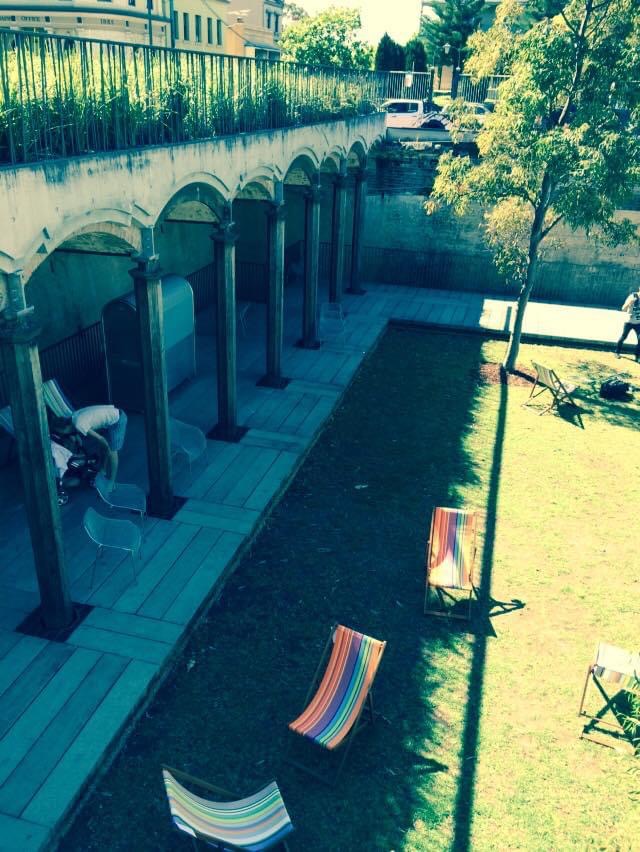
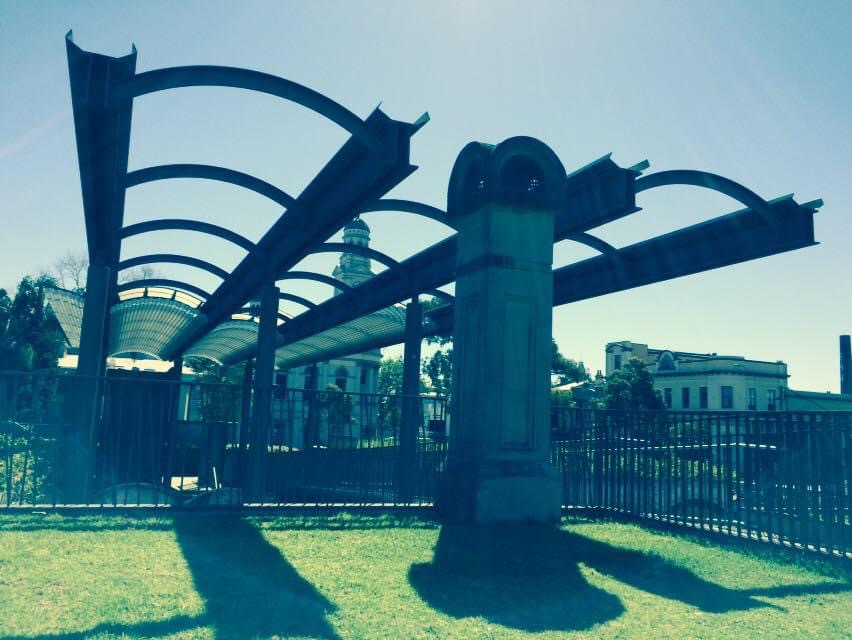
Paddington Reservoir - Oxford Street - Paddington - New South Wales.


The Paddington Reservoir, also known as the Paddington Reservoir Gardens, is a heritage-listed site located in Paddington, Sydney, New South Wales, Australia. Here's some information about the Paddington Reservoir:


1. History: The Paddington Reservoir was originally constructed in the 1860s as an underground water reservoir to supply water to the growing population of Sydney. It was part of the Sydney's water supply infrastructure, designed by engineer Edward Bell.


2. Architectural Design: The reservoir was designed in a Romanesque Revival architectural style, which was popular during the Victorian era. The structure features a blend of brickwork and iron columns, with arches and vaulted ceilings.


3. Function: The reservoir was in operation until 1899 when it was decommissioned. It then went through several stages of use, including storage, workshops, and a service station. In the 20th century, the site fell into disrepair and was eventually abandoned.


4. Transformation into Gardens: In the 1990s, a redevelopment project aimed at transforming the reservoir into a public space was initiated. The site was restored and converted into the Paddington Reservoir Gardens, opening to the public in 2008.


5. Features: The Paddington Reservoir Gardens blend the historic elements of the underground reservoir with modern design. The site incorporates sunken gardens, walkways, seating areas, and reflective pools, creating a serene and contemplative atmosphere.


6. Heritage Significance: The Paddington Reservoir is listed on the New South Wales State Heritage Register and the Australian National Heritage List. It is recognized for its historical and architectural importance, as well as its contribution to the local community and the city's heritage.


7. Events and Activities: The Paddington Reservoir Gardens are a popular venue for various cultural events, art installations, and community activities. It also serves as a tranquil oasis for locals and visitors seeking respite from the bustling city.


The Paddington Reservoir stands as a testament to the historical water infrastructure of Sydney and has been successfully repurposed as a unique urban park. Its blend of historic and contemporary design elements, along with its peaceful ambiance, makes it a notable attraction in Paddington.