
History of convict colonial settlement from the beginnings of the First Fleet in 1788, and other significant parts of Old Sydney Town's heritage.
Tuesday, February 4, 2020
Letters patent – Governor General – Commonwealth of Australia – Constitution
Now know you if we have thought shit to constitute, order, and declare, and to buy those presents constitute, Horder, and for that there shall be a governor general and tomato and cheese here after called the company general over our Commonwealth of Australia, the person who shell Silverstein general so I’ll be goodbye
Monday, February 3, 2020
Hong Kong House - 80 Druitt Street - Sydney - New South Wales
Hong Kong House
Built - 1891
Board.
Architect - Ambrose Thornley
For Well Over 100 Years, Hong Kong House Has Been A Central Feature In The Cityscape And Development Of Sydney.. A Beautiful Example Of Victorian Architecture, The Building's Ornate Facade Gives A Special Place In The City's Cultural And Heritage Landscape. Hong Kong House Occupies A Prominant Site At The Corner Of Druitt Street And York Street, Adjacent To Two of Central Sydney's Most Important Landmarks - The Town Hall And The Queen Victoria Building.
Constructed in 1891 To A Design By Architect Ambrose Thornley, The Building Was Originally Named Central Hotel, And Became The Gresham Hotel in 1906. For Much Of Its Life It Was A Hotel, With A Banking Chamber On the Ground Flor Of The York Street Frontage. The Building Was Converted Into Office Suites In The Late 1980's, And Purchased By The Hong Kong Government In The Mid 1990's, When It Became The Hong Kong Economic And Trade Office, The Hong Kong Trade Development Council And The Hong Kong Tourism
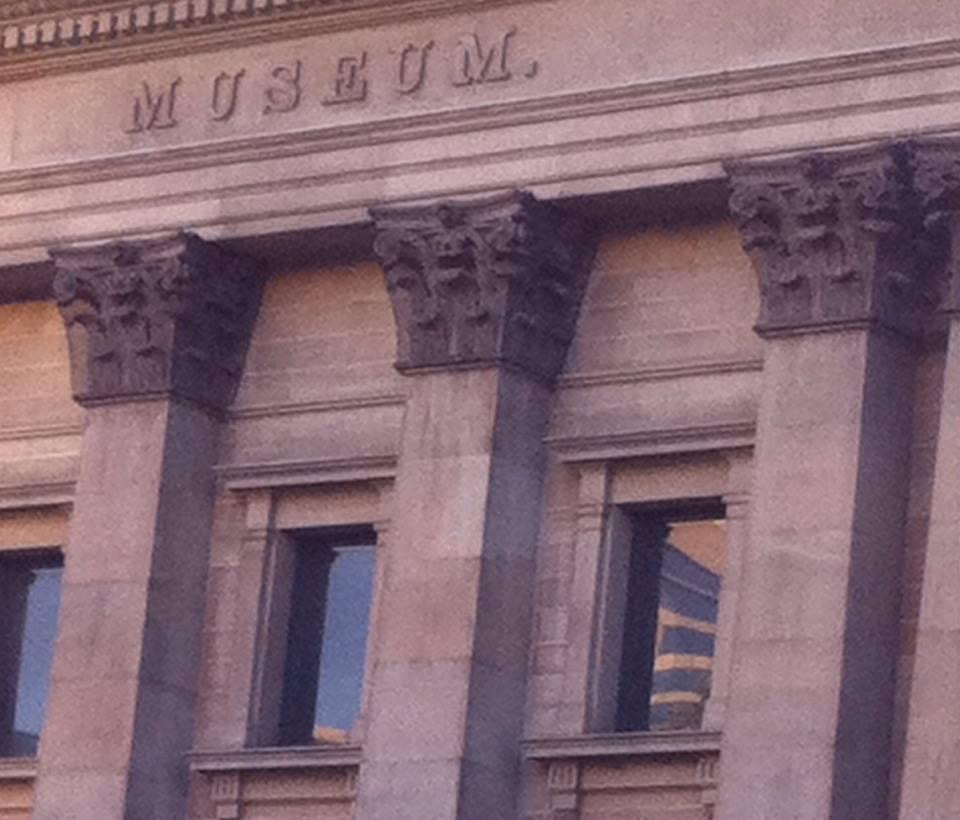
Australian Museum - 1 William Street, Cnr College & William Streets - Sydney
The Australian Museum
Built - 1846 - 1857
Architect - Mortimer Lewis - Colonial ArchitectAdditional Architects -1861 - 1866 - James Barnet - Colonial Architect - Barnet Wing1890 - 1892 - Walter Vernon - Colonial Architect - Lewis Wing Expansion
Found In 1827 To House A Natural History Collection, Australia's First Public Museum Has Been At The Forefront Of Scientific Research, Collection And Education For 190 Years. Originally Designed By Colonial Architect Mortimer Lewis, The Building Has Led A Colorful Life Marked By Adaption And Change.
Construction Of The Museum Began In 1846, But Was Dogged By Controversy; Lewis Resigned In 1849 Amid A Scandal Over The Management Of Public Funds. The Classical Sandstone Building Was Roofless Until 1850, When Its Grand Dome Was Finally Abandoned In Favour Of Skylight. It Opened To The Public In 1857 With Only The Long Gallery For Exhibitions - Scarcely Enough For An Institution Of High Ambition.
After A Succession Of Additions By Government Architects - James Barnet, Walter Liberty Vernon And Edward Farmer - By The 20th Century A Rationalisation Was Sorely Needed. Colin Still Of The Public Work Department Designed A Link To The Major Wings, Improving Visitor Circulation And Installed A Glass Roof Over The Courtyard With An Atrium To House The Library And Temporary Exhibitions.
In 2008 Came Major New Collections Building By Johnson Pilton Walker Architects (JPW). Designed To House Over Ten Million Zoological Specimens, The Australian Museum Research Institute (AMRI) Has A Glass Facade Inspired By The Luminous Color Play Of Butterfly Wings.
The New Architectural Language Was Reinforced In the 2015 Addition Of Crystal Hall By Neeson Murcutt Architects And Joseph Grech Architect, Which Relocated The Main Entry To William Street And Ushered a New Chapter In The Museum's Life
In 2017, Generations Of Ad Hoc Changes Have Been Swept Away. The Original Floors Have Been Uncovered, The Marble Columns Revealed And Restored And The Original Wire Fretwork Re Installed On All Levels.
This Has Revived A Sense Of Grandeur And Wonder, And For The First Time, Sydneysiders Can Now Imagine What Those First Visitors in 1857 Might Have Felt As They Proudly Viewed Their New Museum And It's Curiosities.


Wednesday, January 29, 2020
Governor Arthur Phillip's Canvas House - Bridge Street, In Front Of The Departrment Of Lands
Governor Arthur Phillip's Canvas House - Bridge Street, In Front Of The Departrment Of Lands
In This Vicinity was erected the canvas house brought in frames from England to serve as Governor Arthur Phillip's Temporary home. Carpenters commenced work on it from January 29th 1788, And The Governor went into Residence On February 18th 1788
Governor Arthur Phillip Lived On the Warship Sirius Until the 18th February 1788
"When He Left The Sirius And Took Up Residence On Shore"
Before Leaving London The Governor Had Ordered, At A Cost Of 125 Pounds From Smith Of St George's Fields, A Canvas House To Be Erected On Numbered Frames And Used As A Temporary Residence
David Collins, Judge Advocate, Wrote In The Account Of The English Colony
"A Portable Canvas House, Brought Over For The Governor, Was Erected On The East Side Of the Cove... .WhereAlso A Small Body Of Convicts Was Put Under Tents. The Detatchment Of Marines Was Encamped At The Head Of The Cove Near The Stream, And On The West Side Was Placed The Main Body Of Convicts."
This Government House Was Built Where, Governor Phillip Wrote
"Ships Can Anchor Close To Shore. At A Very Small Expense Quays May Be Constructed At Which The Largest Vessels May Unload. The Cove Is About A Half Mile In Length, And A Quarter Of A Mile Across The Entrance. "
Governor Arthur Phillip, In Honour of Lord Sydney,
"Distinguished It By The Name Of Sydney Cove"
Lord Sydney Was Was Secretary Of The Home Department, And The Governor's Immediate Superior.
David Collins Wrote -
"The Spot Chosen, Was At The Head Of The Cove, Near The Run Of Fresh Water, Which Stole Silently Along Through A Very Thick Wood, The Stillness Of Which Had Then, For The First Time Since Creation, Been Interrupted By The Rude Sound Of The Labourer's Axe, And A Downfall of Its Ancient Inhabitants - A Stillness And Tranquility Which From That Day Were To Give Place To The Voice Of Labour, the Confusion Of Camps And Towns....."
Monday, December 16, 2019
Early Sydney Settlers - First Fleet Onwards
Early sydney settlers first fleet onwards
Governors Of New South Wales
1788 - 1793- Arthur Phillip
1810 - 1821 - Governor Macquarie
Richard Jones Mansion - Pitt Street south western side near Hunter Street
- judge Therry's Home
- Samuel Terry's Home
FAMOUS INNS OF SIN
- The Brown Bear
- the Cat and Fiddle
- The Jolly Sailor
- The Rose Of Australia
- The World Turned Upside Down
- The Whaler's Arms
- The Hero Of Waterloo
PEOPLE OF INTEREST
- Morris Asher - THE RAT PIT - Dog and Rat Fighting.
- Richard Jones - President Of The Bank Of NSW And Founder of The Bank Of Australia
- Major Robert Ross - lieutenant Governor October 1786
- Captain Tench Of The Marines
- Captain John Hunter
- Phillip Gidley King
- Robert Campbell - (Father Of Australian Commerce) - Campbell's Wharf
- Captain John Piper - "The Prince Of Australa" - John Pipers House At Point Eliza Now called Point Piper
- John Cadman
- Francis Greenway Residence - And A List Of The Buildings The He Designed
- Joseph Foveaux
- John Palmer
- Simeon Lord - former Convict And Later Merchant - Had A Mansio.
- Mary Haydock
- Captain Reiby
- Frederick Goulburn - First Colonial Secretary
- David Collins - Judge Advocate
- James Underwood and Underwoods Ship Building Yard
- Isaac Nicholls - Australia's First Postmaster On April 25th 1809
- lieutenant Willam Kent - 1751 - 1812
- John Dunmore Lang - The Australian College
George Crossley
- John Watts - Architect
- James Bloodsworth - Emancipated Convict And Master Builder
Aboriginal Land Names Across The Eastern Beaches
- Every Day Along The Eastern Beaches Of Sydney We Speak Words That Continue To Connect Us With The Cadigal People, The Traditional Owners (TO's) Of Cadigal Country
- Aboriginal Place Names Are Spread Across Australia From Coast To Coast, Derived From The Various Languages & Dialects That Once Dominated Their Respective Landscapes. Some Of The Names Were Adopted By Colonisers & Have Been Subsumed Into Mainstream Australian Culture, Others Are Still Used By TO's, Some Are No Longer Used At All, But Have Been Recorded Historically, & There Are Many That Have Been Lost From Memory.
When You Lay Asleep Last Night & Hear The Sound Of The Ocean, of Waves Breaking On The Shore, That Sound We Need A sentence To Describe Is Expressed By the Cadigal In One Word "BONDI"
Historically Bondi Was Spelt Variously As Boondi, Bundi, Bundeye & Boodye. With Such A Beautiful & Poetic Meaning, It Is Surprising That It Is Not More Commonly Known.
Alternatively, The Australian Museum Has A Record That Bondi Means The "Place Where A Fight Of Nulla's Took Place." It Has Been Suggested That This Latter Meaning May Derive From The Dull Wet Crack. A Nulla (An Aboriginal Weapon) Would Have Made As If It Hit Someone In The Head In Warfare Or Payback Ceremonies; A Sound Analogous To Be The Wet Crack Of Waves Breaking On Rocks.
Tamarama Has Two Distinct Spellings As "Gamma Gamma," & Elsewhere As "Cramarama." It's Original Phonetic Pronunciation Must Lie Somewhere Between The Three Variations. Despite Maroubra Folklore, Historical Evidence Suggests That It Is Tamarama That Means "Thunder" Or "Thunder Clap" Or "Thunder Storm"
Unfortunately For Coogee, It's Name Doesn't Have Quite The Poetic Sensibility That Bondi Does, Though It's Great For Sledging Coogee Residents In Sport Or Pub Banter. The Name Coogee Has Been Derived From The Aboriginal Word "Kudjah" (Kudjii), Meaning "Smelly" Or "Bad Smell". It Is Believed That The Name Derived From The Smell Of Large Deposits Of Rotting Seaweed That Once Built Up Along The Shoreline. There Is Good Historical Record That The True Name Of Coogee Bay Is "Bobroi"
"Boora" Is The Name Of Long Bay. The Traditional Word For A Pathway Was Recorded As "Mo-Ro" & Elsewhere As "Maru". Maroubra Is Believed To Be A Combination Of The Words "Maru" (Pathway) & "Boora" (Long Bay). Long Bay Was An Important Camping & Ceremonial Ground For The Cadigal, And The Traditional Pathway That Led There Passed Right Through Present Day Maroubra.
For TO's, The Importance of Place Names Is Obvious. It Would Be Difficult To Find Significant Geographical Features In Australia That Don't Have An Original Name That Forms Part Of Greater Narratives Of Creation And Lore, Which Us Whitefellas Have Called Dreamtime these Stories Weave Their Way Across The Country Along Song Lines Often So Vast In Distance That Even Distinct Language Groups Are Custodians Of Only Part Of The Story.
Since 2001 The NSW Government Has Committed To Recognising Aboriginal Cultural Heritage By Registering Original Place Names So That They Are Set Aside With Existing Names. Already 20 Locations Around Sydney Harbour Have Been Formally Gazetted As Dual Names Under The NSW Geographical Names Board Dual Naming Policy.
But The Significance Of Aboriginal Place Names Is Not Just Important For TO's. They Are A Defining Element Of The Cultural Identity Of Australia. Many Are So Commonly Used, Subsumed Into Our Daily Lives, & Others So Subtle That We Fail To Recognise Their Significance. However, To Foreign Ears These Names Cleary Distinguish Themselves As Exotic; They Are Uniquely Our Own. As Such Defining Characteristics Of Our Nation In The Growing Cultural Monotony Of Globalisation, They Are Features We Should Celebrate.
The Cadigal Have Left The Eastern Beaches Of Sydney A Greater Cultural Legacy Than The Place Names we Speak Of Daily
And when I Feel Up To Writing Again I Will Follow Up With The Greatest Gift & Legacy That The Cadigal Left Us.
Thursday, November 7, 2019
50 Martin Place - Government Savings Bank Of NSW
50 Martin Place - Martin Place
Built 1925 - 1928
Architect - HE Ross & H Ruskin Rowe, Ross & Rowe
When 50 Martin Place Opened In 1928 As Head Office for The Government Savings Bank of NSW. It Was The City's Tallest, And Most Expensie Building With The Worlds Largest Banking Chamber. It Has Since Been Transformed As The Global Headquarters Of Macquarie Group.
From The Street, The Buildings Beaux - Arts Facade Showcases A Solid red Granite Base, Topped with Four Columns And Pilasters, Clad In Pink Glazed Ceramic Tiles. Twelve Storeys In Height, It Was Crowned Originally With A Two Storey Attic, And, intriguinly, A Rooftop Rifle Range.
At Ground Level, The Grand Hall And Banking Chamber Are Lavishly Detailed In The NeoClassical Style, Featuring Marble And Scagliola - A Form Of Plaster - On Massive Stylised Columns.
Inside The Atrium Are Two Futuristic Circular Glass Lifts
An Extraordinary Eight Storey High Installation By Artist Nike Savvas, Colours Are The Country, Can Be Seen During The lift Journey, Straddling The Atium Is A New Steel Framed Glass Dome, Designed As A Fifth Facade To Be Seen From Thwe Neighbouring Builddings As A Shimmering Lantern.
Wednesday, November 6, 2019
Hyde Park Barracks - Macquarie Street
Hyde Park Barracks - Queens Square - Macquarie Street.
Built - 1817 - 1819
Architect - Francis Greenway

Hyde Park Barracks & The Government Horse Stables Located Near Government House On Macquarie Street Were The Two Great Accomplishments Of Francis Greenways Work Under The Authority Of Governor Macqaurie.
When Commissioner Bigge Arrived In Sydney In 1820 To Conduct His Investigation Of Governor Macquarie & What Was Going On With The Emancipast Reform In The Colony. The Two Buildings Which Threw The Most Anger At Colonial Government Decadence Was The Government Horse Stables Which Was Close
Hyde Park Barracks Is One Of Only 2 World Heritage Sites In Central Sydney. The Hyde Park Barracks Was Built By Convicts, For Convicts.
It Was Designed & Built By Francis Greenway Who Was Appointed The Colony's First Civil Architect By Governor Lachlan Macquarie In 1816.
It Only Took 2 Years to complete & Became The Centre Of Convict Administration & The Colony's Principal Convict Barracks, With An Estimated 50,000 Prisoners Passing Through It's Gates Between 1819 & 1848
After Transportation Was Abolished in 1848, Hyde Park Barracks Became Sydney's Female Immigration Depot, & Then An Asylum for The Aged & Destitute, & It Provided Shelter For Approx 50,000 Women & Their Children Until 1887. It Then Became A Legal Hub, Housing Complex Courts & Government Offices.
The Heritage Value Of Hyde Park Barracks Was Finally Recognised In 1981 With Protection Under The NSW Heritage Act 1977, & in 1984, The Museum of Applied Arts & Sciences Transformed It Into A Museum.
Hyde Park Barracks Was Designed By Francis Greenway, & Was The Main Barracks That The Convicts Would be Housed In.
It Was Officially Ooened On June 4th 1819 By Governor Lachlan Macquarie


What would Francis Greenway, a perfectionist, have thought of the hideous jumble of buildings that has been allowed to spoil the symmetry of the Barricks now queen square?
If the modern rubbish is ever cleared away from the buildings we shall be able to appreciate the imagination of 18th-century men who could bestow dignity even on a prison.
The male convict Barricks, began in 1817 and finished the following year, would house up to 1000 felons in large dormitories. This was a Macqaurie’s scheme for ridding the town of gangs of convicts turned loose at night.
After their days labour on government works they slept where they could, an extra ordinary system that led to robbery and violence; Some of the convicts even used hire pistols for a night marauding.
Greenways three stories Barricks are one of his best work. The Sydney Gazette Of the day called it
“a noble structure executed comfortably with the most elegant proportions of the Greek school”
Macqaurie was so pleased that he gave Greenway His Full pardon. He Arranged for the building to have a handsome clock-since replaced –
And gave the craftsman that made it a grant of 500 acres.
From the 1840’s to the 1880s the main part of the Barricks with used to lodge newly arrived immigrant women from the British Isles.
A district court was squeezed into one corner, and room was later made for the institution for ageD females. The law officers who finally took over the building are mainly to blame for its present sorry appearance.
Female immigration depot
Hyde Park barracks, a former convict dormitory, was adapted in 1848 as Sydney’s female immigration depot to, to protect and process women arriving in the colony under various government schemes.
Up until 1886, thousands of impoverished working class women were housed here, some with their children, before starting new lives in Australia.
A contemporary monument in the compound wall commemorates the many Irish immigrants and workhouse girls who came to New South Wales fleeing the Irish famine.
Old Convict Sites
Hyde Park Barracks is a historic site located in Sydney, Australia, and is recognized as a UNESCO World Heritage Site. It has a rich history and has served various functions over the years. Here's an overview of the history of Hyde Park Barracks:
Construction and Purpose:
- Hyde Park Barracks was designed by architect Francis Greenway and completed in 1819.
- It was built to accommodate male convicts who were assigned to government labor and needed housing in Sydney.
Convict Accommodation:
- The barracks provided accommodation for convicts who were assigned to various government projects and labor, such as building roads, bridges, and other infrastructure.
- It played a significant role in the convict system of the early colonial period.
Design and Layout:
- The building's design is in the Georgian architectural style and features a long and symmetrical facade.
- It consists of three floors with rooms that were used for sleeping and communal spaces.
Overcrowding and Changes:
- Over the years, the barracks became overcrowded, and the conditions for the convicts were often harsh.
- In the mid-19th century, the building's use shifted to house immigrant women and girls, known as "female immigration depot."
Adaptations and Uses:
- In the late 19th century, the building was used for various purposes, including a courthouse and government offices.
- It was also used as a part of the university and a repository for legal documents.
Preservation and Restoration:
- In the 20th century, efforts were made to preserve Hyde Park Barracks as a historic site.
- The building underwent restoration to bring it closer to its original appearance during the convict era.
World Heritage Status:
- In 2010, Hyde Park Barracks was inscribed as a UNESCO World Heritage Site as part of the "Australian Convict Sites" World Heritage property.
Museum and Interpretive Center:
- Today, Hyde Park Barracks operates as a museum and interpretive center that provides insights into the lives of convicts, immigrants, and the building's historical context.
- It offers visitors a chance to learn about the experiences of those who lived and worked within its walls.
Hyde Park Barracks is not only a historic building but also a place of education and reflection, offering a glimpse into Australia's colonial history and the lives of those who shaped the nation's development
Subscribe to:
Posts (Atom)