Search This Blog
Friday, May 22, 2015
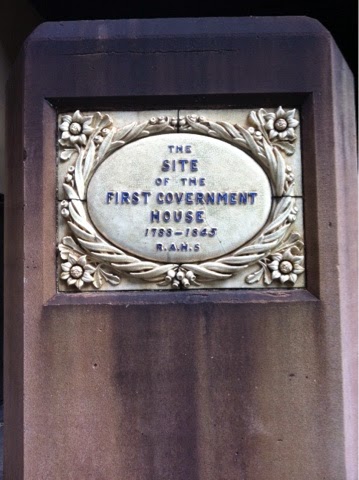
First Government House - Corner Of Bridge Street & Phillip Street - South Western Corner - Sydney - New South Wales
Sydney Conservatorium of Music - The Old Government House Horse Stables - The Government Domain - Sydney
Sydney Conservatorium Of Music - The Old Government Horse Stables -
Off Macquatie Street, Opposite Bridge Street - Sydney
This was Once The Main Horse Stables To Government House
This Building Was Erected In1816 By Governor Macquarie As Stables For Government House. In 1913 The Central Courtyard Was Roofed In To Form A Concert Hall For The New South Wales Conservatorium Of Music.
In His List Of Public Works Governor Macquarie On The 27th July 1822 Mentions "A Handsome Square Brick Building, Stuccoed, Containing Coach House And Stables, With Apartments For Servants For The Use Of The Governor And His Staff"
Governor Macquarie, Housed In The Damp, Decaying Old Government House In Bridge Street..... & Complained That No Private Gentleman In The Colony Is so ill Accommodated As He Was.
In 1817 He Sent Francis Greenway Directions To Draw Up Plans For Stables For 30 horses And A Handsome House For The Residence Of The Governor. But Then The Home Government Vetoed Any New Vice Regal Residence In The Near Bankrupt Colony. Greenway Was Allowed To Go Ahead With The Horse Stables Only.
Governor Macquarie Ordered These To Be Of Brick, And Run Up In 3 Months.
It Has Been Said That He Was Alarmed And Dismayed When He Found Out That Greenway Was Actually Giving Him A Handsome, Castellated Stables. Why, If This Were So, He Did Not Have The Work Halted Is Not Explained.
Greenway's Motive For Seemingly Disregarding Orders Is Also A Mystery. Did He And The Governor, With A Joint Passion For Splendid Architecture, Hope That The Stables Would Set The Tone For An Even Grander Government House, To Be Built In Spite Of The Croakers In London?
Whatever The Truth, The Stable Scandalised The Colonists, And Threw Commissioner Bigge Into A Frenzy Over The Useless Magnificence Of The Building. At First It Was Used As Vice Regal Stables, And At One Stage Even Housed The Mounts Of A Hunt Club.
The Courtyard Was Roofed - In A Totally Different Architectural Style - And In 1916 Became The State Conservtorium of Music
Of All Of Governor Macquarie's Works....... The One That Inflamed His Adversaries The Most Was The Building Put Up As The Stables For His Horses & Quarters For His Servants.
The Sydney Conservatorium of Music, located in Sydney, Australia, is a prestigious institution dedicated to music education, performance, and artistic development. It has a rich history dating back over a century and has played a significant role in shaping Australia's musical landscape. Here's an overview of its history:
Early Beginnings:
- The origins of the Sydney Conservatorium of Music can be traced back to 1855 when the New South Wales government established a music school under the direction of John Hill.
Foundation as a Conservatorium:
- In 1915, the New South Wales State Government officially established the Sydney Conservatorium of Music. It was created with the goal of providing advanced music education and fostering musical talent.
Architectural Heritage:
- The conservatorium's main building, known as the "Conservatorium Building," is a notable architectural landmark. It was designed by Government Architect Walter Liberty Vernon and completed in 1916.
- The building features sandstone architecture with elements of classical and Gothic revival styles.
Influential Figures:
- Sir Eugene Goossens, an acclaimed conductor and composer, became the conservatorium's first director in 1916.
- Throughout its history, the conservatorium has been associated with numerous renowned musicians, educators, and composers who have contributed to Australia's music scene.
Music Education and Programs:
- The Sydney Conservatorium of Music offers a wide range of music education programs, including undergraduate and postgraduate degrees in various disciplines.
- It provides training in classical, jazz, contemporary, and electronic music, fostering a diverse and vibrant musical community.
Concerts and Performances:
- The conservatorium's role extends beyond education to include performances and concerts. It hosts regular concerts, recitals, and events featuring students, faculty, and guest artists.
Cultural Influence:
- The Sydney Conservatorium of Music has had a significant impact on Australia's cultural life. It has contributed to the development of the country's musical talent, composition, and performance.
Facility Upgrades:
- Over the years, the conservatorium's facilities have been upgraded and expanded to accommodate modern educational needs and technologies while preserving its historical character.
Collaborations and Partnerships:
- The conservatorium collaborates with other institutions, organizations, and ensembles both nationally and internationally, fostering connections and cultural exchange.
The Sydney Conservatorium of Music remains a vital institution in Australia's music education and performance landscape. Its history reflects a commitment to excellence in musical training and a dedication to nurturing the artistic talents of generations of musicians.
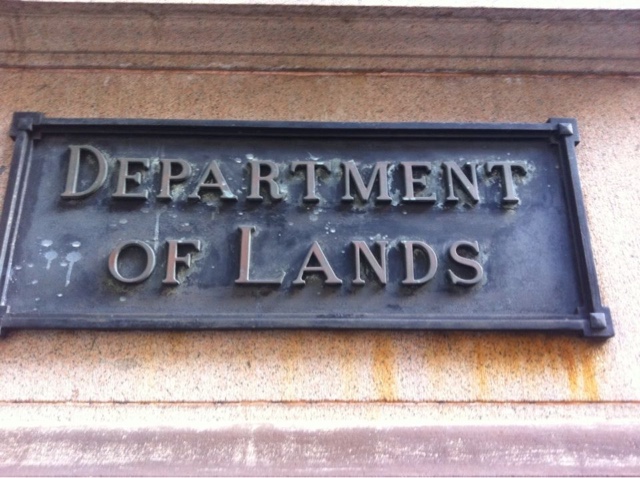
NSW Department of Lands – 22–33 Bridge Street – Sydney – NSW
Stand on Bridge Street looking toward Circular Quay and the sandstone pile that once ran surveying and Crown land for the whole state still dominates the block. The former Lands Department Building at 22–33 Bridge Street (frontages also to Loftus, Bent and Gresham) was designed by Colonial Architect James Barnet in Victorian Renaissance Revival style and built in two main stages — about 1876–1881 and 1888–1892 (the second stage finishing early in Walter Liberty Vernon’s time as Government Architect). Builder John Young’s first stage notably used reinforced concrete floor slabs. For more than a century it housed the Lands department under successive names — maps, surveys, Crown land — right above the Quay.
The façades carry niches meant for portrait statues of explorers and legislators; twenty-three figures went in between 1890 and 1901 (with a later Meehan commemorative addition). Survey standards are built into the fabric: a Bridge Street height benchmark and an internal baseline tied to the state’s measurement system. It is on the NSW State Heritage Register.
Departments left in 2016. Capella Sydney hotel is the neighbouring former Education building — not Lands. Lands is the second Sandstone Precinct chapter, The Lands by Capella. Keep the two buildings distinct in captions and text.

The Colonial Secretary’s Building - 121 Macquarie St - 65 Bridge St - 44-50 Phillip St - Sydney - NSW
Walk Bridge Street past the Lands Department and the next sandstone pile is easy to mix up with its neighbours — don’t. The Chief Secretary’s Building, long known as the Colonial Secretary’s Building, is the ornate government block at 121 Macquarie Street, also addressing 65 Bridge Street and 44–50 Phillip Street. Colonial Architect James Barnet designed the original Victorian Free Classical pile; the first four levels ran from 1873 to about 1881. In 1894–96 Government Architect Walter Liberty Vernon added a fifth-floor mansard and dome in Second Empire taste, plus a further Phillip Street extension. Barnet disliked the changes — they pulled the building away from his Palazzo Farnese model.
For decades this was a nerve centre of colonial and state administration. Premiers including Sir Henry Parkes used prestige corner rooms. Exterior sculpture and lavish stairs, marble and decorative arts were meant to look like a colony that intended to last, sitting beside the Domain and the later Garden Palace grounds. The building is State Heritage listed and has stayed in government use; in more recent times it has housed the Governor of New South Wales’ office and courtroom functions linked to industrial relations jurisdictions — which is why older labels say “Industrial Relations Building.”
Photographs here show the Bridge Street and Macquarie Street elevations, sculptural detail, and the celebrated interior stair.
src="https://blogger.googleusercontent.com/img/b/R29vZ2xl/AVvXsEgzW6ZCSmj2M33i1yEG4-1PhZPe_BYK8J_lW2nR0OX1T_vqt_3q3CrQmT8E7B-FYu-PLnJlcwXLDBkVzWeFsWGO6Oue8GGGx_zr44eHR87XaryjU_y8D9D_7_jWokpqV0dI4EZEAbrP2hVI/s640/blogger-image-2123857072.jpg" />
I Asked Someone There The Meaning Of This Statue..... They Didn't Have A Clue
This Is At The Bottom
King George III - Royal Commission - Arthur Phillip - Governor In Chief - February 7th 1788
Arthur Phillip’s Instructions From King George III
George III
By The Grace Of God.
King Of Great Britain,
France & Ireland....
Defender Of The Faith;
To Our Trusty & Well Beloved Arthur Phillip Esq
We Reposing ESpecial Trust
& Confidence In The Prudence, Courage & Loyalty Of You,
The Said Arthur Phillip, Of Our Special Grace,
Have Thought Fit To Constitute & Appoint You
To Be Our Captain General & Governor In Chief,
In & Over Our Territory Called New South Wales.
Extending From The Northern Cape Or Extremity Of The Coast Called Cape York, in Latitude 10 Degrees 37 Minutes,
To The Southern Extremity, in Latitude 43 Degrees 39 Minutes South.
& All The Country Westward,
To the 135th Degree Of East Longitude, Including All The Islands,
Adjacent In The Pacific Ocean, Within The Latitude Name.
Our Will & Pleasure Is That You Take The Oath
For The Due Execution Of The Office Of Trust Of Our Captain General & Governor In chief For The Due & Impartial Administration, Of Justice
& We Do Hereby, Authorise & Empower You To Keep & Use The Public Seal,
For Sealing All Things Whatsoever, That Shall Pass The Great Seal Of Our Said Territory & It's Dependancies.
We Further Give & Grant Unto You, Full Power & Authority,
To Administer & Give Oaths,
To Every Such Person Or Persons As You Shall See Fit,
& To Constitute & Appoint Justices Of The Peace,
Coroners, Constables, & Such Other Necessary Officers
For The Better Administration Of Justice.
To Pardon Offences,
Remit Fines & Forfeitures,
To Levy, Arm, Muster,
Command & Employ All Persons Whatsoever
Residing Within The Said Territory & It's Dependancies,
For The Resisting Of All Enemies,
Pirates & Rebels,
Both At Sea & Land.
To Execute Martial Law, In Time Of Invasion,
Or At Other Times, When By Law, It May Be Executed
To Erect, Raise & Build So Many Forts Platforms, Castles & Cities, Burrows, Towns & Fortifications, As You Shall Judge Necessary
To Constitute & Appoint Captains, Leutenants, Masters Of Ships & Other Commanders & Officers, To Punish Convicts & Execute OffendersAt Sea Or During Their Time Of Abode at Ports, Harbours & Bays
We Likewise Give & Grant You Full Power & Authority To Grant Land, To Control Commerce, To Appoint Fair, Marts & Markets.
& We Require & Command All Officers & Members,
Civil & Military, & All Other Inhabitants,
To Be Obedient, Aiding & Assisting To You, The Said Arthur Phillip,
In The Execution Of This Our Commission,
& In Case Of Your Death Or Absence, Out Of The Said Territory
To Be Obedient Aiding & Assisting To Such Person
As Shall Be Appointed By Us To Be Captain Loeutenant Governor or Commander In Chief,
Witnessed Ourselves At Westminter on The 2nd Day Of April In The 27th Year Of Our Reign, By Writ Of Privy Seal.
& For So Doing,This Shall Be Your Warrant,
Given At Our Court At St James,The 26th Day Of March, 1787
In The 27th Year Of Our Reign
God Save The King
READ TO ALL CONVICTS AND MARINES PRESENT ON FEBRUARY 7th 1788
Friday, May 15, 2015
Captain Arthur Phillip & The First Fleet Arriving At Botany Bay -January 1788
Captain Arthur Phillip & The First Fleet Arriving At Botany Bay - 18th January 1788
Captain Arthur Phillip Was Aboard "The Sirius" Which Was The First Of The 12 Ships To Finally Arrive At The Shores Of New Holland.
No White Men Had Ventured Along The Eastern Coastline Since Captain James Cook Had Sailed And a Mapped The Coastline On An Exloration mission Aboard "The Endeavour" In 1770.
Sir Joseph Banks Was Also Aboard "The Endeavour" With Captain Cook Recording All The New Flora And Fauna That They Came Across On Their Travels Of New Holland.
Both Captain Cook And Joseph Banks Had Described The a Eastern Coastline As Hospitable.
When Captain Arthur Phillip Arrived On The Shores Of a Botany Bay 18 Years Later.... What He Found Was Something Completely Different. The Soil Was Sandy And The a landscape Was Semi Arid. There Was No Source If Fresh Drinking Water Nearby.
Phillip Was Disappointed With What He Found At Botany Bay. The a Water a Was a shallow, So Ships Couldn't Get Close To The Shoreline, So Everything Would Have To Be Done By Long Boat...... To Begin With....
Captain Arthur Phillip.... With Disappointment... And Maybe Even With A Little Despair.... After Sailing Halfway around The Known World With 12 Ships Fully Laden a With Convicts, Crew And Supplies To Set Up A New Colony.... And After 8 Months At Sea.... There Was No Returning To Portsmouth.... Or Anywhere Or Any Port In The Known British World..
Once All 12 Ships Had Got The Westerly Winds To Push Them
Into Botany Bay, He Decided He Woukd Take A Small Expedition Crew With Him To Try And Locate A Better Spot To Set Up The New Penal Settlement.
As He Sailed Up The Eastern Coast Approximately 4 Nautical Miles, He Came To The Heads Captain Cook Had Mapped ain 1770, And a which He Hsd Named Port Jackson, But Captain Cook Never Ventured In Between The Heads At The Time.
Arthur Phillip And His Expedition Crew Sailed In Approximately Another 4 Nautical Miles When He Came To The Modern Day "Farm Cove" & "Sydney Cove"
Here He Found A Fresh Source If Running Water, Which a Would a Then Go On To Be Named The Tank Stream, The Bay a Was a Almost Naturally Perfectly Circular, With Deep Harbour Waters, So Ships a Were Almost Aboe To Sail Right To a The Shoreline.
David Collins Wrote In His Journal -
"The Spot Chosen, Was At The Head Of The Cove, Near The Run Of Fresh Water, Which Stole Silently Through A Very Thick Wood; The Stillness Of Which Had Then, For The First Time Since Creation, Been Interrupted By The Rude Sound Of The Labourer's Axe... And The Downfall Of Its Ancient Inhabitants. A Stillness And Tranquility Which; From That Day Were To Surrender And Give Way To The Voice Of Labour... And The Confusion Of Camps And Towns..."
Thursday, March 19, 2015
Sydney Harbour Bridge 80th Anniversary (2012)
The Sydney Harbour Bridge spans the harbour at its narrowest between Dawes Point (south) and Milsons Point (north) — a riveted steel through-arch carrying road, rail and footways, with granite-faced concrete pylons. Ideas for a fixed crossing circulated through the nineteenth century (Francis Greenway is often cited as an early advocate under Macquarie); serious modern planning crystallised under engineer J. J. C. Bradfield, appointed to harbour-bridge and city-transit work from 1912. The Sydney Harbour Bridge Act 1922 authorised a high-level cantilever or arch; the construction contract went to Dorman, Long & Co. of Middlesbrough in 1924, with detailed structural design associated with Sir Ralph Freeman.
Approach and foundation work ran through the mid-1920s; the arch halves met in 1930. Premier Jack Lang officially opened the Bridge on 19 March 1932 — famously after New Guard member Francis de Groot slashed the ceremonial ribbon. Roughly eight years of construction employed thousands through the Depression; granite came from Moruya, steel from England and Australian mills. The Bridge remains a National Heritage–listed landmark and the everyday link Bradfield tied to the City Circle and northern lines.
The 2012 “80th anniversary” framing and any embedded video can stay as media; the paragraphs above are the place history the thin anniversary heading lacked.