
William Redfern is one of those names Sydneysiders walk past every day — on the station, the suburb, the park — without thinking of the man behind them. He was a naval surgeon's mate condemned after the Nore mutiny, a Norfolk Island doctor, Macquarie's physician, author of the 1814 report that helped reform convict shipping, a bank director and emancipist campaigner, and finally a student again in Edinburgh. The Australian Dictionary of Biography entry by Edward Ford is the backbone of what follows, checked against Ford's 1953 study where the two speak together.

Early Life and the Navy
The Australian Dictionary of Biography gives his dates as 1774?–1833 and says he was born probably in Canada and brought up at Trowbridge, Wiltshire. His letters show a classical education. In June 1797, after passing the examination of the London Company of Surgeons, he was commissioned surgeon's mate in the Royal Navy and joined H.M.S. Standard. That ship's company took part in the mutiny of the North Sea Fleet at the Nore in May–June 1797, which followed the successful Spithead mutiny of the Channel Fleet. Ford notes that Redfern had served on the Standard only a few months when the courts martial began.


Court Martial and Reprieve
During the trouble on the Standard, Redfern advised the men "to be more united among themselves." For that he was tried among the leaders. On 27 August 1797 a naval court sentenced him to death. Because of his youth he was reprieved. The advice that put him in the dock did not save him from the gallows; the court's mercy did. He spent about four years in prison — Ford and later writers place him for a time at Coldbath Fields — before being transported.

The Minorca, 1801
Redfern was sent to New South Wales in the Minorca. On the indent his name is bracketed with thirteen others as "Mutineers." He helped the surgeon on the voyage. The Australian Dictionary of Biography says he reached Sydney on 14 December 1801.
Norfolk Island
In May 1802 he began duty as assistant surgeon at Norfolk Island. He attracted Lieutenant-Governor Joseph Foveaux's attention, received a conditional pardon, and on 19 June 1803 was given a free pardon by Governor Philip Gidley King. He worked there for five years and built a strong medical reputation before returning to Sydney in 1808.

Sydney Practice and the Colonial Examination
In 1808 Foveaux, then in command at headquarters, appointed Redfern assistant surgeon. Lacking papers to prove his qualifications, Redfern was examined by Surgeons Thomas Jamison, John Harris and William Bohan, who found him "qualified to exercise the Profession of a Surgeon etc." The examination set a precedent for testing medical practice in the colony. From the old hospital at Dawes Point he ran convict out-patients and the busiest private practice in the settlement. He was family doctor to the Macarthurs and the Macquaries, and attended the birth of Governor Macquarie's son.

Macquarie Street
When Macquarie's new general hospital opened on Macquarie Street in 1816, Redfern took charge of the wards. D'Arcy Wentworth, the principal surgeon, visited mainly as a consultant. The north wing became Wentworth's residence; the south wing housed Redfern and his wife. Those wings survive as Parliament House and the Mint. Conditions remained hard: poor diet and sanitation, unreliable convict nurses, and theft so common that Redfern issued stores himself. He trained apprentices, including James Shears (from 1813) and Henry Cowper.


The 1814 Transport Report
In 1814 the convict ships Surry, General Hewitt and Three Bees arrived with heavy mortality from scurvy, typhus and dysentery. Infected seamen from the Surry were treated in a quarantine camp on the north shore of the harbour opposite Dawes Point. Macquarie asked Redfern to investigate. His report of 30 September 1814, printed in the Historical Records of Australia, urged ventilation, cleanliness and fumigation; better diet and clothing; time on deck; and "approved and skilful" surgeons on every ship, with clear authority over the masters. He recommended naval surgeons accustomed to sea practice. Those recommendations were taken up in the later appointment of surgeon-superintendents on convict ships, a reform that greatly reduced the old abuses, though Redfern's paper was one important step among others in that change.
Family, Land and the Bank
When Redfern returned from Norfolk Island in 1808 the passenger list of the Estramina named a wife, but no other record of that marriage is known. On 4 April 1811 he married Sarah Wills of Sydney. They had two sons: William Lachlan Macquarie Redfern, born 1819, and Joseph Foveaux Redfern (1823–1830).
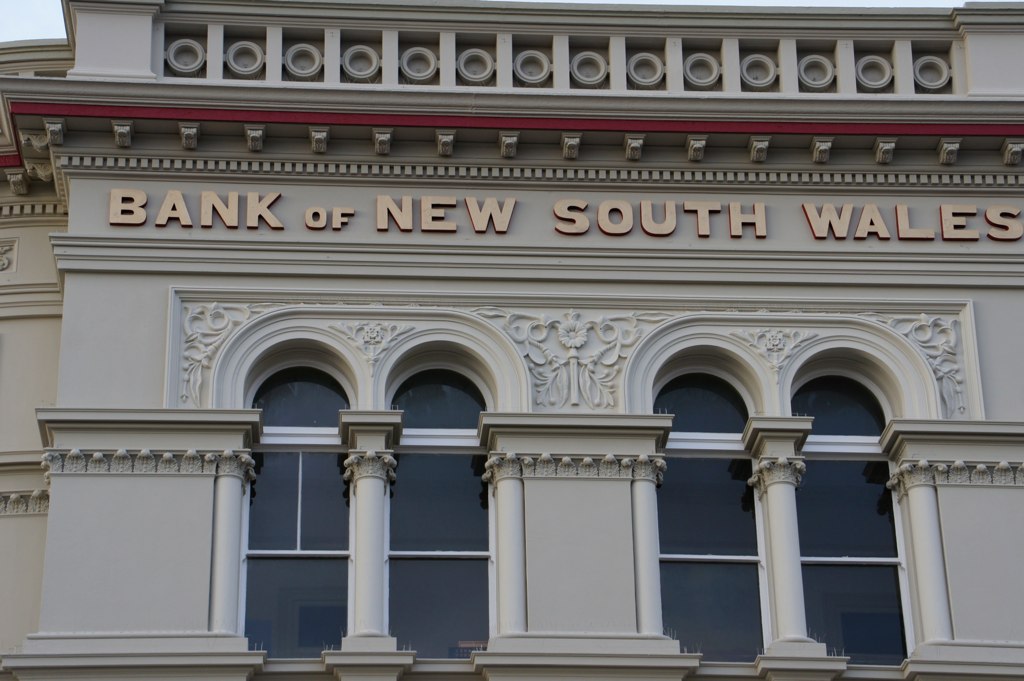
He and Sarah held about 100 acres (40 ha) that later gave the name Redfern to the suburb which grew around the estate. In 1818 he was granted 1,300 acres (526 ha) at Airds, which he called Campbell Fields. Commissioner Bigge still ranked it among the best developed properties in the colony. By the end of his life the Australian Dictionary of Biography puts his New South Wales holdings at 23,190 acres (9,385 ha). On 7 February 1817 he was elected one of the first directors of the Bank of New South Wales.
Passed Over, Magistrate and Bigge
When Wentworth resigned as principal surgeon in 1818, Macquarie recommended Redfern. Lord Bathurst appointed the naval surgeon James Bowman instead. Redfern resigned from the government medical service on 14 October 1819. Macquarie then made him a magistrate; Bigge opposed emancipist magistrates, and Bathurst ordered Redfern's removal. Bigge found him "a proud and inflexible opponent" and said he was the only person in the colony who resisted the commissioner's authority.
Emancipist Rights
Court rulings in 1817–1820 shook the legal status of emancipists freed by a governor's pardon rather than under the Great Seal. In January 1821 a Sydney meeting chose Redfern and Edward Eagar to carry a petition to the King. Redfern sailed on 27 October 1821. The mission helped secure legislation restoring emancipist civil rights in the New South Wales Act of 1823. After time in Madeira for his health he returned in the Alfred in July 1824, took further land, and gave up medical practice entirely in September 1826.
Edinburgh and Death
In 1828 Redfern took his elder son William to Edinburgh to be educated. He intended to return to New South Wales, but died in Edinburgh in July 1833 after a short illness. Sarah, delayed by accident and by the death of their younger son Joseph in 1830, arrived only days afterward. In June 1834 she married James Alexander of Glasgow and later returned with him to Sydney.
The Suburb
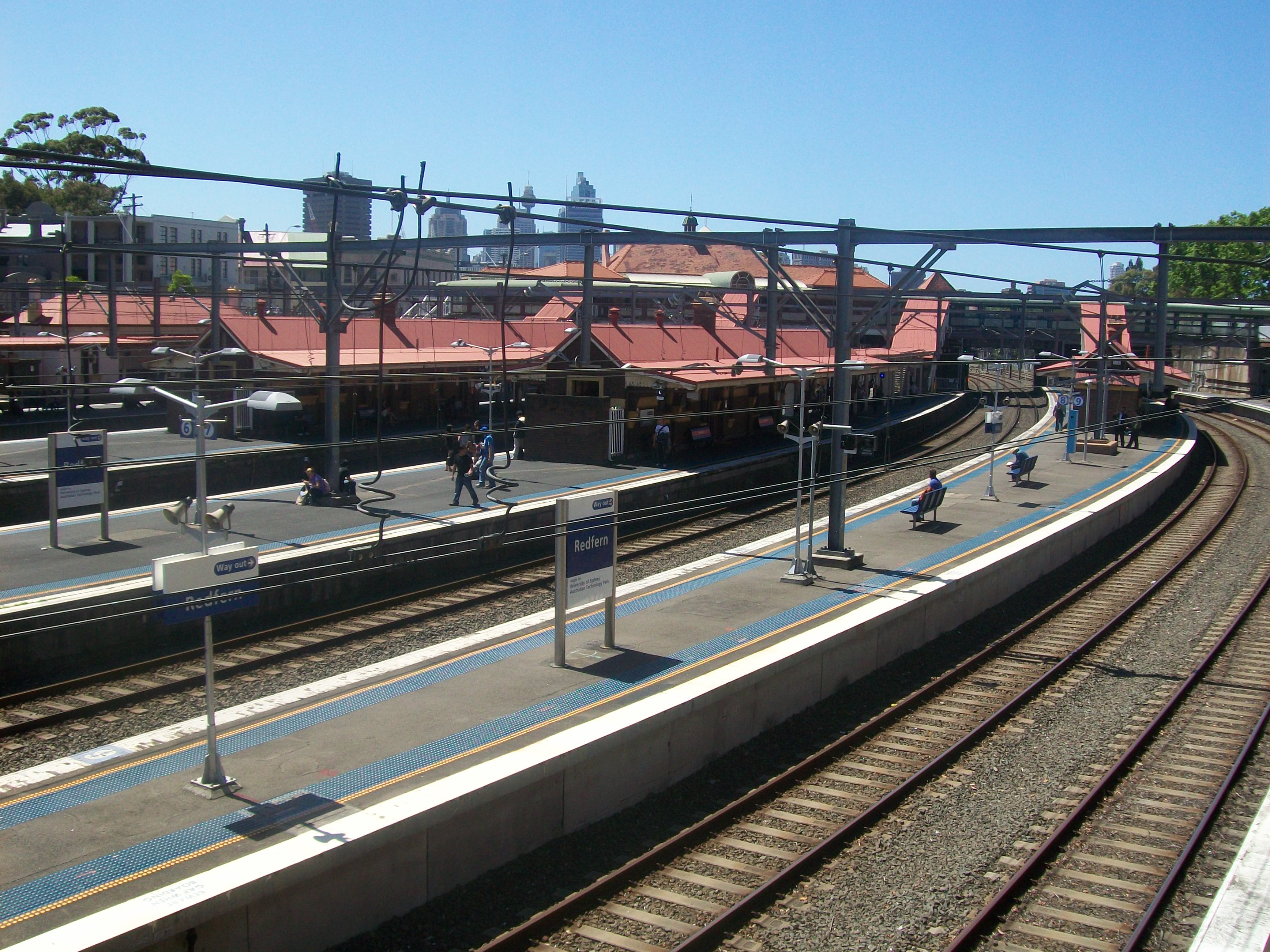
The hundred acres of Dr Redfern's estate were subdivided from the 1840s. The suburb, park and railway station took the name. The Macquarie Street hospital wings remain the buildings most closely tied to his working life.

Legacy
Ford's judgment still stands: Redfern was one of the greatest early medical practitioners of the colony, the first to receive an Australian professional qualification of the colonial examining kind, an early teacher of medical students, and the author of an important reform paper on the convict transports. The Nore condemnation marked him as an emancipist for life. Macquarie stood by him; Bathurst, Bigge and Bowman would not.
Where the Sources Disagree
- Birth year. The Australian Dictionary of Biography: 1774?, probably Canada. Other writers: about 1775. Ford's "youth of nineteen" in 1797 implies a later birth if taken literally.
- Commissioning and the Nore. The Australian Dictionary of Biography dates the Company of Surgeons examination and naval commission to June 1797; the Nore mutiny ran through May–June 1797. Ford says Redfern had been only a few months on the Standard.
- Arrival day. Australian Dictionary of Biography: 14 December 1801. Some convoy narratives: 15 December.
- Younger son's name. Australian Dictionary of Biography and Ford: Joseph Foveaux Redfern (1823–1830). Some later summaries call him Robert; that is not followed here.
- Death day. Australian Dictionary of Biography: July 1833. Some accounts: 17 July 1833.
Timeline
- c.1774–1775 – Born, probably in Canada; raised at Trowbridge.
- 1797 – Surgeon's mate, H.M.S. Standard; Nore mutiny; death sentence 27 August; reprieved.
- 14 December 1801 – Arrives Sydney in the Minorca.
- May 1802 – 1808 – Norfolk Island; free pardon 19 June 1803.
- 1808 – Assistant surgeon, Sydney; colonial examination.
- 4 April 1811 – Marries Sarah Wills.
- 30 September 1814 – Transport health report.
- 1816 – In charge of the new Macquarie Street hospital.
- 7 February 1817 – Director, Bank of New South Wales.
- 14 October 1819 – Resigns government post after Bowman is preferred.
- 1821–24 – Emancipist petition mission; returns July 1824.
- September 1826 – Retires from practice.
- 1828 – Takes son William to Edinburgh.
- July 1833 – Dies in Edinburgh.
Sources
- Edward Ford, "Redfern, William (1774–1833)", Australian Dictionary of Biography, https://adb.anu.edu.au/biography/redfern-william-2580 (text consulted via Internet Archive capture https://web.archive.org/web/20240101000000/https://adb.anu.edu.au/biography/redfern-william-2580)
- Edward Ford, The Life and Work of William Redfern (Sydney, 1953), http://redfern.s3.amazonaws.com/ford1953.pdf
- N. J. Dunlop, "William Redfern, the First Australian Medical Graduate, and His Times", Journal and Proceedings (Royal Australian Historical Society), vol. 14, part 2, 1928
- Historical Records of Australia, series 1, vols 6–10 (including Redfern to Macquarie, 30 September 1814)
- RACGP, "Mr William Redfern", https://www.racgp.org.au/the-racgp/history/biographies/mr-william-redfern
- Royal Australasian College of Physicians, William Redfern Oration (AFPHM), https://www.racp.edu.au/about/college-structure/australasian-faculty-of-public-health-medicine/william-redfern-oration