
James Hardy Vaux is remembered as the thrice-transported London thief who wrote the first full-length convict autobiography composed in Australia, and whose Vocabulary of the Flash Language — compiled at Newcastle in 1812 and published in London in 1819 — is widely regarded as Australia’s first dictionary. In February 1809 he was sentenced to death at the Old Bailey under an alias. The sentence was not carried out. It was respited, and he was transported for life to New South Wales.
He told much of this himself in the Memoirs. Those pages are vivid and often exact on dates and places, but they are also special pleading. Where court registers, the Digital Panopticon life archive and later colonial records disagree with his own voice, the records come first.
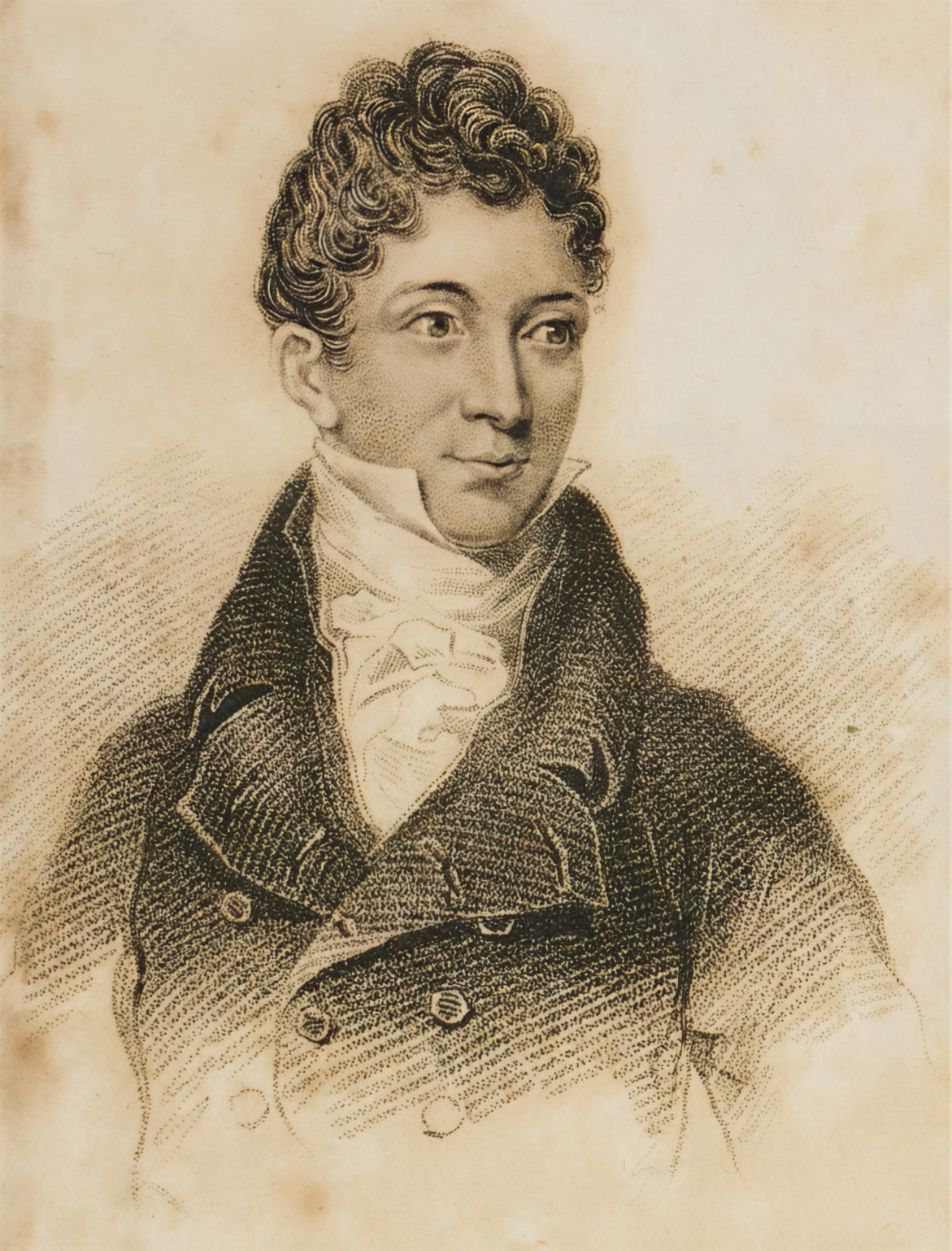
Unknown engraver (frontispiece) · c.1819 · Public domain · Wikimedia Commons

Names, family and early life
He was baptised James Hardy Vaux on 20 May 1782 at East Clandon, Surrey, son of Hardy Vaux, butler and house steward to the Member of Parliament George Holme Sumner, and Sophia, daughter of James Lowe, an attorney connected with the Fleet prison. The family later moved to London, where Hardy Vaux set up as a hatter in Great Turnstile, Holborn. Much of the boy’s childhood was spent with his maternal grandparents at Shifnal in Shropshire.

Colin Smith · 2010 · CC BY-SA 2.0 · Wikimedia Commons

In print and in the dock he appears as James Hardy Vaux, James Vaux, James Lowe or Low, and later James Young. The Lowe alias was not invented out of thin air: Lowe was his mother’s family name. By his mid-teens he had already been dismissed from a Liverpool draper’s apprenticeship and from London clerking jobs. He volunteered for the navy in December 1798, served in the frigate Astraea in the North Sea — the muster lists him as an ordinary seaman, though his memoir claims an earlier midshipman’s berth — and deserted at Yarmouth in August 1799.
First Old Bailey conviction and the Minorca
By 1800 he was living by theft. Arrested in April for pilfering from a Covent Garden clothing firm, he was acquitted; that autumn he was not so lucky. On 17 September 1800, at the Old Bailey, James Vaux was convicted of stealing a handkerchief privately from the person. The jury valued the handkerchief under a shilling — a common device that kept the case off the capital ladder — and he was sentenced to seven years’ transportation.
He reached Sydney in the Minorca in December 1801. Clerk’s work at the Hawkesbury, in Sydney and at Parramatta followed. He forged Governor Philip Gidley King’s initials on commissariat orders, served time in a road gang, then talked his way back into favour with Samuel Marsden and with King himself. When King sailed for home in 1807, Vaux went with him in HMS Buffalo, writing the governor’s log and teaching the King and Marsden children. His seven years expired on the voyage. Compelled to ship as a seaman, he deserted at Portsmouth and slipped back into London’s flash world.

Attributed to Francis Fowkes · published 1789 · Public domain · Wikimedia Commons

Return to London and the Piccadilly jeweller
On 21 July 1808, at St Paul’s, Covent Garden, he married Mary Ann Thomas. In the Memoirs he is frank that one reason was the hope that, if he were transported again, a wife might be allowed to follow. In November–December 1808 he narrowly escaped conviction for stealing a snuffbox. That close call is sometimes muddled, in later popular summaries, with the capital case that followed. They were separate affairs.
The charge that nearly hanged him arose from a visit to a Piccadilly jeweller’s shop on 9 December 1808. The prosecutors were Matthias Bilger the elder and Matthias Bilger the younger. On 15 February 1809, under the alias James Low (also written Lowe), Vaux stood at the Old Bailey.

Ackermann’s Repository · 1810 · Public domain · Wikimedia Commons


Thomas Hosmer Shepherd · 1828 · Public domain · Wikimedia Commons

15 February 1809 — death sentence at the Old Bailey
The Digital Panopticon life archive, drawing on the Old Bailey proceedings and related Home Office material, records the indictment as grand larceny: feloniously stealing, on 9 December, a pearl and amethyst brooch valued at £2 2s., a diamond half-hoop ring valued at £7 13s., a diamond ring with serpent shanks valued at £3 3s., and a diamond ring with hair valued at £9 9s. He was found guilty and sentenced to death.
Vaux’s own Memoirs give a fuller shop-theft narrative and quote an indictment framed on the statute that made it capital to steal goods worth five shillings or more “privately in a shop.” His quoted ring valuations differ in detail from the Panopticon summary; both agree on the Bilger shop, the December theft, the February trial, a guilty verdict and a capital sentence. He was not hanged. Under English practice of the time, many capital convicts were left in the condemned cells while the Recorder of London reported to the King in Council. Some were left for execution; many more had the sentence respited and then commuted.

David Iliff · modern · CC BY-SA 4.0 · Wikimedia Commons


Unknown artist · period print · Public domain · Wikimedia Commons


After an eighteenth-century plan · c.1780 plan · CC BY 4.0 · Wikimedia Commons

According to the same Panopticon archive, Vaux’s sentence was respited on 26 April 1809. His own memoir title states that he was thereafter “transported for the second time, and for life, to New South Wales,” and the same life outcome is given in standard biographical accounts (including Museums of History NSW and the State Library of Queensland). No separate commutation warrant date beyond the 26 April respite has been cited here. After time in Newgate he was moved to the hulk Retribution at Woolwich. On 15 June 1810, by his own account, he was taken from that hulk to the transport Indian. He reached Sydney again in December 1810.

Unknown artist · c.1814 · Public domain · Wikimedia Commons


New Newgate Calendar / Malefactor’s Register · late 18th–early 19th c. · Public domain · Wikimedia Commons

Second colonial career — Newcastle and the flash dictionary
Assigned first to a Hawkesbury settler, then made deputy-overseer of a town gang in Sydney, he was soon in trouble again. In 1811 he received twelve months’ hard labour for receiving property stolen from the judge-advocate Ellis Bent, and was sent to the secondary penal settlement at Newcastle. In January 1814, after a return to Sydney, he was caught trying to escape in the Earl Spencer, flogged and sent back to Newcastle.

William Bradley · fair copy c.1802 · Public domain · Wikimedia Commons


Edward Charles Close · 1817 · Public domain · Wikimedia Commons


Brendon Wyber · modern · CC BY 2.0 · Wikimedia Commons

It was at Newcastle, under Commandant Thomas Skottowe of the 73rd Regiment, that Vaux compiled A New and Comprehensive Vocabulary of the Flash Language for magistrates who had to examine thieves speaking in cant. He dedicated it to Skottowe. A few entries show the tone:
FLASH, the cant language used by the family. To speak good flash is to be well versed in cant terms.
FAMILY, thieves, sharpers and all others who get their living upon the cross, are comprehended under the title of “The Family.”
LAG, to transport for seven years or upwards. LAG, a convict under sentence of transportation. LAG SHIP, a transport chartered by Government for the conveyance of convicts to New South Wales.
He also wrote the autobiography later published as Memoirs of the First Thirty-Two Years of the Life of James Hardy Vaux, a Swindler and Pickpocket; Now Transported for the Second Time, and for Life, to New South Wales. He dedicated the manuscript to the Newcastle commandant and implied he wrote under that patronage. The manuscript later came into the hands of Barron Field, judge of the Supreme Court of New South Wales. Field arranged publication in London by John Murray in 1819, with the vocabulary bound in. Murray’s imprint and Field’s editorial interest made a transported pickpocket into a literary curiosity for metropolitan readers.
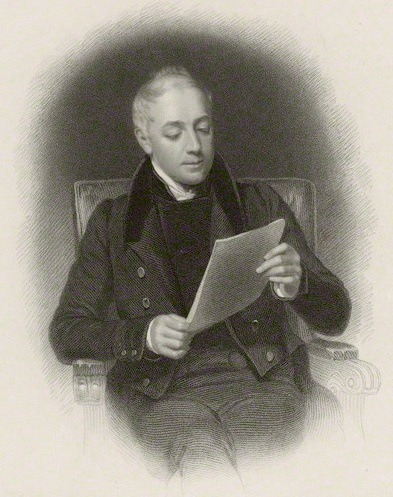
Edward Francis Finden after Henry William Pickersgill · stipple engraving published 1837 (NPG) · Public domain · Wikimedia Commons

Pardon, bigamy and flight
On 3 August 1818 at Newcastle, during a visit by Governor Lachlan Macquarie, Vaux married Frances Sharkey, a former Irish convict. Allowed back to Sydney, he clerked for Field. In January 1820 he received a conditional pardon and became a clerk in the colonial secretary’s office. In 1823 he was received into the Roman Catholic Church by Father John Joseph Therry. On 2 April 1827 Samuel Marsden married him to his housekeeper Eleanor Bateman, another Irish convict — while Frances was still alive. At the end of 1826 Governor Ralph Darling dismissed him under a policy against employing convicts and ex-convicts as government clerks. In April 1829 he absconded, breaking the conditions of his pardon, and made for Ireland.
Third transportation — James Young
In August 1830, at Dublin, he was convicted under the alias James Young of passing forged banknotes. He pleaded guilty. With cooperation from the bank concerned, a capital exposure was again turned aside; he received seven years’ transportation. He arrived at Sydney in the Waterloo in May 1831 (the convict indent date is given as 30 April 1831 in some linked registers). Recognised on arrival, he had his earlier life sentence revived.
Governor Darling wanted him buried in the secondary punishment system. Contemporary newspapers reported him among prisoners sent toward Moreton Bay in early 1832; within about a month the celebrated recidivist was moved on to Port Macquarie, where specials were more often held. He remained in that orbit for much of the 1830s, with short periods also recorded at Hyde Park Barracks in Sydney.

Photograph via Wikimedia Commons · modern · CC BY-SA 4.0 · Wikimedia Commons


Unknown photographer · modern/historic print · Public domain · Wikimedia Commons

Last known years
Allowed back to Sydney in 1837, he worked as clerk to a wine merchant. In May 1839 he was convicted of a sexual assault on a girl of about eight and sentenced to two years’ imprisonment. Released in 1841 on a recommendation associated with Chief Justice Sir James Dowling, he disappears from the reliable record. No trustworthy death date has been established. Wikipedia’s cautious formula, “after 1841,” matches the archival silence.
What 1809 does — and does not — mean
Vaux was sentenced to death at the Old Bailey on 15 February 1809 for the Piccadilly shop theft committed on 9 December 1808. He was held as a condemned man. On 26 April 1809 the sentence was respited; it was not carried out. His memoir title and later biographical accounts record the outcome as transportation for life. The same pattern — exposure to the gallows, then a paper respite into exile — marks other points in his career. The memoir makes the condemned cell vivid; the registers fix the dates.
Sources
- Digital Panopticon life archive for “James Low” (linked Old Bailey / transportation records) — trial 15 February 1809, death sentence, respite 26 April 1809, transportation outcome: digitalpanopticon.org/life?id=obpt18000917-73-defend762
- Old Bailey Proceedings reference for the 1809 trial: t18090215-44 (James Low / Lowe)
- Old Bailey Proceedings reference for the 1800 handkerchief case: t18000917-73
- James Hardy Vaux, Memoirs of James Hardy Vaux (London: John Murray, 1819), esp. Vol. 2, chs. 7–10 — Wikisource text: en.wikisource.org/wiki/Memoirs_of_James_Hardy_Vaux
- Vocabulary of the Flash Language — Wikisource
- State Library of Queensland, “A colourful convict and Moreton Bay: James Hardy Vaux” — slq.qld.gov.au
- Museums of History NSW, “James Hardy Vaux” — mhnsw.au/stories/convict-sydney/james-hardy-vaux/
- Wikipedia overview (cross-checked against the sources above) — en.wikipedia.org/wiki/James_Hardy_Vaux
- Further reading: Averil Fink, “Vaux, James Hardy (1782–1841)”, Australian Dictionary of Biography — adb.anu.edu.au/biography/vaux-james-hardy-2756