
People still say John Frost was the last man in Britain to be hanged, drawn and quartered. He was not. He was one of three Chartist leaders — Frost, Zephaniah Williams and William Jones — sentenced to that punishment for high treason after the Newport Rising. The sentence was never carried out. It was commuted to transportation for life. Frost reached Van Diemen's Land in June 1840, received a conditional pardon in 1854, spent time in the United States, and only then, with a free pardon in 1856, came home to Britain — about sixteen years after he had left under sentence of death.

Newport Beginnings
John Frost was born on 25 May 1784 at Newport, Monmouthshire, the son of John and Sarah Frost of the Royal Oak Inn. His mother died while he was young, and he was brought up mainly by his grandfather, a bootmaker. He was apprenticed as a bootmaker, then worked as a draper's assistant in Bristol and as a shopman in London, before returning to Newport about 1806 to open his own draper's and tailor's business.
On 24 October 1812 he married Mary Geach, a widow. The Australian Dictionary of Biography records two sons and five daughters. His later convict description likewise lists seven children. From about 1816 he argued for lower taxes and parliamentary reform in the spirit of Thomas Paine and William Cobbett.
Libel, Prison and Local Office
A quarrel over his wife's uncle's will brought Frost into conflict with Thomas Prothero, town clerk of Newport. Frost attacked Prothero in pamphlets in 1821–22. Prothero sued for libel, won about £1,000 in damages, and in February 1823 Frost was sentenced to six months' imprisonment. The Australian Dictionary of Biography places that term at Cold Bath Fields in London.

After his release he prospered as a tradesman and opposed both the Tory Tredegar interest and the Whig circle around Prothero. Under the Municipal Corporations Act of 1835 he was elected to Newport's first town council and made a justice of the peace. The Australian Dictionary of Biography says he became mayor of the town a year later — that is, in 1836. The Dictionary of Welsh Biography records the same rise through councillor, magistrate, improvement commissioner, poor law guardian and mayor. His association with Chartism began only in October 1838. In March 1839 the Home Secretary removed him from the magistracy.
The People's Charter
Chartism took its name from the People's Charter of 1838. The six demands were:
- A vote for every man aged 21 and over (of sound mind and not undergoing punishment for crime)
- The secret ballot
- No property qualification for Members of Parliament
- Payment of Members of Parliament
- Equal electoral constituencies
- Annual parliamentary elections
Frost was elected a Monmouthshire delegate to the Chartist Convention. He attended the first convention in London in February 1839 and, as chairman on 14 September in Birmingham, cast the decisive vote to dissolve the convention after the first national petition had been rejected.

Toward Newport
By mid-1839 feeling among Monmouthshire miners and ironworkers was running high. Henry Vincent had been arrested on 7 May and held in Monmouth gaol. The Dictionary of Welsh Biography says that, despite Frost's counsels of moderation, the local movement got out of hand. It places a secret meeting at the Coach and Horses Inn in Blackwood on "Friday, 2 November," when three columns were ordered to converge on Newport early on Monday morning — Frost from Blackwood, Zephaniah Williams from Ebbw Vale, and William Jones from Pontypool. The calendar shows that 2 November 1839 was a Saturday, so the Dictionary's weekday is wrong; the date of the meeting itself is the one those sources record. Monday was 4 November.

The Newport Rising, 4 November 1839
A stormy night wrecked the timetable. The columns did not meet as planned, and the delay gave the authorities time to prepare. Chartist prisoners were held at the Westgate Hotel, with soldiers of the 45th Regiment of Foot in reserve. Frost's column reached the hotel about half past nine on the morning of 4 November. Demands for the prisoners' release were followed by firing from the troops. The clash lasted about twenty to twenty-five minutes. Estimates of the crowd vary from a few thousand upward; modern summaries usually put the dead at about twenty to twenty-two, with fifty or more wounded. The exact death toll is uncertain because of unmarked burials.

Trial and Sentence
Frost, Williams and Jones were tried for high treason before a special commission at Monmouth Shire Hall in December 1839 and January 1840. Frost's convict indent records the Monmouth Special Gaol Delivery date as 10 December 1839. On 16 January 1840 all three were found guilty of levying war against the Queen and sentenced to be hanged, drawn and quartered.

Sentence, Not Execution
They were not executed. After a public outcry the Cabinet intervened. Lord Melbourne announced early in February 1840 that the sentences would be commuted to transportation for life; the Australian Dictionary of Biography dates the commutation to 11 February 1840.
Were they the last men hanged, drawn and quartered? No. They are repeatedly described as the last men in Britain sentenced to that punishment. The Treason Act 1814 (54 Geo. 3 c. 146) had already altered the statutory judgment for high treason: instead of cutting down a living man to be disembowelled, the condemned was to be hanged by the neck until dead, with the body at the Crown's disposal (and with beheading as a permitted alternative). The old living ritual had fallen out of use long before 1840. In any event Frost, Williams and Jones never suffered either form of the sentence. The Forfeiture Act 1870 later abolished hanging, drawing and quartering as a form of sentence in England.
The Mandarin and Van Diemen's Land
The three men sailed in the convict ship Mandarin. Frost's description sheet records embarkation on 20 February 1840 and arrival at Hobart on 30 June 1840: a Protestant who could read and write; woollen draper; five feet seven inches; aged 55; native place Newport; married with seven children; previous six months for libel, "otherwise his character very good."
As political prisoners they were at first given privileges. The Australian Dictionary of Biography says Frost became a clerk in the commandant's office at Port Arthur, Williams a superintendent at the coal mines, and Jones an overseer blacksmith at Point Puer.


Probation, Schoolmaster, Ticket of Leave
Frost's soft start did not last. He was transferred from the Port Arthur clerkship to Brown's River. On 22 November 1841 his convict sheet records three days' solitary confinement for insolent language to the superintendent, and a recommendation for harder labour. He was sent to Impression Bay, where reports call him studious, quiet and an attentive schoolmaster. Probation ended on 17 November 1843. Assigned service followed under W. Carter at New Town, the Rev. W. Jarrett, and later W. Chester at Bothwell. He received his ticket of leave in November 1846 and taught school in Tasmania for years afterward.

Pardon, America and Return
On 27 June 1854 Frost received a conditional pardon — he could leave Van Diemen's Land but not return to Britain. About six months later he sailed for the United States with his daughter Catherine. In May 1856, in New York, he learned that the residency condition had been lifted. He reached England on 12 July 1856 and lectured at Padiham on 31 August. The lectures were published as Horrors of Convict Life (1856) and A Letter to the People of Great Britain and Ireland on Transportation (1857).
Last Years and Memorials
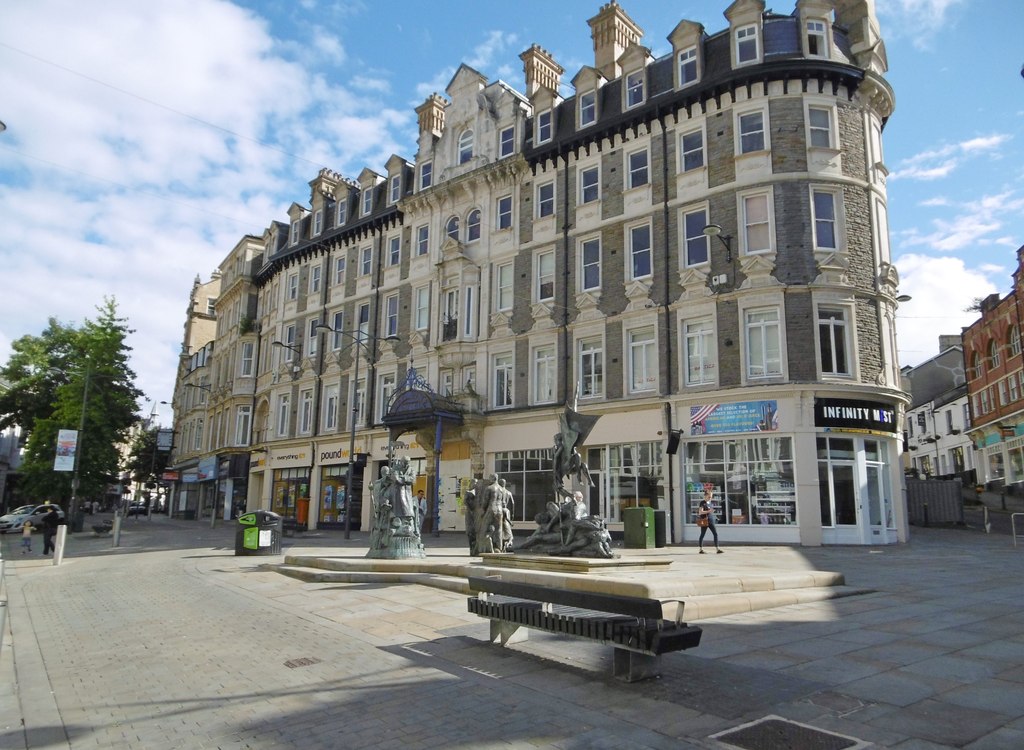
Frost settled at Stapleton, near Bristol. He died there on 27 July 1877, aged 93, and was buried at the Church of the Holy Trinity with St Edmund, Horfield. A new headstone was raised on the rediscovered grave in the 1980s. In Newport, John Frost Square carries his name. Christopher Kelly's sculptures stand outside the Westgate Hotel. A large Chartist mural of 1978 was demolished in 2013.



Williams and Jones
All three leaders were pardoned in the mid-1850s. Frost alone returned to Britain. Zephaniah Williams stayed in Tasmania and died prosperous in 1874. William Jones remained in Australia as a watch repairer and died in poverty in 1873.
Where the Sources Disagree
- Blackwood meeting weekday. The Dictionary of Welsh Biography says "Friday, 2 November"; 2 November 1839 was a Saturday.
- Commutation announcement. Contemporary accounts emphasise early February 1840; the Australian Dictionary of Biography dates the commutation to 11 February.
- Why Frost left the Port Arthur clerkship. The Dictionary of Welsh Biography links hard labour to a remark about Lord John Russell; the Australian Dictionary of Biography treats that link as unproven in the official record. The convict sheet records the Brown's River insolence charge.
- Crowd size and death toll at Newport. No agreed figures.
- Free-pardon paperwork. Frost heard of an unconditional pardon in May 1856; his convict sheet also notes a free pardon dated 24 February 1857.
Timeline
- 25 May 1784 – Born at Newport, Monmouthshire.
- c.1806 – Opens business in Newport.
- 24 October 1812 – Marries Mary Geach.
- 1823 – Six months for libel.
- 1835–36 – Town councillor and justice of the peace; mayor the following year.
- October 1838 – Joins the Chartist movement.
- March 1839 – Removed from the magistracy.
- 14 September 1839 – As chairman, votes to dissolve the Convention.
- 2–4 November 1839 – Blackwood plans; Newport Rising on the 4th.
- December 1839 – 16 January 1840 – Special commission; death sentence.
- 11 February 1840 – Commuted to transportation for life (ADB date).
- 20 February – 30 June 1840 – Mandarin; arrives Hobart.
- November 1846 – Ticket of leave.
- 27 June 1854 – Conditional pardon; later sails to America.
- May–July 1856 – Free pardon news; returns to England.
- 27 July 1877 – Dies at Stapleton, aged 93.
Sources
- G. Rudé, "Frost, John (1784–1877)", Australian Dictionary of Biography, https://adb.anu.edu.au/biography/frost-john-2071 (text consulted via Internet Archive capture https://web.archive.org/web/20240101000000/https://adb.anu.edu.au/biography/frost-john-2071)
- David Williams, "FROST, JOHN (1784–1877)", Dictionary of Welsh Biography, https://www.biography.wales/article/s-FROS-JOH-1784.html
- David Williams, John Frost: A Study in Chartism (University of Wales Press, 1939)
- Joseph and Thomas Gurney, The Trial of John Frost for High Treason (London, 1840)
- Tasmanian convict description for John Frost, transcribed at https://www.newportpast.com/nfs/strands/frost/mandarin/john_frost.php
- Treason Act 1814 (54 Geo. 3 c. 146), https://www.legislation.gov.uk/ukpga/Geo3/54/146
- Port Arthur Historic Site, "The Penitentiary", https://portarthur.org.au/the-penitentiary/
- John Frost, Horrors of Convict Life (London, 1856); A Letter to the People of Great Britain and Ireland on Transportation (London, 1857)