
Lady Juliana was the first convict transport to reach Port Jackson from Britain after the First Fleet, and she came carrying women convicts — more than two hundred of them, sent out while the colony waited, half-starved, for news and supplies from home.
She left Plymouth on 29 July 1789 and came into Port Jackson on 3 June 1790 after 309 days. Five women died on the passage. Two hundred and twenty-two were landed. That record stands in hard contrast to Neptune, Scarborough and Surprize, which arrived three weeks later.

Robert Dodd (artist/engraver); John Harris; published by Robert Sayer & J. Bennett, 17 February 1783. Royal Museums Greenwich PAH8432. Vessel catalogued as Lady Juliana (1777). Public domain. Licence: public domain. Source: record. Also collection page.

Royal Museums Greenwich catalogues this 1783 print’s vessel as Lady Juliana (1777). Dictionary of Sydney gives a Whitby build year of 1769. The museum catalogue identity is followed for the print; the later convict voyage used the same named transport in the secondary literature.
The ship and the charter
In late 1788 Home Secretary Lord Sydney told Treasury he wanted at least two hundred female convicts sent to New South Wales. Women could not legally be held on the prison hulks used for men. By mid-November William Richards junior — the London shipbroker who had chartered First Fleet ships — was contracted to provide a vessel.
The ship was surveyed at Deptford and approved. George Aitken (also Aitkin) was appointed master. Richard Alley sailed as surgeon. Lieutenant Thomas Edgar, who had been master of Discovery on Cook’s last voyage, was naval agent. Steward John Nicol, whose 1822 memoir is the fullest insider account of the voyage, called Edgar a decent, kindly man and Aitken an excellent humane man who did all in his power to make the convicts as comfortable as their circumstances would allow.
Nicol had been offered a berth in either Guardian or Lady Juliana. He chose the transport because he meant to leave the sea afterward and settle in Scotland.

Drawn and engraved by W. H. Lizars. Frontispiece to The Life and Adventures of John Nicol, Mariner (William Blackwood, Edinburgh; T. Cadell, London, 1822). Public domain. Scanned from the 1822 edition microform (Internet Archive / Canadiana, identifier cihm_41947). Licence: public domain. Source: record.
Embarkation

Thomas Rowlandson. Metropolitan Museum of Art. CC0 1.0. Licence: CC0 1.0. Source: record. Also collection page.

The ship lay about six months in the Thames while women were gathered from gaols across England. Nicol wrote that all the jails in England were emptied to complete the cargo. Four women escaped the night before the vessel left London waters. After further delay Lady Juliana sailed from Plymouth on 29 July 1789 with over 220 female convicts on board.
Numbers need care. At Tenerife on 21 September 1789 the agent certified 226 women and six children. Nicol’s memoir speaks of 245 when they sailed. Bateson and later historians usually settle on about 226 convict women embarked and five deaths, with 222 landed at Sydney.
Among those on board were Mary Wade, about eleven, convicted at the Old Bailey of assault and robbery; Elizabeth Steel, described at trial as mute by visitation of God; Rachel Turner, who later lived with First Fleet surgeon John White and then married boatbuilder Thomas Moore; Eleanor Higgins, later a settler around Ryde/Epping; and Ann Mash (Marsh), transported for stealing a bushel of wheat.

Historical view. Wikimedia Commons. Public domain. Licence: public domain. Source: record.

The long voyage
Lady Juliana called at Tenerife, Rio de Janeiro and the Cape of Good Hope. She was a poor sailer and needed repairs. The long stops meant fresh meat and vegetables. Women were allowed on deck. The ship was cleaned and fumigated. Tea, sugar and soap were issued. Mortality stayed low — about two per cent.
Nicol wrote: “When we were fairly out at sea, every man on board took a wife from among the convicts, they nothing loath.” He courted Sarah Whitlam (also spelled Whitelam in some later works), a Lincoln woman he said had been transported for a mantle borrowed from an acquaintance who then prosecuted her. He lived with her on the voyage and wrote that she bore him a son at sea. He claimed he would have married her had there been a clergyman on board, and that he meant to return for her when her time was out.
The women were prisoners. The crew and officers held the keys, the food and the discipline. Nicol presents the partnerships as willing. Later historians, including Siân Rees, have stressed that “nothing loath” is a sailor’s claim, not proof of free consent. Food, protection, better quarters and relief from irons could all hang on a man’s favour. Calling every woman a prostitute, or every partnership free romance, both flatten the record. Nicol himself said there were not a great many very bad characters; the greater number were for petty crimes, and a great proportion for only being disorderly — that is, street-walkers — the colony at the time being in great want of women.
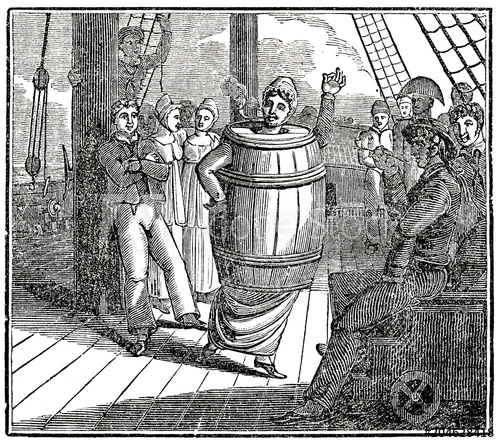
Unknown artist, from Das Heller-Magazin, 13 November 1834, after Nicol’s memoir. Public domain. Nineteenth-century dramatisation, not a 1789 sketch. Licence: public domain. Source: record.


Period print (British Library Mechanical Curator collection / Wikimedia Commons). Public domain. Licence: public domain. Source: record.

At Rio the ship stayed about seven weeks. At the Cape she stayed about a month. There the women learned of Guardian’s disaster. Lady Juliana took on provisions and five men who had been bound for New South Wales as superintendents in Guardian. Surgeon Alley partnered with Ann Mash.

Jacques-Nicolas Bellin. Geographicus Rare Antique Maps / Wikimedia Commons. Public domain. Licence: public domain. Source: record.

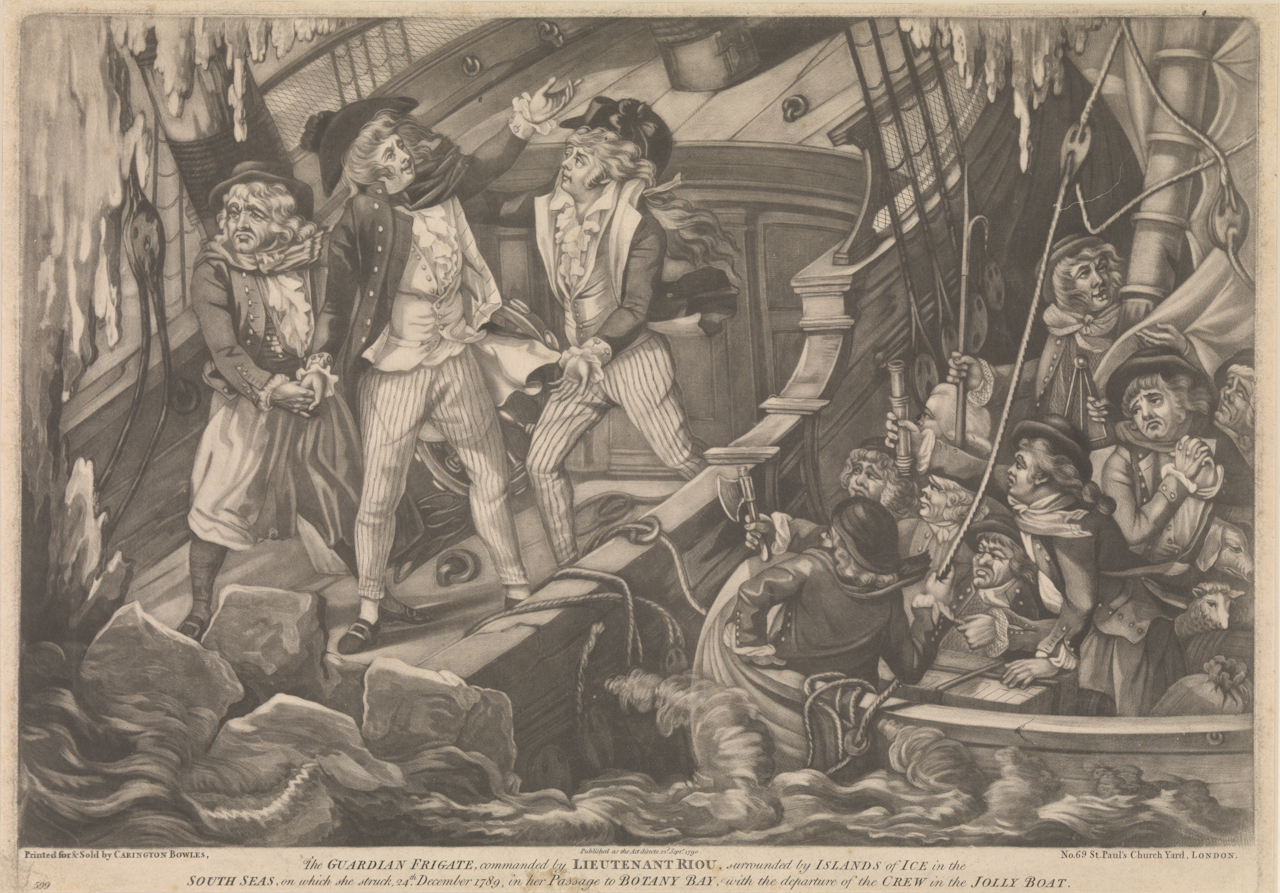
Print published by Carington Bowles, 22 September 1790 (Royal Museums Greenwich). Public domain. Licence: public domain. Source: record. Also collection page.

The “floating brothel” label
In 1959 maritime historian Charles Bateson wrote that Lady Juliana was “nothing more than a floating brothel.” The phrase stuck. It catches one truth — sexual relations between crew and convict women were open and common on this voyage — and buries others. Many women were thieves, receivers or disorderly persons, not professional prostitutes. Some were girls. Edgar’s and Aitken’s management kept rations and cleanliness far above the Death Fleet standard. An anonymous woman’s letter printed in London on 4 August 1791 thanked “our good agent on board, and the gentleman in England who sent us out,” and said provisions were good.
Arrival at Sydney Cove
Lady Juliana made Port Jackson on 3 June 1790. Bad weather delayed anchoring in Sydney Cove until 6 June. The women landed on 11 June. Watkin Tench wrote that news burst upon the settlement like meridian splendour upon a blind man. A seaman who saw them land said they were all fresh, well looking women.
Michael Flynn’s Dictionary of Sydney entry states that they raised the ratio of women in the colony from about 20 per cent to 40 per cent, a level not equalled for decades. That proportion is Flynn’s figure, cited here as such.
Phillip’s colony was starving. Collins recorded the mortification of finding, in the first ship that arrived, a cargo so unnecessary and unprofitable as more than two hundred females instead of provisions. Two weeks later Justinian brought real relief. Then Neptune, Scarborough and Surprize arrived with the sick and dying. The Juliana women helped nurse them. The anonymous letter drew the contrast: what a difference between us and them.

Thomas Watling. Public domain (Wikimedia Commons). Licence: public domain. Source: record.


Francis Wheatley, c.1786. State Library of New South Wales, ML 124. Public domain. Licence: public domain. Source: record.

Assignment and Norfolk Island
Many of the women were soon sent on to Norfolk Island. On 1 August 1790 Surprize sailed with provisions and about 150 female and 35 male convicts; three-quarters of those women had come in Lady Juliana. William Bradley’s watercolour of Justinian and Surprize standing into Sydney Bay, Norfolk Island, on 23 August 1790 records that arrival. Mary Wade and Elizabeth Steel were among those sent. Catherine Crowley, who had arrived in Neptune and was pregnant to D’Arcy Wentworth, also went; their son William Charles Wentworth was born at sea off the island in August 1790.
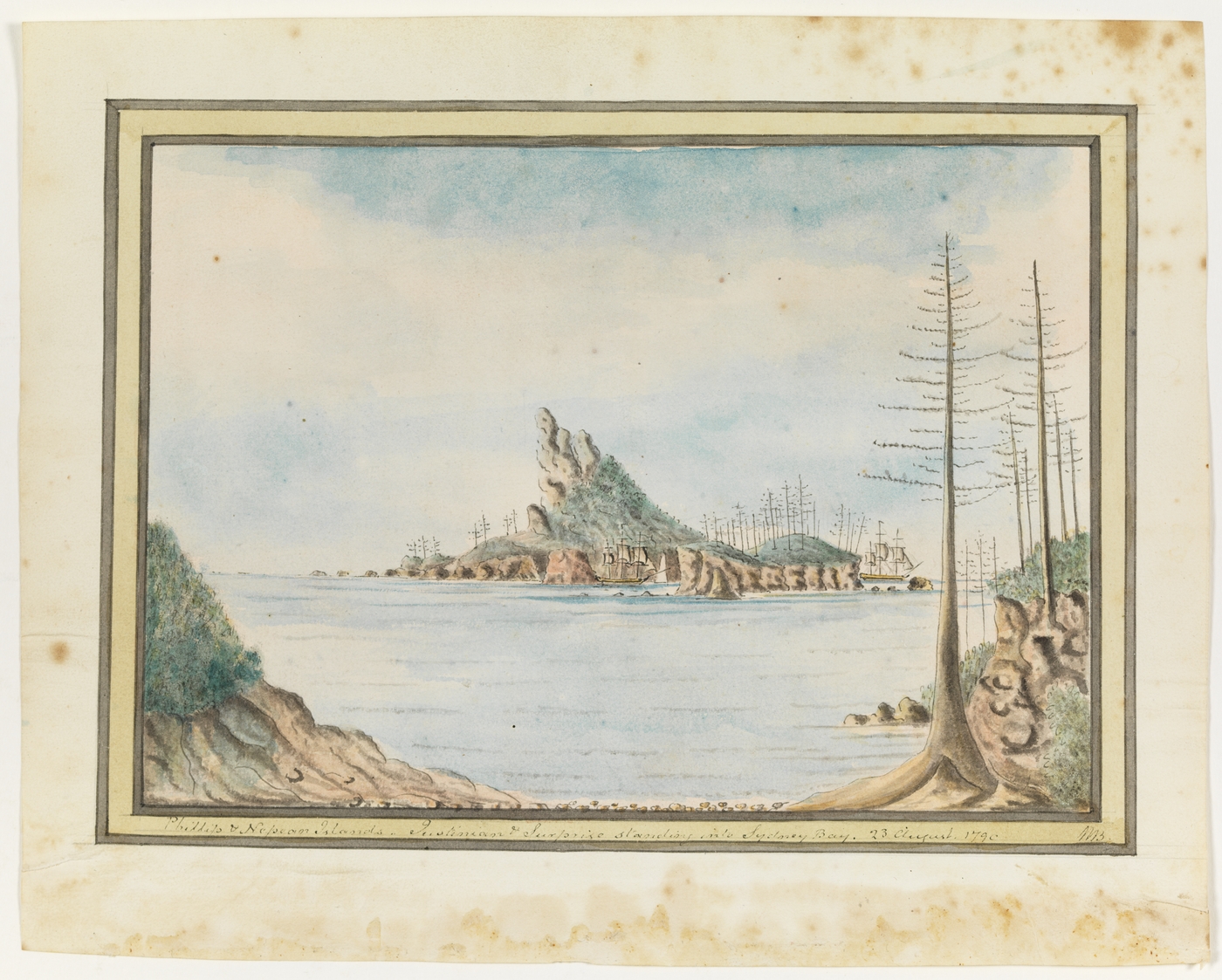
William Bradley. State Library of New South Wales, Safe 1/14. Public domain. Licence: public domain. Source: record.

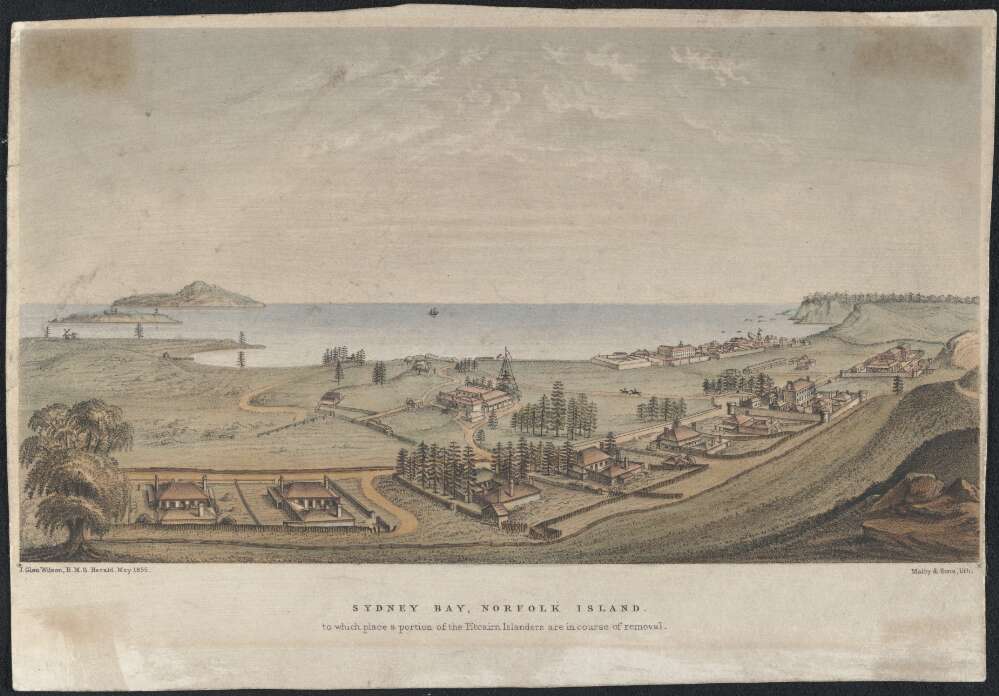
James Glen Wilson (1827–1863). National Library of Australia. Public domain. Licence: public domain. Source: record. Also collection page.

Sarah Whitlam and John Nicol
Nicol was in Sydney only about six weeks before Lady Juliana sailed for Canton on 25 July 1790. He left promising to return when Sarah’s sentence expired. He never did. Dictionary of Sydney notes that Sarah married a fellow convict and was sent to Norfolk Island, and later left for Europe; what became of her afterward is unclear. Nicol’s memoir says he did not know whether she was dead or alive. The relationship produced a child on the outward passage; the child’s later life is not securely traced in the sources used here.
Other women’s later lives
- Mary Wade — among the youngest on board; Norfolk Island; later the Hawkesbury and Illawarra; a large colonial family.
- Ann Mash (Marsh) — partnered with surgeon Alley on the voyage; later shopkeeper, publican and Parramatta–Sydney boat operator.
- Rachel Turner — relationship with John White; marriage to Thomas Moore; Moorebank takes its name from Moore’s grant.
- Elizabeth Steel — Norfolk Island; later Sydney; buried at the Old Sydney Burial Ground; her headstone was found under Sydney Town Hall in 1991.
- Eleanor Higgins — married David Kilpack; farmed at the Field of Mars / Ryde.
Lady Juliana went to Canton, returned to England with other Second Fleet ships in October 1791, and was offered for auction at Greenland Dock on 14 December 1791.

Photograph by Julioenrekei. Wikimedia Commons (own work, released as public domain / PD-self). Licence: public domain. Source: record.

1790 and later telling
The voyage of 1789–90 is one thing. Bateson’s label, Rees’s The Floating Brothel, novels and screen versions are another. They can point readers back to Nicol, the Old Bailey sessions, Collins, Tench and the Dictionary of Sydney entries — or they can turn two hundred women into a single scandal.
Related stories
Read next: Second Fleet – Neptune, Scarborough and Surprize; Trail, Shapcote and Hill.
Sources
- Penny Edwell, “Lady Juliana,” Dictionary of Sydney, 2016 — dictionaryofsydney.org/entry/lady_juliana
- Michael Flynn, “Second Fleet,” Dictionary of Sydney, 2016 — entry
- John Nicol, The Life and Adventures of John Nicol, Mariner (1822) — Project Gutenberg Australia
- Siân Rees, The Floating Brothel (2001)
- Charles Bateson, The Convict Ships, 1787–1868
- David Collins, An Account of the English Colony in New South Wales
- Watkin Tench, accounts of Port Jackson
- Old Bailey Proceedings Online — trial of Mary Wade, 14 January 1789, t17890114-58 — oldbaileyonline.org
- Michael Flynn, The Second Fleet (1993/2001); John Cobley, The Crimes of the Lady Juliana Convicts, 1790
- Anonymous woman’s letter, Morning Chronicle, 4 August 1791
- Royal Museums Greenwich, PAH8432 — Lady Juliana 1783 print