
There is no photograph of Mary Bryant, and no authenticated contemporary portrait of her. She was born a generation before the camera. Every picture here is a period drawing, later view, or modern place photo used to set the scene.
Her story is one of the great small-boat voyages of the age of sail. In March 1791 a Cornish convict woman, her fisherman husband, their two little children and seven other transportees stole the governor's cutter at Sydney Cove and sailed north. Sixty-nine days and more than three thousand miles later they walked ashore at Kupang on Timor. Most of them never got home. Mary did – and then almost vanished from the record.

Tony Atkin · 2007 · CC BY-SA 2.0 · Wikimedia Commons

Mary Broad of Fowey
She was baptised Mary Broad on 1 May 1765 at Fowey, on the south coast of Cornwall. The Australian Dictionary of Biography gives her birth as about 1765 and names her father as a mariner called Broad. The family, one eighteenth-century remark put it, was "eminent for sheep stealing". We do not have a firm birth date – only the baptism. Her name turns up in the records as Broad, Braund, Brand, Braud and Broud. After February 1788 she is Mary Bryant.
Later descriptions put her at about five feet four inches (162 cm), of middle stature, marked with the smallpox, grey eyes, brown hair and a sallow complexion, walking with one knee bent inwards but not lame, and speaking with a strong west-country accent. That description comes from the 1791 return of escaped convicts and the Newgate register of 1792, as summarised in Tim Causer's edition of James Martin's Memorandoms.

Francis Frith & Co. · 1889 · Public domain · Wikimedia Commons

Highway robbery, death sentence and the Dunkirk
In early 1786 Mary Broad was living around Plymouth. With two other women – Catherine Prior (also recorded as Fryer) and Mary Hayden, alias Shepherd – she robbed and violently assaulted Agnes Lakeman on a road there. The assize record, as quoted by Causer, says they put Lakeman "in corporal fear and danger of her life". They took a silk bonnet valued at twelve pence and other goods valued at one pound eleven shillings.
All three were condemned to death. On 13 April 1786 the sentences were commuted to transportation for seven years. Tim Causer's reading of the assize material, in his edition of Martin's Memorandoms, places Mary's conviction with James Martin at the Lent sittings of 20 March 1786, with that 13 April commutation.1

Juan J. Martínez · 2010 · CC BY-SA 2.0 · Wikimedia Commons

On 26 September 1786 she was put on the prison hulk Dunkirk off Plymouth. The hulk report called her "tolerably decent and orderly". The same hulk already held William Bryant, a Cornish fisherman of about thirty, and James Martin, who would later write the only surviving first-hand account of their escape.

Unknown artist · c.1814 · Public domain · Wikimedia Commons

William Bryant
William Bryant had been committed at Bodmin in December 1783 for impersonating two of His Majesty's seamen and receiving part of their wages. At the Launceston assizes in March 1784 he was sentenced to death; the sentence was reduced to seven years' transportation. He spent about three years on the Dunkirk, where his conduct was reported as remarkably good, before he was put aboard the transport Charlotte with Mary and the rest.
Older summaries sometimes call him a smuggler who resisted the revenue men. The clearer court story, followed by the First Fleet Fellowship and by Causer's notes, is the false seamen's-wages case. He was a skilled boatman and fisherman, and that skill would shape everything that followed.
The Charlotte and a child at sea
On 11 March 1787 Mary was embarked on the First Fleet transport Charlotte, master Thomas Gilbert, surgeon John White. The fleet sailed from Portsmouth on 13 May 1787. Mary was already about three months pregnant when she boarded. The father of the child has never been securely identified. Some later writers assume William Bryant; Causer is careful to say it has not been proved.

Thomas Rowlandson · c.1814 · CC0 · Wikimedia Commons


Published by Hannah Humphrey and Edward Hedges · 1786 · Public domain · Wikimedia Commons

On 8 September 1787, not long after the Charlotte left Rio de Janeiro, Mary was "delivered of a fine girl". Surgeon White's phrase stuck. The child was named Charlotte Spence after the ship.
The First Fleet reached the Cape of Good Hope on 13 October 1787. Charlotte was baptised there. Mollie Gillen's Founders of Australia, followed by Causer, gives the baptism as 28 September 1787 – a date that sits before the fleet's arrival at Table Bay. The First Fleet Fellowship summary gives 28 October 1787, after the ships were in. The Cape Town baptism itself is not in doubt; the calendar day is.

Unknown artist · 1762 · Public domain · Wikimedia Commons

Sydney Cove and a Cornish marriage
The First Fleet anchored in Port Jackson in January 1788. On 10 February 1788, at Sydney Cove, Mary Broad married William Bryant. It was one of the earliest marriages in the colony. They were given a hut. William was put in charge of the fishing boats – one of the few jobs that could put fresh protein on official tables when the stores ran low.

William Bradley · fair copy c.1802 · Public domain · Wikimedia Commons


Attributed to Francis Fowkes · published 1789 · Public domain · Wikimedia Commons

In February 1789 William was caught selling fish on the side. Judge-Advocate David Collins, who had no time for him, recorded that every encouragement had been held out to keep Bryant honest – a hut, a share of the catch, whatever was "suitable to a person of his description". It was not enough. Bryant got 100 lashes, lost the fishing charge, and the family lost their hut for a time. He was too useful to banish from the boats altogether. Collins later wrote that "though a fellow of a villainous disposition, he was too useful a person to part with".
In April 1790 Mary bore a second child, a son baptised Emanuel (also Emmanuel in some records) on 4 April 1790. By then the colony was already hungry and on short rations. The three grim transports of the Second Fleet – Neptune, Surprize and Scarborough – did not reach Sydney until June 1790, and the wreckage of that voyage made a bad crisis worse. Escape talk ran through the settlement for the rest of the year.

Thomas Watling · 1794 · Public domain · Wikimedia Commons

Norbert Fischer · 2022 · CC BY-SA 4.0 · Wikimedia Commons

Planning the escape
In October 1790 the Dutch snow Waaksamheyd, Captain Detmer Smith (Smit), reached Port Jackson with badly needed stores. From Smith, Bryant obtained a chart, compass, quadrant, two muskets, ammunition and food – paid for, Collins later believed, out of illicit fish money. Cavities under the boards of Bryant's hut hid the gear.
William was already watched. In February 1791, after a squall nearly wrecked his boat – Bennelong's sister and three children were aboard and got ashore – he used the damage as cover to overhaul the craft thoroughly: new masts, sails and oars. On 22 March HMS Supply left for Norfolk Island. On 28 March the Waaksamheyd sailed for England. That night there was no ship left in Port Jackson that could chase a cutter, and no moon to give them away to the lookout at South Head.
The night of 28 March 1791
Collins listed the party:
First Fleet
- William Bryant – sentence expired (by his own reckoning)
- Mary Braud his wife, and two children – she had about two years still to serve
- James Martin – about one year to serve
- James Cox – life
- Samuel Bird – about one year and four months to serve
Second Fleet
- William Allen – life
- Samuel Broom (also recorded as John Butcher) – about four years and four months to serve
- Nathaniel Lilly (Lillie) – life
- William Morton – about five years and one month to serve
Eleven people in all: eight men, one woman, two children. Charlotte was about three and a half. Emanuel was not yet one. They took the governor's six-oared cutter (also called the fishing boat in the records), a seine, lines and hooks, firearms, quadrant, compass and provisions. Martin's Memorandoms lists about a hundredweight of flour, a hundredweight of rice, fourteen pounds of pork and eight gallons of water – figures that line up with later newspaper reports in London.
Private John Easty of the Marines wrote that the thought of liberty from such a place was enough to make any convict try every scheme, "as thay are the Same as Slaves all the time thay are in this Country." Captain Watkin Tench called it "a very daring manoeuvre … with complete success".

William Bradley · fair copy c.1802 · Public domain · Wikimedia Commons


Francis Wheatley · 1786 · Public domain · Wikimedia Commons

Sixty-nine days in an open boat
They worked north along the coast. Figures usually given for the run are 3,254 miles (5,237 km) in 69 days. They found coal on the way – almost certainly near what is now Newcastle – skirted islands of the Great Barrier Reef, and crossed the Arafura Sea to Timor.
Martin's Memorandoms is the only known first-hand narrative by one of the escapees, and the earliest known Australian convict narrative. It is spare and rough. Storms forced them to bail through the nights. At one point they threw clothes overboard to lighten the boat. Fresh water ran short. "I will Leave you to Consider what distress we must be in," Martin wrote; "the Woman & the two little Babies was in a bad Condition."
About mid-May they put in at a small island surrounded by reef and turtles – Causer, following an earlier identification by Hirst, thinks this was most likely Lady Elliot Island, though Martin's distances do not match the chart exactly. They killed turtles, dried the meat, filled water, and pushed on. They traded and clashed with Aboriginal and Torres Strait Islander people along the north coast; sometimes they were met with curiosity and trade, sometimes with force. The Memorandoms is one of the few convict voices we have for those encounters, and it has to be read with care.

Robert Dodd · 1790 · Public domain · Wikimedia Commons


John Russell · before 1792 · Public domain · Wikimedia Commons


Photograph via Wikimedia Commons · modern · Public domain · Wikimedia Commons

Kupang – shipwreck story and the castle
On 5 June 1791 they reached Kupang (Koepang, Coupang), the Dutch post on west Timor. They posed as survivors of a wreck. Governor Timotheus Wanjon fed and clothed them. For about two months they lived and worked in relative freedom. Bligh, calling later, was shown Bryant's own journal of the voyage and summarised the tale Bryant had spun for the Dutch.

Charles Alexandre Lesueur (del.); Jacques Gérard Milbert (dir.) · after Péron & Lesueur, published early 1800s · Public domain · Wikimedia Commons

Then the story broke. Martin's Memorandoms says William Bryant "had words with his wife went and Informed against himself wife & Children and all of us", and they were locked in "the Castle". Watkin Tench later wrote that Dutch hospitality turned to suspicion and that "one of them at last, in a moment of intoxication, betrayed the secret". Later novels and television dramas have built whole marital quarrels out of those scraps. Causer warns against that. We know they were found out and imprisoned. We do not know the private argument, if there was one, in any trustworthy detail.
On 16 September 1791 Captain Edward Edwards arrived at Kupang with survivors from the wreck of HMS Pandora and captured Bounty mutineers. He questioned the Port Jackson fugitives. On 5 October, when he was ready to sail in the Dutch ship Rembang, he took them in irons.
Batavia, Cape Town and the dead
At Batavia (Jakarta) the tropical diseases did their work. Emanuel Bryant died on 1 December 1791. William Bryant died about three weeks later, on 22 December. Mary was left a widow with Charlotte still beside her.

After I. van Reyne; published Daumont / R. Sayer · mid-18th century plate · Public domain · Wikimedia Commons

Edwards split his charges across Dutch Indiamen for the Cape. On that leg James Cox went overboard in Sunda Strait – drowned or a desperate swim for the shore; he was never heard of again. Samuel Bird and the navigator William Morton died at sea before the Cape. Morton was the man who had known enough navigation to get them to Timor.
At the Cape the survivors were put aboard HMS Gorgon, bound for England with returning Marines. Watkin Tench was a passenger. He had sailed out on the Charlotte with Mary years before. Now he saw her again:
I confess that I never looked at these people, without pity and astonishment. They had miscarried in a heroic struggle for liberty; after having combated every hardship, and conquered every difficulty. The woman, and one of the men, had gone out to Port Jackson in the ship which had transported me thither. They had both of them always distinguished for good behaviour.

Attributed to Frederick Buck · c.1795 · Public domain · Wikimedia Commons


Unknown artist (Royal Navy plan) · c.1787 · Public domain · Wikimedia Commons

Charlotte Bryant, about four years old, died at sea on the last stretch – 5 May 1792 in the Australian Dictionary of Biography, 6 May 1792 in the State Library of NSW account and the First Fleet Fellowship summary. Either way, Mary came home without husband or children.
Newgate, the Old Bailey and James Boswell
Five of the original eleven reached England in June 1792: Mary Bryant, William Allen, Samuel Broom, Nathaniel Lilly and James Martin. They were committed to Newgate. At Bow Street the magistrate Nicholas Bond was said to have found it a miserable duty to send them on. At the Old Bailey on 7 June they escaped the death penalty that returning from transportation could bring. The court ordered them to remain on their former sentences until discharged by due course of law.
The papers loved the story. James Boswell, biographer of Samuel Johnson and a practising lawyer, took up Mary's case and lobbied the Home Office. Mary was pardoned on 2 May 1793 – about six weeks after her original seven-year sentence would have expired. The other four were released in November 1793. One of them later enlisted in the New South Wales Corps.

Joshua Reynolds · 1785 · Public domain · Wikimedia Commons

Fowey again – and then silence
Boswell kept helping her. He sent money after she went back to her family at Fowey. An acknowledgment of one of those gifts in November 1794 is the last solid trace of her in the standard biographical accounts. She could neither read nor write; her "mark" survives on family correspondence with Boswell. What became of her after that is unknown.
Claims of a later remarriage, or of a death in 1795, turn up in secondary compilations. They are not established in the usual life summaries, which leave her death date blank. After November 1794 the trail goes cold.
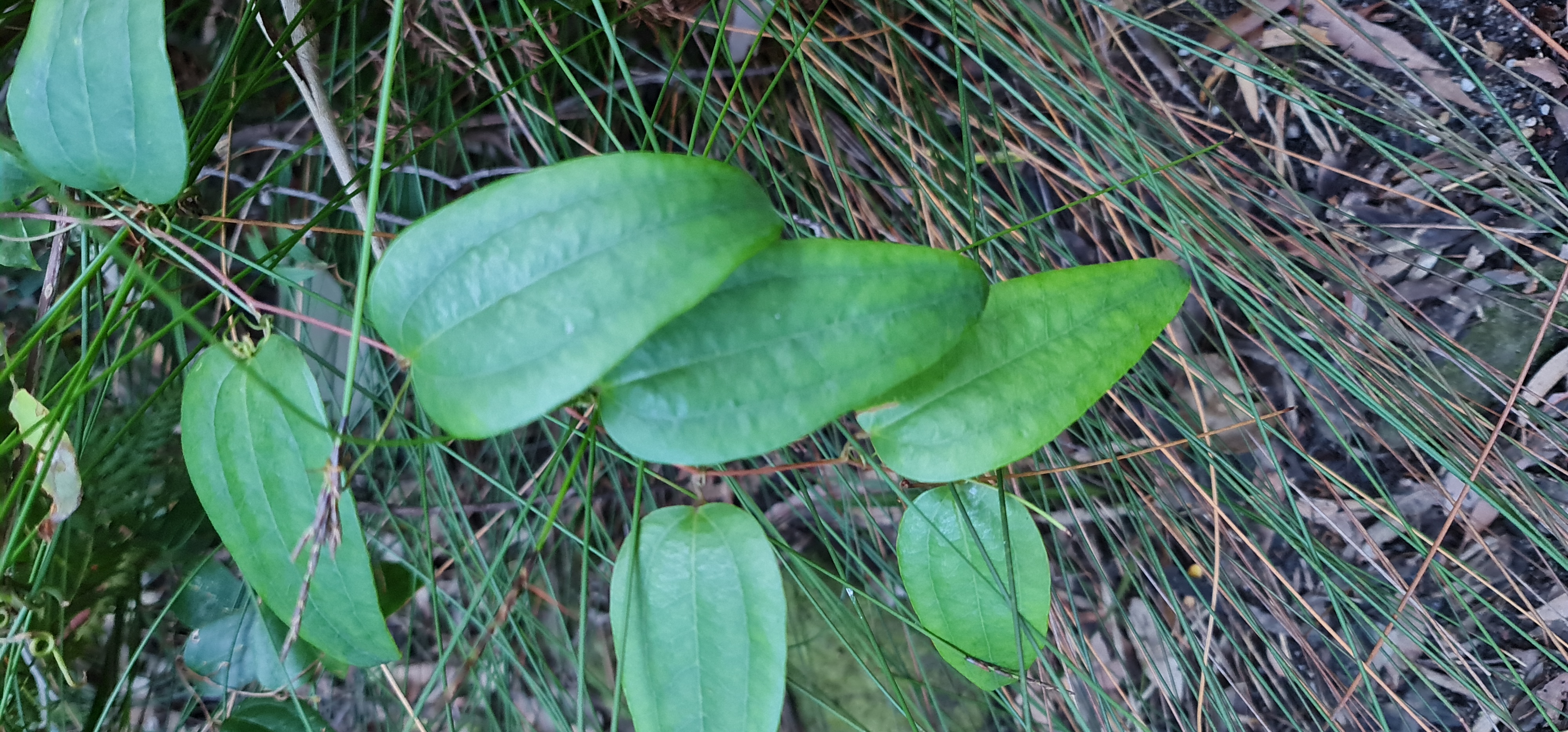
Among Boswell's papers were dried leaves labelled as Botany Bay tea – sweet sarsaparilla from New South Wales. The State Library of NSW holds two of them, presented from Yale in 1956: a small, stubborn relic of the woman who carried the memory of Sydney halfway round the world and home again.
What the records will not stretch to
Mary Bryant's life has been novelised, televised and mythologised. The Incredible Journey of Mary Bryant and various novels invent dialogue, love triangles and neat endings. There is no surviving testimony in her own words. What we have is Collins, Tench, Easty, Bligh, Edwards's orbit, the Dutch trail, the London courts and press, Boswell's papers, and James Martin's Memorandoms. Where those sources disagree – baptism day, Charlotte's death date, exactly how the Timor story leaked – the disagreement stands.
She remains what the London papers called her for a season: the girl from Botany Bay. Cornish-born, First Fleet convict, open-boat escapee, bereaved mother, and, for a few documented months in 1793–94, a free woman back on the Fowey.
1 An older Australian Dictionary of Biography summary instead gives her trial as 20 May 1786 at the Exeter Assizes under the name Mary Braund. That sits after the documented 13 April 1786 commutation and is hard to reconcile with it. This account follows Causer's March 1786 conviction / 13 April reprieve chronology, which also matches the First Fleet Fellowship's reprieve date.
Sources
- Tim Causer (ed.), Memorandoms by James Martin: An Astonishing Escape from Early New South Wales, UCL Press, 2017 (open access) – PDF · UCL Press page
- David Collins, An Account of the English Colony in New South Wales – gutenberg.net.au text
- Watkin Tench, A Complete Account of the Settlement at Port Jackson – gutenberg.net.au text
- State Library of New South Wales, Lisa Madden, “Mary Bryant’s tea leaves” – sl.nsw.gov.au (object R 807)
- First Fleet Fellowship Victoria, “Mary Braund : William Bryant” – firstfleetfellowship.org.au
- Australian Dictionary of Biography, G. D. Richardson, “Bryant, Mary (b. 1765)” (1966) – adb.anu.edu.au/biography/bryant-mary-1843 (site access may be region-limited; used alongside the sources above)
- ADB life summary – adb.anu.edu.au/lifesummary/bryant-mary-1843
- Governor Phillip’s return of absconded convicts, 5 November 1791 (physical descriptions) – reproduced and discussed in Causer
- Old Bailey / Bow Street press coverage of June 1792; Boswell papers (Yale) for the pardon and Fowey letters – as cited in Causer and SLNSW
Further reading (secondary / dramatic, not used as fact): modern novels and the 2005 miniseries The Incredible Journey of Mary Bryant — cultural afterlife only.
No comments:
Post a Comment