
Dame Nellie Melba — Helen Porter Mitchell of Richmond
Dame Nellie Melba was born Helen Porter Mitchell on 19 May 1861 at Richmond, Melbourne. She became one of Australia's first international classical music stars — a lyric coloratura soprano whose name stood for Covent Garden, for the gramophone, and for a kind of Australian success that newly federated Australia claimed as its own. She died at St Vincent's Hospital, Darlinghurst, on 23 February 1931, aged sixty-nine. Her funeral at Scots' Church in Melbourne and burial at Lilydale were treated almost as a state occasion.


Richmond, David Mitchell and a musical household
Helen was the eldest surviving of ten children of David Mitchell, a Scottish-born building contractor, and Isabella Ann Mitchell, née Dow. The Australian Dictionary of Biography records that Melba later said her father had meant more to her than any other man she had known. Mitchell's business acumen and strict code of behaviour shaped the household; Isabella, who played several instruments including the family harmonium, was the girl's first music teacher.
David Mitchell's contracts left a mark on Melbourne. He was involved in major works including Scots' Church on Collins Street (1873–1874) and the great Exhibition Building opened in 1880 — later the Royal Exhibition Building — as well as hotels, halls and institutional buildings. Coombe Yarra Valley's account of the family also notes his brickworks in Burnley Street, Richmond, and his support for the eight-hour day. The girl who would take the stage name "Melba" from Melbourne grew up in a city her father was quite literally helping to build.


She was not an infant prodigy in the storybook sense. She first sang in public at about six and formed a lifelong attachment to "Comin' thro' the Rye", but visitors also noticed her humming — an instinctive vocal exercise she later recommended. She whistled, played piano, and, by her own later accounts, behaved like a tomboy. Education began with aunts and a Richmond boarding school before she entered the Presbyterian Ladies' College as a day-girl. There she studied singing with Mme Ellen Christian, a former pupil of Manuel García, and pursued piano alongside the social accomplishments expected of a well-placed Melbourne girl. The ADB notes that she was undistinguished in mathematics and English, but adept in elocution and painting.
In her teens she performed in amateur concerts around Melbourne and played the organ at church. Her father encouraged musical study yet strongly disapproved of a professional stage career. That tension would define the next decade of her life.
Mackay, marriage and a single child
In 1881 Isabella Mitchell died suddenly at Richmond. A sister's death followed. Seeking a change of scene, David Mitchell contracted to buy a sugar mill near Mackay in Queensland and took Nellie and other family members north. There the twenty-one-year-old met Charles Nesbitt Frederick Armstrong (also recorded as Charles Nisbett Frederick Armstrong), tall, blue-eyed, three years her senior, the youngest son of Sir Andrew Armstrong. He combined rough-riding skill with the recommendation of gentle birth.
They were married at St Anne's Presbyterian Church, Brisbane, on 22 December 1882, by the Rev. Charles Ogg. The marriage certificate survives and has been digitised. After a honeymoon that took in Sydney and Melbourne, Charles was appointed manager of the Marian sugar plantation mill. Their only child, George Nesbitt Armstrong, was born at the Marian home on 16 October 1883.


The marriage was not a success. Melba later described a lonely tin-roofed house, incessant rain, and a foundering partnership. Biographers and the ADB record that Charles reportedly beat his wife more than once. On 19 January 1884 she left Mackay for Melbourne with her infant son. She never returned to live with Armstrong as a wife, though he later travelled with her to Europe for a time and the legal end of the marriage dragged on for years.
Contemporary and later accounts agree that the relationship failed early and that Melba's professional ambition and Armstrong's temperament pulled in opposite directions. The Duke of Orléans episode of the early 1890s, discussed below, supplied the public scandal; Armstrong eventually divorced her in Texas in 1900 after taking their son to America. Mother and son were later reconciled when George came of age.
Melbourne début and the road to Paris
Back in Melbourne Melba studied with the Italian tenor Pietro Cecchi. She later minimised her debt to him, but the ADB notes that Cecchi answered her inquiry with an emboldening telegram and believed hers a voice that would enthral the world. On 17 May 1884 she made her professional concert début at a Liedertafel concert in the Melbourne Town Hall. The Australasian's critic wrote that she sang "like one out of ten thousand". It was there she met John Lemmone, the flautist who would become accompanist, manager, opera-company colleague and, decades later, a presence at her deathbed.


After earning a substantial living as a professional singer in Melbourne — the ADB gives £750 in the first year — she accompanied her father to London in March 1886 when he went as Victoria's commissioner to the Indian and Colonial Exhibition. London at first dazzled her, then disappointed. Sir Arthur Sullivan advised further study and held out the distant possibility of a small part in The Mikado. A foggy concert drew polite applause. Engagements from Carl Rosa and Augustus Harris did not materialise.
She already had an introduction to Mathilde Marchesi in Paris, through Mme (Wiedermann-) Pinschof, wife of the Austro-Hungarian consul in Melbourne and a former Marchesi pupil. Marchesi recognised the young Australian's potential at once — Melba later recalled the teacher's cry, "J'ai enfin une étoile!" ("I have a star at last!"). Marchesi refined technique, sent her into selected salons for social as well as vocal education, and introduced her to composers who visited the École Marchesi, among them Delibes, Thomas, Massenet and especially Gounod, who coached her in his roles.
Marchesi also insisted on a stage name that was short, memorable and Italianate. Helen Armstrong became Nellie Melba — a contraction of Melbourne. The sense of debt Melba felt was lasting: she addressed Marchesi as "Mother" in correspondence and repeatedly called her her only teacher, even while the earlier grounding from Cecchi and Christian remained part of the story.
Brussels, 13 October 1887 — the operatic début
A contract tangle with the impresario Maurice Strakosch delayed her first operatic appearance; his sudden death freed her to accept Brussels. On 13 October 1887 — the date given by the Australian Dictionary of Biography and the Melba Museum — she made her operatic début as Gilda in Verdi's Rigoletto at the Théâtre Royal de la Monnaie. She was twenty-six. Against custom she refused a fair wig and appeared in her own hair in plaits. The house responded with an ovation; she was summoned to the royal box. Belgian reviews the next day spoke of a "revelation", of crystalline tone, exact trill and distinguished presence.


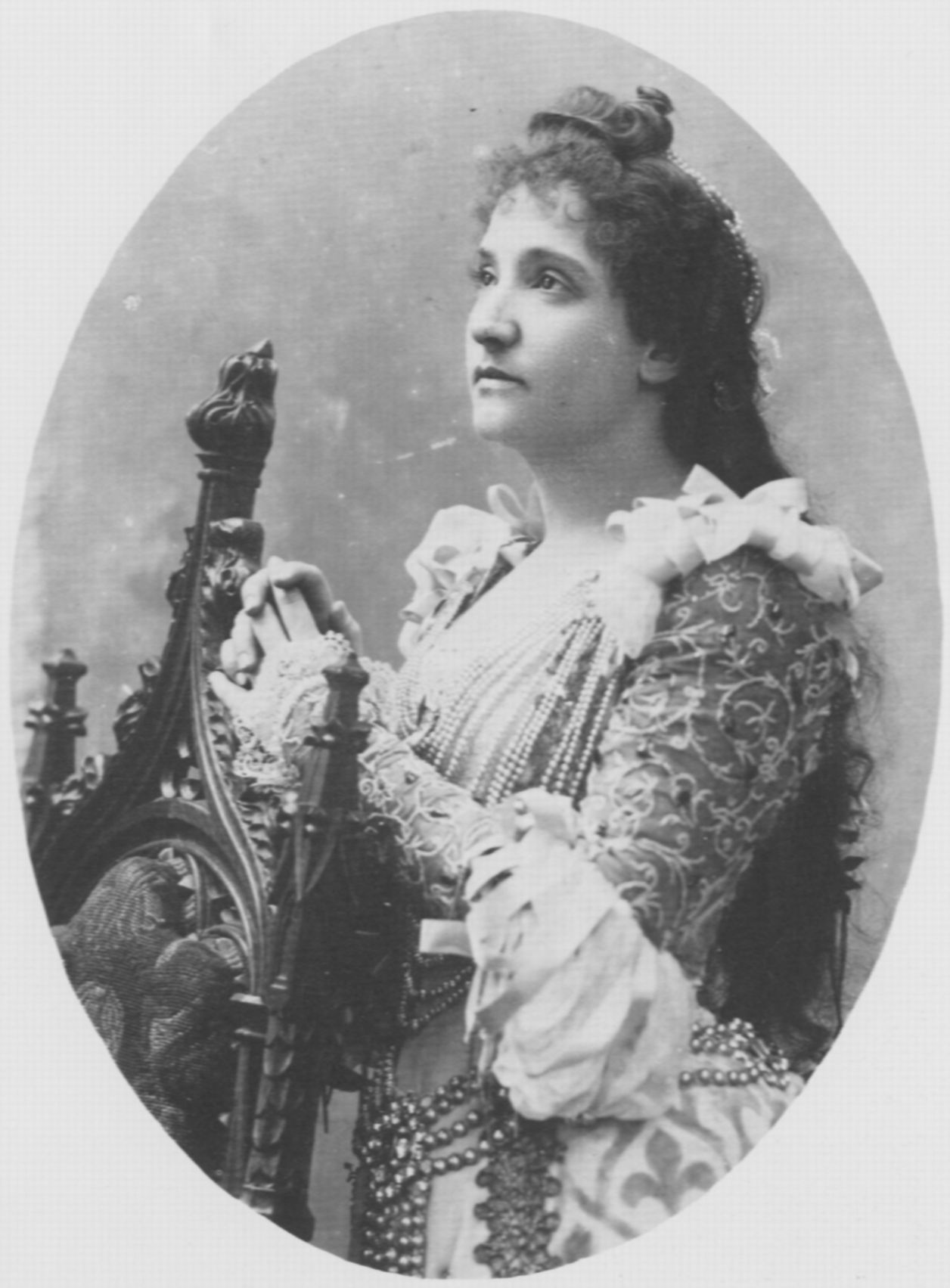

She followed with La traviata and Lucia di Lammermoor. Charles Armstrong was in the audience for the début; a spectacular row between them around that time effectively ended the marriage as a working partnership, even before the later legal divorce.
Covent Garden, Paris and New York
Melba first sang at Covent Garden on 24 May 1888 as Lucia. The reception was friendly rather than ecstatic. The Musical Times called her "a fluent vocalist" and "quite respectable" in light soprano parts, but judged that she lacked "the personal charm necessary to a great figure on the lyric stage". When Augustus Harris offered her only the secondary page role of Oscar in Un ballo in maschera for the next season, she packed her bags and returned to Brussels, vowing never to come back.


She had, however, found an ally in the influential Lady de Grey, who wrote begging her to return. Melba consented — but first conquered Paris. On 8 May 1889 she made her Paris Opéra début as Ophélie in Ambroise Thomas's Hamlet and was acclaimed by press and public. The Times called it "a brilliant success" and praised a voice of great flexibility and expressive acting.


Back at Covent Garden she appeared with Jean and Édouard de Reszke in Gounod's Roméo et Juliette. "I date my success in London," she later recalled, "quite distinctly from the great night of 15 June 1889." From that point she reigned at Covent Garden season after season through what the ADB calls the house's golden age under Harris: spectacular productions, a broadened repertoire, and an audience that still included the aristocracy Melba found exhilarating. She kept a permanent dressing room to which she alone held the key.


Her Metropolitan Opera début in New York came in December 1893, again as Lucia. As at Covent Garden, the first night was less than a triumph — the New York Times praised "one of the loveliest voices that ever issued from a human throat" even as the out-of-fashion work drew thin houses — but Roméo et Juliette later in the season established her as the leading prima donna of the day in succession to Adelina Patti. She would return often to New York, and in 1906–07, displeased with the Metropolitan, she helped revive the rival Manhattan Opera House with a triumphant season that the ADB calls "probably her finest hour".
Her repertoire was deliberately small. Across her career she sang no more than about twenty-five roles and was closely identified with roughly ten. Favourites and signatures included Gilda, Lucia, Violetta, Juliette, Marguerite in Faust, Mimì in La bohème (which she studied with Puccini), Desdemona, Nedda and Rosina. She sang little German opera; her attempt at Brünnhilde in Siegfried at the Metropolitan in 1896 was a disaster, and Aida likewise exposed limits. She was at her best in lyric and coloratura parts that showed purity of line, an even scale across a wide range, and a trill that contemporaries measured and marvelled at. Instrumentalists admired her insistence on realising the composer's intentions even when her temperament was famously imperious.


Society, scandal and the Duke of Orléans
Assisted by Lady de Grey, Melba moved freely in high society. She sang before Tsar Alexander III in St Petersburg, King Oscar II in Stockholm, Emperor Franz Joseph in Vienna, Kaiser Wilhelm II in Berlin, and by command of Queen Victoria at Windsor. Alfred de Rothschild gave financial advice that strengthened her position. Early in the new century she bought a house in Great Cumberland Place, London, and had French workmen remodel it in a Versailles manner.
In 1890 she met Philippe, Duke of Orléans, heir of the Bourbon pretender to the French throne. They were seen together in London, Paris, Brussels, St Petersburg and Vienna. When the papers got hold of the story, Charles Armstrong filed for divorce on grounds of adultery. The English case was quietly dropped — diplomatic pressure has been suggested — but the scandal was enough to send the duke on a long African safari and to teach Melba the price of indiscretion. Armstrong, having taken George to America, divorced her in Texas in 1900. These are the documented outlines. Later gossip about the affair's intensity varies; what is firm is the public exposure, the failed English suit, the Texas divorce, and Melba's subsequent insistence on discretion.
Homecoming, the sentimental tour and Coombe Cottage
In 1902 Melba made her long-awaited return to Australia for a concert tour of the Australian states and New Zealand. From the Sydney and Melbourne concerts alone she netted £21,000; one Sydney concert set a contemporary world record for receipts. Her train journey south was treated as a royal progress. At Melbourne thousands turned out; a contingent from Presbyterian Ladies' College shrilled a "coo-ee" as she alighted. For newly federated Australia she represented glamour, success and international acceptance — Melbourne in particular felt she had made the place famous.


A week after she sailed for Europe in March 1903, John Norton attacked her in Truth with an open letter accusing her of wilfulness, miserliness and drunkenness. Melba ignored him from the safety of London society. Unfounded stories of heavy drinking circulated for years afterwards; they should be treated as contested newspaper aggression, not established biography.
In 1909 she undertook what she called a sentimental tour of Australia, covering some 10,000 miles and appearing in many remote towns. Banquets, speeches and small crowds at wayside stations marked the route. She travelled with manager, maid, valet and two baby grand pianos, arriving a full day before each concert and performing without an interval. On that visit she also began promoting what she regarded as the correct way of singing — essentially the Marchesi method as she had modified it — and she bought a property at Coldstream near Lilydale. The architect and engineer John Grainger, father of Percy Grainger, was called in to build Coombe Cottage (extending an existing cottage), named after a house she had rented near London. Increasingly Coombe became the centre of her Australian life; nearly half her remaining years would be spent in Australia.


She returned in 1911 to head the celebrated Melba–Williamson Opera Company: J. C. Williamson's arranged the venues; Lemmone and Melba engaged the artists. Further Melba–Williamson seasons followed in the 1920s. In England she continued to command extraordinary audiences — the ADB notes that seven kings and queens attended one Covent Garden gala in 1914.
War work, Damehood and the Conservatorium
When the First World War broke out Melba was at Coombe Cottage. Crossing to Europe was difficult, but she made wartime concert tours of North America that stirred pro-Allied sentiment and raised large sums for war charities at home, notably by auctioning flags at the end of concerts. The ADB estimates she probably raised as much as £100,000 for the war effort. She was appointed Dame Commander of the Order of the British Empire in the 1918 New Year Honours — among the first stage performers so recognised — and elevated to Dame Grand Cross (G.B.E.) in the 1927 Birthday Honours.
Her Australian teaching connection deepened during the war years. After a dispute that she interpreted in wartime terms, she threw her support behind Fritz Hart at the Albert Street Conservatorium. She had laid the foundation stone of Melba Hall at the University of Melbourne in 1913, but her lasting institutional link was with Albert Street, later known as the Melba Memorial Conservatorium (teaching later transitioned into the Melba Opera Trust). She taught interpretation classes there without fee, published the Melba Method in 1926, and left money for a singing scholarship "in the hope that another Melba may arise".


Recordings, radio and the voice on disc
From 1904 Melba recorded for the Gramophone & Typewriter Company and later the Victor Talking Machine Company, issuing more than a hundred sides of arias and songs. The early acoustic process could not capture the full body of her live voice, yet the records still show an almost seamlessly pure lyric soprano, accurate intonation, smooth legato and brilliant coloratura. She helped make the gramophone respectable for serious music lovers. On 15 June 1920 she took part in a pioneering radio broadcast from Marconi's Chelmsford works — singing arias and her famous trill — becoming the first artist of international standing to participate in direct radio broadcasts.


Peach Melba and the Escoffier desserts
Melba's name entered the kitchen as well as the opera house. The French chef Auguste Escoffier created dishes in her honour. Peach Melba — peaches with raspberry sauce and vanilla ice cream — is the most famous; it is securely associated with Escoffier and Melba and is commonly dated to his years at the Savoy Hotel in London in the early 1890s (often given as 1892 or 1893 in secondary sources). Melba toast, Melba sauce and the Melba garniture are likewise linked to Escoffier's circle. Exact first-service dates for each item vary in later cookery writing; what is not in serious doubt is Escoffier's authorship of the peach dessert in Melba's honour.


"Doing a Melba" — farewells that would not quite end
After the war Melba reopened Covent Garden and was depressed by the city's weariness and by brown tweed coats in stalls that had once held tiaras. She did not appear there again until 1923. In Australia in 1922 her Concerts for the People in Melbourne and Sydney, with cheap tickets, drew some 70,000 listeners. A further Melba–Williamson tour followed in 1924. Beverley Nichols, who travelled with her while ghost-writing Melodies and Memories (1925), later observed the weariness of a star fighting to keep supremacy as voice and body aged.
On 8 June 1926 she gave a famous farewell performance at Covent Garden in scenes from Roméo et Juliette, Otello and La bohème, with Australians among the cast including John Brownlee at her insistence. That Covent Garden night was recorded and broadcast. But it was not her last farewell. As early as October 1924 she had announced an Australian farewell to grand opera; her last operatic performances came at the end of the third Williamson–Melba season — Sydney on 7 August 1928 and Melbourne on 27 September 1928. Two months later at Geelong she gave her last Australian concert. The phrase "doing a Melba" entered the language for a farewell that proves temporary. The myth that she never meant any goodbye is too neat; the record shows a singer who announced endings, meant them in the moment, and yet kept finding occasions to sing.


Final illness and death at St Vincent's, 23 February 1931
After Geelong Melba left for Europe for about two years. She sang at Brighton, then went on to Paris and Egypt, where she developed a fever she never quite shook off. She managed one last charity appearance at the Hyde Park Hotel in London. Dreading another northern winter, she decided to return to Melbourne, but her health worsened on the voyage.
The Australian Dictionary of Biography states that she died of septicaemia which had developed from facial surgery in Europe some weeks before. The ADB life summary lists the cause as blood poisoning. Contemporary newspapers reported a long illness in a private hospital in Sydney, under the care of Dr Bill Doyle, brother of her daughter-in-law Evie Armstrong, and described periods of slight recovery before the final decline. The Melba Museum notes that she slipped into unconsciousness and died surrounded by her son George and daughter-in-law Evie, her sisters Annie Box and Dora Lempriere, her niece Helen Lempriere, and John Lemmone. Contemporary bulletins emphasised the lingering fever and hospital struggle as much as any single operation; the precise surgical procedure is not set out in the same detail in every account.


She died at St Vincent's Hospital, Darlinghurst, at 4.40 p.m. on 23 February 1931, aged sixty-nine. Obituaries treated her almost as a monarch. The Argus asked whether it was too much to say she was the greatest Australian; parliamentarians in Canberra stood with heads bowed. King George V sent a message through the Governor of New South Wales, Sir Philip Game: "The Queen and I are grieved to hear that Dame Nellie Melba has passed away. We have known her for very many years and appreciated her beautiful voice, which has given pleasure in all parts of the world." The New York Herald Tribune called her the last of the soprano empresses of the previous half-century.
Funeral, Scots' Church and Lilydale
Melba wished to be buried at Lilydale Cemetery, near Coombe Cottage. Her coffin travelled from Sydney by special carriage, changing trains at Albury. The Melba Museum records that the train ran hours late into Melbourne because it stopped at stations along the route as people placed flowers and paid respects. At Scots' Church — the Collins Street church her father had built — the coffin lay in state while thousands filed past.


The funeral service was held at Scots' Church at 1 p.m. on 26 February 1931. Afterwards the cortège drove to Lilydale. Whitehorse Road and the Maroondah Highway were lined with people; traffic stopped; family members later remembered the sound of rubber tyres on the road in the hush. At Lilydale a horse-drawn gun carriage waited. The coffin was transferred, escorted by troopers and scouts and led by workers from Cave Hill, for the final journey to the cemetery. Later accounts of the contemporary press coverage describe a motorcade more than a kilometre long and billboards abroad that simply read "Melba is dead".
She was buried at Lilydale. Her headstone, designed by Sir Edwin Lutyens, bears Mimì's farewell from La bohème: "Addio, senza rancor" — farewell, without bitterness.
Estate, family and legacy
Melba was survived by her son George. The ADB records an estate valued for probate at £67,511 — less than her pre-war fortune — including a bequest of £8,000 to the Albert Street Conservatorium for a singing scholarship. Coombe Cottage passed down through the family: to her granddaughter Pamela, Lady Vestey (1918–2011), and thereafter to Lady Vestey's sons. The property remains associated with the Melba estate and is now known publicly through Coombe Yarra Valley's gardens and hospitality, while the cottage itself has remained a private family residence.
Her legacy is institutional as well as personal. Melba Hall at the University of Melbourne, the Melba Opera Trust and scholarships that carry her name continue the teaching thread. The Canberra suburb of Melba is named after her. She appears on Australia's $100 banknote. A marble bust stands on the grand staircase at Covent Garden beside Adelina Patti's. Portraits by Rupert Bunny and John Longstaff hang in the National Gallery of Victoria. Recordings, reissued on modern formats, still let listeners hear the purity that Sarah Bernhardt called "pure crystal" and that Percy Grainger said made him see Australia's landscapes.


She was a Melbourne builder's daughter who took a city name, conquered the opera houses of Europe and America, raised large sums in wartime, taught Australian singers, and came home to die — and to be buried within sight of the Yarra Valley country she had made her Australian base.
Sources
- Australian Dictionary of Biography — Jim Davidson, "Melba, Dame Nellie (1861–1931)", first published in hardcopy in ADB vol. 10, 1986.
- ADB Life Summary — Melba (birth, death, cause listed as blood poisoning, honours, legacies).
- Obituaries Australia / Sydney Morning Herald notice material via ANU (death at St Vincent's, 4.40 p.m., funeral arrangements for Scots' Church and Lilydale).
- Dame Nellie Melba Museum, Lilydale — Death & Funeral; Final Years; Marriage and Family; Operatic Debut pages.
- Coombe Yarra Valley — Our Story (David Mitchell buildings; Coombe Cottage chronology; family succession).
- Dictionary of Sydney — Melba, Nellie (milestone dates).
- Victorian Government profile — Dame Nellie Melba, DBE.
- National Portrait Gallery (Canberra) — Melba biography essay.
- Grainger Museum Online — Melba on the world stage.
- Wikipedia — Nellie Melba (cross-checks of dates and repertoire lists against ADB).
- Wikimedia Commons — Category:Nellie Melba and individual file pages for image licences.