Search This Blog

Friday, April 24, 2020

St John’s Church – Darlinghurst Road

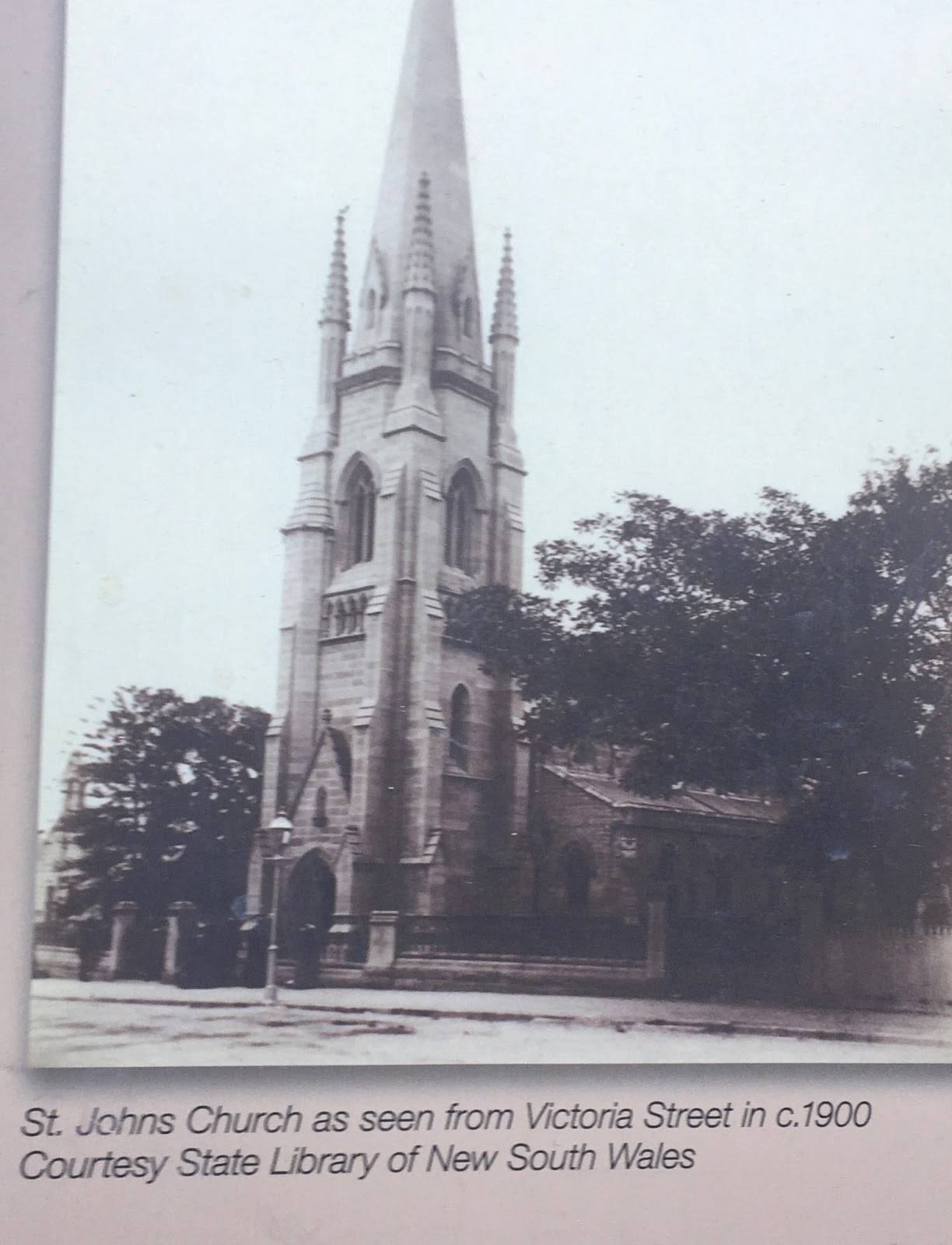
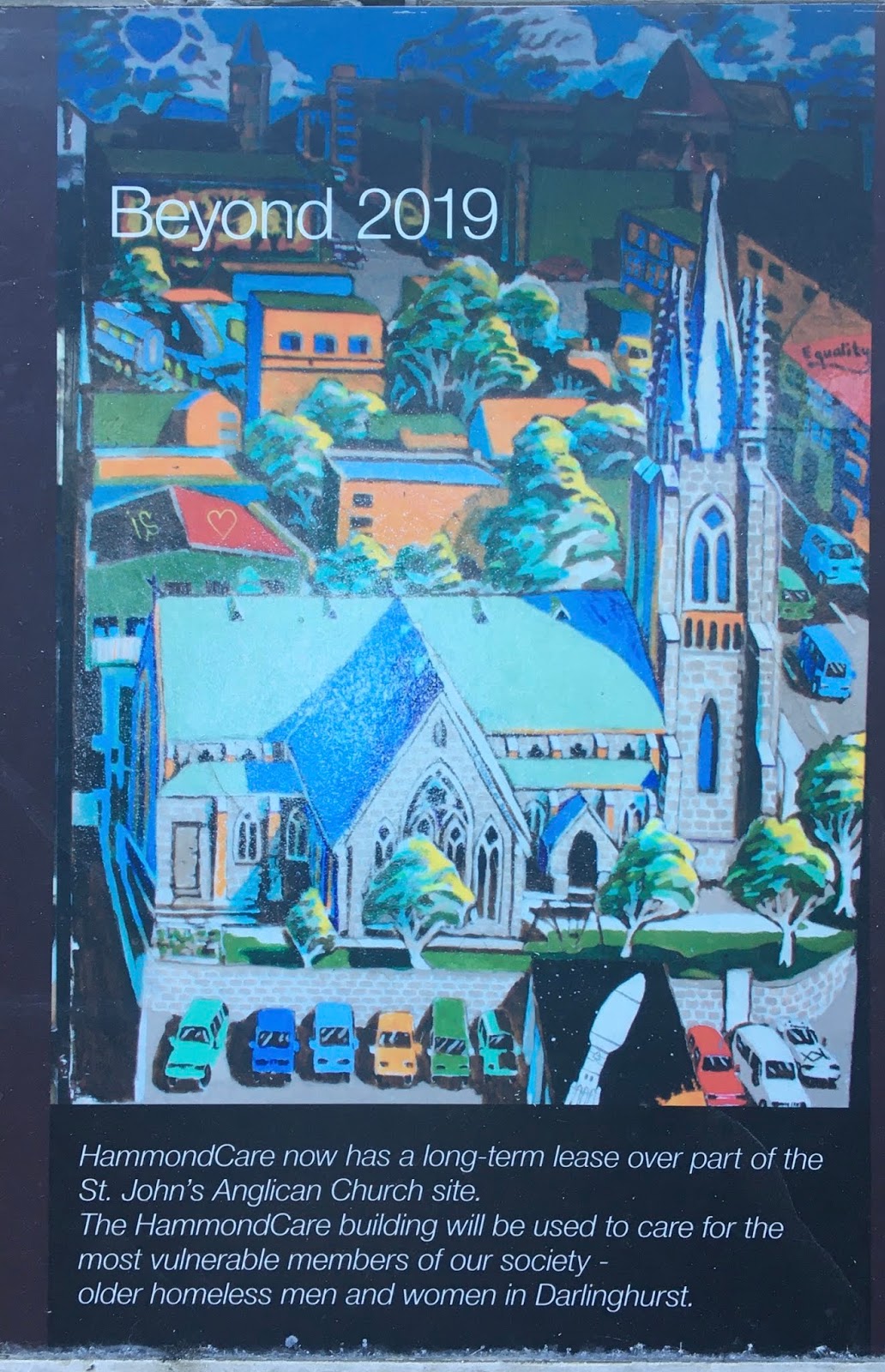
Walk Darlinghurst Road toward the Cross and the spire is the thing that tells you you’ve arrived — sandstone Gothic punching up through the pubs and apartment blocks. St John’s Anglican Church (Church of St John the Evangelist) stands at 120 Darlinghurst Road, Darlinghurst, with grounds running through to Victoria Street. The foundation stone went down in December 1856 and the church opened in 1858. Stage one — nave, aisles and north porch — was Goold and Hilling in decorated Gothic, for a prosperous inner-suburban congregation that wanted something they recognised from home.

From 1871 Edmund Blacket transformed what you see from the street. He added the ornate tower and spire and the transepts (done by about 1875); the chancel followed later (Heritage NSW notes completion by about 1885). That tower and spire now dominate Darlinghurst Road. With its rectory, grounds and fence, St John’s is regarded as one of the most intact nineteenth-century church groups in Sydney and is listed on the NSW State Heritage Register (listed 1999).

The photographs document sandstone Gothic detail, stained glass, and the church’s place in the Darlinghurst / Kings Cross streetscape.

St John’s Church in Darlinghurst is one of Sydney’s historic Anglican churches. Its location on Darlinghurst Road reflects the suburb’s long religious and civic history.


St John’s Church, Darlinghurst

St John’s Church stands on Darlinghurst Road, a visible reminder of the area’s changing history and character. 


Sunday, April 12, 2020

Centennial Park - Sydney - New South Wales

Centennial Park is the grand Victorian “People’s Park” dedicated in 1888 under Premier Sir Henry Parkes to mark the centenary of European settlement in New South Wales. It was carved from parts of the old Sydney Common and Lachlan Swamps water reserve east of the city — unemployed labour turned swampy ground into formal drives, ponds, plantations and statues in the English public-park tradition. Charles Moore (Director of the Botanic Gardens) and engineer Frederick Franklin were among those who assessed the potential; Randwick Road through the Government Domain later became Anzac Parade.
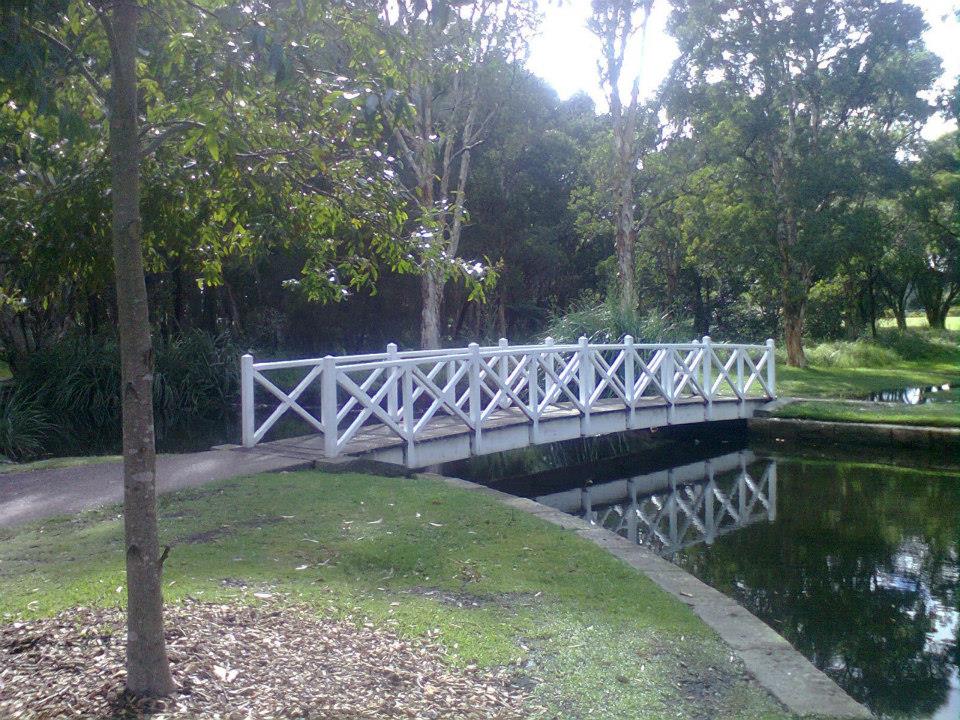
On 1 January 1901 the park’s natural amphitheatre hosted the inauguration of the Commonwealth of Australia, when the colonies were proclaimed a federation. A temporary Federation Pavilion stood for the ceremony; the hexagonal Federation Stone later marked the spot, and architect Alexander Tzannes’s permanent Federation Pavilion (dedicated 1 January 1988) now houses the stone. Centennial Park sits on the Australian National Heritage List for that nation-making association. Together with Moore Park and Queens Park it forms the Centennial Parklands, managed for public recreation, equestrian use and historic landscape conservation.

Photographs here show drives, water bodies and park structures in the Centennial landscape.


Centennial Park Was The brainchild of Sir Henry Parkes, Who At The Time Was Colonial Secretary For The Colony Of New South Wales. 


Randwick Had Turned Into A Flourishing Village And Was Connected To Randwick Road Which Ran Through The Government Domain Which Was Later Called Moore Park After Charles Moore, The Mayor Of Sydney At The Time. Randwick Road Was Later Called Anzac Parade After The Tragedies & Sacrifice From World War 1. 


Centennial Park Sculptures - Centennial Park - Sydney - New South Wales


Centennial Park 
Statues And Sculptures. 

The Original Design For Centennial Park Had A Total of 31 Statues Through The Park. Over The Years Due To Vandalism And Weathering Only 19 Remained In 1946 And Today There Are Only 9.


Charles Dickens Was A Renowned English born Novelist & Social Commentator. He Achieved Popular Acclaim In The Late 1830's, And His Fame Grew Until His Death In 1870.
Centennial Park Was Officially Opened By Sir Henry Parkes, On January 26th 1888 To Commemorate 100 Years Of European Settlement In Australia

The Marble Statue Of Charles Dickens Appears To Have Been 1 Of 11 Statues Acquired In 1889 As Decoration For The New Park. It Was Originally At The Junction Of Parkes And Hamilton Drive But Was Relocated To The Junction Of Dickens And Loch Avenue In 1897, To Make Way For The Statue Of Sir Henry Parkes. 

The Statue Is 1 Of Only 2 Known Life Size Representations Of Charles Dickens In The World; The Other Is A Bronze Statue  In Clark Park, Philadephia, USA

In 1972 Most Of The Remaining Statues In The Park Were Removed & Put In Storage. Then The Statue Was Lost, And Its Location Was Unknown For Over 40 Years. 

When Gaenor Vallack, A Volunteer At The NSW Library And A Member Of The Dickens Society, Was Flicking Through Edwin Wilson's Book The Wishing Tree A Picture Of Charles Dickens Statue Caught Her Eye. 

In November 2006, Sandra Wrote To The Sydney Morning Heralds Column 8 Asking If Anyone Had Any Idea If The Statue Still Existed And If So, Where Was It? 

in 2007, Column 8 published Saying That The Statue Was Placed In The Protective Custody By The Royal Botanic Gardens, And That The Charles Dickens Statue Had Lost Its Head.