Search This Blog

Wednesday, February 26, 2020

Lieutenant Governor’s Residence - George And Grosvenor St


Lieutenant Governor’s ResidenceCorner of George And Grosvenor Streets, Southern Corner


A Stone Residence For The First Lieutenant Governor, Major Robert Ross, Was Erected On This Site In 1788. It Was Occupied By His Successors, Grose & Paterson. In 1820 It Became The Sydney Hotel. In 1833 Samuel Lyons Built Auction Rooms On The Site Which Were Not Demolished Until 1912. 
Just Something Else That Should’ve Been Preserved From Old Sydney. 
Major Robert Ross Arrived On The First Fleet At Botany Bay In January 1788, Having Been Appointed Lieuetenant Governor In October 1786, Ross Was Unhappy In New South Wales & Declared That 
"In The Whole World There Is Not A Worse Country Than What We Have Seen Of This". He Returned To England In December 1791 And Died There On The 9th June 1794.
As Commander Of The Newly Formed New South Wales Marine Corps, Major Francis Grose Landed In Sydney In February 1792. In December Of That Year, When Phillip Returned To England, Grose Became Lieuteanant Governor


Lieutenant Governor's Residence
George And Grosvenor Streets Southern Corner 


Lieutenant Governor's residence a stone residents are for the first lieutenant Major Robert Ross was erected on this site in 1788 it was occupied by his successors grows and Patterson in 1820 it became the Sydney Hotel in 1833 Samuel Lions are built auction rooms on the site which were not demolished until 1912.
Major Robert Ross arrived with the first Fleet at botany Bay in 1788 having been appointed Lieutenant Governor in October 1786 Ross was unhappy in New South Wales and declared that in the whole world there is not a worse country than what we have yet seen of this returned to England in December 1791 and died there on 9 June 1794 as commander of the newly formed New South Wales corpse Major Francis grows landed in Sydney in February 1792 in December of that year when Phillip returned to England Gross became Lieutenant Governor it was an unhappy choice and gross made many blunders before returning home in 1794 where he died in 1814. 
The next document of major Rosses corner was captain William Patterson who arrived in October 1791 with the New South Wales corpse after a term on Norfolk Island Patterson in December 1794 six seeded gross as Lieutenant Governor until relieved in September 1795 by Governor John Hunter on 21 June 1810 on the voyage home Patterson died of a heart attack new Que porn Ross is corner was acquired BISA John Jamerson as a town residents until on 20 March 1820 Mr Stillwell acquired see John's block and named it the Sydney hotel and coffeehouse next on the scene was William Cummings aged 40 who arrived in the colony as a free man in 1822 with his wife Mary and their son William he announced in the Sydney Gazette on 9 June 1825 that he had installed hot and cold water in 1828 Cummings was listed as a hotel keeper McQuarrie place owning 1008 acres 40 head of cattle and 60 sheep later tenant was Samuel Lyons London Taylor who reached Sydney in January 1815 serving a life sentence he reformed and by adding 28 was an option nearing George Street lions died on 3 August 1851 aged 59 and was interred in the Jewish burying ground he left in large unencumbered property which was divided equally between his two sons and a daughter the oldest son was a barrister in England the Lieutenant Governor's house still on the corner of George Street and Charlotte Place a name retained under until March 1889 when it became Grosvenor Street the present building on the site is occupied by the union steamship company of New Zealand a proper o'clock proclaims it as the sight of the first Lieutenant Governor's house from 1788 to 1809

The Auction Rooms Were Approximately 80 Years Old When They Were Demolished. & That Was in 1912.... 


The Lieutenant Governor's House, located at the intersection of George Street and Grosvenor Street in Sydney, has a significant history tied to the colonial administration of New South Wales and the development of the city. Here's an overview of its history:

Early Establishment:

  • The Lieutenant Governor's House was built in the early 19th century as the official residence for the lieutenant governors of New South Wales.
  • The house was intended to provide accommodation for the colony's administrators and officials.

Governor Lachlan Macquarie:

  • One of the notable figures associated with the house is Governor Lachlan Macquarie, who served as the fifth governor of New South Wales from 1810 to 1821.
  • Macquarie and his wife, Elizabeth, resided in the house during his tenure. He undertook significant reforms and development projects in the colony, shaping the early growth of Sydney.

Architectural Significance:

  • The house was designed in a Georgian architectural style, which was common for colonial buildings of the era.
  • The design featured symmetrical facades, decorative details, and a sense of grandeur befitting a residence for colonial administrators.

Later Use and Transformation:

  • After Macquarie's time, the house continued to serve as a residence for various lieutenant governors.
  • Over the years, the house underwent changes and renovations to adapt to changing needs and preferences.

Governor-General's Residence:

  • In the mid-19th century, the house ceased to serve as the official residence for colonial governors and lieutenant governors.
  • It was later used as the residence for visiting dignitaries, including Governor-Generals of Australia.

Transformation into a Hotel:

  • By the 20th century, the house was no longer used as a residence for government officials.
  • In the 1980s, the building was converted into the Sir Stamford Circular Quay Hotel, a luxury hotel that preserved its historical facade and certain architectural features.

Historical Significance:

  • The Lieutenant Governor's House holds historical significance as a tangible link to the colonial administration of New South Wales and the development of Sydney.
  • It reflects the early efforts to establish an official presence and governance in the colony during its formative years.

The Lieutenant Governor's House at the corner of George Street and Grosvenor Street represents a part of Sydney's colonial heritage and the changing roles of historic buildings over time. Its transformation into a hotel has allowed its architectural and historical features to be preserved while also accommodating modern uses in the heart of the city.


Sunday, February 23, 2020

West Street - Darlinghurst


West Street - Darlinghurst

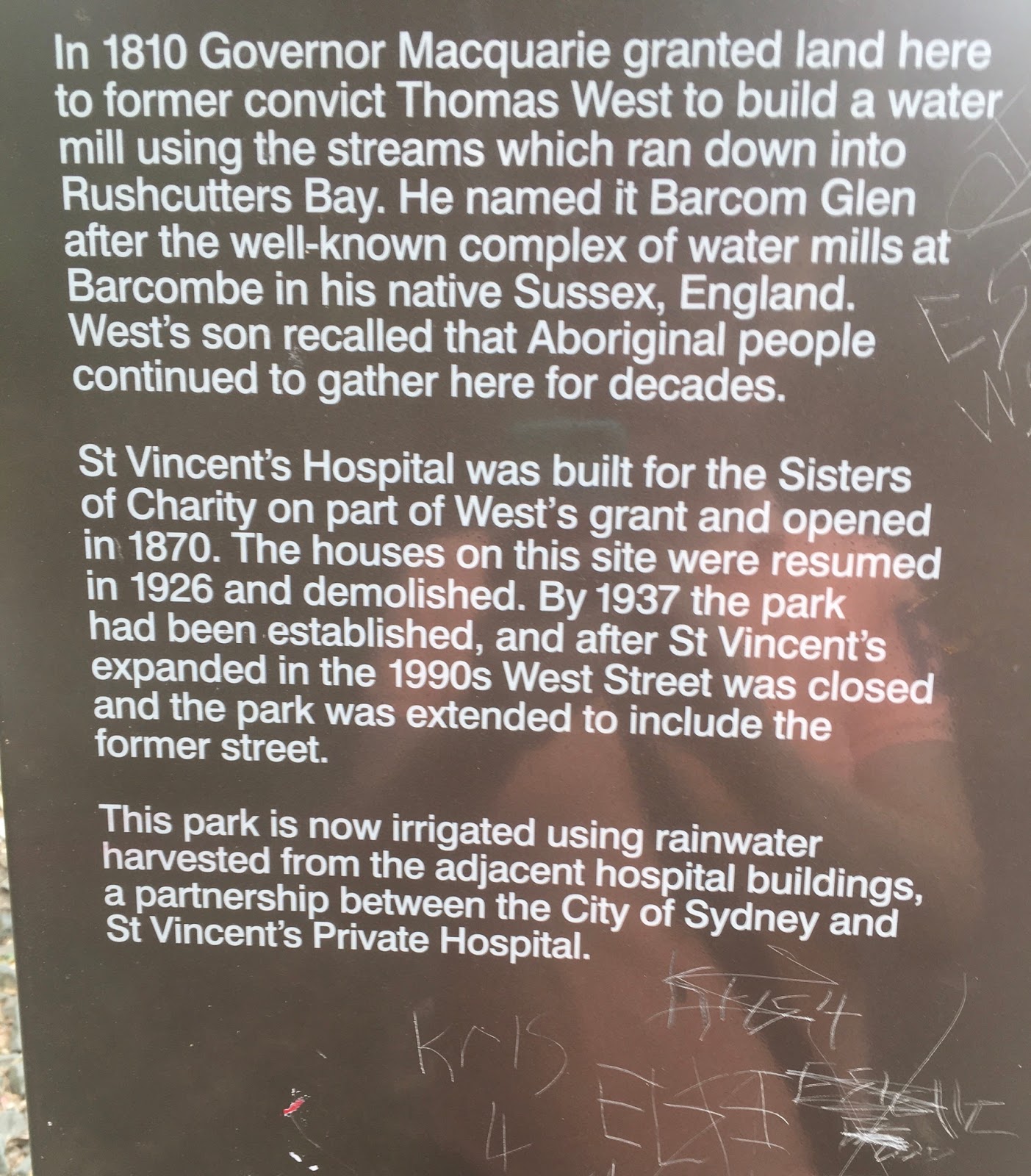
The history of West Street includes early nineteenth-century water-mill activity and the development of St Vincent’s Hospital nearby. A heritage plaque records Governor Macquarie’s 1810 land grant and the later use of the area by the Sisters of Charity. Darlinghurst’s streetscape now combines these historic associations with dense inner-city housing and services.


Sunday, February 9, 2020

Frenchman’s Road - Eastern Suburbs - Randwick - Bond


Frenchman’s Road - Eastern Suburbs - Randwick 

Most people in the eastern suburbs in the 21st-century would know of Frenchmans Road.

I don’t know is that Frenchmans Road is pretty much one of the oldest tracks in Australia.

Right to the time that la Perouse came and set up camp at La Paroo‘s at Botany Bay. 


Australia Hotel - Castlereagh Street - SYDNEY


The Australia Hotel - Castlereagh Street Sydney


The Australia Hotel, located on Castlereagh Street in Sydney, was once a prominent and historic hotel that played a significant role in the city's hospitality and social scene. Here's an overview of its history:

Establishment and Early Years:

  • The Australia Hotel was established in 1891, during a period of economic growth and development in Sydney.
  • The hotel was designed by the architect William Wardell in the Second Empire architectural style, characterized by its elaborate façade and distinctive mansard roof.

Grandeur and Amenities:

  • The Australia Hotel was known for its grandeur and opulent interiors. It boasted luxurious amenities, including a large dining room, ballroom, bar, and accommodations for guests.
  • Its central location in the heart of Sydney made it a popular choice for visitors and locals alike.

Social Hub and Gatherings:

  • The hotel quickly became a social hub and gathering place for various events, meetings, and celebrations.
  • It hosted social occasions, weddings, balls, and other gatherings that attracted Sydney's elite and upper classes.

Accommodations and Services:

  • The Australia Hotel provided upscale accommodations for travelers and guests. Its elegant rooms and services catered to a discerning clientele.

Decline and Closure:

  • Over time, changing preferences and economic shifts impacted the hotel's viability. Modernization of accommodations and shifts in tourism trends led to decreased patronage.
  • The Australia Hotel faced financial difficulties and a decline in its reputation.

Demolition:

  • Despite efforts to preserve the historic building, the Australia Hotel was demolished in 1971.
  • Its demolition was met with public outcry and debates about heritage preservation.

Legacy:

  • The Australia Hotel's demolition marked the loss of a significant architectural and historical landmark in Sydney.
  • Its legacy continues to be remembered as an emblem of the city's history and a reminder of the importance of preserving heritage buildings.

While the Australia Hotel is no longer physically present, its history and impact on Sydney's hospitality industry and social life remain noteworthy. Its story serves as a testament to the ever-evolving nature of urban landscapes and the challenges of preserving historic structures in the face of modern development


The renowned French actress Sarah Bernhardt's visit to Sydney and her stay at the Australia Hotel left a lasting impression on the city's cultural history. Sarah Bernhardt was one of the most famous actresses of the late 19th and early 20th centuries, known for her exceptional talent and charisma on the stage. Here's an overview of her visit:

Visit to Sydney:

  • Sarah Bernhardt toured Australia as part of her international performance schedule. Her visit to Sydney took place in 1891.
  • At the time of her visit, she was already a legendary figure in the world of theater, celebrated for her roles in classic plays and her larger-than-life persona.

Staying at the Australia Hotel:

  • During her time in Sydney, Sarah Bernhardt stayed at the Australia Hotel, which was known for its luxurious accommodations and central location.
  • Her choice to stay at the Australia Hotel added to the hotel's prestige and drew attention to her presence in the city.

Theater Performances:

  • While in Sydney, Sarah Bernhardt performed at the Theatre Royal, captivating audiences with her performances.
  • She was known for her dramatic acting style and ability to portray a wide range of characters, from tragic heroines to comedic roles.

Cultural Impact:

  • Sarah Bernhardt's visit to Sydney created a significant cultural buzz. Her performances were widely covered by the media, and her presence drew large crowds and admirers.

Reception and Legacy:

  • The people of Sydney welcomed Sarah Bernhardt with enthusiasm and excitement. Her performances received positive reviews, and her visit was seen as a highlight of the city's cultural calendar.
  • Her time at the Australia Hotel and her performances left a lasting impact on the city's cultural scene and theater enthusiasts.

Continued Legacy:

  • Sarah Bernhardt's legacy as an iconic actress and her visit to Sydney are remembered as significant moments in the city's cultural history.
  • The Australia Hotel's connection to her visit adds to the hotel's historical importance and its role in hosting notable figures.

Sarah Bernhardt's visit to Sydney and her stay at the Australia Hotel provided an opportunity for the city's residents to experience the talent of a theatrical legend. Her impact on the cultural landscape of Sydney during her visit continues to be appreciated and remembered to this day.


Saturday, February 8, 2020

ARTHUR PHILLIP’S INSTRUCTIONS - February 7th 1788


ARTHUR PHILLIP’S INSTRUCTIONS


On the 7th of February 1788, Governor Arthur Phillip, the first Governor of the colony of New South Wales, issued a set of instructions known as the "Phillip's Instructions." These instructions were a comprehensive set of guidelines and orders that outlined the governance and administration of the newly established British colony in Australia.

The instructions covered a wide range of aspects related to the management of the colony, including:

1. Government Structure: The instructions established a system of governance that vested ultimate authority in Governor Phillip. He was given the power to make laws, appoint officers, and establish courts.

2. Relations with Indigenous People: The instructions emphasized the need for respectful relations with the Indigenous inhabitants of the land. Governor Phillip was instructed to seek a peaceful coexistence with the Aboriginal people, to treat them justly and fairly, and to avoid any acts of hostility.

3. Land Ownership and Settlement: The instructions outlined the process for acquiring and distributing land within the colony. Governor Phillip was instructed to allocate land for the use of the settlers and to ensure that proper records were maintained.

4. Criminal Justice System: The instructions provided guidance on the establishment of a legal system. Governor Phillip was directed to ensure the enforcement of laws, the establishment of courts, and the administration of justice in the colony.

5. Trade and Commerce: The instructions outlined the regulation of trade and commerce within the colony. Governor Phillip was instructed to encourage agriculture, industry, and trade to promote the economic development of the settlement.

6. Morality and Discipline: The instructions stressed the importance of maintaining order and discipline within the colony. Governor Phillip was instructed to enforce morality, prevent vice and immorality, and ensure the proper behavior of the settlers.

Governor Arthur Phillip's instructions played a crucial role in establishing the foundations of governance and administration in the early days of the colony. They provided guidance and authority to the governor and set the tone for the development of the settlement. These instructions formed the basis for the early legal and administrative framework of New South Wales and laid the groundwork for the establishment of subsequent institutions and systems of government.


Arthur Phillip’s Instructions - February 7th 1788


George The third; by the grace of God; king of Great Britain France and Ireland,; defender of the faith

To Our Trusty; & Well Beloved Arthur Phillip Esq. 


We; Eposing Especial Trust And Confidence In The Prudence, Courage & Loyalty Of You;

The Said Arthur Phillip; 

Of Our Special Grace 


Have Thought Fit To Constitute & Appoint You To be Our Governor General And Commander In Chief; 


In And Over; Our Territory Called New South Wales


Extending From The Northern Cape; Called Cape York; In Latitude 10 Degrees 37 Minutes To The Southern Extrmity In Latitude 43 degrees 39 Minutes South; 


And All The Country Westward; To The 135th Degree of East Longtitude; \


Including All The Islands Adjacent In The Pacific Ocean; 

Within The Latitude Name.


Our Will And Pleasure Is That You Take The Oath For the Office And Trust Of Our Governor General And Commander in Chief For The Due And Impartial Administration Of Justice 


& We Do Hereby Authorise & Empower You To Keep And Use The Public Seal; For Sealing All Things Whatsoever, That Shall Pass The Great Seal Of Our Said Territory New South Wales, And Its Dependancies;

We Further Give & Grant Unto You Full Power & Authority To Administer & Give Oaths; To Any Such Person; Or Persons As You Shall See Fit 


To Constitute & Appoint Justices Of The Peace, Coroners, Constables And Other Such Necessary Officers For The Better Administration Of Justice


To Pardon Offences; To Remit Fines & Forfeitures;


To Levy; Arm; Muster; Command; & Employ All Persons Whatsoever for The Resisting Of All Enemies; Pirates & Rebels; Both At Sea & Land


To Execute Martial Law In Times Of Invasion; 

& At Other Times; When By Law It May Be Executed. 


To Erect Raise & Build So Many Forts & Platforms, Castles, Cities, Burroughs, Towns & Fortifications As You Shall Judge Necessary 


To Constitute & Appoint Captains; Liuetenants, Master's Of Ships & Other Commanders & Officers; 

To Punish Convicts & Execute Offenders At Sea; Or During Time of Abode At Ports; Harbours And Bays


We Likewise Give & Grant You Full Power to Grant Land, To Control Commerce, & To Appoint Fair Marts & Markets.


& We Require & Command; All Members, Both Civil & Military; & All Other Inhabitants To Be Obedient, Aiding & Assisting To You; The Said Arthur Phillip; And In Case Of Your Death Or Absense Out Of The Said Territory; To be Obedient; Aiding And Assisting To Such Person That Shall Be Appointed By Us To Be Liuetenant Governor Or Commander In Chief.


Witnnessed Ourselves At Westminister On The 2nd Day Of April In The 27th Year Of Our Reign 


Tuesday, February 4, 2020

Cockatoo Island - Port Jackson - Sydney - New South Wales

Cockatoo Island — Wareamah in Dharug language, a place tied to women’s business and the waterways of the Wallumedegal, Wangal, Cammeraygal and Gadigal peoples — is the largest island in Sydney Harbour, parked where the Parramatta and Lane Cove Rivers meet. From 1839 to 1869 it ran as a convict penal establishment for secondary punishment under Governor Sir George Gipps. Convicts quarried sandstone, raised prison buildings and dug Fitzroy Dock (opened 1857): Australia’s earliest commenced graving dock and the only surviving dry dock built by convict labour in the country.

Shipbuilding and repair grew from that dockyard seed — industrial use roughly 1857 to 1991/92, including a Commonwealth naval dockyard phase supporting the RAN. Between the convict and industrial peaks the island also housed reformatory and nautical-school institutions for young people (c.18711911). Remnant convict fabric forms part of the Australian Convict Sites serial property inscribed on the UNESCO World Heritage List in 2010.

Since 2001 the Sydney Harbour Federation Trust has managed remediation and public visiting — camping, events, and interpretation of convict, dockyard and residential precincts including Biloela House.

Atalante in Fitzroy Dock, Cockatoo Island, 1873 — State Library of NSW.

1913 Commonwealth Crimes Act - TREASON SEDITION


COMMONWEALTH CRIMES ACT 1913

Section 24 

(A) ((a))

I) TREASON 


I) TREACHERY 

      A Person Shall Not 

    I). Do Any Act Or Thing With Intent

    I) To Overthrow The Constitution Of The a Commonwealth Of Australia 

                Subsection Clause I) - By Revolution Or Sabotage 
  
I) To Overthrow The Constitution By Force Or Violence 


AUSTRALIAN CONSTITUTION 1901 


SECTION 44 - 

A Politcian Or Senator Must Be Expelled From
the Lower House Or Senate If There Is A REASONABLE CHANCE. Of Treason. 


TREASON

TREACHERY

SABOTAGE 

FOREIGN ALLEGIANCE 


A PERSON SHALL NOT 


ATTEMPT TO OVERTHROW THE COMMONWEALTH OR THE COMSTITUTION OF THE COMMONWEALTH

ASSIST BY WHATEVER MEANS,  WITH INTENT TO ASSIST A PROCLAIMED ENEMY. 

PENALTY - IMPRISONMENT FOR LIFE