Search This Blog

Sunday, February 9, 2020

Australia Hotel - Castlereagh Street - SYDNEY


The Australia Hotel - Castlereagh Street Sydney


The Australia Hotel, located on Castlereagh Street in Sydney, was once a prominent and historic hotel that played a significant role in the city's hospitality and social scene. Here's an overview of its history:

Establishment and Early Years:

  • The Australia Hotel was established in 1891, during a period of economic growth and development in Sydney.
  • The hotel was designed by the architect William Wardell in the Second Empire architectural style, characterized by its elaborate façade and distinctive mansard roof.

Grandeur and Amenities:

  • The Australia Hotel was known for its grandeur and opulent interiors. It boasted luxurious amenities, including a large dining room, ballroom, bar, and accommodations for guests.
  • Its central location in the heart of Sydney made it a popular choice for visitors and locals alike.

Social Hub and Gatherings:

  • The hotel quickly became a social hub and gathering place for various events, meetings, and celebrations.
  • It hosted social occasions, weddings, balls, and other gatherings that attracted Sydney's elite and upper classes.

Accommodations and Services:

  • The Australia Hotel provided upscale accommodations for travelers and guests. Its elegant rooms and services catered to a discerning clientele.

Decline and Closure:

  • Over time, changing preferences and economic shifts impacted the hotel's viability. Modernization of accommodations and shifts in tourism trends led to decreased patronage.
  • The Australia Hotel faced financial difficulties and a decline in its reputation.

Demolition:

  • Despite efforts to preserve the historic building, the Australia Hotel was demolished in 1971.
  • Its demolition was met with public outcry and debates about heritage preservation.

Legacy:

  • The Australia Hotel's demolition marked the loss of a significant architectural and historical landmark in Sydney.
  • Its legacy continues to be remembered as an emblem of the city's history and a reminder of the importance of preserving heritage buildings.

While the Australia Hotel is no longer physically present, its history and impact on Sydney's hospitality industry and social life remain noteworthy. Its story serves as a testament to the ever-evolving nature of urban landscapes and the challenges of preserving historic structures in the face of modern development


The renowned French actress Sarah Bernhardt's visit to Sydney and her stay at the Australia Hotel left a lasting impression on the city's cultural history. Sarah Bernhardt was one of the most famous actresses of the late 19th and early 20th centuries, known for her exceptional talent and charisma on the stage. Here's an overview of her visit:

Visit to Sydney:

  • Sarah Bernhardt toured Australia as part of her international performance schedule. Her visit to Sydney took place in 1891.
  • At the time of her visit, she was already a legendary figure in the world of theater, celebrated for her roles in classic plays and her larger-than-life persona.

Staying at the Australia Hotel:

  • During her time in Sydney, Sarah Bernhardt stayed at the Australia Hotel, which was known for its luxurious accommodations and central location.
  • Her choice to stay at the Australia Hotel added to the hotel's prestige and drew attention to her presence in the city.

Theater Performances:

  • While in Sydney, Sarah Bernhardt performed at the Theatre Royal, captivating audiences with her performances.
  • She was known for her dramatic acting style and ability to portray a wide range of characters, from tragic heroines to comedic roles.

Cultural Impact:

  • Sarah Bernhardt's visit to Sydney created a significant cultural buzz. Her performances were widely covered by the media, and her presence drew large crowds and admirers.

Reception and Legacy:

  • The people of Sydney welcomed Sarah Bernhardt with enthusiasm and excitement. Her performances received positive reviews, and her visit was seen as a highlight of the city's cultural calendar.
  • Her time at the Australia Hotel and her performances left a lasting impact on the city's cultural scene and theater enthusiasts.

Continued Legacy:

  • Sarah Bernhardt's legacy as an iconic actress and her visit to Sydney are remembered as significant moments in the city's cultural history.
  • The Australia Hotel's connection to her visit adds to the hotel's historical importance and its role in hosting notable figures.

Sarah Bernhardt's visit to Sydney and her stay at the Australia Hotel provided an opportunity for the city's residents to experience the talent of a theatrical legend. Her impact on the cultural landscape of Sydney during her visit continues to be appreciated and remembered to this day.




Saturday, February 8, 2020

ARTHUR PHILLIP’S INSTRUCTIONS - February 7th 1788


ARTHUR PHILLIP’S INSTRUCTIONS


On the 7th of February 1788, Governor Arthur Phillip, the first Governor of the colony of New South Wales, issued a set of instructions known as the "Phillip's Instructions." These instructions were a comprehensive set of guidelines and orders that outlined the governance and administration of the newly established British colony in Australia.

The instructions covered a wide range of aspects related to the management of the colony, including:

1. Government Structure: The instructions established a system of governance that vested ultimate authority in Governor Phillip. He was given the power to make laws, appoint officers, and establish courts.

2. Relations with Indigenous People: The instructions emphasized the need for respectful relations with the Indigenous inhabitants of the land. Governor Phillip was instructed to seek a peaceful coexistence with the Aboriginal people, to treat them justly and fairly, and to avoid any acts of hostility.

3. Land Ownership and Settlement: The instructions outlined the process for acquiring and distributing land within the colony. Governor Phillip was instructed to allocate land for the use of the settlers and to ensure that proper records were maintained.

4. Criminal Justice System: The instructions provided guidance on the establishment of a legal system. Governor Phillip was directed to ensure the enforcement of laws, the establishment of courts, and the administration of justice in the colony.

5. Trade and Commerce: The instructions outlined the regulation of trade and commerce within the colony. Governor Phillip was instructed to encourage agriculture, industry, and trade to promote the economic development of the settlement.

6. Morality and Discipline: The instructions stressed the importance of maintaining order and discipline within the colony. Governor Phillip was instructed to enforce morality, prevent vice and immorality, and ensure the proper behavior of the settlers.

Governor Arthur Phillip's instructions played a crucial role in establishing the foundations of governance and administration in the early days of the colony. They provided guidance and authority to the governor and set the tone for the development of the settlement. These instructions formed the basis for the early legal and administrative framework of New South Wales and laid the groundwork for the establishment of subsequent institutions and systems of government.


Arthur Phillip’s Instructions - February 7th 1788


George The third; by the grace of God; king of Great Britain France and Ireland,; defender of the faith

To Our Trusty; & Well Beloved Arthur Phillip Esq. 


We; Eposing Especial Trust And Confidence In The Prudence, Courage & Loyalty Of You;

The Said Arthur Phillip; 

Of Our Special Grace 


Have Thought Fit To Constitute & Appoint You To be Our Governor General And Commander In Chief; 


In And Over; Our Territory Called New South Wales


Extending From The Northern Cape; Called Cape York; In Latitude 10 Degrees 37 Minutes To The Southern Extrmity In Latitude 43 degrees 39 Minutes South; 


And All The Country Westward; To The 135th Degree of East Longtitude; \


Including All The Islands Adjacent In The Pacific Ocean; 

Within The Latitude Name.


Our Will And Pleasure Is That You Take The Oath For the Office And Trust Of Our Governor General And Commander in Chief For The Due And Impartial Administration Of Justice 


& We Do Hereby Authorise & Empower You To Keep And Use The Public Seal; For Sealing All Things Whatsoever, That Shall Pass The Great Seal Of Our Said Territory New South Wales, And Its Dependancies;

We Further Give & Grant Unto You Full Power & Authority To Administer & Give Oaths; To Any Such Person; Or Persons As You Shall See Fit 


To Constitute & Appoint Justices Of The Peace, Coroners, Constables And Other Such Necessary Officers For The Better Administration Of Justice


To Pardon Offences; To Remit Fines & Forfeitures;


To Levy; Arm; Muster; Command; & Employ All Persons Whatsoever for The Resisting Of All Enemies; Pirates & Rebels; Both At Sea & Land


To Execute Martial Law In Times Of Invasion; 

& At Other Times; When By Law It May Be Executed. 


To Erect Raise & Build So Many Forts & Platforms, Castles, Cities, Burroughs, Towns & Fortifications As You Shall Judge Necessary 


To Constitute & Appoint Captains; Liuetenants, Master's Of Ships & Other Commanders & Officers; 

To Punish Convicts & Execute Offenders At Sea; Or During Time of Abode At Ports; Harbours And Bays


We Likewise Give & Grant You Full Power to Grant Land, To Control Commerce, & To Appoint Fair Marts & Markets.


& We Require & Command; All Members, Both Civil & Military; & All Other Inhabitants To Be Obedient, Aiding & Assisting To You; The Said Arthur Phillip; And In Case Of Your Death Or Absense Out Of The Said Territory; To be Obedient; Aiding And Assisting To Such Person That Shall Be Appointed By Us To Be Liuetenant Governor Or Commander In Chief.


Witnnessed Ourselves At Westminister On The 2nd Day Of April In The 27th Year Of Our Reign 


Tuesday, February 4, 2020

Cockatoo Island - Port Jackson - Sydney - New South Wales

Cockatoo Island — Wareamah in Dharug language, a place tied to women’s business and the waterways of the Wallumedegal, Wangal, Cammeraygal and Gadigal peoples — is the largest island in Sydney Harbour, parked where the Parramatta and Lane Cove Rivers meet. From 1839 to 1869 it ran as a convict penal establishment for secondary punishment under Governor Sir George Gipps. Convicts quarried sandstone, raised prison buildings and dug Fitzroy Dock (opened 1857): Australia’s earliest commenced graving dock and the only surviving dry dock built by convict labour in the country.

Shipbuilding and repair grew from that dockyard seed — industrial use roughly 1857 to 1991/92, including a Commonwealth naval dockyard phase supporting the RAN. Between the convict and industrial peaks the island also housed reformatory and nautical-school institutions for young people (c.18711911). Remnant convict fabric forms part of the Australian Convict Sites serial property inscribed on the UNESCO World Heritage List in 2010.

Since 2001 the Sydney Harbour Federation Trust has managed remediation and public visiting — camping, events, and interpretation of convict, dockyard and residential precincts including Biloela House.

Atalante in Fitzroy Dock, Cockatoo Island, 1873 — State Library of NSW.

1913 Commonwealth Crimes Act - TREASON SEDITION


COMMONWEALTH CRIMES ACT 1913

Section 24 

(A) ((a))

I) TREASON 


I) TREACHERY 

      A Person Shall Not 

    I). Do Any Act Or Thing With Intent

    I) To Overthrow The Constitution Of The a Commonwealth Of Australia 

                Subsection Clause I) - By Revolution Or Sabotage 
  
I) To Overthrow The Constitution By Force Or Violence 


AUSTRALIAN CONSTITUTION 1901 


SECTION 44 - 

A Politcian Or Senator Must Be Expelled From
the Lower House Or Senate If There Is A REASONABLE CHANCE. Of Treason. 


TREASON

TREACHERY

SABOTAGE 

FOREIGN ALLEGIANCE 


A PERSON SHALL NOT 


ATTEMPT TO OVERTHROW THE COMMONWEALTH OR THE COMSTITUTION OF THE COMMONWEALTH

ASSIST BY WHATEVER MEANS,  WITH INTENT TO ASSIST A PROCLAIMED ENEMY. 

PENALTY - IMPRISONMENT FOR LIFE 


Letters patent – Governor General – Commonwealth of Australia – Constitution


Commonwealth of Australia


Letters patent passed under the great Seal  of the United Kingdom,
 constituting the office of Governor General  and Commander-In-Chief of the Commonwealth of Australia. Try


Recites Imperial at 63 and 61 Victoria section 12 and proclamation of 17 September 1900 –


A


And where as we did on 17 September 1900, I am with your price


And where as we are desirous of making sexual and persistent provision for the office of the Mandarin to you in an overpass at Commonwealth of Australia, without making new letters patent on HDMI of the sub office


Now know you if we have thought shit to constitute, order, and declare, and to buy those presents constitute, Horder, and for that there shall be a governor general and tomato and cheese here after called the company general over our Commonwealth of Australia, the person who shell Silverstein general so I’ll be goodbye


Letters Patent, dated 29 October 1900 –

Victoria, By The Grace Of God. of the United Kingdom of Great Britain & Ireland; Queen 

Defender Of The Faith, 

Empress of India;

To All to whom these presents shall come,

 Greeting

Whereas, By An Act Of Parliament, Passed On The Ninth Day Of July 1900, In The 64th Year Of Our Reign,  

An Act To Constitute The Commonwealth Of Australia,

It Is An Act That Shall Be Lawful For The Queen, With The Advice Of The Privy Council To Declare By Proclamation; 

That, On & After A Day Therein Appointed, Not Being Later Than One Year After The Passing Of This Act, The People Of New South Wales, Victoria, South Australia, Queensland, & Tasmania, & Also, If Her Majesty Is Satisfied That The People Of Western Australia Have Agreed That Too, Of Western Australia, Shall Be United In A Federal Commonwealth Under The Name Of The “Commonwealth Of Australia”


Monday, February 3, 2020

Hong Kong House - 80 Druitt Street - Sydney - New South Wales


Hong Kong House


Built - 1891
Board.


Architect - Ambrose Thornley


For Well Over 100 Years, Hong Kong House Has Been A Central Feature In The Cityscape And Development Of  Sydney.. A Beautiful Example Of Victorian Architecture, The Building's Ornate Facade Gives A Special Place In The City's Cultural And Heritage Landscape. Hong Kong House Occupies A Prominant Site At The Corner Of Druitt Street And York Street, Adjacent To Two of Central Sydney's Most Important Landmarks - The Town Hall And The Queen Victoria Building.


Constructed in 1891 To A Design By Architect Ambrose Thornley, The Building Was Originally Named Central Hotel, And Became The Gresham Hotel in 1906. For Much Of Its Life It Was A Hotel, With A Banking Chamber On the Ground Flor Of The York Street Frontage. The Building Was Converted Into Office Suites In The Late 1980's, And Purchased By The Hong Kong Government In The Mid 1990's, When It Became The Hong Kong Economic And Trade Office, The Hong Kong Trade Development Council And The Hong Kong Tourism

Australian Museum - 1 William Street, Cnr College & William Streets - Sydney


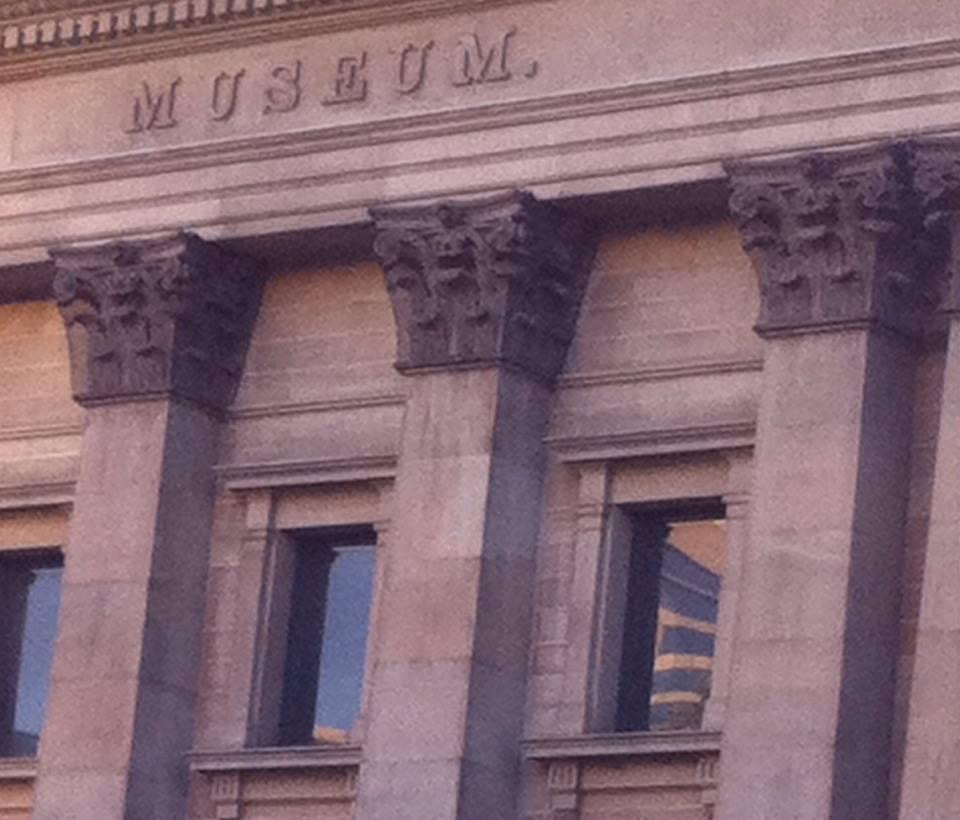
The Australian Museum


Built - 1846 - 1857
Architect - Mortimer Lewis - Colonial ArchitectAdditional Architects -1861 - 1866 - James Barnet - Colonial Architect - Barnet Wing1890 - 1892 - Walter Vernon - Colonial Architect - Lewis Wing Expansion


Found In 1827 To House A Natural History Collection, Australia's First Public Museum Has Been At The Forefront Of Scientific Research, Collection And Education For 190 Years. Originally Designed By Colonial Architect Mortimer Lewis, The Building  Has Led A Colorful Life Marked By Adaption And Change.

Construction Of The Museum Began In 1846, But Was Dogged By Controversy; Lewis Resigned In 1849 Amid A Scandal Over The Management Of Public Funds. The Classical Sandstone Building Was Roofless Until 1850, When Its Grand Dome Was Finally Abandoned In Favour Of Skylight. It Opened To The Public In 1857 With Only The Long Gallery For Exhibitions - Scarcely Enough For An Institution Of High Ambition.
After A Succession Of Additions By Government Architects - James Barnet, Walter Liberty Vernon And Edward Farmer - By The 20th Century A Rationalisation Was Sorely Needed. Colin Still Of The Public Work Department Designed A Link To The Major Wings, Improving Visitor Circulation And Installed A Glass Roof Over The Courtyard With An Atrium To House The Library And Temporary Exhibitions.

In 2008 Came Major New Collections Building By Johnson Pilton Walker Architects (JPW). Designed To House Over Ten Million Zoological Specimens, The Australian Museum Research Institute (AMRI) Has A Glass Facade Inspired By The Luminous Color Play Of Butterfly Wings.

The New Architectural Language Was Reinforced In the 2015 Addition Of Crystal Hall By Neeson Murcutt Architects And Joseph Grech Architect, Which Relocated The Main Entry To William Street And Ushered a New Chapter In The Museum's Life


In 2017, Generations Of Ad Hoc Changes Have Been Swept Away. The Original Floors Have Been Uncovered, The Marble Columns Revealed And Restored And The Original Wire Fretwork Re Installed On All Levels.
This Has Revived A Sense Of Grandeur And Wonder, And For The First Time, Sydneysiders Can Now Imagine What Those First Visitors in 1857 Might Have Felt As They Proudly Viewed Their New Museum And It's Curiosities. 


Wednesday, January 29, 2020

Governor Arthur Phillip's Canvas House - Bridge Street, In Front Of The Departrment Of Lands


Governor Arthur Phillip's Canvas House - Bridge Street, In Front Of The Departrment Of Lands 


In This Vicinity was erected the canvas house brought in frames from England to serve as Governor Arthur Phillip's Temporary home. Carpenters commenced work on it from January 29th 1788, And The Governor went into Residence On February 18th 1788


Governor Arthur Phillip Lived On the Warship Sirius Until the 18th February 1788

"When He Left The Sirius And Took Up Residence On Shore"

Before Leaving London The Governor Had Ordered, At A Cost Of 125 Pounds From Smith Of St George's Fields, A Canvas House  To Be Erected On Numbered Frames And Used As A Temporary Residence


David Collins, Judge Advocate, Wrote In The Account Of  The English Colony

"A Portable Canvas House, Brought Over For The Governor, Was Erected On The East Side Of the Cove... .WhereAlso A Small Body Of Convicts Was Put Under Tents. The Detatchment Of Marines Was Encamped At The Head Of The Cove Near The Stream, And On The West Side Was Placed The Main Body Of Convicts."


This Government House Was Built Where, Governor Phillip Wrote

"Ships Can Anchor Close To Shore. At A Very Small Expense Quays May Be Constructed At Which The Largest Vessels May Unload. The Cove Is About A Half Mile In Length, And A Quarter Of A Mile Across The Entrance. "

Governor Arthur Phillip, In Honour of Lord Sydney,

"Distinguished It By The Name Of Sydney Cove"

Lord Sydney Was Was Secretary Of The Home Department, And The Governor's Immediate Superior.

David Collins Wrote -

"The Spot Chosen, Was At The Head Of The Cove, Near The Run Of Fresh Water, Which Stole Silently Along Through A Very Thick Wood, The Stillness Of Which Had Then, For The First Time Since Creation, Been Interrupted By The Rude Sound Of The Labourer's Axe, And A Downfall of Its Ancient Inhabitants -  A Stillness And Tranquility Which From That Day Were To Give Place To The Voice Of Labour, the Confusion Of Camps And Towns....."