Search This Blog

Monday, March 15, 2021

North Sydney Post Office and Courthouse – 92–94 Pacific Highway – North Sydney

 
North Sydney Post Office And Courthouse - 92–94 Pacific Highway - North Sydney

That clock tower on the Pacific Highway at Mount Street is the civic punctuation mark of old St Leonards — the late-Victorian government precinct at 92–94 Pacific Highway. After a branch post and telegraph office opened in the district in the 1870s, the colonial government bought the triangular site in 1884 for a combined post office, courthouse and police station.

Colonial Architect James Barnet designed the group; James Reynolds was the principal builder. The courthouse portion was finished about 1886 and the post office was ready for occupation on 31 January 1889 (the office name shifting to “North Sydney” soon after). A clock tower went up over the entrance in 1895, in Walter Liberty Vernon’s time as Government Architect; the clock itself was installed in July 1900 after locals settled their share of the cost. Circular stairs and sandstone classical detail still give the corner its landmark weight.

The post office is on the NSW State Heritage Register. Postal counter functions have in recent years moved to other North Sydney premises, while heritage management of the vacant historic building and the separate state-owned courthouse/police components continues to evolve. Photographs here show the Pacific Highway frontage, the carved “COURT HOUSE” entrance, and the combined civic group.


Sunday, March 14, 2021

Hay Street – Haymarket – Chinatown – Sydney – New South Wales


Hay Street - Haymarket - Sydney - New South Wales 

Hay Street runs through Haymarket, the valley south of Brickfield Hill that Governor Darling’s administration set aside in 1829 for cattle and corn markets — a pause-point for farmers’ carts before the haul into town. The place-name Haymarket stuck; City of Sydney later controlled the market lands. Belmore Markets (fruit and vegetables, from 1869 on the old cattle-market ground) and adjoining Paddy’s markets drew produce traders, pubs and Saturday-night crowds; market buildings on the wider site later cycled through circus, hippodrome and Capitol Theatre uses.

Chinese merchants and gardeners clustered here from the 1870s, forming what historians call Sydney’s second Chinatown after The Rocks. When municipal markets shifted toward Darling Harbour in the early twentieth century, Chinese commerce reconcentrated around Dixon Street; from the 1970s–80s that precinct was promoted as Chinatown, while Hay, Campbell and neighbouring streets kept market memory, fine-grain shops and civic buildings (including the Corporation Building / former markets administration fabric nearby). Hay Street today is still a Chinatown–Haymarket spine of heritage shopfronts, light rail and night-time economy.

Photographs here document Hay Street façades and the Haymarket setting.


181–187 Hay Street – Haymarket


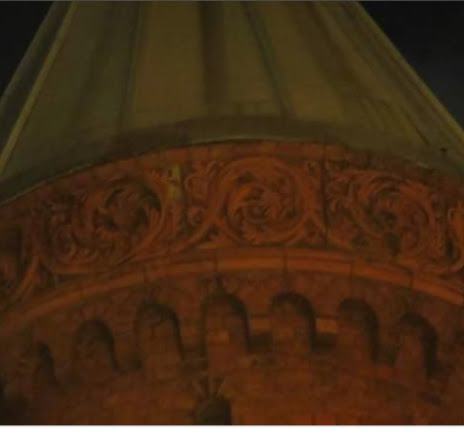
Haymarket’s little terracotta-and-brick corner tower is easy to walk past on the way to Paddy’s or the Capitol — which is a shame, because it is one of the most highly decorated small municipal buildings Sydney ever put up. 181–187 Hay Street, better known as the Corporation Building (also the Municipal Building), was designed in 1892 by City Architect George McRae for Sydney Municipal Council and built in 1893–95 as a service building for the new Belmore Markets. It gave the market clerk and produce agents offices, refreshment rooms and toilets.

The Federation Anglo-Dutch façade is rich in face brick, sandstone and glazed terracotta, with that distinctive corner tower. Together with neighbours such as the Capitol Theatre, Haymarket Chambers and the Palace Hotel, it forms a late-Victorian / Edwardian streetscape tied to markets, the railway terminus and nearby retail. The building is on the NSW State Heritage Register (SHR 00693). City of Sydney conservation works completed in 2022 restored degraded façade detailing and rebuilt the Hay/Parker Street entrance in original character.

Photographs here document the Hay Street elevations and ornamental detail of McRae’s Corporation Building.