Search This Blog

Thursday, February 17, 2022

St Stephen’s Anglican Cemetery – Camperdown – Newtown


St Stephen's Anglican Cemetery - Camperdown - Newtown

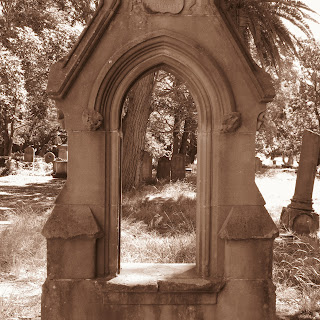
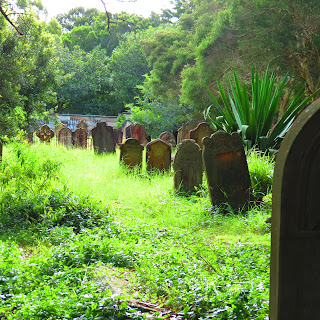
Walk into Camperdown Cemetery off Church Street, Newtown, and the city noise drops a notch. This is the ground the Sydney Church of England Cemetery Company opened in 1848 and consecrated in 1849, when the older Devonshire Street (Sandhills) cemetery — now under Central Station — was bursting. For about twenty years it was Sydney’s principal Church of England burying place, many thousands of interments, until Rookwood took the metropolitan role from 1867–68. Of Sydney’s three earliest major burial grounds, this is the only one that still reads as a cemetery landscape.

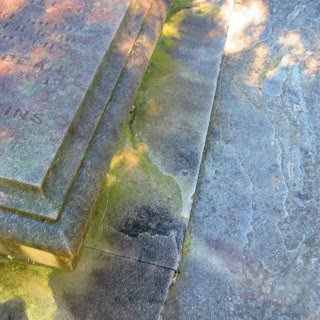
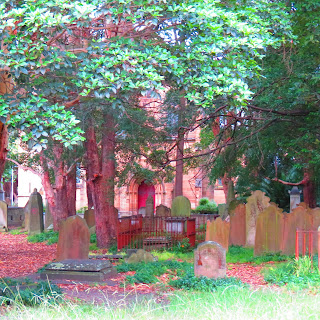
Inside the walls stands St Stephen’s — Edmund Blacket’s Gothic Revival church, built after Newtown outgrew his earlier 1844 chapel. An Act of Parliament let them put a new church in the cemetery; Governor Belmore laid the foundation on 11 November 1871, and the first service was Easter Sunday, 5 April 1874. After the Second World War the Camperdown Cemetery Act (1948) resumed most of the acreage as Camperdown Memorial Rest Park; a sandstone wall holds the historic core around the church. The two big gateposts on the Dunbar Track are from Devonshire Street Cemetery, re-erected here after that ground was cleared for Central — relics of the Sandhills, not original Camperdown fabric.


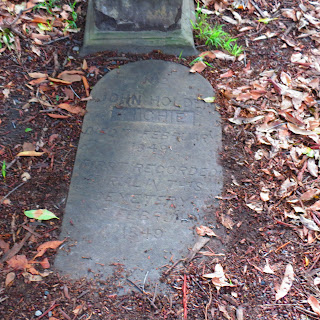
An early memorial associated with John Putland (d. 1808) is recorded in this cemetery; claims about the “oldest headstone” should be treated cautiously unless tied to a specific stone and reliable register.


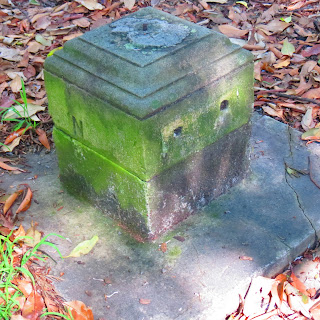
One of the Original Sandstone Pillars Of The Devonshire Street Cemetery 


The 2 Sandstone Pillars Of The Original Gates To the Devonshire Street Cemetery 1816 - 1901


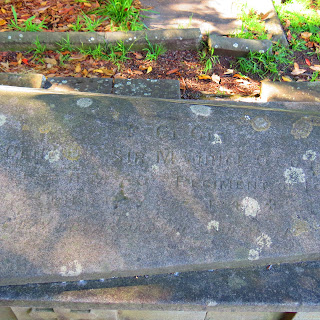
Maurice O’Connell - where we Get O’Connell Street In The Coty From. 


Wednesday, January 5, 2022

Grand Central Coffee Palace - Clarence Street - Sydney - New South Wales


Grand Central Coffee Palace - Clarence Street - Sydney - New South Wales 


The 1850s goldrush in the New South Wales central west brought much prosperity to the colony and financed a massive building boom in Sydney. The Grand Central Hotel, in Clarence Street, was one of many hotels built around the city at the time. Eager to have the biggest and the best, their owner spared no expense to gain the reputation of having the most opulent hotel in town. Not only did the owner the Grand Central Hotel built it will the intent of making it Sydney's finest - he gave it a name that declared it too. It took its name from The Grand Central Hotel in New York, later renamed the Broadway Central Hotel, that was famous as the site of the murder of financier James Fisk in 1872 by Edward S. Stokes.
The New York hotel, which opened in 1870, was designed by Henry Engelbert, and was commissioned by Elias S. Higgins, a local carpet manufacturer. Believed to be the largest hotel in America when completed, it was described as "throwing in the shade the largest hotels in this country - rivalling even the Grand Hotel at Paris in magnificence." On August 3, 1973, allegedly due in part to illegal alterations on a basement bearing wall, a section of the Broadway facade of the structure collapsed onto Broadway, killing four residents of the hotel. Such was not the fate of its Sydney counterpart - Sydney's Hotel Grand Central survived for many decades and lived up to the reputation its name had originally inferred.
The hotel became the Grand Coffee Palace temperance hotel in 1892 under the management of Joynton Smith. The business published a 110 pages book - The Grand Central Coffee Palace visitors  guide to Sydney - in 1889, promoting the coffee palace and the various health and pleasure resorts in the vicinity. It was described as "Handsomely illustrated with wood engravings especially executed for this work". The term Coffee Palace was primarily used in Australia to describe the temperance hotels which were built during the period of the 1880s Although there are references to the term also being used to a lesser extent, in the United Kingdom. They were hotels that did not serve alcohol, built in response to the temperance movement and, in particular, the influence of the Independent Order of Rechabites in Australia.
James Munro was a particularly vocal member of this movement. Coffee Palaces were often multi-purpose or mixed use buildings which included a large number of rooms for accommodation as well as ballrooms and other function and leisure facilities. The construction of buildings for the temperance movement coincided with an economic boom in Australia and the use of richly ornamental High Victorian architecture.
Ironically as the temperance movement s influence waned, many hotels applied for liquor licences. Many were either converted into hotels or demolished; however, some fine examples still survive. Such was not the fate of the Grand Coffee Palace which was converted into the Hotel Arcadia, now with a liquor licence. The building was demolished in 1929, and replaced by Art Deco Embassy Theatre. Location: 164-174 Pitt Street, Sydney.


Friday, December 17, 2021

Treasury & Audit Office – Bridge St and Macquarie Street

The sandstone pile on the corner of Bridge and Macquarie Streets started as government money and paperwork, not a hotel foyer. Colonial Architect Mortimer Lewis designed the first purpose-built government office block here in 1849–51 on land once within the garden of First Government House: an Italian Palazzo / neo-classical sandstone building with a Bridge Street frontage for the Audit Office and a Macquarie Street frontage for the Treasury, originally divided internally.

Edmund Blacket added coach-house and stables to the north by 1853. From 1873 the Treasury absorbed Audit space. Government Architect Walter Liberty Vernon added a fire-proof Strong Room (1896–98) and a Link Building with the present Macquarie Street portico (1898–1900). George McRae’s Bridge Street extension for the Premier’s Department followed in 1916–19. After later government uses the complex was sold in the early 1980s and adapted as the InterContinental Sydney (heritage wings restored; modern hotel tower inserted), with significant interiors such as the former Premier’s Room retained.

Photographs here show the Bridge and Macquarie Street sandstone elevations of the old Treasury precinct.


Treasury & Audit Office - Now The Inter Continental Hotel - Macquarie Street - Sydney - New South Wales 


 Treasury & Audit Office 


It’s now the Inter Continental Hotel


History House – 133 Macquarie Street – Sydney – New South Wales

Opposite the Botanic Gardens on Macquarie Street — 133 Macquarie, not the misspelt Macqaurie of the URL — sits one of the last proper Victorian gentlemen’s townhouses on that Domain edge. George Allen Mansfield designed it in December 1871 for his uncle, the Parramatta pastoralist-politician George Oakes; the house was probably finished in 1872. Italianate stone, a three-storey cast-iron verandah, cedar stair hall — the sort of Macquarie Street front that once told you who mattered in the colony.

It has lived several lives since Oakes. Clubs and boarding-house years, a long stretch as doctors’ consulting rooms, then a late-1950s rename to Wickham House. In 1970 the Royal Australian Historical Society moved in (officially opened as History House in November 1971), swapping its old Young Street wool-store for this Domain-facing HQ after an AMP land swap. The rear service wing went in the 1969–70 adaptation; the Macquarie Street face and principal rooms still read as Mansfield’s house.

Today it is SHR #00692 — a working history society, not a frozen house museum. Pair it with the Domain / Macquarie Street civic posts: this is where Sydney’s oldest historical society actually hangs its hat.

Robert Campbell - Campbell’s Cove - Campbell’s Stores - The Rocks - Sydney - NSW


 Robert Campbell - Campbell’s Cove - Campbell’s Stores - Campbell’s Bank - The Rocks - Sydney - New South Wales  


Robert Campbell was a prominent early settler and merchant in Sydney, New South Wales, during the late 18th and early 19th centuries. He played a significant role in the development of the colony and left a lasting legacy, including the establishment of Campbells Cove. Here's some information about Robert Campbell and Campbells Cove:

1. Robert Campbell: Robert Campbell was born in Ireland in 1769 and arrived in Sydney in 1798. He was an astute businessman and quickly became involved in various commercial ventures. Campbell engaged in activities such as shipping, whaling, and the export of goods, including wool and timber.

2. Business Ventures: Robert Campbell established a successful import-export business, dealing in a wide range of goods. His ships carried cargo to and from Australia, and he developed extensive trade connections with Asia, Europe, and America. Campbell's enterprises contributed to the economic growth of the young colony.

3. Campbell's Cove: Campbell's Cove is a historic site located on the western side of Sydney Cove, near The Rocks area. It was named after Robert Campbell, who owned land in the area. Campbell developed the cove as a wharf and shipping hub, playing a crucial role in the maritime trade of the colony.

4. Wharf and Warehouses: Campbell's Cove became an important center for the handling and storage of goods. Warehouses were constructed along the waterfront, facilitating the movement of cargo from ships to land. The area was bustling with activity, with vessels from around the world arriving to unload their cargo at Campbell's Cove.

5. Development and Decline: During its heyday, Campbell's Cove thrived as a commercial precinct. However, with the growth of the city and changes in shipping practices, the significance of the cove diminished over time. The construction of larger wharves in other locations, such as Darling Harbour, led to the decline of Campbell's Cove as a major maritime hub.

6. Preservation and Heritage: Today, Campbell's Cove is a heritage-listed area and part of The Rocks historic precinct. The wharves and warehouses have been preserved and restored, maintaining their historical character. The area is now a popular destination for tourists and locals, featuring restaurants, bars, and picturesque views of Sydney Harbour.

Robert Campbell's contributions to Sydney's early development, particularly through his commercial endeavors and the establishment of Campbell's Cove, are significant. The legacy of Campbell's Cove as a historic site and its connection to Sydney's maritime history continue to be celebrated and enjoyed by visitors to the area.


Robert Campbell was Born On 28th April 1768


And Died At Duntroon NSW On 25th April 1846


And is Buried At St John’s Cemetery - Parramatta 


Saturday, December 11, 2021

Zink & Sons Tailors Since 1895 - Oxford Street - Darlinghurst

Some Oxford Street shopfronts come and go with the fashion cycle. G.A. Zink & Sons is the opposite — a Darlinghurst tailoring firm founded in 1895 by German immigrant Gustav Adolph Zink, who first traded at 112 Oxford Street. When the street was widened, City of Sydney auctioned new leasehold shop sites; Zink took 56 Oxford Street and commissioned architect John Dunstan to design a four-storey Federation Arts and Crafts building, erected about 1911–12 by G.T. Brown. The firm has occupied that purpose-built premises ever since.

In 1938 Frank Zink installed a bold Art Deco shopfront and entrance porch by shopfitters H. & E. Sidgreaves — still the signature of the Oxford Street elevation. Mezzanine alterations in the late 1920s had already expanded fitting and cutting space. The GA Zink & Sons Building, including the Art Deco shopfront and significant interiors, is listed on the NSW State Heritage Register. Tailoring continues on the site more than a century after the move to number 56 — one of Oxford Street’s longest-running specialist retailers.

Photographs here show the Oxford Street façade and shopfront detail of the Zink & Sons building.

Zink & Sons Tailors - Oxford Street -  Since 1895


 G. A. Zink & Sons was established in 1895 at 112 Oxford Street by Gustav A. Zink. The purpose-built premises at 56 Oxford Street were built around 1912 on a new block formed by the widening of Oxford Street. The building was later substantially renovated by his son, Frank, with a new shopfront & entrance porch designed by the shop fitting firm of H. & E. Sidgreaves and installed during 1938