Search This Blog

Tuesday, March 3, 2020

Bulletin Place - Laneways - Sydney - New South Wales


Bulletin Place - Laneways - Sydney - NSW


The Basement Has Long Been A Favourite Jazz Venue In The City. Beyond This, Warehouses & Stores From The Mid 19th Century Preserve A Little Enclave Of Olde Sydney. The Bulletin Newspaper Was Published Here From 1880, & Writers Such As Henry Lawson & A B Paterson Would Have Frequented This Little Street. 

This Lane Possibly inspired The Lines Of Patterson's Famous Poem 
"Clancy Of The Overflow" 
About Dingy Offices And Folk With 
"Stunted Forms & Weedy, For Townsfolk Have No Time To Grow, They Have No Time To Waste"


Reiby Place - Macquarie Place - Sydney - New South Wales


Reiby Place - Near Macquarie Place - Sydney - NSW 


Today Reiby Place Is Lined With Slick Glass & Concrete, But It's Name Commemorates One Of The City's Earliest Entrepeneurs. 

Before This Area Was Drained, Thomas & Mary Reiby Had A House On the Waterfront Macquarie Place. Mary Reiby, Convicted For Horse Stealing, Became A Wealthy & Respected Widow, & In 1817 Her House Became The First Premises Of Australia's First Bank, The Bank Of New South Wales.

Mary Reiby's Face Is On The $20 Note.


Mary Reiby 1777 to 1855 was a convict who became a highly successful business woman was interested in hotels, trading, shipping, farming in city buildings.

She briefly owns the land around Argyle stores in 1828. Mary Reiby was a governor of the free Grammar School and a founding member of the bank of New South Wales, as well as an active in church and charity work


Loftus Lane - Circular Quay - Sydney - New South Wales


Loftus Lane - Circular Quay - Sydney - NSW 


For Most Of Its Life This Laneway Has Served As The Entrance To The Buildings On Loftus Street, Housing Custom Agents, Shipping Brokers & Wool Buyers. The Old Three Storey Sandstone Building On The Right, Which Forms The Rear Of The Gallipoli Club, Was Built In 1876. This & Hinchcliffs Are The Only Remaining Woolstores In The Circular Quay Precinct. 


Customs House Lane - Circular Quay - Sydney - New South Wales

If you duck off Circular Quay into the tight grid between Alfred, Loftus and Young Streets, you’re in the old customs-and-wool pocket of the working port. Customs House Lane sits hard against Sydney’s Customs House — the bureaucratic heart of the quay when wool and general cargo still came alongside. Colonial Architect Mortimer Lewis designed the original Greek Revival building; construction ran 1843–45 on reclaimed foreshore. Overcrowding and damp pushed James Barnet to enlarge and rebuild in the 1880s (wings, another floor, the portico), with later twentieth-century alterations. After Federation the Commonwealth ran customs from here until operations wound down around 1988–90. Today it’s a City of Sydney cultural and library venue — not an active customs office.

On the south-west of the lane precinct, Hinchcliff’s stone wool store (Hinchcliff House, 5–7 Young Street) survives from the staple-export years. Andrew Hinchcliff’s firm built the stone store about 1860 (an earlier iron shed of 1845; a matching late-1880s addition). Mid-century the Society of St Vincent de Paul used it as Ozanam House and, from 1952, part of the Matthew Talbot Hostel for homeless men before the hostel moved on. The façade hoists still read as wool-bale kit if you know what you’re looking at.

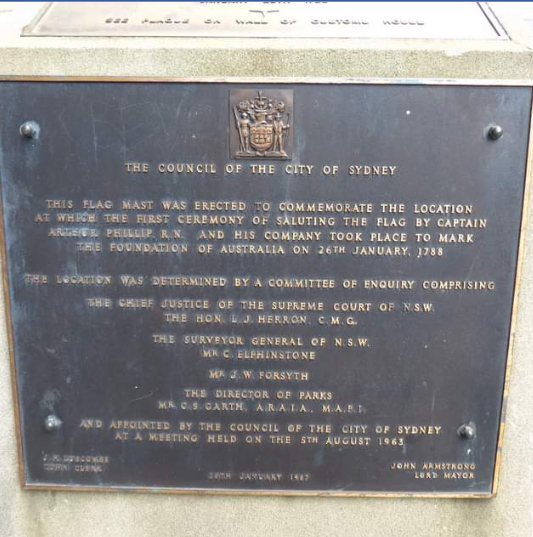
Together the customs house and woolstore tell Circular Quay’s shift from working port to civic waterfront. Soften any claim that a particular Loftus Street flagpole marks the exact 1788 flag-raising site — popular tradition varies; treat flag symbolism as commemorative unless a heritage panel is quoted. Photographs here cover Customs House, Hinchcliff House / the lane, and Circular Quay streetscape.


Customs house was where shipping was cleared and goods passing through the Port of Sydney will text for sale or export.
When the port was busy the house was crowded and noisy, a scene of raised tempers, delays in disputed dealings.

The six story colonnaded building you see today evolve through several phases of expansion between 1845 and 1917.
On Loftus Street alongside the house, union Jack flies permanently on the site where the first British flag was raised.



Phillip Lane – Off Phillip Street – Sydney – New South Wales


Phillip Lane - Off Phillip Street - Sydney - NSW

Phillip Lane Is The Last Survivor Of Several Laneways That Were Established In The 1840's To Service Macquarie Street House. The White Astor Apartments On The Left Were Built In 1923, & An Early Example Of Fashionable Apartment Living In the City. 
On The Right Is The Rear Of The Chief Secretary's Building, Occupied From 1878. The Laneway's Low Sandstone Archway, Remnant Sandstone Guttering & Cobblestone Paving Echo A Past Kind Of Streetscape  That Has All But Disappeared from the City 


Across Phillip Street Is The Museum of Sydney, Which Is The Location of The Very First Original Government House. 


Sunday, March 1, 2020

Maps of Sydney – From January 1788 Onwards


Sydneys earliest maps record the establishment and growth of the colonial settlement founded at Warrane (Sydney Cove) in 1788. Early surveyors charted the harbour, shoreline and developing streets as the town expanded. Comparing these maps helps show how Sydney’s landscape changed from the first years of European settlement.


Maps Of Sydney


Wednesday, February 26, 2020

Lieutenant Governor’s Residence - George And Grosvenor St


Lieutenant Governor’s ResidenceCorner of George And Grosvenor Streets, Southern Corner


A Stone Residence For The First Lieutenant Governor, Major Robert Ross, Was Erected On This Site In 1788. It Was Occupied By His Successors, Grose & Paterson. In 1820 It Became The Sydney Hotel. In 1833 Samuel Lyons Built Auction Rooms On The Site Which Were Not Demolished Until 1912. 
Just Something Else That Should’ve Been Preserved From Old Sydney. 
Major Robert Ross Arrived On The First Fleet At Botany Bay In January 1788, Having Been Appointed Lieuetenant Governor In October 1786, Ross Was Unhappy In New South Wales & Declared That 
"In The Whole World There Is Not A Worse Country Than What We Have Seen Of This". He Returned To England In December 1791 And Died There On The 9th June 1794.
As Commander Of The Newly Formed New South Wales Marine Corps, Major Francis Grose Landed In Sydney In February 1792. In December Of That Year, When Phillip Returned To England, Grose Became Lieuteanant Governor


Lieutenant Governor's Residence
George And Grosvenor Streets Southern Corner 


Lieutenant Governor's residence a stone residents are for the first lieutenant Major Robert Ross was erected on this site in 1788 it was occupied by his successors grows and Patterson in 1820 it became the Sydney Hotel in 1833 Samuel Lions are built auction rooms on the site which were not demolished until 1912.
Major Robert Ross arrived with the first Fleet at botany Bay in 1788 having been appointed Lieutenant Governor in October 1786 Ross was unhappy in New South Wales and declared that in the whole world there is not a worse country than what we have yet seen of this returned to England in December 1791 and died there on 9 June 1794 as commander of the newly formed New South Wales corpse Major Francis grows landed in Sydney in February 1792 in December of that year when Phillip returned to England Gross became Lieutenant Governor it was an unhappy choice and gross made many blunders before returning home in 1794 where he died in 1814. 
The next document of major Rosses corner was captain William Patterson who arrived in October 1791 with the New South Wales corpse after a term on Norfolk Island Patterson in December 1794 six seeded gross as Lieutenant Governor until relieved in September 1795 by Governor John Hunter on 21 June 1810 on the voyage home Patterson died of a heart attack new Que porn Ross is corner was acquired BISA John Jamerson as a town residents until on 20 March 1820 Mr Stillwell acquired see John's block and named it the Sydney hotel and coffeehouse next on the scene was William Cummings aged 40 who arrived in the colony as a free man in 1822 with his wife Mary and their son William he announced in the Sydney Gazette on 9 June 1825 that he had installed hot and cold water in 1828 Cummings was listed as a hotel keeper McQuarrie place owning 1008 acres 40 head of cattle and 60 sheep later tenant was Samuel Lyons London Taylor who reached Sydney in January 1815 serving a life sentence he reformed and by adding 28 was an option nearing George Street lions died on 3 August 1851 aged 59 and was interred in the Jewish burying ground he left in large unencumbered property which was divided equally between his two sons and a daughter the oldest son was a barrister in England the Lieutenant Governor's house still on the corner of George Street and Charlotte Place a name retained under until March 1889 when it became Grosvenor Street the present building on the site is occupied by the union steamship company of New Zealand a proper o'clock proclaims it as the sight of the first Lieutenant Governor's house from 1788 to 1809

The Auction Rooms Were Approximately 80 Years Old When They Were Demolished. & That Was in 1912.... 


The Lieutenant Governor's House, located at the intersection of George Street and Grosvenor Street in Sydney, has a significant history tied to the colonial administration of New South Wales and the development of the city. Here's an overview of its history:

Early Establishment:

  • The Lieutenant Governor's House was built in the early 19th century as the official residence for the lieutenant governors of New South Wales.
  • The house was intended to provide accommodation for the colony's administrators and officials.

Governor Lachlan Macquarie:

  • One of the notable figures associated with the house is Governor Lachlan Macquarie, who served as the fifth governor of New South Wales from 1810 to 1821.
  • Macquarie and his wife, Elizabeth, resided in the house during his tenure. He undertook significant reforms and development projects in the colony, shaping the early growth of Sydney.

Architectural Significance:

  • The house was designed in a Georgian architectural style, which was common for colonial buildings of the era.
  • The design featured symmetrical facades, decorative details, and a sense of grandeur befitting a residence for colonial administrators.

Later Use and Transformation:

  • After Macquarie's time, the house continued to serve as a residence for various lieutenant governors.
  • Over the years, the house underwent changes and renovations to adapt to changing needs and preferences.

Governor-General's Residence:

  • In the mid-19th century, the house ceased to serve as the official residence for colonial governors and lieutenant governors.
  • It was later used as the residence for visiting dignitaries, including Governor-Generals of Australia.

Transformation into a Hotel:

  • By the 20th century, the house was no longer used as a residence for government officials.
  • In the 1980s, the building was converted into the Sir Stamford Circular Quay Hotel, a luxury hotel that preserved its historical facade and certain architectural features.

Historical Significance:

  • The Lieutenant Governor's House holds historical significance as a tangible link to the colonial administration of New South Wales and the development of Sydney.
  • It reflects the early efforts to establish an official presence and governance in the colony during its formative years.

The Lieutenant Governor's House at the corner of George Street and Grosvenor Street represents a part of Sydney's colonial heritage and the changing roles of historic buildings over time. Its transformation into a hotel has allowed its architectural and historical features to be preserved while also accommodating modern uses in the heart of the city.


Sunday, February 23, 2020

West Street - Darlinghurst


West Street - Darlinghurst

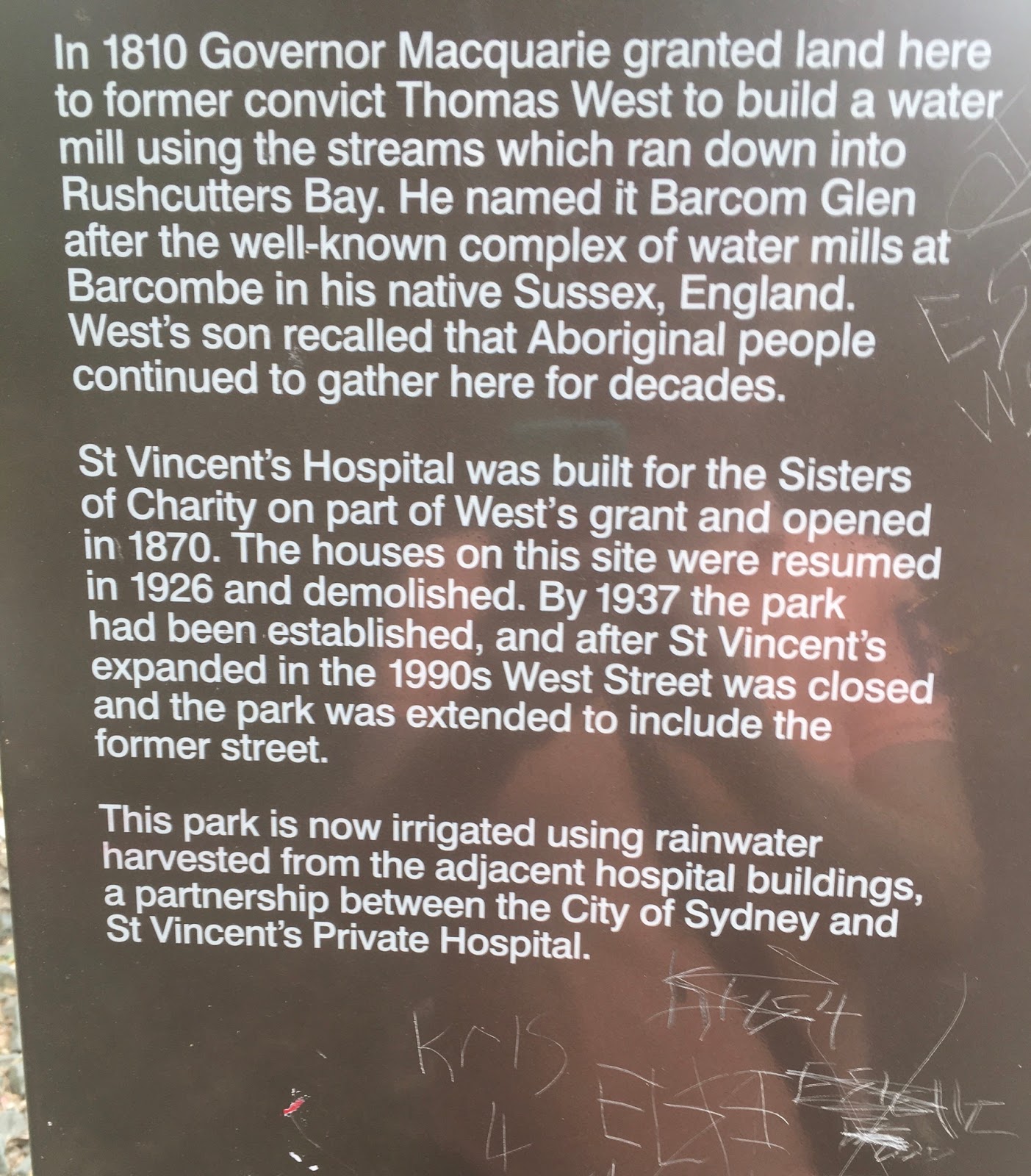
The history of West Street includes early nineteenth-century water-mill activity and the development of St Vincent’s Hospital nearby. A heritage plaque records Governor Macquarie’s 1810 land grant and the later use of the area by the Sisters of Charity. Darlinghurst’s streetscape now combines these historic associations with dense inner-city housing and services.