Arthur Phillip Had Been Given A Royal Commission By King George III Before He Left Portsmouth In May 1787, Appointing HiM Liuetanant General, Or Commander In Chief Over The New Colony .
After Phillip And The Marines Had Finally Got All The Women Convicts Ashore At Circular Quay On February 6th 1788, A Mass Orgy Between the Male Convicts And The Female Convicts Occurred Through The Night. Judge Advocate David Collins Recorded In His
Journal That The Humidity Was Almost Unbearable, And There Was An Intense Storm And Lightning Struck A Tree And Killed 2 Sheep As They Were All Huddled In Their Tents They Could Hear The Howling Of The Dingoes As They Dug The Graves Of The People Who Had Been Freshly Buried At The Very First Sydney Burial Ground
located Near Dawes Point.
George III. By The Grace Of God. King Of Great Britain, France & Ireland. To Our Trusty & Well Beloved Arthur Phillip Esq.
We, Reposing A Special Trust In The Prudence, Courage & Loyalty Of You, The Said Arthur Phillip, Of Our Special Grace; Have Seen Fit To Constitute & Appoint You To Be Our Lieutenant General, Or Commander In Chief; In, & Over Our Territory Called New South Wales.
Starting From The Northern Cape Or Coastal Extremity Known As Cape York, In Latitude 10 Degrees 37 Minutes To The Southern Cape Or Coastal Extremity In Latitude 43 Degrees 37 Minutes South. & All The Land Westward, To The 135th Degrre Of East Longtitude, Including All The Islands Adjacent In The Pacific Ocean, Within The Latitude Name.
Our Will & Pleasure Is That You Take The Oath Of Office Of Luietenant General & Commander In Chief, For The Due & Impartial Administration Of Justice
& We Hereby Authorise & Empower You To Keep & Use The Public Seal, For Sealing All Things Whatsoever That Shall Pass The Great Seal Of Our Said Territory, & It's Dependancies.
Likewise, We Give You Full Power & Authority To Give Oaths;To Such Person, Or Persons As You Will Judge Fit. To Constitute & Appoint Justice's Of The Peace, Coroners, Constables & Other Such Necessary Officers, For The Better Administration Of Justice.
To Pardon Offences; To Remit Fines & Forfeitures, To Levy, Arm, Muster & Command All Persons Whatsoever, Civil & Military, Residing In The Said Territory, For The Resisting Of All Enemies; Pirates & Rebels, At Sea & On Land.
To Execute Mashall Law In Time Of Invasion, & At Other Times, When, By Law It May Be Executed
To Constitute & Appoint Masters Of Ships, Lieutenants & Other Such Necessary Officers; To Punish & Execute Convicts, At Sea, Or During Their Time Of Abode At Ports Harbours & Bays.
To Erect, Raise & Build As Many Platforms, Burrows, Cities, Castles & Towns: & Other Fortifications As You Shall Judge Necessary
We Also Give You Full Power & Authority To Grant Land, To Control Commerce, To Erect Fair Marts & Markets.
& We Hereby Command All Citizens, Civil & Military; & All Other Inhabitants To Be Obedient, Aiding & Assisting, To You, The Said Arthur Phillip; In The Execution Of This; Our Royal Commission.
& In The Event Of Your Absence Or Death From The Said Territory, & It's Dependances, All Inhabitants Are To Be Obedient Aiding & Assisting To Such Person That Will Be Appointed By Us To Be Lieutenant General Or Commander In Chief.
Witnessed Ourselves At Westminster, On The 2nd Day Of April, In The 27th Year Of Our Reign.
& For So Doing, This Shall Be Your Warrant; Given At Our Court At At James On The 22nd March 1787, In The 27th Year Of Our Reign
GOD SAVE THE KING
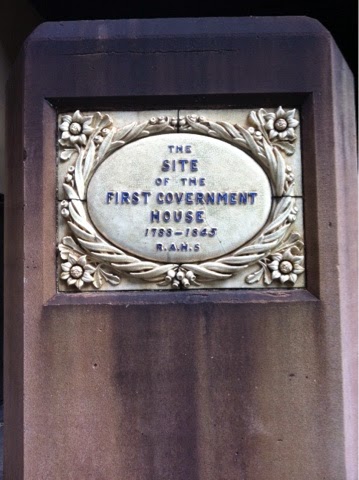
5. First Government House
First Government House
Bridge Street And Phillip Street South Western Corner.
Where The Museum Of Sydneyis Now, Is Where The Frst And Original Government
House Stood....
It's The House That Governor Bligh Was Supposedly Hiding Under the Bed When a The Red coats Of The New South Wales Army Corp Were Going to Put Him
under House Arrest.
Be Chosen By Us To Be Liuetenant General Or Commander In Chief
Construction Of The First Government House Was Commenced On May 15, 1788. Governor Phillip Moved In Ahortly Before June 4 1789. It Was The Residence of 8 Governors Until 1845