Search This Blog

Friday, May 22, 2015

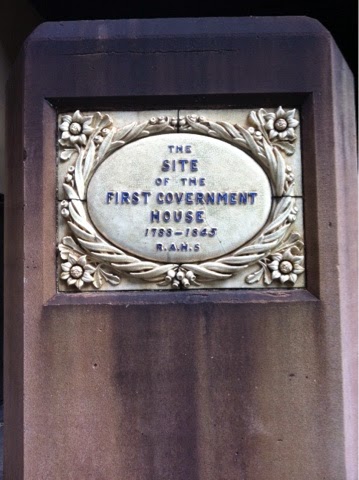
First Government House - Corner Of Bridge Street & Phillip Street - South Western Corner - Sydney - New South Wales

 First Government House - Bridge Street And Phillip Street -  South Western Corner - Sydney - NSW


Where The Museum Of Sydneyis Now, Is Where The Frst And Original Government
House Stood....


It's The House That Governor Bligh Was Supposedly Hiding Under the Bed When a The Red coats Of The New South Wales Army Corp Were Going to Put Him
under House Arrest. 


Where The Museum Of Sydneyis Now, Is Where The Frst And Original Government
House Stood....

It's The House That Governor Bligh Was Supposedly Hiding Under the Bed When a The Red coats Of The New South Wales Army Corp Were Going to Put Him
under House Arrest. 


5. First Government 


Bridge Street And Phillip Street South Western Corner.


Sydney's First Government House was built in 1789 for Governor Arthur Phillip. In November 1789, 2 Aboriginal men, Bennelong & Colebee, were captured at Manly under Phillip's orders & were held at Government House. 


After they escaped, Bennelong maintained cordial ties with Phillip. He often dined at Government House with his wife Barangaroo, & a number of Aboriginal people wwre buried within the gardens at his behest. In 1995 The Museum of Sydney opened on the site. A A Forest of pillars made of timber, stone & steel stands adhjacent to the Museum entrance. 


Sydney Conservatorium of Music - The Old Government House Horse Stables - The Government Domain - Sydney


Sydney Conservatorium Of Music - The Old Government Horse Stables - 
Off Macquatie Street, Opposite Bridge Street - Sydney


This was Once The Main Horse Stables To Government House 
This Building Was Erected In1816 By Governor Macquarie As Stables For Government  House. In 1913 The Central Courtyard Was Roofed In To Form A Concert Hall For The New South Wales  Conservatorium Of Music. 

In His List Of Public Works Governor Macquarie On The 27th July 1822 Mentions "A Handsome Square Brick Building, Stuccoed, Containing Coach House And Stables, With Apartments For Servants For The Use Of The Governor And His Staff" 


Governor Macquarie, Housed In The Damp, Decaying Old Government House In Bridge Street..... & Complained That No Private Gentleman In The Colony Is so ill Accommodated As He Was. 
In 1817 He Sent Francis Greenway Directions To Draw Up Plans For Stables For 30 horses And A Handsome House For The Residence Of The Governor. But Then The Home Government Vetoed Any New Vice Regal Residence In The Near Bankrupt Colony. Greenway Was Allowed To Go Ahead With The Horse Stables Only. 
Governor Macquarie Ordered These To Be Of Brick, And Run Up In 3 Months. 
It Has Been Said That He Was Alarmed And Dismayed When He Found Out That Greenway Was Actually Giving Him A Handsome, Castellated Stables. Why, If This Were So, He Did Not Have The Work Halted Is Not Explained. 
Greenway's Motive For Seemingly Disregarding Orders Is Also A Mystery. Did He And The Governor, With A Joint Passion For Splendid Architecture, Hope That The Stables Would Set The Tone For An Even Grander Government House, To Be Built In Spite Of The Croakers In London? 
Whatever The Truth, The Stable Scandalised The Colonists, And Threw Commissioner Bigge Into A Frenzy Over The Useless Magnificence Of The Building. At First It Was Used As Vice Regal Stables, And At One Stage Even Housed The Mounts Of A Hunt Club.  
The Courtyard Was Roofed - In A Totally Different Architectural Style - And In 1916 Became The State Conservtorium of Music 

Of All Of Governor Macquarie's Works....... The One That Inflamed His Adversaries The Most Was The Building Put Up As The Stables For His Horses & Quarters For His Servants. 


The Sydney Conservatorium of Music, located in Sydney, Australia, is a prestigious institution dedicated to music education, performance, and artistic development. It has a rich history dating back over a century and has played a significant role in shaping Australia's musical landscape. Here's an overview of its history:

Early Beginnings:

  • The origins of the Sydney Conservatorium of Music can be traced back to 1855 when the New South Wales government established a music school under the direction of John Hill.

Foundation as a Conservatorium:

  • In 1915, the New South Wales State Government officially established the Sydney Conservatorium of Music. It was created with the goal of providing advanced music education and fostering musical talent.

Architectural Heritage:

  • The conservatorium's main building, known as the "Conservatorium Building," is a notable architectural landmark. It was designed by Government Architect Walter Liberty Vernon and completed in 1916.
  • The building features sandstone architecture with elements of classical and Gothic revival styles.

Influential Figures:

  • Sir Eugene Goossens, an acclaimed conductor and composer, became the conservatorium's first director in 1916.
  • Throughout its history, the conservatorium has been associated with numerous renowned musicians, educators, and composers who have contributed to Australia's music scene.

Music Education and Programs:

  • The Sydney Conservatorium of Music offers a wide range of music education programs, including undergraduate and postgraduate degrees in various disciplines.
  • It provides training in classical, jazz, contemporary, and electronic music, fostering a diverse and vibrant musical community.

Concerts and Performances:

  • The conservatorium's role extends beyond education to include performances and concerts. It hosts regular concerts, recitals, and events featuring students, faculty, and guest artists.

Cultural Influence:

  • The Sydney Conservatorium of Music has had a significant impact on Australia's cultural life. It has contributed to the development of the country's musical talent, composition, and performance.

Facility Upgrades:

  • Over the years, the conservatorium's facilities have been upgraded and expanded to accommodate modern educational needs and technologies while preserving its historical character.

Collaborations and Partnerships:

  • The conservatorium collaborates with other institutions, organizations, and ensembles both nationally and internationally, fostering connections and cultural exchange.

The Sydney Conservatorium of Music remains a vital institution in Australia's music education and performance landscape. Its history reflects a commitment to excellence in musical training and a dedication to nurturing the artistic talents of generations of musicians.


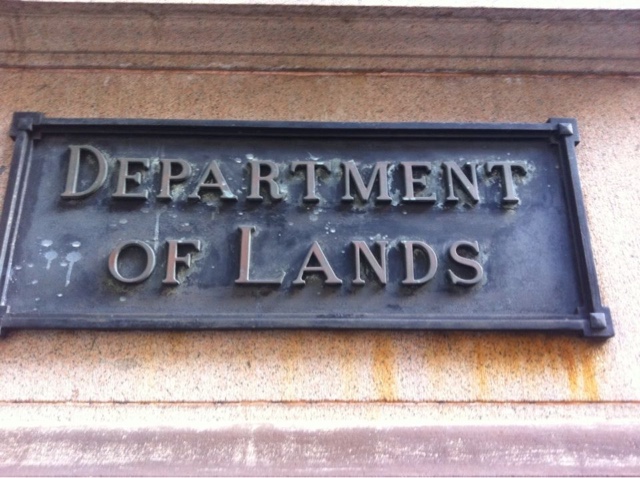
NSW Department of Lands – 22–33 Bridge Street – Sydney – NSW

Stand on Bridge Street looking toward Circular Quay and the sandstone pile that once ran surveying and Crown land for the whole state still dominates the block. The former Lands Department Building at 22–33 Bridge Street (frontages also to Loftus, Bent and Gresham) was designed by Colonial Architect James Barnet in Victorian Renaissance Revival style and built in two main stages — about 1876–1881 and 1888–1892 (the second stage finishing early in Walter Liberty Vernon’s time as Government Architect). Builder John Young’s first stage notably used reinforced concrete floor slabs. For more than a century it housed the Lands department under successive names — maps, surveys, Crown land — right above the Quay.

The façades carry niches meant for portrait statues of explorers and legislators; twenty-three figures went in between 1890 and 1901 (with a later Meehan commemorative addition). Survey standards are built into the fabric: a Bridge Street height benchmark and an internal baseline tied to the state’s measurement system. It is on the NSW State Heritage Register.

Departments left in 2016. Capella Sydney hotel is the neighbouring former Education building — not Lands. Lands is the second Sandstone Precinct chapter, The Lands by Capella. Keep the two buildings distinct in captions and text.