Search This Blog

Thursday, May 28, 2015

The Cadigal People And The Eastern Beaches


Every Day Along The Eastern Beaches Of Sydney We Speak Words That Continue To Connect Us With The Cadigal People, The Traditional Owners (TO's) Of Cadigal Country

Aboriginal Place Names Are Spread Across Australia From Coast To Coast, Derived From The Various Languages & Dialects That Once Dominated Their Respective Landscapes. Some Of The Names Were Adopted By Colonisers & Have Been Subsumed Into Mainstream Australian Culture, Others Are Still Used By TO's, Some Are No Longer Used At All, But Have Been Recorded Historically, & There Are Many That Have Been Lost From Memory.

When You Lay Asleep Last Night & Hear The Sound Of The Ocean, of Waves Breaking On The Shore, That Sound We  Need  A sentence To Describe Is Expressed By the Cadigal In One Word "BONDI"

Historically Bondi Was Spelt Variously As Boondi, Bundi, Bundeye & Boodye. With Such A Beautiful & Poetic Meaning, It Is Surprising That It Is Not More Commonly Known. 

Alternatively, The Australian Museum Has A Record That Bondi Means The "Place Where A Fight Of Nulla's Took Place." It Has Been Suggested That This Latter Meaning May Derive From The Dull Wet Crack. A Nulla (An Aboriginal Weapon) Would Have Made As If It Hit Someone In The Head In Warfare Or Payback Ceremonies; A Sound Analogous To Be The Wet Crack Of Waves Breaking On Rocks. 

Tamarama Has Two Distinct Spellings As "Gamma Gamma," & Elsewhere As "Cramarama." It's Original Phonetic Pronunciation Must Lie Somewhere Between The Three Variations. Despite Maroubra Folklore, Historical Evidence Suggests That It Is Tamarama That Means "Thunder" Or "Thunder Clap" Or "Thunder Storm" 

Unfortunately For Coogee, It's Name Doesn't Have Quite The Poetic Sensibility That Bondi Does, Though It's Great For Sledging Coogee Residents In Sport Or Pub Banter. The Name Coogee Has Been Derived From The Aboriginal Word "Kudjah" (Kudjii), Meaning "Smelly" Or "Bad Smell". It Is Believed That The Name Derived From The Smell Of Large Deposits Of Rotting Seaweed That Once Built Up Along The Shoreline. There Is Good Historical Record That The True Name Of Coogee Bay Is "Bobroi"

"Boora" Is The Name Of Long Bay. The Traditional Word For A Pathway Was Recorded As "Mo-Ro" & Elsewhere As "Maru". Maroubra Is Believed To Be A Combination Of The Words "Maru" (Pathway) & "Boora" (Long Bay). Long Bay Was An Important Camping & Ceremonial Ground For The Cadigal, And The Traditional Pathway That Led There Passed Right Through Present Day Maroubra. 

For TO's, The Importance of Place Names Is Obvious. It Would Be Difficult To Find Significant Geographical Features In Australia That Don't Have An Original Name That Forms Part Of Greater Narratives Of Creation And Lore, Which Us Whitefellas Have Called Dreamtime these Stories Weave Their Way Across The Country Along Song Lines Often So Vast In Distance That Even Distinct Language Groups Are Custodians Of Only Part Of The Story. 

Since 2001 The NSW Government Has Committed To Recognising Aboriginal Cultural Heritage By Registering Original Place Names So That They Are Set Aside With Existing Names. Already 20 Locations Around Sydney Harbour Have Been Formally Gazetted As Dual Names Under The NSW Geographical Names Board Dual Naming Policy. 

But The Significance Of Aboriginal Place Names Is Not Just Important For TO's. They Are A Defining Element Of The Cultural Identity Of Australia. Many Are So Commonly Used, Subsumed Into Our Daily Lives, & Others So Subtle That We Fail To Recognise Their Significance. However, To Foreign Ears These Names Cleary Distinguish Themselves As Exotic; They Are Uniquely Our Own. As Such Defining Characteristics Of Our Nation In The Growing Cultural Monotony Of Globalisation, They Are Features We Should Celebrate. 

The Cadigal Have Left The Eastern Beaches Of Sydney A Greater Cultural Legacy Than The Place Names we Speak Of Daily


And when I Feel Up To Writing Again I Will Follow Up With The Greatest Gift & Legacy That The Cadigal Left Us. 


The Convict Stain


the convict stain
January 23, 2014 at 8:26am

the First Officially Recordee Incidence Occurred 60yrs Before European Settlement in 1727. The Dutch Ship Zeewijk. . . 

Captain Arthur Phillip 

"There Are Two Crimes That Would Merit Death - Murder & Sodomy" 

The First Trial For Sodomy Took Place In 1796, With The Accused Francis Wilkinson Was Acquitted. 

The First Person Hanged Was Alexander Brown In 1828. 

1839 - Camping By A Billabong 

In 1828 Samuel Cox Was Sentanced To Death 

convict Stain Part 2

January 23, 2014 at 8:47am

Tasmanian Executions 

Heindrick Whitmalder - in Hobart 
Dennis Collins In Launceston in 1863 

Robert Hughes - the Fatal Shore 

1803 - georgette lee -the Portland. -

Vaucluse house


            VAUCLUSE  HOUSE


VAUCLUSE House commenced  as a small stone cottage built in 1803 for an Irish Knight, Sir Henry Brown Hayes (1780 -1872).  In 1827 the property was bought by William Charles Wentworth, a gifted but restless lawyer & politician, was one of the most influential Australian Borne Colonists. His achievements included the first European Crossing if the Blue Mountains west if Sydney, in 1813; campaigning for civil rights (such as trial by jury) & co-publishing the Colony's first independent newspaper, "The Australian" in 1824; the formation of Australia's first University (The University Of Sydney) in 1852; & had agitation for Representative Government, achieved in 1856. 

His wife, Sarah (Nee Cox, 1805 - 1880), the daughter of Ex Convicts, worked as A Milliner before her marriage in 1829. Letters show her to have been an astute manager of the house & estate at VAUCLUSE.  


Wentworth, who proposed an hereditary Upper House for the New South Wales Parliament, dreamt of building a family Mansion In The Gothic Revival style of Sydney's Government House to suggest his ancient family lineage. Despite this, Sarah Wentworth suffered social isolation for having borne two of their children  before their marriage. Wentworth's attacks on the "Exclusives" In  Colonial Politics put him at odds with leading colonial families. In addition to this, his own legitimacy, convict mother & Father's near conviction for highway robbery were also known. VAUCLUSE House is very Unresolved in terms of its internal layout, owing to its construction. Over many years for a growing family that was forced to socialise outside of Colonial society. 

VAUCLUSE House was purchased by the State Government In 1911 to provide Public access to the Sydney Harbour Foreshores. By 1912 the ground floor was open to the public. The adjacent Tea rooms were built In the 1920's when VAUCLUSE house became a popular tourist destination. Today 9 hectares (23 acres) of the original 208 hectares(515 acres) estate survives  & VAUCLUSE house is one of Australia's most important intact homesteads with stables, carriage drives, pleasure garden, kitchen garden and service yards. The restoration of gravelled paths, iron fences & planting compliment the house interiors, which are furnished to reflect the Wentworth's Family occupancy from 1827 - 1861

As Vaucluse House is an historic site, care should be take. With floor surfaces, stairways and the low lighting levels. The only exit for the house is the entry point. Exit from the upper floor is from The Main Stairs. 

GROUND FLOOR

1. KITCHEN - The kitchen is at the centre of the large two storey service wing, constructed I. 1829. As In most Colonial houses, the service wing was a separate building to distance the risk of fire from the main house. Here the cook & her staff prepared all the meals for the family, guests and servants. The dresser, food safe & cast Iron cooking range are original 

2. SCULLERY - The Scullery Is Where The Washing Up Was Done. Dirty Water Was Emptied Into The Slop Drain. 

3. DAIRY AND LARDER - The Dairy (For Milk, Butter And Cheese Preparation) And Larder (For Food Storage)  Reflect  The Operation Of Vaucluse House As A Self Sufficient Colonial Estate.

4. CELLARS - The Two Roomed Cellars Were Used a For The Cool Storage Of Good Food & Wine. The Inner Room Retains It's Arched Brick Bins For Bottled Wine While Hooks For Hanging Salted And Cured Meats Survive On The Original Lath & Plaster Ceilings. 

5. HOUSEKEEPERS ROOM - The Housekeeper's Room Was The Centre Of Domestic Operations. The Housekeeper Was Responsible For Linen & The Supervision Of Female Domestic Servants 

6. BUTLER'S PANTRY - The Pantry Was An Office Strategically Located For The Head Of The Household Staff To Oversee Activities In The House & Arrivals At The Property. Here Lamps Were Cleaned, Re Fuelled & Wicks Trimmed; & China, Glass & Silverware Cleaned, Polished &Stored. 

FAMILY HISTORY ROOM - In 1900 This Room Was Used As A Library. Today It Houses An Exhibition Of The Wentworth's Family History.

8. BREAKFAST ROOM - The Breakfast Room Is The Part Of The House Built From 1837 To 1840. Most Large Colonial Houses Had A Second Dining Room For The Informal Family Use. The Decorative  Paint Scheme By The Firm  Lyon, Cottier & Co Dates From The 1880's While The Carved Oak Furniture Was Purchased By Fitzwilliam Wentworth In England Around 1872. 

9. DINING ROOM - The Dining Room Is Hung With Family Portraits In Keeping With The Early 19th Century Practice. The Oak Furniture Belonged To The Wentworth Family. The Fine Gothic Revival Side Drawers & Cupboards Date From 1845, While The Dining Table & Chairs (With Their Embossed Spanish Leather Upholstery) May Have Been Part Of  A Consignment Of Furniture Sent From Europe In 1859. The Floor Of Mid 19th Century Italian Glazed Tiles Is Unusual & Possibly A Concession To The Australian Climate. The Chimney Piece Is Of Marble From Marulan In Southern New South Wales. 

10. LITTLE TEA ROOM - The Little Tea Room's Joinery Suggests That It Was One Of Wentworth's  First Additions To The House After 1828. It Had Been Furnished To Reflect Its Use As A Small Informal Sitting Room To Keep Cool In Summer, In Winter The Rooms Small Size  Ensured It Was Easily Heated. 

11.  THE DRAWING ROOM - The Drawing Room Was Formed Partly Within The Walls If Sir Henry Brown Hayes Original Stone Cottage & Was Completed In1847. The Floral Wallpaper Border Plaster Cornice, Italian Marble Surround & Cast Iron Grated Are All Original. The Drawing Room Was Intended As A Setting For Potential Suitors To Meet The Wentworth Daughters, Owing To Sarah Wentworth's Social Isolation. By 1853 When The Original Contents Were Sold Before The Wentworth Family's Departure For Europe, The Room Contained Brazilian Rosewood With Crimson Damask Upholstery. Today The Room Contains A Collection Of Copies Of Old Master Paintings Acquired By The Wentworth Family In Italy, Including Copies Of Flora & The Titan, A Penitant Magdalerie After Guido Reni And A Madonna & Child After Marillo. 

FIRST FLOOR 

12. SECOND ROOM - The Second Room, As It Was Called In 1853, Was A Private Family Sitting Room. The Fireplace & Grate Are Original. Furniture Has Been Acquired Based In An 1853 Inventory Of The House. 

13. PRINCIPAL BEDROOM - In 1853 The Principal Bedroom Contained A Winged Wardrobe, Chest Of Drawers & Marble Wash Stand. The Four Post Bed Has Been Hung With A Reproduction Of A Glazed Chintz 1860 Known To Have Been Used In Another Gothic Revival House, GreenOaks At Darling Point. The Bed Has The Typical Arrangement Of Three Mattresses Filled With Straw, HorseHair & Feathers. (Bottom To Top) 


14.  FITZWILLIAM'S ROOM IN THE HALL - Vaucluse House Was Left Incomplete In The Mid 1840's &The Large Open Upper Hall Was Partitioned By Cupboards To Create A Bedroom For Wentworth's Second Son, Fitzwilliam. 


SECOND FLOOR 

15. CHILDREN'S ROOM - The Nursery Was Probably Used For The Four Youngest Wentworth Children Aged Between Five & Twelve In 1853. The Room Is Furnished As A Typical Children's Room In The Mid 19th Century With Children's Furniture & Toys the Metal Beds Are Hung With Gauze & Mosquito Nets. 


16. MISS WENTWORTH'S ROOM - Miss Wentworth's Room Was Named After The Eldest Unmarried Wentworth Daughter. In 1853 It Was Shared By Sarah Eleanor & Eliza Sophia Wentworth. 

1803 - Original Cottage Built On The Site By Sir Henry Browne Hayes

1827 - Wentworth Buys The Cottage And Estate. Buys A Further 7 Acres

1853 - Wentworth and Family Leave For Europe

1861 - Family Returns To Renovate House

1873 - Wentworth Dies


1910 - State Government Purchases Property

1915 - Vaucluse House Opens As A PublicMuseum 

1981 - Bought By The Historic Houses Trust


VAUCLUSE 
1. It has convict roots. Former convict Sir Henry Brown acquired two land grants in 1803 - the Laycock & Cardell grants  - & built a house he named "VAUCLUSE" after a locality in Provence

2. William Charles Wentworth was one it's famous sons. The house VAUCLUSE was acquired by Wentworth, who subdivided the estate in 1838. He retained the are punt Parsley Bay, which was dominated by rock (near today's Memorial Church), from which he admired tr view

3. VAUCLUSE house and grounds was acquired by the State Government in 1910. It is now administered by The Historic Houses Trusg. 

4. Macquarie Lighthouse is the site of the longest continuously operating navigational beacon in the country. Built in 1818, it was the first light house in Australia.

5. Set on 5 hectare with 180 degree view, Strickland house is reguarly used as a film set. 


———————————


Sir Henry Kissed - 
Sir Henry Kissed - 
Sir Henry Kissed The Quaker
And What If He Did? 
You Ugly Thing
I’m Sure He Did Not Ate Her 

So Sang The Wags Of Sydney, 

He Was A Naughty Knight, Formally Sheriff Of Cork, Transported For Abducting A Quaker Heiress, But Did Not Behave Like A Convict. 

In 1803 He Created What Was Called a “Rustic Little Paradise” On About 100 Acres Of Crown Land Near Watson’s Bay, Naming His Estate Baucluse

Serpents in his garden. It is played with snakes.

So important for the barrels of genuine Irish pub, and had Irish girl into a trench around his house, bird them on by singing songs and pray to Saint Patrick’s power over vipers. According to the legend.


Henry can Captain John Piper, controllers customs, but his tenancy dispute.

On 27th I’ll talk to you then it’s land to build on Charles went worth.

Building on his beginnings, which she described as a very uncomfortable residence, Wentworth

Building on hazels beginnings, which she described as a very uncomfortable residence, oceans of his dignity.

1910 Hawkins has passed and went with descendants of the kind state Museum,.

Rangehood, including the floor tiles in 40 from Pompeii and the Saltair left there from his electric dining room suite which came from the garage is palace in Venice.


You Say You Belong To Australia My Friend


You Say You Belong To Australia My Friend,

And Like Me You'd Die For This Land Defend

But Let Us Be Honest
It's Sad But True

Australia My Friend, Doesn't Belong To You


Our Country's Been Sold ByThe Powers That Be. 
To Big Wealthy Nations Over The Sea

They Couldn't Take Us With Lead Or Bayonet

So They Decided To Buy Us Instead 


and tAlking Of Wars And Blood That Was Spilt


And I Wonder If They're Gjosts Can See What's Happening To Their Native Land 

I Wonder If The Fallen Can See The Crime Corruption And Poverty
With A Lost Generation On The Dole
Adrift On Life's Ocean Without Any Goal

I Once Had A Dream Of Our Country So Grand
Where Rivers Outback Irrigated The Land
With Dams And Canals
And Big Inland Cities With Work Everywhere
Profit From Farm Factory And Mine 
Was Used To Build A Nation So Fine
When I Woke From My Dreaming TonTge Areality

That The Wealth Of Out Nation Goes Over The Sea... 


Sydney's First General Hospital - Old George Street North - The Rocks


Sydney's First  General Hospital 
George Street North, In Front Of Police Station


The First Location Of The Canvas Hospital Tents Is Not Known. But By March 1788, The Hospital Buildings 


The precise location of the laboratory and sick Teds First directed is not known but by March 1788 hospital buildings on this site were in use a garden was also established John why was the principal search and apply corrected by the Royal Australian Historical Site Society On The Wall Of The Police stage and station reads The Site The First General Hospital in Australia from 1788 to 1816 Dr John White recorded on 29 January 1788 that the Marines their wives and children together with all the convicts were landed the laboratory and sick tents were erected and I'm sorry to say was soon Philby patients afflicted with the true Camp Justin Shray and The scurvy more pitiable objects were perhaps never seen not it was a comfort or convenience could pick up for them besides the very few we had with us the sick of increased since our landing to such a degree that spot for the General Hospital has been marked out and artifices already employed on at Captain Collins describes the feeding of the sick with Wild celery spinach parsley which the sick and the well enjoyed as a pleasant addition to the Russians of the soul provisions great governor Philip in the Dissen treat the red gum of the tree which abounds on this coast was found to be very a very powerful remedy the Yellow gum has been discovered to possess the Same Property but to an inferior degree the resources of the tiny hospital were taxed to the limit when The Transport surprise arrived from Portsmouth in Sydney Cove on the 26 June 1790 after a journey of 158 days during which 36 convicts died out of 256 who had embarked after the surprise drop anchor she was visited by the Reverend Richard Johnson the chaplain who stated a be held Site truly shocking a great number of convicts laying on deck some half and others nearly naked without bedding unable to help themselves spoke to them as I passed but the smell was so offensive I could scarcely Barrett the landing of these people was truly affecting great numbers were not able to walk nought to move handle Foote such was slung over the side in the same manner as they would sling a cask upon being brought up to the open air some fainted some died upon the deck and others's others died in the boat before reaching the sure some crept up on their hands and knees and some were carried on the backs of others All Where It Filthy state such was Sydney's First hospital In June 1790


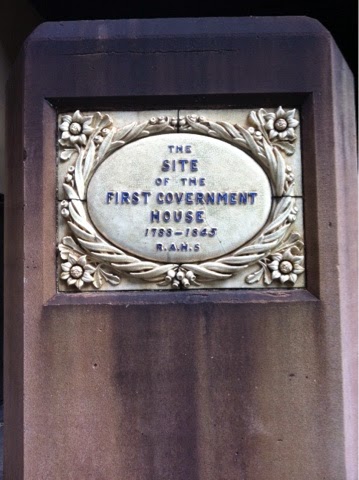
First Government House - Bridge Street & Phillip Street - NSW

First Government House


Bridge Street And Phillip Street South Western Corner


33° 51’49”S
151° 12’ 41”E


Where The Museum Of Sydneyis Now, Is Where The Frst And Original Government
House Stood....


It's The House That Governor Bligh Was Supposedly Hiding Under the Bed When a The Red coats Of The New South Wales Army Corp Were Going to Put Him
under House Arrest. 


Construction Of The First Government House  Was Commenced On This Site On May 15 1788, And Governor Phillip Moved In Shortly Before June 4th 1789. It Was The Residence Of All Governors Until 1845 


Captain Collins Worte That A Gang If Labourers Was Put
under The Direction Of A Stonemason, And On The 15th May The First Stone Of The  Building Intended For The Residence Of The Governor Until Government House Could Be Erected  Was Laid On The East Side Of The Cove. 


On the 7th March 1899 Robert John McCann, While Excavating A Telegraph Tunnel, Discovetrd The Cornerstone Of The Building

Said McCann " I Came Across 2 Flat Stones, One On Top Of Another, And On Clearing The Earth I Saw A Piece Of Copper Lying Between Them, I Took Care Not To Injure The Copper Plate, Because I Thought It May Be Of Some value, As There Was Writing On It. It's Only Blemish When Found 111 Years After Its Embedment Was Discoloration From Dampness And A Hole
made With A Workman's PickAxe"

This Historic Copper Pate Is Now In The Dixson Gallery, Sydney

The First Government House Was Completed On The 4th June 1789, In Time To Celebrate The Birthday of Goerge III. Governor Phillip Threw AParty  There In Honour Of His Illustrious Master. 

The Buiding In Bridge Street, About The Corner Of Phillip Street Stood About 56 Feet AboveThe High Water Mark. There "By Sinking A Well About Fifteen Feet In The Rock, An Excellent Sprring Of pure Water" Was Obtained. 


The House Included Australia’s First Staircase

It is 170ft Long And 40 And A Half Feet High. The Ballroom
Measures 150 Ft In Length And 28Ft Width. 


The Present Government House Stands In A Portion Of The Domain, On The Shores of Farm Cove, And Was First Occupied By Governor Gipps in 1845. Joseph Fowles, In Sydney 1848 Described It As An Elegant Sandstone Ediface In Tudor Gothic"


Governor Arthur Phillips Garden - Macquarie Place - Near South Western Corner - NSW


Governor Phillip's Garden


Macquarie Place, Near South Western Corner 

David Collins Remarked "Some Ground Having Been Prepared Near His Excellency's House On The Eat Side, The Plants From Rio De Janeiro And The Cape Of Good Hope Were safely Brought To Shore In A Few Days; And We Soon Had The Satisfaction Of Seeing The Grape, The Fig, The Orange, The Pear And The Apple, taking Root And Establishing Themselves In Our New World" 


Surgeon General John White in His Journal Of A Voyage To New South Wales Wrote About The Sick Suffering From Dysentry And Scurvy. 
"His Excellency, Seeing The State These Poor Objects Were In, ordered A Piece Of Ground To Be Inclosed, For The Purpose Of Raising Vegetables For Them. The Seeds That Were Sown Upon This occasion, on first Appearing Above The Ground, Looked Promising And Well, Which Was Not Indeed Wxtraordinary, As They Were Not Sown At A Proper Season Of The Year."

In May 1788 Governor Phillip Gloomily
Commented "From The Great Labour Which Attended The Clearing Of The Ground, It Proved Impracticable To Sow More Than Eight To Ten Acres With Wheat And Barley; And It Was Feared That Even This Crop Would Suffer From The Depredations Of Ants And Field
nice. 


Two Bunches Of Grapes Were Plucked On The 24th January 1791, Three years Later. And 

"It Was Predicted In The Vehemence Of Expectation That Their Juice Will Hereafter Furnish An Indisputable Article Of Luxury At European Tables."

Lieutenant P.G. King on 29th January Noted In Their Journal: - "Some Convicts Digging Up The Ground for A Garden."

Surgeon General John White Travelled On The Transport Charlotte to Botany Bay With The First Fleet, And Remained In New South Wales Until December 1794, After Which He Returned To England.  While In England's Newest Colony, The Peppery Doctor, Besides Collecting Material On The Fauna And Flora Of The Colony, Fought A Duel With His Assistant, Dr William Balmain. White's Book - Journal Of A Voyage To New South Wales, Published In 1790 Carried - Sixty Five Illustrations Of Non Descript Animals, Birds, Lizards, Serpents, Curious Cones Of Trees And Other Natural Productions."

John White Died In Sussex, England in 1832.


Sunday, May 24, 2015

The New South Wales Lands Department – Bridge Street – Old Sydney

The Lands Building does not “stand” in the past tense. James Barnet’s Victorian Renaissance Revival pile still occupies 22–33 Bridge Street, between Loftus and Gresham, the most self-important sandstone on the old government ridge. Three storeys of Pyrmont stone, a clock tower with a copper onion dome, explorer statues in the niches — the Department of Lands mapped and sold the colony from here while the streets below filled in the Tank Stream.

Barnet’s campaign runs 1876–81; Walter Liberty Vernon and William Edmund Kemp carried later stages through to about 1892. The building is State Heritage listed (no. 00744). The green plaque on this post is item 3 in the RAHS series: Lands Department, Bridge Street. Those statues are a who’s who of inland Australia as the nineteenth century wanted it remembered — read the plinths rather than guessing from memory.

Public servants moved out in the 2010s. The sandstone is now a hotel — Capella Sydney, with ballrooms next door at The Lands by Capella. That is adaptive reuse, not demolition. Photograph the Bridge Street façade as Barnet intended, then admit you can book a room where the parish maps were drawn.


Saturday, May 23, 2015

Farm Cove – Next to the Royal Botanic Gardens – Sydney – New South Wales


Farm Cove - Westrn Side 


Farm Cove Is A Wide Crescent Bay Between Sydney Cove & Woolloomooloo Bay. Sloping Down To The Roomy Foreshores Are Government House Grounds, The Botanical Gardens (An Arboreal Sanctuary of 66 Acres, & The Domain 125 Acres. 


A. Tree Shaded Creek Flow Through the Gardens Where A Memorial Plaque States "In These Gardens Began The Agriculture & Horticulture Of A Continant. The First Farm In Australia Was Established On This Site With Seeds &Plants Brought By The First Fleet in 1788." Here, Where Kangaroos & Emus Had Browsed On The Tough Grass Since Time Began, convicts With Axes Destroyed Trees Or hoed &Harrowed The Fertile Soil. 


In 1813 A Road Three Miles And 367 Yards Long Was Built Through The Farm To The Eastern Portion Of The Cove (Native Name Yourong) Where On The 13th June 1816 An Inscription was Etched On A Huge Sandstone Rock Known As Mrs Macquarie's Chair. Here The Governor's Wife Could Rest After Her Long Walk from Government House In Bridge Street, Or Watch The Panorama Of Pinchgut Rock.,, Where Unruly Convicts Were Banished For Their Sins And Fed ON Bread And Water Until Their "Pinched Guts" Made Them More Reasonable To Discipline. 


Governor Phillip Lived On The Warship "Sirius" Until The 18th Of February 1788..... 
"When He Left The "Sirius" And Took Up His Residence In Shore"

Before Leaving London The Governor Had Ordered, At A Cost Of £125, Frpm Smith Of St George's Fields, A Canvas House To Be Erected On Numbered Frames And Used As A Temporary Residence. 


David Collons - Judge Advocate, Wrote In His Account Of The English Colony


"A Portable Canvas House, Brought Over For The Governor, Was Erected On The East Side Of The Cove.... Where Also A Small Body Of Convicts Was Out Under Tent The Detachment Of Marines Was Emcamped At The Head Of The Cove, Near The Stream, And On The West Side  Was Placed The Main Body Of Convicts." 


This Government House Was Built Where Governor Phillip Wrote - "Ships Can Anchor Close To The Shore. At A Very Small Expense Quays May Be Constructed At Which The Largest Vessels May Unload. The Cove Is About A Half Mile In Length, And A Quarter Of A Mile Across The Entrance." 


Farm Cove is a small, picturesque bay located on the southern shore of Sydney Harbor, adjacent to the Sydney Central Business District (CBD). It has a rich history that dates back to the early colonial period of Australia. Here's an overview of the history of Farm Cove:

  1. Indigenous Land: Prior to European settlement, the land around Farm Cove was inhabited by the Gadigal people, an indigenous group of the Eora nation. They had lived in the Sydney area for thousands of years, and the cove would have been a part of their traditional lands.

  2. Colonial Settlement: When the British First Fleet arrived in Sydney Cove in 1788 and established the first European settlement, Farm Cove was included within the boundaries of what became Sydney. Governor Arthur Phillip, the first governor of New South Wales, selected the area around Farm Cove for the government garden and farm.

  3. Government Garden: Governor Phillip established a garden in the Farm Cove area in 1788 to grow food crops to supplement the colony's limited food supply. This garden, known as the Government Garden, was one of the earliest European-style gardens in Australia.

  4. Botanic Gardens: In 1816, Governor Lachlan Macquarie expanded and formalized the Government Garden, transforming it into the Royal Botanic Garden, Sydney. This marked the beginning of the garden's role as a center for the study and cultivation of plants. The Botanic Garden is now one of the oldest scientific institutions in Australia.

  5. Cultural Significance: Farm Cove and the Royal Botanic Garden have played a significant role in Sydney's cultural and scientific life. The garden houses a diverse collection of plants, including many rare and exotic species. It is also home to scientific research and educational programs.

  6. Landmarks: Farm Cove is home to several notable landmarks, including the iconic Sydney Opera House, which was completed in 1973. The Opera House's unique design has made it one of the most recognizable and celebrated buildings in the world.

  7. Recreational Use: Today, Farm Cove and the surrounding area are used for various recreational purposes. People can stroll through the Royal Botanic Garden, enjoy picnics, or simply take in the stunning views of Sydney Harbor. The cove's location also makes it a popular spot for events, including the annual New Year's Eve fireworks display.

  8. Preservation: Efforts have been made to preserve and protect the natural beauty and historical significance of Farm Cove and the Royal Botanic Garden. Conservation initiatives aim to protect the native flora and fauna in the area and maintain the cultural heritage associated with the garden.

Farm Cove, with its historical importance and scenic beauty, continues to be a cherished part of Sydney's landscape. It reflects the city's colonial past and its ongoing commitment to horticulture, botany, and the natural environment.