Search This Blog
Tuesday, December 6, 2016
Entrance to Sydney Harbour – North Head
Monday, November 14, 2016
Admiralty House - Kirabilli - Governor General's Residence
Thursday, November 3, 2016
Francis Greenway’s Public Fountain – Bent & Spring Street
Francis Greenway designed the public fountain during Governor Lachlan Macquarie’s administration. It stood in Sydney’s civic precinct near the intersection of Bent and Spring Streets and provided a practical public water supply.
Friday, September 30, 2016
Sydney Garden Palace – Part 5
Thursday, September 29, 2016
The Sydney Fig Trees Inspired Me To Paint Again
Well It Has Been A Few Years Since I Painted anything.
Thursday, August 11, 2016
Pinchgut Island - Fort Dension - Sydney Cove
Friday, July 8, 2016
South Head – The Macquarie Lighthouse
South Head And The Macquarie Lighthouse
In the beginning of 1790 a flagstaff was erected at South Head, by means of ewhich the arrival of ships could be signalled to Sydney. For nearly 2 years the Colony has been isolated. Apparently the Home Government had forgotten their very existence.
Friday, July 1, 2016
MY COUNTRY
St Jude’s Cemetery – Avoca Street – Randwick
St Jude’s Cemetery on Avoca Street is a historic cemetery in Randwick.
ude's Cemetery - Avoca Street - RandwickWednesday, June 29, 2016
The Sydney Mint – Macquarie Street – Sydney – New South Wales
The Mint in Sydney, also known as the Sydney Mint or the Rum Hospital, has a fascinating history deeply intertwined with the city's colonial past, economic development, and architectural heritage. Here's an overview of its history:
Background and Construction:
- The Mint was originally established in response to the need for a reliable currency in the early colony of New South Wales, which suffered from a shortage of official coinage.
- The building that would become the Mint was originally intended to be the Rum Hospital, constructed using funds generated from the importation of rum.
Architectural Significance:
- The Rum Hospital (future Mint) was designed by convict architect Francis Greenway, who was renowned for his neoclassical designs.
- The building's design was influenced by the classical architectural principles of symmetry, proportion, and grandeur.
Conversion to the Mint:
- The Rum Hospital was not used as a medical facility for long. In the 1850s, it was repurposed as the Sydney Mint to address the shortage of local coinage.
- The Mint was equipped with machinery to produce gold sovereigns and silver coins. It played a crucial role in providing a stable and official currency for the colony.
Coin Production:
- From 1855 to 1926, the Sydney Mint produced gold sovereigns, half-sovereigns, and other denominations of silver coins.
- The coins minted here had a significant impact on the local economy and trade, as well as contributing to the establishment of the Australian currency system.
Architectural Features:
- The building features a distinctive colonnaded facade with Doric columns and ornate detailing.
- The exterior of the building reflects the neoclassical style that Greenway favored in his designs.
Modern Uses:
- The Mint ceased its coin production operations in 1926, and the building went through various uses and renovations.
- In the 21st century, the Mint has been repurposed as a museum, showcasing its historical significance, the history of coin production, and the economic development of Australia.
Heritage Status:
- The Sydney Mint is a heritage-listed building, recognized for its architectural and historical significance.
The Sydney Mint's history reflects the evolution of colonial Sydney, from its early struggles for currency to its establishment as a reliable mint and its subsequent transformation into a museum that preserves the legacy of coin production and its impact on Australian society and economy.
Thursday, June 23, 2016
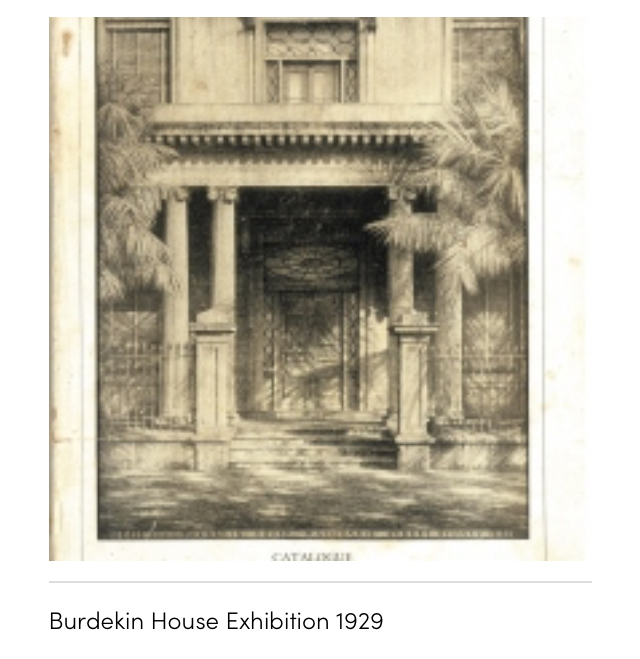
Burdekin House – Macquarie Street – Western Side in Front of St Stephen’s Church
Burdekin House - 197 Macquarie Street Western Side Now St Stephens Church
Here, Until 1933 Stood Burdekin House, &. Was Built In 1841 & Was Long Known as The “Most Handsome House In Sydney"
It's Owner, Thomas Burdekin, Was An Ironware Monger Merchant From England. He Died In 1844, After Which His Widow & Son, Sydney Burdekin (Mayor Of Sydney In 1890), Cared For The Home.
On The 2nd April 1845 The German Explorer Ludwig Leichardt, Overlandimg From Moreton Bay (Now Brisbane) To Port Essington, Noted In His Journal -
"I Have Reached The Junction Of The Suttor With The New River Which I Called The Burdekin, In Appreciation Of The Assistance From Mrs Thomas Burdekin, In The Outfit Of My Expedition.”
About This Time, An English Globe trotter Named J.C. Byrne Visited Sydney, Scooping Up Gossip To Be Used In His "Twelve Years Wandering The British Colonies"
Said Byrne -
“A Person Named Burdekin... Had Amassed By His Trade & Private Discounting..... A Vast Fortune. Whether True Or False, No Man In Sydney Was Both So Disliked On Account Of The Usurious Interest, As It Was Asserted, He Exacted From those Who Were So Unfortunate As To Fall Into His Hands, & So Much Feared On Account Of The Power Of His Wealth..... This Mr Burdekin Took It Into His Head To Purchase An Extensive Piece Of Ground.... In The Immediate vicinity Of The Club House New South Wales Aristocracy, Many Of The Members Which Had Particular Reasons For Not Being Attached To Then Discount Gentlemen.
The Land Once Purchased, The Erection Of A Pile Of Costly Magnificence WasProceeded With...."
Byrne's Story Ends With The Arrival Of A Stranger From England, Who Actually
held The Original Title Deeds That Burdekin Had Buult His Mansion On, Valued at £16,000.
Legal Proceedings Followed & Burdekin Found That This Strangers Title Was Base. In
order To Make Best Of A Bad Situation Burdekin Agreed To Pay The Stranger The Sum Of £600 A Year For Life.
The Australain On 11th July 1840 Advertised "A Land Grant Ten Perches, Allotment No. 9 Of Section No. 41, Bounded On The East By Macquarie Street. This Allotment Was Advertised On The 16th October 1839, In The Name Of Christopher Crane, Who
now Requests The Deeds In Favour Of Mr Burdekin"
The 1828 Census Lists "Chrostopher Crane, Age 27. Came Free In 1815, Shoemaker & Laundress Street.
Christopher Crane became licensee of the leather bottle in Castlereagh Street on 5 August 1831 & was still leasee in 1840 when he seated his block number 9 to Burdekin Street"
Christopher Crane Became Licensee Of The Leather Bottle Inn In Castlereagh Street On 5th August 1831 & Was Still Lessee In 1840, When He Ended His Block No. 9 To Burdekin
On 17th September 1899 Sydney Burdekin, Son Of Thomas, Died at Rooty Jill, New Sputj Wales, Leaving An Estate Balued at £252,525
IT WAS A CRIME THAT THIS BEAUTIFUL HOME WAS DEMOLISHED IN ITS 99TH YEAR, JUST Before Turning 100 In The 1920’s
Burdekin House Had Stood The Test Of Time With All The Scandals & Legal Fights Over Who Owned The Land.
One Could Say That Old Sydney Town Had Been Raped & Pillaged By The 1960’s. Just About Every Grand, Architectural Wonder Of Sydney Had Been Destroyed.
Unfortunately Most Of The Beautiful Buildings In Macquarie Street Have Been Demolished For Less CHEAP, BESSA BLOCK, CONCRETE & GLASS.
I Found This Story About Thomas Burdekon & Christopher Crane Really
interesting. I Have never Heard of Anything Like It Before.
I found out That this Stranger By The Name Of Christopher Crane From England with the Original Title
Deed Had Been In The Colony In The Very Early Days & Had Been Given A Land Grant. He Went Back To England. SydneyTown Was Just A Small Penal Colony But When he Returned It Had really Changed Totally.
So Thomas Burdekin Thought He Had Bought & owned The Land He Built His Mansion On. It Went To Court & It Was Found that Christopher Crane Was The Real Title Owner.
They Struck A Deal & Burdekin Has To Pay Him 600 Pounds A Year For The Rest Of His Life.
This Was Apparently One Of The Grandest Houses In The Colony. All The Stress, Distress, Humiliation & Everything Else Ended Up Killing Thomas Burdekin Shortly Afterwards.
It Stayed In The Family But Then
Sold & Bought By The Presbyterian church & They Demolished It & Built a Church. The House Was Already Over 100 Years Old By That Stage.
Apparently All The Items In The House Were Truly Amazing & It Was Decked Out in Louis XIII Style.
There Was Even A Great Exhibition Called "Burdekin House" on the Lower Ground Was The Oak Furniture. ON the Ground Floor Was Walnut Furniture & Early Lacquer
In The Double Drawing Room There Were French Items & Richly Decorated Upholstered Silk.
The Main Bedrooms On The 1st Floor Was Mahogany Of The Period 1750-1800.
Chippendale, Sheraton & Hepplewhite Antiques Drew Large Crowds.
WOW. So There You Go. Another HISTORIC BUILDING THAT REALLY SHOULD'VE BEEN PRESERVED.
& That Was In 1933
Saturday, June 18, 2016
Moore Park Trust Legislation
The Orginial Deed Was Written And Given To The People Of New South Wales, On November 13th 1813, By None Other Than Governor Lachlan Macquarie.
Friday, June 17, 2016
The Old Toll Gate - Cnr George And Pitt Sts Railway Square
The Old Toll Gate
- Cnr George And Pitt Sts Railway Square
As continents were colonised, the practice of implementing toll roads continued. When Governor Lachlan Macquarie arrived in New South Wales in 1810, he upheld high standards for the development of New South Wales from penal colony to free settlement, including improved infrastructure. Macquarie ordered the construction of roads, bridges, wharves, churches and public buildings and introduced a building code. Funds for road construction were to come from Government funds, public subscription and the establishment of toll roads. Private operators were permitted to construct roads and maintain them for ten years, under the colony's new, strict standards; in return, they collected the tolls to pay for their own costs.
Australia’s first toll road was a newly constructed turnpike road from Sydney to Parramatta. It opened on 10 April 1811, with one toll bar positioned in George St, Haymarket and the other at the Boundary Road end in Parramatta. This was a successful arrangement, as a profit of $930 was made in 1815 alone from the tolls on the Sydney to Parramatta road
“Expensive Trifle, An Attempt At The Imitation Of Gothic: Defective In Design & Execution. Whilst It Must Excite The Derision Of Everyone Acquainted With The Style In Architecture It Must Also Raise In Responsible Breasts A Strong Emotion Of Regret At The avast Disbursement On This Inelegant & Fugacoous Toy.”