Search This Blog

Monday, November 14, 2016

Admiralty House - Kirabilli - Governor General's Residence


I Guess That Everyone   Knows That Adiralty House Is The Residence Of TheGovernor  General When In Sydney.


Originally The Land Was Acquired By The New South Wales Government In 1885 As A Residence For The British Officers In Command Of The Australian Naval Station. 
At That Time London Took Responsibility For Defence On The Southern Continent. A Dozen Admirals Had Resided There  Up Until 1913 When The Royal Australian Navy Was Established.


Back in 1806 When Kiribilli Was Wild And Uninhaited, Robert Campbell Bought The Property For a Few Pounds. 


It Surprises People Today That Kirribilli Point Was Referred To As "Russian Point". This Began in 1814 When The Russian Shhip SUVOROV Called In To Port Jackson. 


Colonnaded stone building, which which explains the garden dominate the Kirribilli, and has since 1916 been a resident of Australia’s governor general.

The house was bought in 1885 by the state of New South Wales as a residence for the naval commander in chief. Earlier the house of been described as having a white Veranda, spacious entrance hall, drawing and dining rooms, 10 bedrooms, and the usual rooms in the main part of the house for large courtyard, seventh rooms, kitchen stables etc with an abundant water supply which never fails in the driest weather.

To make this residence fit the British Admiral grand proportions. Did therefore came like a thunderclap to the state of Florida keys from the second last at McHughes it, for George King Cole, struck his black bear and handed the residents over to the Commonwealth.


Thursday, November 3, 2016

Francis Greenway's Public Fountain - Bent & Spring Street


During Governor Macquarie's Rule, Francis Greenway Built The Fantastic Public Fountain On 

When Commissioner Bigge Arrived In Sydney He Was Shocked At The Extravagance Of Governor Macquarie And His Public Buildings 


Thursday, September 29, 2016

Thursday, August 11, 2016

Pinchgut Island - Fort Dension - Sydney Cove


Reverend John Dunmore Lang Remembered As He Said - 

"An Island Called Pinchgut, Consisting Of One SolitAry


Governor Phillip Island at farm Cove, a conical peak on a perfect stunted bush have one function – as a dump until he had time to build a jail for convicts who committed crimes after reaching the colony. Maroon convicts who is Russian of bread and water was Road to them once a week changed its name from rock island to pinch gap.


Sometimes the hangman went out on the third boat for years the remnants of a man’s bones hung in chains on a giblet on the island Francis Morgan convicted with others of the murder of a man on the North Shore, with strung up as a warning. There’s a legend I asked if he wished to make any last remark he looked about him and said well you have yeah indeed a beautiful harbour


Early 1940 after two American warships had sneaked into the harbour at night without a pilot Governor gipps decided to rets how many gipps decided to arrange a battery on the island


He said gangs of convicts to level the rock and almost had the job done when he ran out of funds. The ruining of what had once been a lovely if sinister spot sent Dr Dunmore Lang into a rage and he denounce the official golf or Hun.

Military minds however could not resist the law of the island. When there was a Russian invasion scared during the Crimean war I thought was built on it – a Martello tower without buildings for power to magazines and quarters for a small permanent garrison foundations were quarry deep into the island rock. Stone for the 12 foot thick walls was brought from Carrabba point. The fort completed in 1957 was named after the governor so William Denison. The island is now used to the tide gauge in light and fog signal station. It’s 1 o’clock gun was discontinued in 1942


Military minds however could not resist the law of the island. When there was a Russian invasion scared during the Crimean war I thought was built on it – a Martello tower without buildings for power to magazines and quarters for a small permanent garrison foundations were quarry deep into the island rock. Stone for the 12 foot thick walls was brought from Carrabba point. The fort completed in 1957 was named after the governor so William Denison. The island is now used to the tide gauge in light and fog signal station. It’s 1 o’clock gun was discontinued in 1942


*+****** FRANCIS MORGAN. Was Strung Up on A Gibbet 
-  more Research Into This 

Friday, July 8, 2016

South Head - The Macquarie Lighthouse -


South Head And The Macquarie Lighthouse 


In the beginning of 1790 a flagstaff was erected at South Head, by means of ewhich the arrival of ships could be signalled to Sydney. For nearly 2 years the Colony has been isolated. Apparently the Home Government had forgotten their very existence. 


Governor Macquarie Laid The Foundation Stone Of The Tower In July 1816, & Had Expected The Job To Be Finished  In Nine Months. 

Francis Greenway Didn’t Like Using The Samdstonw Quarried On Site As It Was Too Soft, And He Knew It Wouldn’t Last. 

Within 50 Years The Tower Had To Be Reinforced With Iron. By 1883 The Whole Elegant Structure Had Been Condemned. 

I. December 1817 Governor Macquarie Made Up A Breakfast Party To Drive Out And Inspect The Work. He was So Delighted With The “Noble & Magnificent Ediface” - That He Gave Francis Greenway His Conditional Pardon. 

When The Lamps In The Original Lighthouse Were First Lit They “Astonished A Mariner When He Beheld Them From 38 Miles Out At Sea. 

The Second Light, Can, Officially Be Seen 25 Miles Off shore. 


Friday, July 1, 2016

MY COUNTRY


The Love Of Field & Coppice, 
Of Green Shaded Lanes 
Of Ordered Woods And Gardens
Is Running Through Your Veins 
Strong Love Of Blue Grey Distance
Brown Streams & Soft Dim Skies
I Know But Cannot Share It
My Love's Otherwise 


I Love A Sunburnt Country
A Land Of Sweeping Plains
Of Ragged Mountain Ranges 
Of Droughts And Flooding Rains
I Love Her Far Horizons
I Love The Jewel Sea
Her Beauty And Her Terror


St Jude's Cemetary - Avoca Street - Randwick


St Jude's Cemetary - Avoca Street - Randwick 


- Sir Frederick William Pottinger 

- Sir Alfred Stephen - LEIUTENANT GOVERNOR OF NEW SOUTH WALES 


- Sir Edward Deas Thomson

- Sir Edward Knox

- Henry Mort

- Charles Wentworth 

- Sir James Martin 

- Sir William Manning - 1st Chancellor Of Sydney University 

- William Busby - Busby's Bore

- Archibald Mosman


Wednesday, June 29, 2016

The Sydney Mint - Macqaurie Street - Sydney - New South Wales

The Sydney Mint 

Macquarie Street 


How many McQuarrie‘s critics never cease to winning out that he had virtually paid in rum for Sydneys second general hospital.

Looking back, it seems a brilliant street by the government to have acquired a huge public building for nothing, whatever that means employed.

The first General Hospital was in what is now lower George Street. By McQuarrie‘s time it was a filthy house of death. The governor then let the contract for a new one in McQuarrie Street to 3 men who had never built anything-

 
The governor then let the contract for a new one in McQuarrie Street to 3 men who had never built anything-

Darcy went Worth

-random black cell

– Alexander Riley


In return they were permitted to import 45,000 gallons of rum in three years.

This was almost a monopoly, but the three speculators do not seem to have made much profit on it.

The hospital, the first part of which was opened in 1916, was in three sections.

The present Sydney hospital stands on the side of the large central block, which was pulled down in 1879. To the north and the south of the main block with separate -surgeons quarters. The wing in the north still stands, as Parliament house.

It is a quite a mess of additions, tacked on to save space to cramped legislators. It’s twin the Southern building, which first housed the assistant surgeons, has escaped uglification. It stands at the top of Macquarie Street, it’s pillared facade admired as a fine relic of colonial design.

From 1885 to 1926 a branch of the Royal Mint worked there, producing the first New South Wales sovereign Beloved by collectors.

It now houses government departments, including ironically, the state housing commission.


The Mint in Sydney, also known as the Sydney Mint or the Rum Hospital, has a fascinating history deeply intertwined with the city's colonial past, economic development, and architectural heritage. Here's an overview of its history:

Background and Construction:

  • The Mint was originally established in response to the need for a reliable currency in the early colony of New South Wales, which suffered from a shortage of official coinage.
  • The building that would become the Mint was originally intended to be the Rum Hospital, constructed using funds generated from the importation of rum.

Architectural Significance:

  • The Rum Hospital (future Mint) was designed by convict architect Francis Greenway, who was renowned for his neoclassical designs.
  • The building's design was influenced by the classical architectural principles of symmetry, proportion, and grandeur.

Conversion to the Mint:

  • The Rum Hospital was not used as a medical facility for long. In the 1850s, it was repurposed as the Sydney Mint to address the shortage of local coinage.
  • The Mint was equipped with machinery to produce gold sovereigns and silver coins. It played a crucial role in providing a stable and official currency for the colony.

Coin Production:

  • From 1855 to 1926, the Sydney Mint produced gold sovereigns, half-sovereigns, and other denominations of silver coins.
  • The coins minted here had a significant impact on the local economy and trade, as well as contributing to the establishment of the Australian currency system.

Architectural Features:

  • The building features a distinctive colonnaded facade with Doric columns and ornate detailing.
  • The exterior of the building reflects the neoclassical style that Greenway favored in his designs.

Modern Uses:

  • The Mint ceased its coin production operations in 1926, and the building went through various uses and renovations.
  • In the 21st century, the Mint has been repurposed as a museum, showcasing its historical significance, the history of coin production, and the economic development of Australia.

Heritage Status:

  • The Sydney Mint is a heritage-listed building, recognized for its architectural and historical significance.

The Sydney Mint's history reflects the evolution of colonial Sydney, from its early struggles for currency to its establishment as a reliable mint and its subsequent transformation into a museum that preserves the legacy of coin production and its impact on Australian society and economy.


Thursday, June 23, 2016

Burdekin House - Macquarie Street - Western Side In Front Of StStephens Church


Burdekin House -  
197 Macquarie Street  
 Western Side 
 Now St Stephens Church 


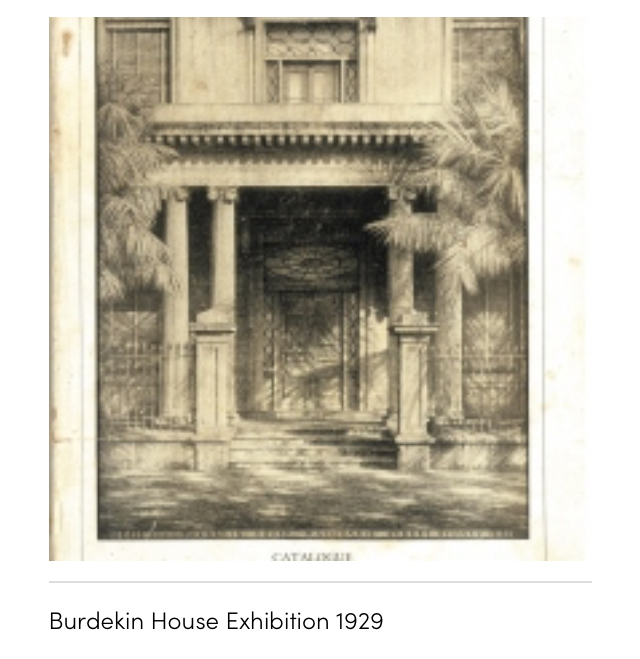
Here, Until 1933 Stood Burdekin House, &. Was Built In 1841 & Was Long Known as The “Most Handsome House In Sydney"
It's Owner, Thomas Burdekin, Was An Ironware Monger Merchant From England. He Died In 1844, After Which His Widow & Son, Sydney Burdekin (Mayor Of Sydney In 1890), Cared For The Home. 
On The 2nd April 1845 The German Explorer  Ludwig Leichardt, Overlandimg From Moreton Bay (Now Brisbane) To Port Essington, Noted In His Journal - 
"I Have Reached The Junction Of The Suttor With The New River Which I Called The Burdekin, In Appreciation Of The Assistance From Mrs Thomas Burdekin, In The Outfit Of My Expedition.” 
About This Time, An English Globe trotter Named J.C. Byrne Visited Sydney, Scooping Up Gossip To Be Used In His "Twelve Years Wandering The British Colonies" 
Said Byrne - 
“A Person Named Burdekin... Had Amassed By His Trade & Private Discounting..... A Vast Fortune. Whether True Or False, No Man In Sydney Was Both So Disliked On Account Of The Usurious Interest, As It Was Asserted, He Exacted From those Who Were So Unfortunate As To Fall Into His Hands, & So Much Feared On Account Of The Power Of His Wealth..... This Mr Burdekin Took It Into His Head To Purchase An Extensive Piece Of Ground.... In The Immediate vicinity Of The Club House New South Wales Aristocracy, Many Of The Members Which Had Particular Reasons For Not Being Attached To Then Discount Gentlemen.
The Land Once Purchased, The Erection Of A Pile Of Costly Magnificence WasProceeded  With...." 
Byrne's Story Ends With The Arrival Of A Stranger From England, Who Actually
held The Original Title Deeds That Burdekin Had Buult His Mansion On, Valued at £16,000. 


Legal Proceedings Followed & Burdekin Found That This Strangers Title Was Base. In
order To Make Best Of A Bad Situation Burdekin Agreed To Pay The Stranger The Sum Of £600 A Year For Life.
The Australain On 11th July 1840 Advertised "A Land Grant Ten Perches, Allotment No. 9 Of Section No. 41, Bounded On The East By Macquarie Street. This Allotment Was Advertised On The 16th October 1839, In The Name Of Christopher Crane, Who
now Requests The Deeds In Favour Of Mr Burdekin" 
The 1828 Census Lists "Chrostopher Crane, Age 27. Came Free In 1815, Shoemaker & Laundress Street.

Christopher Crane became licensee of the leather bottle in Castlereagh Street on 5 August 1831 & was still leasee in 1840 when he seated his block number 9 to Burdekin Street" 
Christopher Crane Became Licensee Of The Leather Bottle Inn In Castlereagh Street On 5th August 1831 & Was Still Lessee In 1840, When He Ended His Block No. 9 To Burdekin
On 17th September 1899 Sydney Burdekin, Son Of Thomas, Died at Rooty Jill, New Sputj Wales, Leaving An Estate Balued at £252,525 


IT WAS A CRIME THAT THIS BEAUTIFUL HOME WAS DEMOLISHED IN ITS 99TH YEAR, JUST Before Turning 100 In The 1920’s 
Burdekin House Had Stood The Test Of Time With All The Scandals & Legal Fights Over Who Owned The Land. 

One Could Say That Old Sydney Town Had Been Raped & Pillaged By The 1960’s. Just About Every Grand, Architectural Wonder Of Sydney Had Been Destroyed. 


Unfortunately Most Of The Beautiful Buildings In Macquarie Street Have Been Demolished For Less CHEAP, BESSA BLOCK, CONCRETE & GLASS. 


I Found This Story About Thomas Burdekon & Christopher  Crane Really
interesting. I Have never Heard of Anything Like It Before. 

I found out That this Stranger By The Name Of Christopher Crane From England with the Original Title
Deed Had Been In The Colony In The Very Early Days & Had Been Given A Land Grant. He Went Back To England. SydneyTown Was Just A Small Penal Colony But When he Returned It Had really Changed Totally. 
So Thomas Burdekin Thought He Had Bought & owned The Land He Built His Mansion On. It Went To Court & It Was Found that Christopher Crane Was The Real Title Owner. 
They Struck A Deal & Burdekin Has To Pay Him 600 Pounds A Year For The Rest Of His Life. 
This Was Apparently One Of The Grandest Houses In The Colony. All The Stress, Distress, Humiliation & Everything Else Ended Up Killing Thomas Burdekin Shortly Afterwards. 
It Stayed In The Family But Then
Sold & Bought By The Presbyterian church & They Demolished It & Built a Church. The House Was Already Over 100 Years Old By That Stage. 
Apparently All The Items In The House Were Truly Amazing & It Was Decked Out in Louis XIII Style. 
There Was Even A Great Exhibition Called "Burdekin House"  on the Lower Ground Was The Oak Furniture. ON the Ground Floor Was Walnut Furniture & Early Lacquer
In The Double Drawing Room There Were French Items & Richly Decorated Upholstered Silk. 
The Main Bedrooms On The 1st Floor  Was Mahogany Of The Period 1750-1800. 
Chippendale, Sheraton & Hepplewhite Antiques Drew Large Crowds. 
WOW. So There You Go. Another HISTORIC BUILDING THAT REALLY SHOULD'VE BEEN PRESERVED. 


& That Was In 1933


Saturday, June 18, 2016

Moore Park Trust Legislation


THE CENTENNIAL PARK AND MOORE PARK TRUST 1983


The Orginial Deed Was Written And Given To The People Of New South Wales, On November 13th 1813, By  None Other Than Governor Lachlan Macquarie. 


In That Original Deed Governor Macquarie Set Out The Second SYDNEY COMMON. 

Later Sir Henry Parkes Put A The Centennial Celebrations Act 1887 To The New South Wales Legislative Council in Honour Of The Silver Jubilee Of Queen Victoria In1888.  Which Cemented The 2nd Sydney Common For The People Of New South Wales. 

There Were 3 MountAins Which Surrounded The Common Before It Was Officially Called Moore Park After Sir Charles Moore, Who Was The Head BotAnist Of The Royal BotAnic Gardens. 

Sir Charles Moore propagated up To 4,500 of The Sydney Fig Trees That We All Take for Granted Today,  To Make Tree Lined Avenues Starting From Government House,


PART 2 
SECTION 10

Subject to Section 20(2) The Trust Shall Not Sell, Mortgage Or Demise Or Otherwise Dispose of Any Of The Original Land As Set Out By Governor Macqaurie In The Original Trust Deed For The 2nd "SYDNEY COMMON".

PART 5 - MISCEALANEOUS

SECTION 1 

RESUMPTION OF ORIGINAL LAND REQUIRES AN ACT OF PARLIAMENT

SUBSECTION 1 (19)


(2) NOTWITHSTANDING ANYTHING CONTAINED IN ANY OTHER ACT, AND SUBJECT TO THIS ACT, THE ORIGINAL LAND SHALL NOT BE APPROPRIATED OR RESUMED BY GOVERNMENT OR PRIVATE ENTERPRISE EXCEPT THROUGH AN OFFICIAL ACT OF THE NEW SOUTH WALES PARLIAMENT. 


THEREFORE THE NEW SOUTH WALES GOVERNMENT AND THE COMPANY WHO OWNS THE


Friday, June 17, 2016

The Old Toll Gate - Cnr George And Pitt Sts Railway Square


The Old Toll Gate
 - Cnr George And Pitt Sts Railway Square


  Toll roads and toll bridges are public roadways and thoroughfares which drivers must pay to use. They are believed to have existed in a variety of forms for around 2700 years, with the earliest known toll road thought to be the highway connecting Susa and Babylon. Toll roads and bridges continued to be used through the Middle Ages, in the Holy Roman Empire, as well as across Asia.  

As continents were colonised, the practice of implementing toll roads continued. When Governor Lachlan Macquarie arrived in New South Wales in 1810, he upheld high standards for the development of New South Wales from penal colony to free settlement, including improved infrastructure. Macquarie ordered the construction of roads, bridges, wharves, churches and public buildings and introduced a building code. Funds for road construction were to come from Government funds, public subscription and the establishment of toll roads. Private operators were permitted to construct roads and maintain them for ten years, under the colony's new, strict standards; in return, they collected the tolls to pay for their own costs. 

Australia’s first toll road was a newly constructed turnpike road from Sydney to Parramatta. It opened on 10 April 1811, with one toll bar positioned in George St, Haymarket and the other at the Boundary Road end in Parramatta. This was a successful arrangement, as a profit of $930 was made in 1815 alone from the tolls on the Sydney to Parramatta road


A Toll Gate Was Erected On This Spot By Governor Macquarie In 1811 And 1819 & An Elaborate Gothic Toll House  Was Erected Nearby To The Design Of Francis Greenway. Proceeds From The Toll Was Going To Pay For The Maintenance Of This 14 Mile Dirt Road To Parramatta. 


On The 6th October 1810 Governor Lachlan Macqaurie Proclaimed It Expedient

"To Give Regular & Permanant Names To All The Streets & Ways Leading Through  Town.... & To Order Posts & Finger Boards.... With The Names Of The Streets Painted On Them
To Ne Erected In Conspicuous Parts. 


For Instance - "The Principal Street In Town, & Leading Through The Middle Of It From Dawes Point To The Place Near The Brickfields, Being Upwards Of A Mile In Length, & Hitherto Known Alternately By The Names Of High Street, Spring Row, & Sergeant Majors Row Is Now Named George Street , In Honour Of  Our Revered & Gracious Sovereign" 


The First Toll Gates Were Opened On The 10th April 1811, & The Road From There To Parramatta, Fourteen Miles From Sydney, Qas Financed By A Levy Of 3 Shillings.

Monsieur Peron, The French Explorer Who Visited Sydney In 1802, After Travelling Over the Parramatta Highway Remarked........

  "This Grand Road Appears At A Distance like An Immense Avenue Of Foilage & Verdure. A Charming Freshness & An Agreeable Shade Always Prevail In This Continuous Bower, The Silence Of Which Is Interrupted Only By The Singing & Chirping Of The a richly Plumed Paroquets & Other Birds Which Inhabit It"


If Peron Could Return To Parramatta Road Again Today, He’d Get A Severe Shock

The Toll Gate Remained Until 1819, When It Was Replaced By A Greenway Designed Barricade. 


Commissioner Bigge Arrived In Sydney In September 1819 & He Described Francis Greenway’s Toll Bar As An

“Expensive Trifle, An Attempt At The Imitation Of Gothic:  Defective In Design & Execution. Whilst It Must Excite The Derision Of Everyone Acquainted With The Style In Architecture It Must Also Raise In Responsible Breasts A Strong Emotion Of Regret At The avast Disbursement On This Inelegant & Fugacoous Toy.”


Matthew Flinders - Famed Adventurer Died A Pauper After Years At Sea


MATTHEW FLINDERS..........
Famed Adventurer Died A Pauper After Years At Sea.........


  Explorer Matthew Flinders Paid The Ultimate Price For His Historic Voyages.......


In Constant Pain From Kidney Stones And Bladder Inflammation, Probably AS  A Consequence Of Constant Repeated Dehydration &Scurvy During His Years At Sea, Matthew Flinders Was Also Plagued By Financial As He Proofed Complex Navigation Charts For Books Chronicling His Voyages Around Terra Australis. 


Nine Days Before His Death, The Invalid Explorer Made His Final Diary Entry, Noting He Did Not Rise Before Two. Weeks Earlier His a wife Ann Wrote  to Friends That "So Dreadfully Was He Altered, He Looked Cull 70 Years Of Age & Was Worn To A Skeleton."


The Navigator, Hydrographer And Scientist Died On July 19, 1814, At His Rented Home At 14 London Street, Fitzroy Square In London, Where He Settled With His Wife & Two Year Ild Daughter Ann Five Months Earlier, Weeks Before His 40th Bitthday. 


Despite His Success As A Navigator And Cartographer, Established In Charting Tasmania, The NSW Coat And Circumnavigating Australia, Flinders Reaped Limited Financial Reward.


He Was Born At Donnington In Lincolnshire On March 16, 1774, The Eldest Som Of Surgeon Matthew Flinders, And His Wife Sussanah, Who Doed In 1783 After The Birth Of Their Youngest Son Sanuel. Educated at A Free Parosh School &From 12 As A Grammar School Boarder, Flinders Resisted His Fathers Plans For Him To Train As A Surgeon. 


Growing Up Near The English Channel, Flinders Witnessed Ships Arrive And Depart From The Napoleonic Wars And America, And Enjoyed Stories Told By Cousin John Franklin, A Royal Navy Midshipman. Flinder's  Later Explanation Was "Induced To Go To Sea Against The Awuahes  Of Frends From Reading Robinson Cruesoe."


On The  Advice Of His Cousin, Flinder's Studied Geometry, Trigonometry & Navigation To Improve His Pospects For Promotion In The Navy. franklin Also Had Him Illegally Recruited As An Officer's Servant On The HMAS Alert, Then In The West Indies, In October 1789, Although Finder's Did not Board A Ship Until May 1790. 


He Sailed On The HMAS Scipio As A MidShipMan Under a the Command Of A Family Acquaintance Thomas Pasley, Soon Moving With Pasley As An Able Bodied Seaman Patrolling Seas Around England K. HMAS Bellerophon.


The Centennial Park Eel


The Centennial Park Eel 


THE CENTENNIAL PARK EEL

In the Ponds Of Centennial Park Lives The Eastern (???? ) Eel. And To The Normal Park Goer They Look Like An Ugly Animal Swimming Around In The Murky Waters Of The Parklands. 


But The Centennial Park Eels Hold A Remarkable Story For Those In The Know. 


Male Eels Mature Around 10- 30 years and Female Eels Mature Around 8 Years. When They Reach Adult Stage & Feel The Need Spawn & AmazingThing Happens.


The eels Hop From Pond To Pond and then crawl Through a drain Underneath Alison Road and into Randwick Racecourse. They then follow the Natural Watercourse Through To The Moore Park Golf Course and then Follow it Through To Botany Bay Coming Out Where The Third Sydney Runway Comes Out at Kingsford Smith Airport.  

While Making This Journey some Amazing Changes Happen To Their Bodies...... 

- their Dorsal Fin Becomes bigger  So They Are Able To Swim Better In Ocean Currents. 


- their  stomach shrinks


- Their Eyes Also Change SizeThat They Can See In The Seawater

- their anus Restricts and Any Orifice To Reduce Water Loss


- Their Gills 
 From Freshwater To Saltwater. They Can Also Out In Fresh Air, And If There Is No Watercourse For Them To Make It To Botany Bay They Can travel Across Land for short distances. 

The Eels Then Make A 3,500 Mile Journey through The Ocean To Somewhere Near New Caledonia, where They Spawn Their Young & Die. 


These Young Eels Then Male Their Way The 3,500 Miles Back To Centennial Park Where They Live In The Ponds Until They Mature