Search This Blog

Saturday, January 2, 2021

Sydney Clocks -


SYDNEY CLOCKS 


is hard now to imagine when telling the time was a difficult thing to do. With everyone having a phone or at least a watch, it is easy to forget that not that long ago public time pieces were, for many, the best available option for getting to work on time, making sure they caught the train or made the meeting.

It’s amazing how many of these clocks and timepieces were sited around Sydney, and even more amazing how many survive still. The most prominent of these were the clock towers, which in their day, loomed over the low scale city round them and were visible to all the workers scurrying back and forth to offices and factories.

From the earliest days of the colony time was important. Convicts were sent here to do time, and their days were broken up into timed patterns. In 1797 Governor Hunter erected the first clock tower to the west of the settlement on what is now Church Hill. The tower was 46 metres high with its clock facing the town. The tower was damaged in a storm in 1799 and then collapsed in 1806. The clock itself was salvaged and re-erected in a smaller tower the following year.

The oldest clock still working in Sydney is in the façade of the Hyde Park Barracks. This was installed in 1819 by convict clockmaker James Oatley. Oatley, appointed as Keeper of the Town Clock by Governor Macquarie installed a number of public clocks across Sydney, with clocks in churches at Parramatta, Campbelltown, Windsor and Liverpool amongst others. The suburb Oatley is named after him.

Of the clock towers it is those at the Sydney Town Hall (1884), the Lands Department (c1890, clock 1938), the old General Post Office (1891), and Central Station (1921) that remain as the best examples. Each was built so as their clocks could be seen across the part of the city they stood in or from the approaching ferries to Circular Quay. Workers would check them as they went to their jobs. Their heights hint at the low scale of the nineteenth century metropolis and they could be seen across surrounding suburbs. Central Station, which was visible across the industrial suburbs of Redfern and South Sydney was colloquially known as “The Working Man’s Watch” for this reason. Town Hall Clock was visible from Balmain. Their prominence on the skyline was such that during World War II the GPO clock tower was dismantled for fear it would provide a target for Japanese air raids.  It was not rebuilt until the 1960s.


gpo-clock-being-removed-1942-naa-c4078-n1914d.jpg

GPO Clock being removed 1942 (NAA C4078 N1914D)

While the others worked independently, the clock at Central was the centre of an intricate system of integrated clocks around the station and across the Sydney train network. A system of electrical pulses regulated the time across the network so all showed the same time. Correct time is essential to safe and efficient running of railway networks and has been from the start. As such, the adoption of railway time as local time as the network extended across Sydney and NSW was instrumental in the eventual adoption of it as standard time for NSW and later Australia from 1895.


central-clock-tower-sydney-1952-naa-a1200-l14553.jpg

Central Station with its landmark clock tower in 1952. It still towers over the southern end of Sydney. (NAA A 1200 L 14553)

The scale of these clocks is not appreciated from the ground, but some ideas of the size of the mechanism can be taken from the fact that the Central Clock hands are 2.3m and 3m each, with the clock face itself is 4.8m in diameter. Upgraded in 2014 the Central Clock continues to provide accurate time, although fewer notice it these days.


Rookwood Necropolis


ROOKWOOD NECROPOLIS


ome to the largest cemetery in the southern hemisphere, where up to 1 million former Sydneysiders now eternally rest.  Rookwood Necropolis, near Lidcombe, was opened in 1867 and is still an active cemetery.

The term necropolis refers to its enormous size, deriving from a Greek word meaning City of the Dead and at over 777 acres, or 300 hectares, it is the size of Redfern and Glebe combined.

The need for a large general cemetery was obvious in Sydney from as early as the 1850s.  By then, the old Sydney Burial Ground in George Street (under Sydney Town Hall today) had been full and closed for 30 years, and the Devonshire Street cemetery built to replace it (under Central Station today) was also nearing capacity.  While there were small, church yard cemeteries around, most of these were also on limited land and were restricted to the particular denomination of the church involved.


rookwood-headstones-cos-archives-020801.jpg

Old headstones at Rookwood Cemetery (City of Sydney Archive)

The need for a site with sufficient depth of soil, no rocks, drainage away from domestic water, relatively isolated from populated areas but still close to a railway and with the capacity to be beautified and landscaped, meant that it was not until the early 1860s that a site was chosen.  Land at Liberty Plains, approximately 18km from Sydney was deemed suitable and the Government purchased 200 acres in 1862.  In 1867 the passing of the Necropolis Act made it official.

The first burial on site was of a pauper, John Whalan on 5 January 1867, with the first registered burial two days later in the Catholic section.  This was of a 14 month old girl.  The first burial in the Church of England was also of a child on 4 January 1867.  Three humble burials to start.

Originally the cemetery was divided into six sections for different denominations: Church of England, Catholic, Presbyterian, Wesleyan, Congregational and Jewish, with Lutheran, Methodists and a general section added by 1881.  In keeping with Victorian era ideals, the cemetery was laid out as a garden landscape, with pathways, garden plantings, fountains and shade houses.

By 1890 there were over 37,000 people buried at Rookwood.  As the cemetery grew, it attracted associated industries to the area.  By the turn of the twentieth century, about 20 monumental masons had opened yards and showrooms in the area, with a refreshment room and florist also operating inside the cemetery by the 1930s.

The isolation of the necropolis in the years before private motor transport meant mourners and funeral parties needed a way to get to Rookwood.  A train line was included as part of the design for the cemetery to overcome this issue.


rookwood-station-with-train-srnsw-17420_a014_a014000306.jpg

Rookwood station with a funeral train c1890 (SRNSW)

Funeral trains ran regularly from Central Station to Rookwood from 1867 until 1948, by which time the use of hearses and private cars had made the service redundant.  Inside Rookwood a grand station, or receiving house was built, with a matching one at Central.  Designed by the Colonial Architect James Barnet, the sandstone station was in a gothic revival style, with finely carved angels on the entry arches and angels faces on the roof trusses inside.  The line was extended through the cemetery between 1867 and 1901 with four stations serving the different sections.  In 1957 the main station was sold and dismantled, being re-erected in Canberra as All Saints Church in Ainslie.

Rookwood, final home too many of Sydney’s famous and infamous citizens, remains an active and much loved cemetery.  It may not be your idea of a great day out, but it is certainly worth a visit.


Captain James Cook RN - Birth - Wednesday October 27th 1728


Captain James Cook RN


Wednesday, October 27, 1728. :   Captain James Cook, who charted Australia's eastern coastline, is born. 


     James Cook was born at Marton in North Yorkshire, on 27 October 1728. He was the son of a farm labourer, and held no great ambitions, being apprenticed in a grocer/haberdashery when he was 16. Lack of aptitude in the trade led his employer to introduce Cook to local shipowners, who took him on as a merchant navy apprentice. Here he was educated in algebra, trigonometry, navigation, and astronomy, which later set Cook up to command his own ship.


After working his way up to positions of greater responsibility and experience, Cook was hired in 1766 by the Royal Society to travel to the Pacific Ocean to observe and record the transit of Venus across the Sun. Following this, Cook's next orders were to search the south Pacific for Terra Australis Incognita, the great southern continent that many believed must extend around the southern pole. He came across New Zealand, which Abel Tasman had discovered in 1642, and spent some months there, charting the coastline. Nearly a year later, Cook set sail west for New Holland, which was later to become Australia


Sodomy In The South Pacific - Sodomy In The Colony Of New South Wales


SODOMY IN THE PENAL COLONY OF NEW SOUTH WALES 


- THE AISLE OF SODOM 

- SODOMY IN THE SOUTH PACIFIC 


The convict stain


The First Officially Recorded Incidence Occurred 60yrs Before European Settlement in 1727. The Dutch Ship Zeewijk. . .  Off The Coast Of Western Australia. 


Captain Arthur Phillip 

"There Are Two Crimes That Would Merit Death - Murder & Sodomy" 

The First Trial For Sodomy Took Place In 1796, With The Accused Francis Wilkinson Was Acquitted. 

The First Person Hanged Was Alexander Brown In 1828. 

1839 - Camping By A Billabong 

In 1828 Samuel Cox Was Sentanced To Death 


Tasmanian Executions 

Heindrick Whitmalder - in Hobart 
Dennis Collins In Launceston in 1863 

Robert Hughes - the Fatal Shore 

1803 - georgette lee -the Portland. 


Thursday, November 26, 2020

Museum Of Sydney - Phillip Street - Site Of Original Government House


Museum Of Sydney - Phillip Street - Site Of Original Government House


I Remember Back In 2017 The Families  Of The Fire Fleeters  Put The Money Together To Get This Statue Of Captain Arthur Phillip R.N Commissioned And Was Finally Place In The Courtyard On The Corner Of Phillip  And Bligh Street Which Is The Original Site Of The First Government House In Australia. 


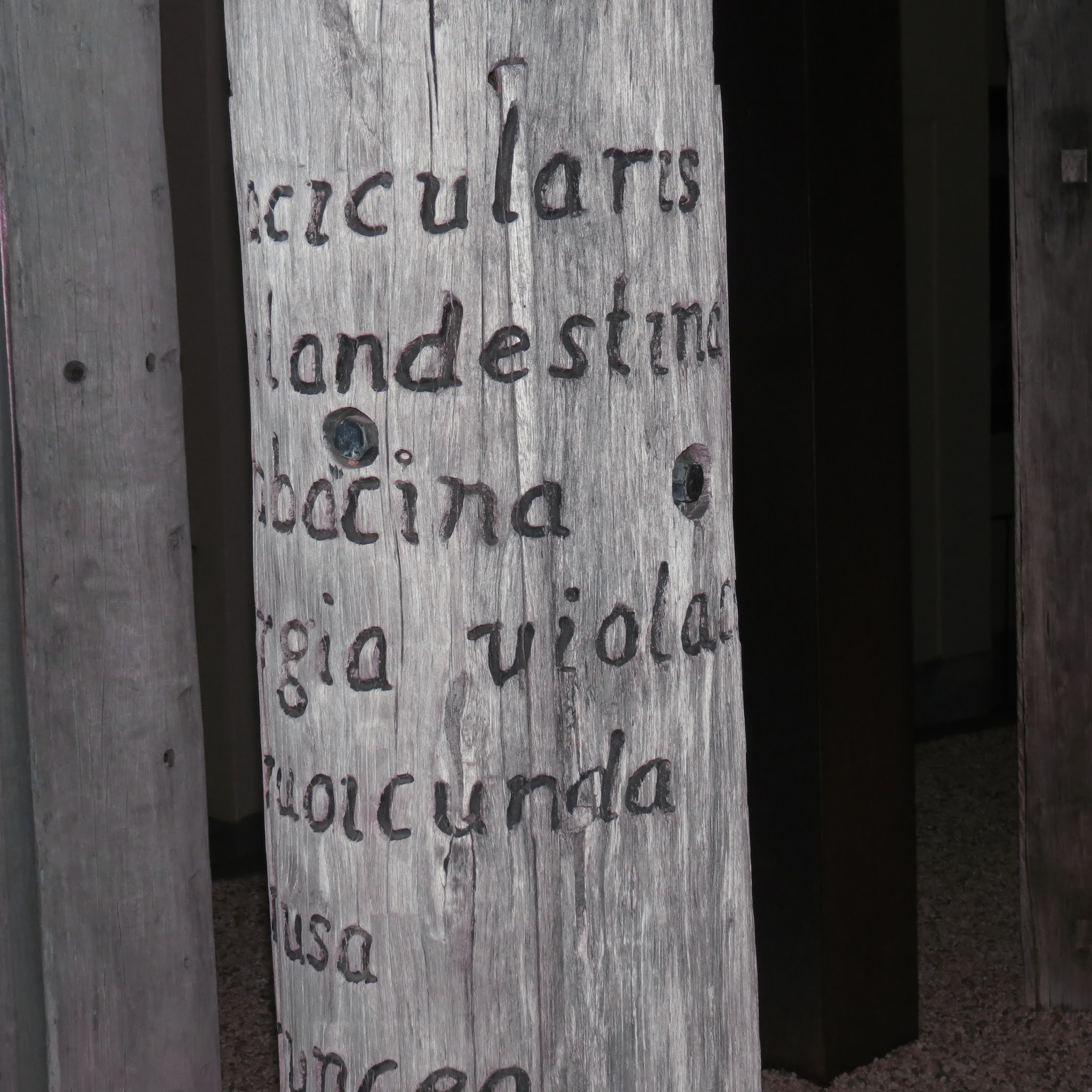
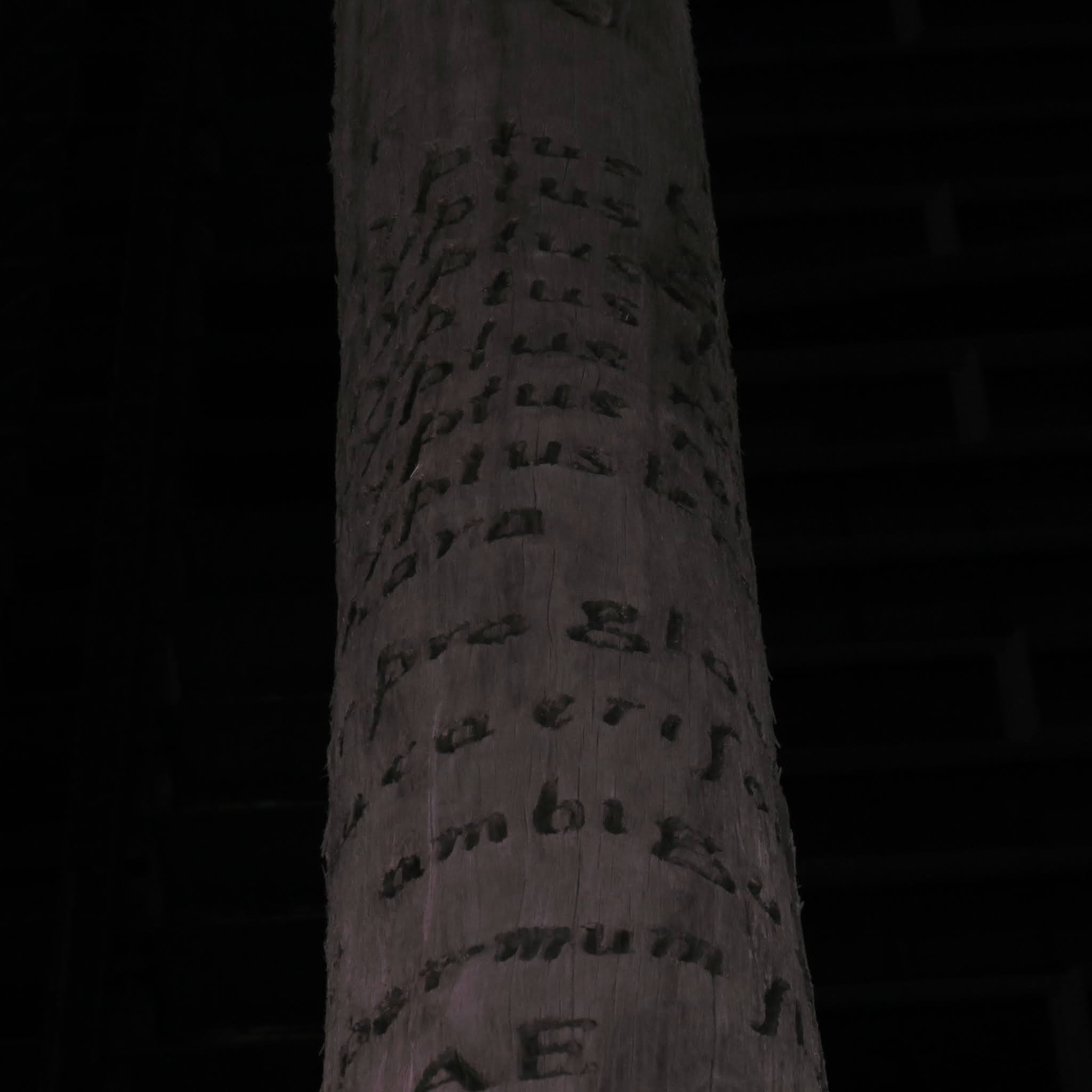
I Stopped Back On The Corner Of Bligh Street And Phillip Street, The Site Of The First Government House. These Are The Totem Poles Of The Eora Tribe Which Has Since Died Out In The Sydney Basin Region.


Sydney’s first government house was built in 1789 for Governor Arthur Phillip.

In November 1789, two aboriginal man, Bendalong and Colby, we captured at Manly under Phillips orders and we held at government house.

After they escaped, Binalong maintain cordial ties with Phillip. He often dying to government house with his wife Barangaroo and a number of aboriginal people were buried within the gardens at his best.

In 1995 the Museum of Sydney opened on the site. A forest of pillars made of timber, stone and steel stands adjacent to the museum entrance.

This installation by Janet Lawrence and Fiona Foley, edge of the trees, symbolises the interaction between aboriginal and non-aboriginal people at this important side of early contact


Royal Botanic Gardens


The Royal Botanic Gardens